Archive for the ‘Astoria’ Category
shocking coruscations

– photo by Mitch Waxman
Conversation offered by divers and submarine enthusiasts inform this posting, which like your humble narrator, lingers about at Hells Gate.
Explorations of the occluded depths in this area, as reported, reveal a shattered series of reefs and alluvial boulders underlying this region of the East River. In addition there are depressions found in the sediment here, which form enormous cauldron like holes dropping down into the silt choked darkness, and I am informed that such formations are commonly called “pots” by those familiar with such subaqueous geography. Within these pots might be found a hodge podge of archaeological record, but the strong currents above them form venturi effect vortices within, and any who might enter one are considered to be extraordinarily lucky to exit such a feature intact and alive.
from “Myths and Legends of our Own Land, by Charles M. Skinner” at gutenberg.org
Satan appears to have troubled the early settlers in America almost as grievously as he did the German students. He came in many shapes to many people, and sometimes he met his match. Did he not try to stop old Peter Stuyvesant from rowing through Hell Gate one moonlight night, and did not that tough old soldier put something at his shoulder that Satan thought must be his wooden leg? But it wasn’t a leg: it was a gun, loaded with a silver bullet that had been charged home with prayer. Peter fired and the missile whistled off to Ward’s Island, where three boys found it afterward and swapped it for double handfuls of doughnuts and bulls’ eyes. Incidentally it passed between the devil’s ribs and the fiend exploded with a yell and a smell, the latter of sulphur, to Peter’sblended satisfaction and alarm. And did not the same spirit of evil plague the old women of Massachusetts Bay and craze the French and Spaniards in the South?

– photo by Mitch Waxman
Rumors which have persisted since the advent of European colonization suggest that great treasures might by found in these deep eddies and swirling maelstroms of the underwater grottoes. Famously, the wreck of a British ship called “the Hussar” carried a great fortune and many lives down to the bottom of Hells Gate- and the aboriginal inhabitants of the archipelago related stories of a race of giants who originally inhabited these islands that would cross the river by merely stepping across the rocks. Of course, there used to be a lot more rocks, before the Army Corps of Engineers set off the greatest manmade explosion (until Hiroshima) in history to “assure navigability”.
The effort to clear “flat rock”, “frying pan”, “pot rock”, “Flood Rock”, and “Hallet’s Point Reef” was explored in some detail in a Newtown Pentacle Posting of June 5, 2009- “The River of Sound”, and the enigmatic Hells Gate Bridge and its environs was discussed in some detail in the September 23, 2009 posting “A Bright Passage”.
from “Myths and Legends of our Own Land, by Charles M. Skinner” at gutenberg.org
Back in the days before the Revolution, a negro called Mud Sam, who lived in a cabin at the Battery, New York City, was benighted at about the place where One Hundredth Street now touches East River while waiting there for the tide to take him up the Sound. He beguiled the time by a nap, and, on waking, he started to leave his sleeping place under the trees to regain his boat, when the gleam of a lantern and the sound of voices coming up the bank caused him to shrink back into the shadow.
- At first he thought that he might be dreaming, for Hell Gate was a place of such repute that one might readily have bad dreams there, and the legends of the spot passed quickly through his mind: the skeletons that lived in the wreck on Hen and Chickens and looked out at passing ships with blue lights in the eye-sockets of their skulls;
- the brown fellow, known as “the pirate’s spuke,” that used to cruise up and down the wrathfultorrent, and was snuffed out of sight for some hours by old Peter Stuyvesant with a silver bullet;
- a black-looking scoundrel with a split lip, who used to brattle about the tavern at Corlaer’s Hook, and who tumbled into East River while trying to lug an iron chest aboard of a suspicious craft that had stolen in to shore in a fog.
This latter bogy was often seen riding up Hell Gate a-straddle of that very chest, snapping his fingers at the stars and roaring Bacchanalian odes, just as skipper Onderdonk’s boatswain, who had been buried at sea without prayers, chased the ship for days, sitting on the waves, with his shroud for a sail, and shoving hills of water after the vessel with the plash of his hands.

– photo by Mitch Waxman
A busy industrial corridor in the ominous 21st century, the efforts of engineers have rendered Hell Gate tame and predictable, although one might still observe the occasional spiral eddy and acre wide pools of swirling water near the shorelines on windy days. If one watches carefully, a phastasmagorical plethora of animal forms persists in this part of the river- diving cormorants are common, Birds of Prey are present as are riverine and littoral mammalia, and there are said to be other less well known phyla. Every now and then, one might even encounter a U.F.O. (an Unidentified Floating Object).
Who can guess, after all, what is is that may be hiding down there?
from “HISTORY OF QUEENS COUNTY with illustrations, Portraits & Sketches of Prominent Families and Individuals. New York: W.W. Munsell & Co.; 1882.” at bklyn-genealogy-info.com
Hallett’s purchase at Hell Gate Neck included much of the territory later incorporated as the village of Astoria. The original proprietor lived there to the age of about ninety, and was foremost in many early improvements. He divided his property at that point in 1688 between his sons William and Samuel, the former receiving the lands south of the road Since forming Greenoak Street, St. George’s Place, Welling and Main streets and Newtown avenue, the latter the lands lying north of that road.
It is probable that the Indians who sold Hell Gate Neck to William Hallett were of the Canarsie tribe, a clan of reputed power whose jurisdiction extended over the whole of Kings county, the islands in Hell Gate, and, O’Callaghan says, some part of Newtown. A large tract of land including the southwestern portion of the present city was deeded “to the inhabitants of Newtowne, alias Middleburg,” by Pomwaukon and Roweroenesteo of the above tribe, July 9th 1666.

– photo by Mitch Waxman
Indolent, and quite susceptible to environmental stressors, your humble narrator has commented several times about the odd sonic qualities of this patch of the East River. Mighty Triborough never sleeps, and its steel hums continually. Staccato, the traffic over Hells Gate is no less affecting, but it is just not in the same league as the constant oppression of infrasonic drone emanating from Triborough, or the din of nearby heavy industrial activity on Wards Island.
Here is part of a recording made on May 28th of 2010, directly beneath the Triborough Bridge… using the admittedly poor microphone of an iPhone headset… for your consideration…
from wikipedia
After the war ended, Jaspar Ward and Bartholomew Ward took ownership of the island that later carried their surname. Although a small population had lived on the island since as early as the 17th century, the Ward brothers developed the island more heavily by building a cotton mill and building the first bridge to cross the East River in 1807, connecting the island with Manhattan at 114th Street.
The bridge, paid for by Bartholomew Ward and Philip Milledolar, was a wooden drawbridge. The bridge lasted until 1821, when it was destroyed in a storm.After the bridge was destroyed, the island was largely abandoned until 1840, when the island was transformed into a dumping ground for everything unwanted in New York City. Between 1840 and 1930 the island was used for:
- Burial of hundreds of thousands of bodies relocated from the Madison Square and Bryant Park graveyards.
- The State Emigrant Refuge, a hospital for sick and destitute immigrants, opened in 1847, the biggest hospital complex in the world during the 1850s.
- The New York City Asylum for the Insane, opened around 1863.
- An immigration station from 1860 until the 1892 opening of Ellis Island.
- Manhattan State Hospital, operated by the New York State Department of Mental Hygiene when it took over the immigration and asylum buildings in 1899. With 4,400 patients, it was the largest psychiatric institution in the world. The 1920 census notes that the hospital had a total of 6045 patients. It later became the Manhattan Psychiatric Center.
pale garden
 |
 |
 |
|||
| The first posting in this series was “City of Marble and Beryl“, from the 7th of April in 2010. | 1 | The second posting in this series was “effulgent valleys“, from the 7th of May in 2010. | 1 | The third posting in this series was “Strange Prayers “, from the 7th of June in 2010. | |
June 27, 2010

– photo by Mitch Waxman
There are more shots in the following series up at my flickr page, if you care to view a few more of them. On the 27th of June, the day after a full moon, I found a white candle in front of the seeming altar. A few other incidentals were scattered about.

– photo by Mitch Waxman
Two cigars were in place, both had been lit at some point, but not smoked.

– photo by Mitch Waxman
There was a curious residue in the grass, which looked to me like candle wax or some other sort of resinous substance.
July 26, 2010

– photo by Mitch Waxman
The 26th of July was a full moon, and I showed up the day of… just to see if any preparatory elements had appeared for the night’s ceremony. There were charred bits of grain and burned bone in the spot where the candle wax or resin was last month.

– photo by Mitch Waxman
The white candle was smashed, probably by groundskeepers during routine mowing. I actually ran into a groundskeeper on this trip, an amiable but suspicious man who volunteered “I see all kinds shit up around here, bottles- knives- whatnot” when I queried him about the spot.
August 26, 2010

– photo by Mitch Waxman
The full moon was on the 24th in August, and obligation kept me from St. Michael’s until the 26th. Luckily, whoever is working this ritual site is fastidious, whereas the groundskeeping crew were concentrating on other more… modern… sections of the cemetery.

– photo by Mitch Waxman
This time around, there was a pan of what looked like peanuts (a kind of nuts at least), beans, and some sort of grain floating about in a frothy bath of water. There was intense rain just the day before, and the water very well might have been a natural accumulation.

– photo by Mitch Waxman
This time around, the candle was green, and nestled close to the altar.

– photo by Mitch Waxman
Melted white wax was also apparent.

– photo by Mitch Waxman
Additionally, there was a broken egg in the grass.
September 23, 2010

– photo by Mitch Waxman
Almost disappointed that “my man” didn’t show up on the moon of September 23rd, a humble narrator instead decided to think about the history of the place and the set of assumptions I’ve been operating under in recording this macabre series of scenes.

– photo by Mitch Waxman
First, the things I know for certain. The frequency of events at this location have been dropping off, after a flurry of activity at the start of the holy year at Easter. The site is set up along the meridian points of a compass, and it seems to have been following a lunar calendar since the early summer.

– photo by Mitch Waxman
Meridian points.

– photo by Mitch Waxman
South

– photo by Mitch Waxman
East

– photo by Mitch Waxman
West

– photo by Mitch Waxman
North and approximately 100-150 yards away.

– photo by Mitch Waxman
North and approximately 175 yards away. Bingo.

– photo by Mitch Waxman
Clockwork.

– photo by Mitch Waxman
A plate of great price, north of the new site.

– photo by Mitch Waxman
An odd necklace just south.

– photo by Mitch Waxman
Can this be a medicine bag?

– photo by Mitch Waxman
Just East was this torn apart bird. My first instinct was that this was a kill by one of the many felines which patrol the cemetery,

– photo by Mitch Waxman
But this isn’t how cats kill, and the bird’s sundered remains were all present and the tell tale signs of carnivorous consumption were absent.
pounding on the rocks
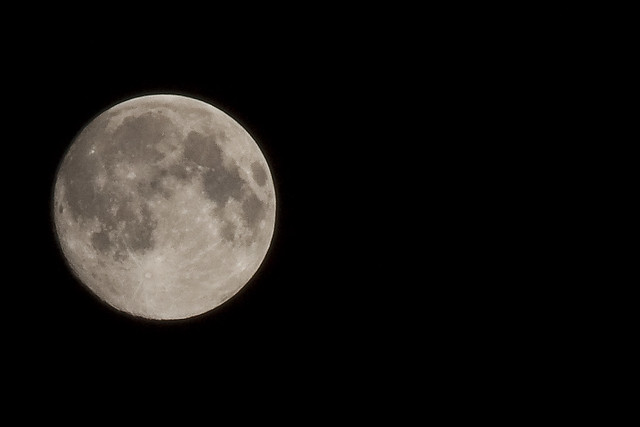
– photo by Mitch Waxman
In accordance with habits cultivated, your humble narrator spent the lunar maximum visiting the vast garden cemetery complexes which adorn the Greater Newtown Pentacle during the waning of October. Surveys of these necropolitan complexes often reveal surprise and delight, and figure prominently in the rambling narrative which regular readers of this journal have grown accustomed to. Extant clues to the deep history of our communities can often be found carved into the nitre dripping monuments and grave markers which adorn and define the cemetery belt.
St. Michael’s Cemetery is found in Astoria, a charming victorian affair which has a surprisingly diverse roll call of interments.
from St. Michael’s
St. Michael’s Cemetery is situated in the borough of Queens in New York City. Established in 1852, St. Michael’s is one of the oldest religious, nonprofit cemeteries in the New York City metropolitan area which is open to people of all faiths. It is owned and operated by St. Michael’s Church, an Episcopal congregation located on the Upper West Side of Manhattan.
The original property for St. Michael’s Cemetery was purchased in 1852 by the Rev. Thomas McClure Peters and occupied seven acres. Over the years St. Michael’s gradually acquired additional land to its present size of approximately eighty-eight acres. Because it was Dr. Peters intention to provide a final dignified resting place for the poor who could not otherwise afford it, areas within the cemetery were assigned to other free churches and institutions of New York City. These areas are still held for the institutions they were assigned. As a service to its diverse constituency, St. Michael’s continues to this day provide burial space for individuals and families from all classes, religions and ethnicities. St. Michael’s reflects the demographic and historical trends of New York City. Walking through the older sections of the cemetery, you will find burials representing the 19th and early 20th century immigrants.

– photo by Mitch Waxman
Not so far from Newtown Pentacle HQ that it can’t be reasonably accessed, traversed, and returned from in a timely interval, my frequent strolls through the place are always intriguing. At 88 acres, it’s not the monster that the Olivette/Lutheran or Calvary/Zion objectives represent, and my proximity to it offers me the closest thing to true parkland in this section of Astoria (which does not have two enormous steel bridges spanning it). September and October of 2010, of course, were remarkable for the severe weather that swept across Queens (including an actual Tornado), and the toll taken on the ancient arboretum cemeteries during those days of angry skies is apparent to even casual notice.
from wikipedia
Cemetery authorities face a number of tensions in regard to the management of cemeteries.
One issue relates to cost. Traditionally a single payment is made at the time of burial, but the cemetery authority incurs expenses in cemetery maintenance over many decades. Many cemetery authorities find that their accumulated funds are not sufficient for the costs of long-term maintenance. This shortfall in funds for maintenance results in three main options: charge much higher prices for new burials, obtain some other kind of public subsidy, or neglect maintenance. For cemeteries without space for new burials, the options are even more limited. Public attitudes towards subsidies are highly variable. People with family buried in local cemeteries are usually quite concerned about neglect of cemetery maintenance and will usually argue in favour of public subsidy of local cemetery maintenance, whereas other people without connection to the area often argue that public spending comes from their taxes and therefore should be spent on the living in the district rather than being “wasted” on the dead.
Another issue relates to limited amount of land. In many larger towns and cities, the older cemeteries which were initially considered to be large often run out of space for new burials and there is no vacant adjacent land available to extend the cemetery or even land in the same general area to create new cemeteries. New cemeteries are generally established on the periphery of towns and cities, where large tracts of land are still available. However, people often wish to be buried in the same cemetery as other relatives, creating pressure to find more space in existing cemeteries and are not interested in being buried in new cemeteries with which there is no sense of connection to their family.
A third issue is the maintenance of monuments and headstones, which are generally the responsibility of families, but often become neglected over time. Decay and damage through vandalism or cemetery maintenance practices can render monuments and headstones either unsafe or at least unsightly. On the other hand, some families do not forget the grave but constantly visit, leaving behind flowers, plants, and other decorative items that create their own maintenance problem.

– photo by Mitch Waxman
The Osage Oranges, Maclura Pomifera if you might, have dropped onto the ground in accordance with their nature. A detailed posting on St. Michael’s atavist vegetation was offered nearly one year ago- “Things you learn from being a Ghoul“- which discusses the fruit, my discovery and identification of it, and various empirical theories about the enigmatic and quite prehistoric cultivar. I am keen on acquisition of an Osage wood staff, and fashioning a camera monopod from it, but “one must never remove anything from a graveyard” is one of the commandments etched into my iron road and I shall obey my maxim.
from wikipedia
The trees acquired the name bois d’arc, or “bow-wood”, from early French settlers who observed the wood being used for war clubs and bow-making by Native Americans. Meriwether Lewis was told that the people of the Osage Nation “esteem the wood of this tree for the making of their bows, that they travel many hundred miles in quest of it.” Many modern bowyers assert the wood of the Osage-orange is superior even to English Yew for this purpose, though this opinion is by no means unanimous. The trees are also known as “bodark” or “bodarc” trees, most likely originating from a corruption of “bois d’arc.” The Comanches also used this wood for their bows. It was popular with them because it is strong, flexible and durable. This tree was common along river bottoms of the Comanchería.

– photo by Mitch Waxman
A shame, for the Osage Oranges are actually highly prized as natural pesticides, and sell at a per piece price at major online auction sites. Offered at 6 for $5, such a harvest might find a hearty welcome here at NPHQ, which is underfunded and is a place where belts continue to be tightened and teabags used thrice.
Any reading this missive interested in alleviating the wicked poverty which approaches a humble narrator might wish to purchase the first Newtown Pentacle book– Newtown Creek, for the Vulgarly Curious– which can ordered by clicking this link. It’s available as a nicely bound paper book which will be shipped out to your choice of address, or in a downloadable ebook format (which is HIGHLY discounted)– I would add.
from wikipedia
Osage-orange, Horse-apple, Bois D’Arc, or Bodark (Maclura pomifera) is a small deciduous tree or large shrub, typically growing to 8–15 metres (26–49 ft) tall. It is dioeceous, with male and female flowers on different plants. The fruit, a multiple fruit, is roughly spherical, but bumpy, and 7–15 cm in diameter, and it is filled with a sticky white latex sap. In fall, its color turns a bright yellow-green and it has a faint odor similar to that of oranges.
Maclura is closely related to the genus Cudrania, and hybrids between the two genera have been produced. In fact, some botanists recognize a more broadly defined Maclura that includes species previously included in Cudrania and other genera of Moraceae.
Osajin and Pomiferin are flavonoid pigments present in the wood and fruit, comprising about 10% of the fruit’s dry weight. The plant also contains the flavonol morin.
Recent research suggests that elemol, another component extractable from the fruit, shows promise as a mosquito repellent with similar activity to DEET in contact and residual repellency.

– photo by Mitch Waxman
But… Mitch… -you ask- St. Michael’s? Wasn’t that the place with the weird ritual site that you posted about in “City of Marble and Beryl“, “Effulgent Valleys“, and “Strange Prayers” a few months back? What the heck, man, you just kind of dropped the whole thing after promising to keep us posted on it?
Actually, I’ve been making it a point to be in St. Michael’s after the full moon since then, but you’re just going to have to wait till tomorrow for all that…
from wikipedia
Magical rituals are the precisely defined actions (including speech) used to work magic. Bronisław Malinowski describes ritual language as possessing a high “coefficient of weirdness,” by which he means that the language used in ritual is archaic and out of the ordinary, which helps foster the proper mindset to believe in the ritual. S. J. Tambiah notes, however, that even if the power of the ritual is said to reside in the words, “the words only become effective if uttered in a very special context of other action.” These other actions typically consist of gestures, possibly performed with special objects at a particular place or time. Object, location, and performer may require purification beforehand. This caveat draws a parallel to the felicity conditions J. L. Austin requires of performative utterances. By “performativity” Austin means that the ritual act itself achieves the stated goal. For example, a wedding ceremony can be understood as a ritual, and only by properly performing the ritual does the marriage occur. Émile Durkheim stresses the importance of rituals as a tool to achieve “collective effervescence,” which serves to help unify society. Psychologists, on the other hand, describe rituals in comparison to obsessive-compulsive rituals, noting that attentional focus falls on the lower level representation of simple gestures. This results in goal demotion, as the ritual places more emphasis on performing the ritual just right than on the connection between the ritual and the goal. However, the purpose of ritual is to act as a focus and the effect will vary depending on the individual.
What, exactly, is inside a modern traffic light?

– photo by Mitch Waxman
Whilst wandering about the Newtown Pentacle one fine summer day, your humble narrator encountered a maintenance crew from Weisbach performing some sort of upkeep on a traffic signal light. This is one of the newer ones, the kind which have two switch boxes attached, of the sort that has populating Northern Blvd. for the last few years.
from hoovers.com
Specialty contractor Welsbach Electric provides outdoor electrical construction, installation, and maintenance services for utilities and public and private clients in New York City and Long Island. The company builds and installs roadway traffic signals, power stations, stadium lighting systems, underground transmission circuits, and other specialized systems. It maintains a fleet of more than 300 aerial and handling vehicles. Welsbach Electric was founded more than a century ago; it was acquired by construction group EMCOR in 1971.

– photo by Mitch Waxman
Normally hidden within the steel enclosure, the intricate works and electronica were exposed for the technician’s egress, and I took the opportunity to crack out a few shots of its innards. Byzantine, complex, and strangely advanced machinery seems to govern the actions of the traffic signal- a 4 way device which handles the busy corner of 44th street and Northern Blvd. near Major Auto World.
from nyc.gov
(a) Traffic control signals. Whenever traffic is controlled by traffic control signalsexhibiting different colored lights successively, the following colors shall indicate andapply to operators of vehicles and to pedestrians, except as superseded by pedestriancontrol signals, as follows:
(1) Green alone.
- (i) Vehicular traffic facing such signals may proceed straight through orturn right or left unless a sign at such place prohibits any such movement.But vehicular traffic, including vehicles turning right or left, shall yield theright of way to other vehicles and to pedestrians lawfully within theintersection or an adjacent crosswalk at the time such signal is exhibited.
- (ii) Pedestrians facing such signal may proceed across the roadwaywithin any crosswalk.
(2) Steady yellow alone, dark period, or red-green combined when shownfollowing the green signal:
- (i) Vehicular traffic facing such signal is thereby warned that the redsignal will be exhibited immediately thereafter and such vehicular trafficshall not enter the intersection when the red signal is exhibited.
- (ii) Pedestrians facing such signal are thereby warned that there isinsufficient time to cross the roadway, and shall not enter or cross theroadway. Pedestrians already in the roadway shall proceed to the nearestsafety island or sidewalk.
(3) Steady red alone:
- (i) Vehicular traffic facing such signal shall stop before entering thecrosswalk on the near side of the intersection or, if none, then beforeentering the intersection and shall remain standing until an indication toproceed is shown.
- (ii) Notwithstanding the foregoing provisions of this subdivision (a), or any provisions of state law, an operator approaching an intersection where asign authorizes right or left turns on red signal may make such turn aftercoming to a complete stop, but shall yield the right of way to all vehiclesand pedestrians lawfully within the intersection.
- (iii) Pedestrians facing such signal shall not enter or cross the roadway.

– photo by Mitch Waxman
Holy Moley! What’s going on inside this thing? This looks like the extensive rack of electronic doodads used here at Newtown Pentacle HQ for photo retouching!
also from nyc.gov
Citywide Congested Corridors Study
Northern Boulevard from Queens Plaza to the Brooklyn Queens Expressway (2.2 miles)This corridor runs east-west route in northern Queens and provides a major connection to the Queensboro Bridge. The corridor has direct access to the Brooklyn-Queens Expressway in the east, a location that has undergone a massive reconstruction, and to the Manhattan CBD by way of the Queensboro Bridge in the west. The reconstruction of the BQE has resulted in a change in traffic patterns at the intersection, especially for motorists wishing to access the expressway toward Brooklyn.
Northern Boulevard is a wide corridor with significant auto-related and large, stand-alone commercial retail stores. There are light pedestrian volumes and some residential land uses. The corridor is also a through truck route. There are three subway stops along this portion of Northern Boulevard where the R, V and G trains can be accessed and an N/W station one block away on 39th Ave. The Q101 and Q66 bus routes operate along a portion of the study corridor.
always as before

– photo by Mitch Waxman
All along the Hell Gate Extension tracks which snake across Astoria, one may find spots which are favored by the local flocks of Pigeons for use as a latrine. How or why these spots are selected is anyone’s guess, but I always find it curious when I discover what seems to be a purposeful arrangement of cast off goods in such a place.
Again- in Western Queens, illegal dumping is an art form.


 The Newtown Pentacle