Archive for the ‘Astoria’ Category
Gangster town

– photo by Mitch Waxman
I’m hooked on a few basic cable crime “reality shows” at the moment, as I sit out the “dark and cold” season. My favorite of these entertainments, so far, is the lurid charm of “Mobsters“. Cheaply produced by overseas staff, the show presents a basic reportage of the New York organized crime story- as told by federeal prosecutors for an international audience. A topical and shallow montage of the “official” story is what TV shows such as “best of breed” “Mobsters” present, as it were or as I’ve termed it- Mobster-Porn.
What I find interesting about the storytelling technique of these shows are the usage of long tracking shots featuring Astoria which underpin the narrative. The shot above, for instance, is similar to one of the mobster-porn standbys. Usually this is used to demonstrate an ethnic neighborhood, a tracking shot interspersed with depression era stock footage of the lower east side, which birthed the racketeer focused on in a particular week’s episode.
Ironically, this is one of the nicest blocks in all of Astoria, a nearly suburban lane which abuts Astoria Park.

– photo by Mitch Waxman
In the past, I’ve mentioned that Newtown Pentacle HQ is housed in a Matthews Model Flat “new model tenement” apartment. The particular block I live on is the setting of much of “A Bronx Tale“- Sonny’s Bar (in reality a Karate Studio) is on the corner, as is the apartment house Robert DeNiro was meant to live in. The church seen in the film is St. Joseph’s and the funeral home is across the street from it on 30th avenue. The school attended by the kids in the film is a block away as well. Area delis and restaurants proudly sport pictures of the great actor stuffing their wares into himself and exhibiting his trademark grin.

– photo by Mitch Waxman
Of course the hollywood angle in using Astoria for its location shoots is that the older housing stock and relict buildings of the ancient village are reminiscent of what Manhattan once looked like. The radical theory of Urban Renewal practiced in the 20th century, which has only just gotten around to Long Island City and North Brooklyn using the alias “up-zoning”, wiped out the old “New York” in Manhattan.
Ironically, many of the Racketeers showcased by “Mobsters” made the predominance of their fortunes in enterprises that were directly related to this Urban Renewal. Gambling was their primary source of income before the politicians offered up lucrative construction and carting work in the 50’s, especially a certain racket called “the numbers”. Ahh, the good old days…
Fascination with the “outlaw” archetype is buried deeply in the psyche of westerners, but trust me when I say that to be in the presence of such characters is actually not very much fun. Its a little scary hanging out with people for whom killing other people is “just another day at the office”. It’s not just the mobsters that make me nervous, of course, off-duty cops and soldiers also make me uneasy. I’m no warrior.

– photo by Mitch Waxman
The effect of this media imagery on the kids of the ancient village is profound. Admittedly, their major cultural influences in the decadent 21st century emanate from the violent gang cultures of the 1990’s, but maturing in an age which delights in youtube cruelty and televised urban warfare has had risible effects on the latest New Yorkers.
Of course, they aren’t acting like real gangsters, just emulating things that they see on TV- acting like actors acting like gangsters. A lot of blood gets spilled in this kabuki, but that’s all it really is, as the old rackets don’t pay as well as they used to and the new ones have a high mortality rate. Crime went official back in the 70’s, anyway, when Lotto was invented and the politicians muscled their way into the numbers. The government will be getting into the “new rackets” soon enough- organ brokering and drug legalization come to mind.
Modern New Yorkers know who runs the modern numbers racket, because the citizenry is always forced to pay “mob tax” in gangstertown, no matter who collects it. There’s only two warring crime families left these days, and they’re headquartered at executive palaces in Albany- not sipping espresso in some outer borough Salumeria.
Like a great hand

– photo by Mitch Waxman
Came across this dire tableau the other night (December 16th to be exact) here in the oft perplexing grid of Astoria’s streets. At the corner of 44th and Broadway, it seemed that some great hand had reached down and jerked a car skyward, violently.
from wikipedia
Astoria is a neighborhood in the northwestern corner of the borough of Queens in New York City. Located in Community Board 1, Astoria is bounded by the East River and is adjacent to three other Queens neighborhoods: Long Island City, Sunnyside (bordering at Northern Boulevard), and Woodside (bordering at 50th Street). Astoria Heights, more commonly referred to as “Upper Ditmars,” borders Astoria on the northeast, at Hazen Street.

– photo by Mitch Waxman
The eternal entrepreneur who owns the bodega establishment on the corner informs me- as his fruitstand and delicatessen has a full video surveillance coverage of the corner- that a “black car” or “car service” driver was parked in the spot when a delivery truck rounded the corner at many times the speed limit.
ChristmAstoria 3

– photo by Mitch Waxman
All right, I’ll admit it- the last couple of posts about ChristmAstoria have painted the seasonal holiday in a somewhat sarcastic veneer. I grew up Jewish and have always been a little jealous of a holiday with such a rich mythology. Channukah, like Christmas, is all about celebrating “having survived the Romans”, but the Christmas iconography is just so much more compelling. There are also NO Rankin-Bass stop motion Channukah cartoons, and Heat Miser would have to be rethought entirely. The Winter Warlock, however, ports directly over – from an interfaith perspective.

– photo by Mitch Waxman
Your humble narrator and the extensive staff here at Newtown Pentacle HQ (its a bit like TMZ around here- swimming pools and movie stars) just wanted to say thanks for following us around and checking in at the blog periodically, as well as wishing you all a healthy and happy holiday. The plan around here is to have one last feast day (or two) and get back to work. I’ll be wandering around the empty streets this weekend whenever I get a break- weather and feast wise. Look for a crazy looking old man in a filthy black raincoat taking pictures of dead rats- that’ll be me.

– photo by Mitch Waxman
My little dog, Zuzu (left), has extensive obligations all weekend as well, I am told.

– photo by Mitch Waxman
I’ll be taking a day or two off, but will most likely get rolling again on Saturday. Have a merry christmas, or at least a couple of days you don’t have to go to work.
(Don’t worry if anything good happens, I’ll post it. Why not subscribe to the RSS feed- found in the column to the right, and updates will just pop up in the gadget or browser of your choice?)
ChristmAstoria 2

– photo by Mitch Waxman
Let me preface today’s post by mentioning that the anagrammatic transposition of Santa and Satan is no accident.
Given the macabre sense of humor that the most high god itself is suggested to have by scripture- making its arch enemy transmogrify into a nice old man who gives presents to children- on its birthday- is exactly the sort of thing one would expect from the sun god of a desert people.
If you think about it, Santa is principally red in color and flies about with a wild hunt of magickal herd animals. He is also invulnerable to chimney fires and possessed of a menacing laugh. Ergo- Santa Claus (saint nick) might actually be Satan (old nick). This link will be handy on Christmas eve, as the Strategic Air Command’s NORAD will be tracking the demon as it makes its way south from the polar wastelands toward the Newtown Pentacle.
from wikipedia
Numerous parallels have been drawn between Santa Claus and the figure of Odin, a major god amongst the Germanic peoples prior to their Christianization. Since many of these elements are unrelated to Christianity, there are theories regarding the pagan origins of various customs of the holiday stemming from areas where the Germanic peoples were Christianized and retained elements of their indigenous traditions, surviving in various forms into modern depictions of Santa Claus.

– photo by Mitch Waxman
In the early days of the American Colonies, which modern politics and propaganda instruct its citizenry to believe was a time of “freedom and liberty”, personal or non standard expressions of religion were frowned upon. Of course, that was up north in New England. New York City and its citizens are actually the authors of the modern Christmas.
Thomas Nast created the visuals in 1863 for “Harper’s Weekly”, Washington Irving turned Sinterklaas into Santa Claus in 1809’s “A History of New York” and also inserted the reindeer and sleigh, Clement Clarke Moore (whose family got their start in colonial Newtown) is said to have written “Twas the night before Christmas” in 1823, and the NY Sun published the famous “Yes Virginia, there is a Santa Claus” in 1897.
from wikipedia
Christmas celebrations in Puritan New England (1620-1850?) were culturally and legally suppressed and thus, virtually non-existent. The Puritan community found no Scriptural justification for celebrating Christmas, and associated such celebrations with paganism and idolatry. The earliest years of the Plymouth colony were troubled with non-Puritans attempting to make merry, and Governor William Bradford was forced to reprimand offenders. English laws suppressing the holiday were enacted in the Interregnum, but repealed late in the 17th century. However, the Puritan view of Christmas and its celebration had gained cultural ascendancy in New England, and Christmas celebrations continued to be discouraged despite being legal. When Christmas became a Federal holiday in 1870, the Puritan view was relaxed and late nineteenth century Americans fashioned the day into the Christmas of commercialism, liberal spirituality, and nostalgia that most Americans recognize today.

– photo by Mitch Waxman
In modern times, the garish lighting adorning Astoria is also equipped with tiny electronic speakers which blare endless loops of the first movement of “Jingle Bells”. Were one prone to paranoid and conspiratorial thinking, it would seem that some vast cabal of industrial and economic powers have convinced the citizenry of these United States to consume electricity unabashedly. Such thinking is faulty, however, as the tradition of christmas lights is far older than the nation- isn’t it?
from wikipedia
The first known electrically illuminated Christmas tree was the creation of Edward H. Johnson, an associate of inventor Thomas Edison. While he was vice president of the Edison Electric Light Company, a predecessor of today’s Con Edison electric utility, he had Christmas tree light bulbs especially made for him. He proudly displayed his Christmas tree, which was hand-wired with 80 red, white and blue electric incandescent light bulbs the size of walnuts, on December 22, 1882 at his home on Fifth Avenue in New York City. Local newspapers ignored the story, seeing it as a publicity stunt. However, it was published by a Detroit newspaper reporter, and Johnson has become widely regarded as the Father of Electric Christmas Tree Lights. By 1900, businesses started stringing up Christmas lights behind their windows. Christmas lights were too expensive for the average person; as such, electric Christmas lights did not become the majority replacement for candles until 1930.

– photo by Mitch Waxman
Just to ensure that the Newtown Pentacle doesn’t accidentally cause a remonstrance to spring up, we need to give equal time to all faiths in these ChristmAstoria posts- thus- December 23 is the date on which a surprisingly large number of Americans will celebrate Festivus. Watch out for feats of strength being performed, and gather round the Aluminum pole, its time for the airing of grievances.
from wikipedia
The practice of putting up special decorations at Christmas has a long history. From pre-Christian times, people in the Roman Empire brought branches from evergreen plants indoors in the winter. Christian people incorporated such customs in their developing practices. In the fifteenth century, it was recorded that in London, it was the custom at Christmas for every house and all the parish churches to be “decked with holm, ivy, bays, and whatsoever the season of the year afforded to be green”. The heart-shaped leaves of ivy were said to symbolise the coming to earth of Jesus, while holly was seen as protection against pagans and witches, its thorns and red berries held to represent the Crown of Thorns worn by Jesus at the crucifixion and the blood he shed.
and just as a note- this is the Anniversary of Vincent van Gogh cutting off his ear lobe in 1888
ChristmAstoria 1

– photo by Mitch Waxman
ChristmAstoria 2009…
The annual occurrence of Christmas adorns the tired streets of ice struck Astoria with electrical garlands of questionable taste, speakers blare seasonally appropriate melodies from their lamp post perches, and vast hordes of shoppers seek to acquire, transport, and then dispense a bounty of trade goods. Such peculiar behavior garners no small amount of comment from the large middle eastern and southeast Asian communities within the ancient village, who are not willing to miss out on what seems to be a lot of fun, and they eventually join in and play along with the odd custom.
from Charles Dickens “A Christmas Carol“, original text from wikisource.org
Nobody ever stopped him in the street to say with gladsome looks “My dear Scrooge, how are you? When will you come to see me?”. No beggars implored him to bestow a trifle, no children asked him what it was o’clock, no man or woman ever once in all his life inquired the way to such and such a place, of Scrooge. Even the blind men’s dogs appeared to know him; and when they saw him coming on, would tug their owners into doorways and up courts; and then would wag their tails as though they said “No eye at all is better than an evil eye, dark master!”.

– photo by Mitch Waxman
Amongst the tangled thickets of cable TV, telephone, and emergency power supply cables (still in place some 3 1/2 years after the Great Astoria Blackout), one might observe the extensive holiday decorations installed by the local Business Improvement District Council and Municipal authorities. On Steinway Street, in particular, an oppressive bleating of holiday music is inescapable, and endless loops of holiday songs considered to be inoffensive and nonsectarian drone cheerily on. They do not play “Onward, Christian Soldiers” for instance.
from wikipedia
Ebenezer Scrooge is the principal character in Charles Dickens’ 1843 novel, A Christmas Carol. At the beginning of the novel, Scrooge is a cold-hearted, tight fisted and greedy man, who despises Christmas and all things which engender happiness. A quote from the book reads “The cold within him froze his old features, nipped his pointed nose, made his eyes red, his thin lips blue, and he spoke out shrewdly in his grating voice …” His last name has come into the English language as a byword for miserliness and misanthropy, traits displayed by Scrooge in the exaggerated manner for which Dickens is well-known. The tale of his redemption by the three Ghosts of Christmas (Ghost of Christmas Past, Ghost of Christmas Present, and Ghost of Christmas Yet to Come) has become a defining tale of the Christmas holiday. Scrooge’s catchphrase, “Bah, humbug!” is often used to express disgust with many of the modern Christmas traditions.

– photo by Mitch Waxman
To appreciate ChristmAstoria, however, one must visit its fertile climes at night.
Ever conscious of social status and standing, given to vulgar displays of tasteless consumption and wild imaginings on the subject of real estate development, the population of Astoria does not disappoint when competing with neighbors for the attentions of holiday tourists. Even the police cameras and red light robotics clustered around the corner of Broadway and Steinway Street look positively resplendent when illuminated by such redolent regalia.
from nallon.com
The prevailing economic theory of the early nineteenth century was the acceptance of the unrestrained free market. It is a theory that still has its supporters today. Just before Christmas in 1983, Ed Meese, then the Presidential counsellor to US President Ronald Reagan and later Reagan’s Attorney General, made a speech to the National Press Club. He said, “Ebenezer Scrooge suffered from bad press in his time. If you really look at the facts, he didn’t exploit Bob Cratchit.” Meese went on to explain that “Bob Cratchit was paid 10 shillings a week, which was a very good wage at the time… Bob, in fact, had good cause to be happy with his situation. He lived in a house not a tenement. His wife didn’t have to work… He was able to afford the traditional Christmas dinner of roast goose and plum pudding…
So let’s be fair to Scrooge. He had his faults, but he wasn’t unfair to anyone. The free market wouldn’t allow Scrooge to exploit poor Bob… The fact that Bob Cratchit could read and write made him a very valuable clerk and as a result of that he was paid 10 shillings a week.” Factually Bob’s wage according to Dickens was fifteen shillings a week not ten shillings ( Bob had but fifteen bob a-week himself; he pocketed on Saturdays but fifteen copies of his Christian name; and yet the Ghost of Christmas Present blessed his four-roomed house ) but the thrust of Meese’s argument was that the ‘free market’, better known to economic theorists as laissez-faire , served Bob well and had provided him with a living wage to feed his family. Ed Meese omitted to say that the free market economy in England in the 1840’s, a period that became known as the ‘Hungry Forties’, was in deep depression and an excess of labour was keeping wages low. Cratchit could hardly ask for more when there were many willing to take his place and for probably for much less.
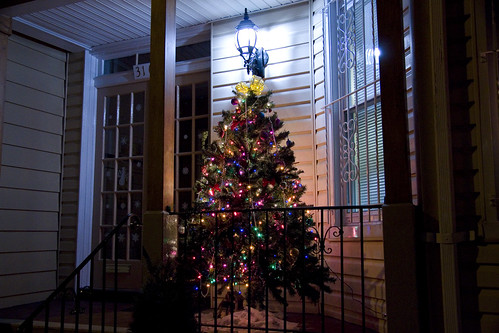
– photo by Mitch Waxman
Such public exertions have always fascinated your humble narrator, who would never be caught up in such wild fancy. A deadly seriousness and focused purpose should be the hallmark of a day well and profitably spent, without all of this pageantry and jumping about. Get back to work, all of you… bah…
from wikipedia
John Elwes [née Meggot or Meggott] (a.k.a. “Elwes the Miser”), MP, Esquire, (7 April 1714 – 26 November 1789) was a Member of Parliament (MP) in Great Britain for Berkshire (1772 – 1784) and a noted eccentric and miser, believed to be the inspiration for the character of Ebenezer Scrooge in Charles Dickens’ A Christmas Carol…
…He went to bed when darkness fell so as to save on candles. He began wearing only ragged clothes, including a beggar’s cast-off wig he found in a hedge and wore for two weeks. His clothes were so dilapidated that many mistook him for a common street beggar, and would put a penny into his hand as they passed. To avoid paying for a coach he would walk in the rain, and then sit in wet clothes to save the cost of a fire to dry them. His house was full of expensive furniture but also molding food. He would eat putrefied game before allowing new food to be bought. On one occasion it was said that he ate a moorhen that a rat had pulled from a river. Rather than spend the money for repairs he allowed his spacious country mansion to become uninhabitable. A near relative once stayed at his home in the country, but the bedroom was in a poor state. So much so, that the relative was awakened in the night by rain pouring on him from the roof. After searching in vain for a bell, the relative was forced to move his bed several times, until he found a place where he could remain dry. On remarking the circumstance to Elwes in the morning, the latter said: “Ay! I don’t mind it myself… that is a nice corner in the rain!”
Incidentally, this link came up while searching around for Dickens- Funniest thing I’ve seen since “Rap Chop“. “A Christmas Carol” A Gateway to Communism and the Occult! – from parody site Landover Baptist
also, just as a note: This is the anniversary of the Lincoln Tunnel opening for business in 1937.


 The Newtown Pentacle