Archive for 2010
Project Firebox 9

– photo by Mitch Waxman
Foliated in the manner of some medieval “green man”, this FDNY alarm box clings to it’s mount at the corner of Woodside and 38th avenues. A vestigial back alley rudely forgotten beside the tracks of the LIRR, it sits squarely at the center of an angle between the neighborhoods of Woodside and Sunnyside- a place which is neither here nor there, between tick and tock.
wholly kaleidoscopic

– photo by Mitch Waxman
Often have the Sunnyside Yards been referred to at this, your Newtown Pentacle, as cyclopean- gargantuan- or titanic.
Perhaps it is just that we New Yorkers are not used to seeing such accumulations of acreage and open sight lines, or just maybe its that the 2-3 stories down surface upon which the tracks are laid down is the actual hardscrabble earth, not the engineered “ground” upon which we walk and drive.
from wikipedia
The yard is owned by Amtrak, but it is also used by New Jersey Transit. The shared tracks of the Long Island Rail Road (LIRR) Main Line and Amtrak’s Northeast Corridor pass along the southern edge of the yard. Plans for the LIRR East Side Access project to build tracks to Grand Central Terminal would have those tracks diverging in the vicinity of, or perhaps through, the Sunnyside Yard.
Northeast of the yard a balloon track (or reverse loop) is used for “U-turning” Amtrak and NJ Transit trains which terminate at Penn Station. Leading eastward near the south side of the yard, this balloon track switches off and turns left under the LIRR/Amtrak tracks, turns left once again, and merges with the Sunnyside yard track to turn the train west toward Penn Station.

– photo by Mitch Waxman
Recently, while moving through Queens Plaza on one of the sultry afternoons which have so far typified the summer of 2010, I found myself at one of the “hidden in plain sight” vantage points by which facility laborers enter and leave the place and the very edge of a high security “homeland security type” area.
During non peak hours, the yard acts as a staging and holding area for various Manhattan bound commuter trains, which is why in the above shot you’re seeing Amtrak parked next to New Jersey Transit and the Long Island Railroad transits through the place on a regular schedule.
from plannyc.org
Sunnyside Yards Platform
The Sunnyside Yards development proposal has been discussed by city planners, developers, and community advocates for decades. The report recommends that builders put between 18,000 and 35,000 housing units on the site, depending on the zoning. There would also be schools, parks land and an interposal transportation facility for the MTA, LIRR, Amtrak and bus service. Some advocates hope the project would include a guarantee of 50 percent affordable housing.
The property, which is owned by Amtrak and is primarily used by New Jersey Transit, is enormous. It runs from Laurel Hill Avenue on the east to Hunters Point Avenue on the west. To put it into perspective, if the property were in Manhattan, it would span 42nd to 59th Street, from Fifth Avenue to Lexington Avenue.

– photo by Mitch Waxman
Built by the Pennsylvania Railroad Company in 1910, at its height the Sunnyside yard had 45 tracks and a capacity of 552 cars. It provides area trains with connections to the New York Connecting Railroad which provides Amtrak and the cargo carriers like CSX access off of Long Island and the New York archipelago over the Hellgate Bridge to the mainland.
from wikipedia
The P32AC-DM locomotive was developed for both Amtrak and Metro-North so it can run off power either generated by the on-board diesel prime mover or collected from a third rail electrification system at 750 volts direct current. The P32AC-DM is rated at 3,200 horsepower (2,390 kW), 2,900 horsepower (2,160 kW) when supplying HEP, and can obtain a maximum speed of 110 mph (177 km/h)

– photo by Mitch Waxman
The yard also serves Amtrak’s Acela service, which is a high speed train line, but this is one of the so called Genesis trains that is pulling forward, one of the work horses of the Northeast Corridor.
from subwaynut.com
The Genesis P32AC-DM are a regional service dual mode locomotive found exclusively on almost every train between New York and Albany (These are Empire Service trains, the Maple Leaf, the Aderondeck, the Ethan Allen Express, and the Lakeshore Limited). This is beacause trains entering Penn Station can not be diesels. The trains use there diesel locomotives throughout the trip from Albany until just near Penn Station when the driver puts the third rail shoe down and uses this, there is no change felt to passengers on board. The train then stops at Penn Station, discharges all regular passengers and then runs light under the east river on the third rail, and into Amtrak’s Sunnyside Yard.
Historic Tug at Newtown Creek

Vintage Tugboat at Newtown Creek – photo by Mitch Waxman
A rare opportunity to ride up the Newtown Creek was recently enjoyed by your humble narrator, and on my journey up that maligned cataract I spotted an artifact of New York Harbor’s glorious past sneaking past Hunters Point.
from epa.gov
Blue-claw crabs, bluefish, weakfish, striped bass, and other species inhabit the creek, and fishing and crabbing for human consumption occurs [Ref. 7, pp. 2, 5; 8, p. 11; 21, p. 13; 22, pp. 1-2; 24, p. 143; 52, p. 93; 68, p. 3; 69, p. 1]. Subsistence fishing has been observed in Newtown Creek at Dutch Kills, and crabbing for consumption has been observed at the end of Manhattan Avenue in Brooklyn [Ref. 7, p. 5; 21, p. 13; 22, pp. 1-2; 68, p. 3; 69, p. 1]. These locations are both within the zone of contamination for the Newtown Creek site [Figure 2 of this HRS documentation record]. Therefore, Actual Contamination is documented, and the target fishery is evaluated for Actual Human Food Chain Contamination.

the W O Decker at Newtown Creek – photo by Mitch Waxman
Wooden hulled, its spitting steam boilers have long been replaced by modern diesel engines, this little (52 feet long) tugboat is the W O Decker.
also from epa.gov
Beginning in the late 1800s and continuing into the 1930s, Newtown Creek was widened, deepened, and lined with bulkheads to accommodate the growing traffic, leading to the destruction of all its freshwater sources [Ref. 8, p. 10; 12,
p. 52]. During World War II, the government commandeered factories along the creek to make military equipment, such as a factory that made aluminum for fighter planes [Ref. 11, p. 14]. At that time, Newtown Creek was the busiest industrial port in the Northeast, with tanker traffic lining its length [Ref. 7, p. 1; 11, p. 13]. The national highway system built after the war took business away from the nation’s waterways, leading to a rapid decline in the level of industry along Newtown Creek [Ref. 7, pp. 1-2].

the W O Decker passing by the “Greenpoint Manufacturing and Design Center” – photo by Mitch Waxman
A “historic place” the Decker was originally called the Russell 1 when it was built in 1930 for the Newtown Creek Towing Company, who were specialists in berthing and towing heavy cargo along the crowded and narrow waterway.
from gmdconline.org
The Greenpoint Manufacturing and Design Center (GMDC) started in the late 1980s as an innovative intersection of two interests: reclaiming derelict factories in North Brooklyn’s Greenpoint neighborhood and sustaining industry and manufacturing in New York City. The organization formally incorporated in 1992.
From its initial purchase and redevelopment of a large facility at 1155 Manhattan Avenue for use by light manufacturers and artisans, GMDC has since expanded and today is the only nonprofit industrial developer in New York City. The organization acquires, develops, and manages industrial real estate that provides small and medium-sized manufacturing enterprises with affordable, flexible production space.

In the shot above, The Decker is passing the Newtown Creek Waste Water Treatment Facility in Greenpoint, Brooklyn – photo by Mitch Waxman
The Decker is currently a high end tour vessel, operated by and out of the South Street Seaport in Manhattan.
from seany.org
The wooden tugboat W.O. Decker was built in Long Island City, Queens in 1930 for the Newtown Creek Towing Company, a firm specializing in berthing ships and barges in the creek that separates Brooklyn and Queens. Originally called the Russell I for the towing company’s owners, she was renamed the W.O. Decker in 1946 after being sold to the Decker family’s Staten Island tugboat firm.

The shield wall of the Shining City, framed by Long Island City on the right and industrial Brooklyn on the left with the Pulaski Bridge just at Horizon – photo by Mitch Waxman
The vessel I was aboard continued on toward the Greenpoint Avenue Bridge, but the Decker turned in the narrow part of the Newtown Creek near the confluence of its tributaries Whale Creek and Dutch Kills.
Check out this 1896 article at the NYTimes, which actually interviews the manager of Newtown Creek Towing Company, John Russell, for whom the Decker was originally named.
Our friends at the Working Harbor Committee are actually doing a few tours this summer on the Decker- click here for more
black seas of infinity

– photo by Mitch Waxman
Conversations with area wags and a wide spread network of personal friends have all pointed to a spate of dream disturbances plaguing the artistic class and those “sensitive” citizens of this Newtown Pentacle (specifically- reports have been made from Astoria, Woodside, Sunnyside, Jackson Heights, Elmhurst, Dutch Kills, Long Island City, Blissville, Maspeth, Ridgewood, Bushwick, East Williamsburg, Greenpoint).
Perhaps it is just the psychic ripple of the Hiroshima bomb, echoing through time and space, but it is nevertheless observed that a remarkable concurrence of isolated reports of nightmares and bizarre dreaming has reached and- indeed been experienced at Newtown Pentacle HQ in the last two weeks.
Such hive mind events are jungian in nature, and signal a massing of the collective unconscious, an expectation of some dire or portentous event unfolding. Accordingly, this anonymous poll (as best as I can tell it is, anyway) is offered, in an effort to document this curious pattern. If you have a moment, please offer a click to the answer below that best describes your recent experiences.
If you want to go into any detail, please feel free to send a missive here, with instructions as to whether or not it may be shared with your fellow lords and ladies… A common thread and shared imagery has been reported from unrelated sources, but I don’t want to color any possible responses by stating it quite yet.
Not Dead!

– photo by Mitch Waxman
Apologies, lordas and ladies, for the tardiness of postings in the last few days. A humble narrator must eat, after all, and a professional obligation kept me busier than usual during the last week but will provide me with some short term cash. An existential crisis is averted, for now, and it seems I won’t need to sleep next to the gentlemen (and his fellows) above, on the cement in a Duane Reade parking lot on 47th street between Broadway and Newtown Road here in Astoria.
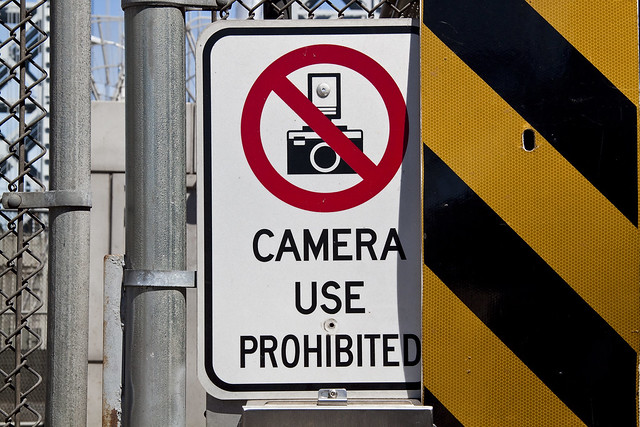
I did, however, get to walk around the JFK airport with my camera out just snapping away. Due to the validation provided me by my client, a major corporation and “player”, TSA and Homeland Security allowed a photo shoot (with certain limitations spelled out in advance). A rare thing in these days of Takfir and Terror Warrior is the ability to openly carry a camera around a transportation hub without hassles. Of course, this was a freelance job, and the shots belong to my client, so I can’t show them off.
– photo by Mitch Waxman
The farcical kabuki of the security men and their war on photography however, an abrogation of both self expression and logic, is a subject I find myself returning to over and over.
Your humble narrator has several personal connections to the attacks on New York in 2001, including a bunch of firefighters and Port Authority cops who I used to hang around with that didn’t make it out of the towers, and my blood lust and desire for vengeance is hardly satisfied with the destruction and subjugation of merely two foreign nations so don’t think I’m some peacenik hippie, but this subject is the tip of an iceberg- and I can personally take any of you on a tour of the wide open holes that don’t seem to merit any attention (or funding) around Queens.
We need to ditch the “new normal”, and get back to business.


 The Newtown Pentacle