Author Archive
Errata Hari

– photo by Mitch Waxman
As often mentioned in posts since the very inception of this, your Newtown Pentacle, when I screw up- whether it be a place name, roadway, or some other variance from reality- I’m counting on being called on it and corrected by you assembled Lords and Ladies of Newtown.
Often, when contacted on such matters- an unnecessarily confrontational tone is offered by the petitioner to your humble narrator. Sometimes, wild accusations of defaming the past or purposely smoothing over inconvenient truths are put forth. Before we discuss the rather lengthy list of errors that I’ve been made aware of regarding the Vanderbilt Mansion postings published earlier this month, allow me to restate and clarify things…

– photo by Mitch Waxman
The pitiable mendicant who calls himself “your humble narrator” is an unlettered amateur, untempered by the crucible of academic review, whose flawed attempt at presenting a cogent overview and glimpse into an often hidden world of relict infrastructure and unseen corners found around the great metropolis is sometimes successful.
There are certain subjects which I refuse to delve too deeply into- famously NYFD history and Rail- for there are amateur experts out there whose depth of knowledge on these topics is staggering. Intelligent discussion of historic Newtown can be had “off the top of my head”, but it’s when I leave “my beat” that I tend to get into trouble.
The Vanderbilt Mansion revealed certain lapses in capabilities, and remind one that I am an expert on nothing except embarrassing myself in public. If I’m wrong about something, please contact me through the comments, so corrections may be offered to your fellow Lords and Ladies.

– photo by Mitch Waxman
Thankfully, Eric Weaver, who served as Horticultural Educator at “Vandyland” from 2004 to 2007 contacted me with a lengthy list of corrections regarding the Vanderbilt Mansion posts and has given me permission to post them here. All the following text (in blue) is from Mr. Weaver.
ERRATA Vanderbilt Mansion 1

– photo by Mitch Waxman
He also flew, having been the first to circumnavigate South America and cross the Andes in a “flying boat.”
He collected fauna not flora.
He didn’t have a fleet, his boats and ships were owned in succession.
His dock was too shallow to accommodate ocean going ships. He moored the Alva at Price’s Bend off of Eaton’s Neck. JP Morgan had to moor his ship there too which gave his son HP Morgan the idea of buying up 500 acres on Eaton’s Neck which is still known as the Morgan Estate.
The Guatemalan church only influenced the design on the Marine Museum.
He wasn’t powerful, just rich.
There was no fleet of vessels and the only collection was at Eagle’s Nest.
ERRATA Vanderbilt Mansion 2

– photo by Mitch Waxman
The Vanderbilt family were farmers, hence the boat to take the vegetables into Manhattan.
Willie K I did not want to compete making money like his father and grandfather, so he decided to spend it. He seemed to compete with his brothers building houses.
Willie K II did not compete building houses. His places are modest compared to his father’s generation.
The planetarium was built by Suffolk County, not the state.
The Marine Museum has not been officially called the Hall of Fish since they put the second story on in the late twenties.
There are some nice totems and artifacts on the second floor.
The ironwork at the door of the second floor of the ‘fish house’ was used to haul up the large objects.
ERRATA Vanderbilt Mansion 3

– photo by Mitch Waxman
Willie K did not own a fleet. Did you visit the ship model room?
The ship Alva that you write about was Willie K I’s ship. Willie K II’s Alva was built in Kiel, Germany in the same shipyard that the U-boat that sunk it was built. (Did I mention that Lindbergh was one of Willie K II’s friends?)
The narrative goes that it takes five generations to make the fortune then squander it.
ERRATA Vanderbilt Mansion 4
– photo by Mitch Waxman
The Breakers was Cornelius V II. GWV was the Biltmore in North Carolina. These were two of the Uncles of Willie K II who competed in building.
Eagle’s Nest is in Centerport on Northport Bay. Maybe the fumes of formaldehyde (since replaced with alcohol) from the second floor overcame you.
Consuelo was forced to wear hoops on her neck to elongate it. Alva locked her in her boudoir for long periods.
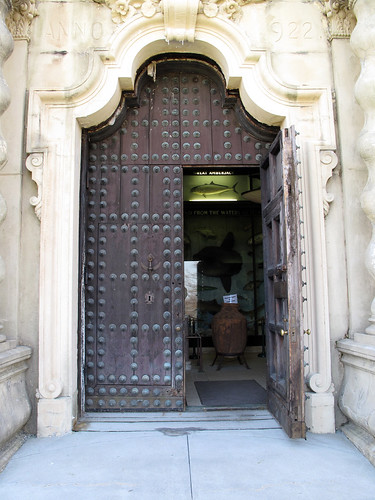
The historic castle doors are ornamental. Security is too lax as golden things get stolen frequently. The curator was offered half a million in cash for one artifact on the second floor of the fish house. There are valuable things there.
The Alva didn’t dock in Northport.
ERRATA Vanderbilt Mansion 5

– photo by Mitch Waxman
The property is NOT owned by the State of New York but Suffolk County. Willie K left an endowment of six million dollars. It was up over twenty in the late nineties. Graft and corruption by the former director brought them back to six mil. The county is loaning them money now to make ends meet. If not, the property reverts back to the family.
The photography policy is no professionals and not in the mansion because they make money on photo shoots, especially wedding pictures.
To get to the beach you need to go to the seaplane hangar.
There have been numerous Newsday articles about the wheelchair access. To make the place totally wheelchair accessible it would no longer be a museum.
Eagle’s Nest being decrepit serves as an indication of what happens to wealth.
Eagle’s Nest was started in 1909 but he kept adding on until the 1930s.
The portcullis is fake and does not move but there are iron bars on all lower windows on most buildings – did I mention Lindbergh?
He had his own wells and a power plant to generate electricity.
Willie K did contribute to science, discovering and naming many new species.
Thanks to Mr. Weaver, who unfortunately doesn’t maintain a web presence that I can send you to check out.
Tombstone Territory

– photo by Mitch Waxman
Just a short posting today, and as you might observe, your humble narrator has been hanging out around cemeteries again. The other day, as I was leaving Calvary via the Greenpoint Avenue Gates, I spotted Ladder 128’s truck (which had apparently just been washed) sparkling in the cascading emanations of the thermonuclear eye of god itself. As I’ve mentioned in the past, the subject of the NYFD and their wonderful equipment reduces me to early childhood. When a fire engine or ladder truck screams past with lights and sirens on, it is a very difficult thing for me not to run after it yelling “Firemen, Firemen!!!”.
from nypost.com
Ladder 128 has played an integral role in the community over the past 100 years, and the stories from within the house were feted as that which makes a life complete by the hundreds who attended Friday’s celebration at the Blissville location. The firehouse covers the areas of Blissville, Long Island City, Sunnyside, Woodside and Greenpoint, Brooklyn.
“Ladder 128 has produced some true strong leaders,” Fire Commissioner Salvatore Cassano said. “%u2026 You’ve responded to some of the toughest fires we’ve had. Members of Ladder 128 have served this city with distinction.”
Chief of Department Edward Kilduff called the centennial a tremendous milestone for the firehouse, nicknamed “tombstone territory” thanks to its location across from Calvary Cemetery, one of the largest and oldest burial grounds in the country.
“This is one of the most diverse areas in the city,” Kilduff said. “You have everything here from high-rises to tunnels to rail yards. The commercial buildings are extreme challenges for anybody. A place like this really represents the heart and soul in the Fire Department.”

– photo by Mitch Waxman
Far away from the carven hillocks of Calvary, along the graven lanes of Broadway in Astoria, that’s Engine 263 and Ladder 163 doing something important that involved the ancient Subway platform at 46th street.

– photo by Mitch Waxman
What I believe is Ladder 136 at the scene of a 5 alarm fire in a Dutch Kills commercial building last year.
Happy Earth Day

– photo by Mitch Waxman
My heart is calloused, blackened from a lifetime of disappointment and broken promises, one of which is the so called “Earth Day”. Like many of the utopian ideologies which emerged into the body politic during the late 1960’s and early 1970’s, the disestablishmentarian ethos of “saving the earth” have become corporatized, profitable, and serve as convenient talking points for a political and business class which still dumps battery acid and raw sewage into rivers. They’re working on it, they say.
from wikipedia
On April 22 1970, Earth Day marked the beginning of the modern environmental movement. Approximately 20 million Americans participated. Thousands of colleges and universities organized protests against the deterioration of the environment. Groups that had been fighting against oil spills, polluting factories and power plants, raw sewage, toxic dumps, pesticides, Freeway and expressway revolts, the loss of wilderness, and the extinction of wildlife suddenly realized they shared common values.

– photo by Mitch Waxman
Feel good programs like municipal recycling and so called organic farming fall apart when you visit Newtown Creek, where reality is impossible to ignore, and is a location that the conversations of former hippies seldom mention. It is psychologically easier to attend a rally in the Shining City of Manhattan’s Central Park, or some concert and street fair plastered with corporate logos which present a vision of zero sacrifice coupled with affluent plenty. The hard realities of pollution, endemic and omnipresent, don’t sound good at cocktail parties.
from earthday.net
Forty years after the first Earth Day, the world is in greater peril than ever. While climate change is the greatest challenge of our time, it also presents the greatest opportunity – an unprecedented opportunity to build a healthy, prosperous, clean energy economy now and for the future.
Earth Day 2010 can be a turning point to advance climate policy, energy efficiency, renewable energy and green jobs. Earth Day Network is galvanizing millions who make personal commitments to sustainability. Earth Day 2010 is a pivotal opportunity for individuals, corporations and governments to join together and create a global green economy. Join the more than one billion people in 190 countries that are taking action for Earth Day.

– photo by Mitch Waxman
The “Establishment” won the war, you see, and oddly enough the great hero of the environmental movement is the last person you’d ever think it is. It’s not Edmund Muskie, Gaylord Nelson, or Ralph Nader who should be celebrated on Earth Day- instead it should be the man who oversaw and implemented the widest and most powerful set of environmental regulations ever implemented in the United States.
The creations of the federal Environmental Protection Agency, Federal Water Pollution Control Act amendments of 1972, and the omnibus National Environmental Policy Act (NEPA) were accomplished, funded, and implemented by the very face of the hated “Establishment”- Richard M. Nixon.
from earthdayny.org
Recognizing the importance of reaching youth and engaging them to be effective advocates for their future, we have decided to return to one of the original strategies of Earth Day 1970 – the environmental teach-in.
We are working together with the New York City Department of Education, the United Federation of Teachers Green Schools Committee and the Green Schools Alliance to create a dynamic and powerful Earth Week for New York City’s next generation of young environmental leaders and innovators.
In order to assist in making the 40th Anniversary of Earth Day special and memorable, we have developed and/or gathered a variety of resources for your use including an environmental speaker’s bureau, films and videos and lesson plans and activities. Many of these resources will also be appropriate for higher education, corporate or non-profit organizations.

– photo by Mitch Waxman
Don’t get me wrong, things have improved somewhat since 1970- however, 40 years later- the Newtown Creek still pulses with unknown compounds and raw sewage, Big Allis still pumps millions of pounds of carbon into the atmosphere, and the toxic leftovers of the industrial revolution still gurgle through rusting and deeply buried pipelines just below the surface.
Just forget about that though, as you sort your trash and worry about impossible and poorly understood issues like climate change. Don’t mention anything that might disrupt the party line, as the hippies are now elderly and we wouldn’t want to upset them as they drink their fine wines and satisfy their “sense of themselves”. Don’t remind them that they elected Reagan.
Environmentalism is a marketing strategy now, so just enjoy those free trade, sustainable, and organic products you all love- secure in the knowledge that corporate america always has your best interests in mind and is focused on long term solutions.
from nytimes.com
So strong was the antibusiness sentiment for the first Earth Day in 1970 that organizers took no money from corporations and held teach-ins “to challenge corporate and government leaders.”
Forty years later, the day has turned into a premier marketing platform for selling a variety of goods and services, like office products, Greek yogurt and eco-dentistry.
LIC Millstones updates
To begin with, the so-called “LIC Millstones” are a pair of colonial era industrial artifacts, which have incontrovertibly survived into modernity- in Queens. Quite a controversy is afoot about them, which I’ve been actively involved in. Recent developments bear some attention, and the whole story needs a roundup:
First, an explanation of the importance of these items- from a Newtown Pentacle posting of 3/23/10
I’ve been helping out on the fledgling LIC Millstones blog, and have just uploaded a little history lesson from Bob Singleton of the Greater Astoria Historical Society that explains just what the heck a millstone is and why it matters that a significant and totemic piece of Queens from the colonial days is sitting in a construction zone in Queens Plaza. Here’s the vid:
Second, from an LIC Millstones Blog posting of 3/18/10, by your humble narrator:

– photo by Mitch Waxman
So, after all the noise and argumentative tumult of a public meeting- here’s where the LIC Millstones are being stored. Rephrase that as where they’re being left.

– photo by Mitch Waxman
Are due diligence and respect being paid to these historic artifacts? What else, all around our community, is being treated so roughly?
Third, from an LIC Millstones Blog posting of 3/23/10. also by your humble narrator:

– photo by Mitch Waxman
Yes, the Millstones (actually one of them, the other is still embedded in the sidewalk) are in this crate, the one at the center of the shot.
No, there has been not a single move made by any of our elected officials to protect these colonial era artifacts.
Observation tonight (it was raining too hard to risk the camera) showed that a delivery of construction materials has been piled around the crate.
This is kind of a hard issue to evangelize our busy neighbors about, as we are all struggling to make our rent and find time for friends and family, let alone give two ****’s about a pair of 400 year old industrial artifacts. There is something wrong though, in our community, isn’t there?
You can smell it in the air, whether the breeze is coming off the Newtown Creek or Big Allis. A disconcerting sense of change, with long time residents being swept away by progress. What is being lost, and who is profiting from it?
Fourth, from an LIC Millstones Blog posting of 4/2/10, also by your humble narrator:

Ring-a-ring-a-roses – photo by Mitch Waxman
Windmills must be tilted at, I always say, or in this case millstones. Witness with me, if you would, the state of the LIC millstones on the 26th of march, 2010. It is my habit, when time permits, to walk across the Queensboro Bridge. Often, I find myself walking back to Astoria’s rolling hills through Queens Plaza.

A pocket full of posies – photo by Mitch Waxman
The LIC Millstones remain in the little triangle in Queens Plaza, and continue to be shielded from the non stop truck and automobile traffic by a flimsy chain link fence. The netting affixed to the fence had been torn away by a recent squall of stormy weather.

Hush! hush! hush! hush! – photo by Mitch Waxman
Survivors of the 17th century, the artifacts housed here are an artifact of the agrarian industries that populated Queens before, during, and after the Revolutionary War. It is very likely that some number of the 163 African American slaves known to have been held in Newtown in 1755 were employed in operating these millstones. We won’t know for certain, because scholarly access to them is being denied for unguessable reasons by those municipal authorities who hold tenancy over them.
Fifth, from a Queens Chronicle article of 4/15/10, for which I was interviewed
Hidden under a crate and surrounded by heavy construction material, the current condition of the already worn Colonial-era millstones in Queens Plaza has preservationists outraged. They say the lack of concern for these historic artifacts that have been part of the streetscape since the 1600s is shameful.
“The manner in which these historical artifacts are being handled and stored is ludicrous,” said Mitch Waxman, an Astoria resident and contributor to the Long Island City Millstones blog, which was formed by Dutch Kills community members.
In the past, millstones drove the economic wheel of Western Queens. In pairs, they were designed to be used in wind or watermills, to grind staple foods like corn or wheat into flour. According to the LIC blog, in the mid 1600s the millstones were part of the Jorrisen’s Mill. Some disagree and claim the stones arrived from Holland, acting as weight on a West Indies trading ship.
Now, the 400-year-old artifacts remain in the triangular intersection of Queens Plaza, behind fencing, trapped in the midst of the construction that is currently underway.
“Given the way they’re being stored and handled, they’ll either be crushed by a truck or just disappear,” Waxman said.“Ultimately, who will care? This seems to be the governing principle over their handling right now.”
According to Christina Wilkinson, president of the Newtown Historical Society, the millstones are believed to be the oldest man-made objects in the borough created by European settlers.
Wilkinson is one of the preservationists who have been actively seeking to have the millstones removed from the location at Queens Plaza and be placed in a museum gallery where they can be protected.
Sixth, from this STUNNING POST at Queenscrap, dated 4/19/10- in which the response from the Landmarks Preservation Commission is revealed:
Here was the response to an application for review from the Landmarks Preservation Commission. Note these are not colonial artifacts, but a “distinctive sidewalk” (even though they will not be in the sidewalk for much longer)- and the actual letter courtesy scribd.com
Vanderbilt Mansion 5
check out the prior Vanderbilt Mansion posts: 1, 2, 3, and 4
I’m in a bit of a conversational mood tonight, lords and ladies… forgive the indulgence of a personally opinionated voice in this posting-

– photo by Mitch Waxman
The rest of the Eagle’s Nest Estate are landscaped grounds, whose manicuring has certainly seen better days. No sleight is meant toward the current custodians, of course, but one must assume that the status minded Vanderbilts undoubtedly spent a great deal more on gardening than a museum can. Observation revealed many places where the unlimited budgets of earlier times would be helpful in shoring up the estate.
note: I’ve been to the Hellenic Republic, commonly called Greece, a few times. Those people have the good taste to just accept ruination of aging structures.

– photo by Mitch Waxman
Built fancifully, to satisfy the whimsy and taste of landed gentry, the buildings that dot the Eagle’s Nest are all in differing stages of dissolution. Researching the Vanderbilt Mansion, here at Northport, repeatedly turned up tales of financial strife. The property was willed, ultimately, to the State of New York which has inconsistently funded it. Forced to accede to popular culture by financial reality, the planetarium presents Laser Rock shows- a vestige of Long Island’s 1970’s and 80’s “head culture”.
note: despite the reputation of the five boroughs of New York City as the center of mortal sin and drug culture in the tri-state area held by suburban residents, the psychedelic culture calls Long Island, New Jersey, Upstate New York, and Connecticut home. How many Fish bumper stickers do you see in Brooklyn?

– photo by Mitch Waxman
The actual mansion is a hodge podge of architectural themes and styles. Bas reliefs, which repeat and amplify the hideous battrachian implications found on the Hall of Fishes, seem to be randomly placed throughout the main building. On the lowest level of the place is a room of taxidermy, whose prize possession is a whale shark. An accidental byproduct of the stuffed skins is produced by the searching horror of their glass eyes. I chose not to showcase this section of the trip, as blood sport is not something which Newtown Pentacle editorial policy is very fond of, and because of some misguided sympathy for the long dead animals which line this rich man’s walls.
note: Your humble narrator is a carnivore, and is more aware than most of how an animal’s flesh hits his plate. The companionship of many a Vegan has been enjoyed at Newtown Pentacle HQ, and that group of folks aren’t exactly shy about sharing their viewpoints with me. Hypocritical, I nevertheless don’t see the value of publishing a photo of a stuffed Tiger skin which is caked with dust.

– photo by Mitch Waxman
As is the case with many quasi public-private institutions, signs adjuring the practice of photography abound. I can understand a regulation saying “Not Tripod, No Lights”, but am flabbergasted by the notion that a public building or Non-Profit corporation which welcomes visitors forbids the collection of photons. As mentioned in the past, your humble narrator is employed sometimes as a photo retoucher and all around desktop publishing guy at major metropolitan advertising agencies, and has developed a rather sophisticated knowledge of intellectual property law and custom. Did you know that the Empire State building itself, I mean the actual building, is a zealously protected and trademarked intellectual property? If you want to use an image of New York and the Empire State appears in it as a main element (over 30% of the shot), you need to seek permission from some landlord.
note: Yes, I claim copyright on the photos and text that appear in this blog. Yes, I want to use a “creative commons” approach, but counsel has informed me that while it sounds great, there is no significant legal precedent or body of case law covering such status- especially in international agreements. Yes, the Empire State people need to protect their “brand” and try to make a few bucks at the same time. Should the Catholics claim copyright on the cross, by this logic?

– photo by Mitch Waxman
Remnants of the Eagle’s Nest’s role as a port can be observed just at the water’s edge, beyond fences of brush and bush. Shame, the beach was unreachable along any path I attempted. Signage forbade the use of stairs as unsafe, but I felt that the area was closed merely in the name of not having to maintain it in the expensive manner required for disabled access which would be demanded under state law. The entire estate, incidentally, was not geared well for wheelchairs or other ambulatory contrivances. It is constructed on a steep and sloping shoreline which is subsected by a series of smaller yet remarkable hills and the connective tissue of the place are stairs.
note: Northport hosts many impressive and attractive homes, and is obviously a moneyed community even today. My family has one of its branches here, in nearby Melville, which established itself in the 1960’s as part of the enormous eastward migration from Brooklyn and Queens of the same ethnic urban hordes which the Vanderbilts and other “bosses” had established these country home communities to escape from in the early 20th century. I would mention that my Uncle’s down payment for his house near “Old Country Road” was accomplished via the GI Bill and the sweat of his brow, not by inheritance. He’s a depression era Jewish kid from Brooklyn.

– photo by Mitch Waxman
There’s no possibility, you see, that I cannot react to this vulgar display of financial power without comment. Another one of the little things about history that emerged when researching this series of posts is this- the Vanderbilt family won the battle. So did Carnegie, and Rockefeller. Their wealth, won by the literal slaughter of their workers, built a series of these monumental structures across the Americas and endowed University, Library, and Charitable Organ. Within a mere three generations, who they were and what they did- these Robber Barons- is forgotten by the population at large. The names of these men and women are carved in modern stone as benificent, yet their business practices and corrupting influence over government and finance are overlooked. Philanthropy, as a strategic tool of historical reputation, works.
note: I ain’t no commie, don’t get a humble narrator wrong- however- the obscene splendor enjoyed by these few at the expense of the many resulted in a lot of death and trauma in the 19th century. Conveniently, the working class then as now were willing to focus in on comical personnages of the “dirty politician” like Boss Tweed- who had risen from their own social group- rather than focus on the real bosses in the overclass. The banks, the trusts, the corporations- Andrew Jackson and Dwight Eisenhower warned us a long time ago. Tea Party? I drink coffee. Black.
– photo by Mitch Waxman
The Eagle’s Nest was built in 1910, same year that Henri Rousseau died and the Earth passed through the tail of Halley’s Comet. In Tibet, the 13th Dalai Lama was forced to flee to India, and Typhoid Mary won release from Blackwell’s Island, while over in Manhattan, and Brooklyn, and Queens- the immigrant working class found themselves fighting over crusts of bread. There was real fear of a communist revolution in the United States in this period, and the Robber Barons built concentric rings of security into their houses. William K. Vanderbilt II felt the need for a porticullis, for instance.
note: Our society’s lack of what I’ve termed “institutional memory” is what is going to destroy us in the end.

– photo by Mitch Waxman
Your humble narrator started working at 7 years old, shining shoes in a mafioso barber shop in Canarsie. It’s been a series of humiliations since, once I enjoyed a job whose task list included- literally- shoveling shit. For a while, I was an Aquarium Service Technician and found myself in Gypsy Rose Lee’s former mansion, down the block from the Vanderbilt Library in midtown Manhattan (which was owned at the time by the painter Jasper Johns- nice guy). Another professional incarnation found me laboring as a Fine Art Mover, installing Giacometti sculptures in a private gallery in Croton on Hudson. Corporate jobs have included work at a midtown investment bank, on the night shift, which had the portrait of George Washington that is found on the Dollar Bill prominently displayed in its executive wing- literal corridors of power. I can tell you this- the bosses don’t care about you, and view everyone outside of their social class as either inferior and lacking in ambition or worthy of pity.
note: OK, that sounds pretty “commie”, but the inequitable split of capitalist reward is a trend which had abated somewhat between the Great Depression and the 1980’s and has been operating in a retrograde fashion since the Reagan years. The death of organized labor and collective bargaining, as well as the cult of Ayn Rand and the smaller government mantra is a disturbing trend and an example of “the rubber band stretching back to its original shape”.

– photo by Mitch Waxman
Inside the mansion, the offices and drawing room of William K. Vanderbilt the 2nd. From here, expeditions were launched across the seven seas which plumbed the benthic depths, searching for some elusive prize. Organic specimens and detailed charts were compiled, hidden knowledge organized, and ancient mariner’s secrets revealed in the pages of worm eaten books. What secrets were uncovered, and hidden from coarse eyes?
note: you don’t really believe that what the Vanderbilts made public was all they found, do you?

– photo by Mitch Waxman
Go take a look for yourselves:
from vanderbiltmuseum.org
Vanderbilt Museum April Hours
March 27 – April 5, 2010 (Closed Easter)
Mansion, Marine Museum, Natural History Exhibits and Grounds Open Tuesdays and Fridays 12-5. Saturdays 11-5 and Sundays 12-5. Closed to general public Mondays, Wednesdays and Thursdays except by appointment. For more information please call 631.854-5579. Please check back for May and June Hours.
Observing Friday Nights (weather permitting)
[The closing times listed above is for the closing of the Buildings/Grounds and Exhibit Areas. The ticket booth will close one hour earlier. The last mansion tour is one hour before closing.]
Directions:
Vanderbilt Museum
180 Little Neck Road
Centerport, New York 11721-0605
From the LIE Exit 51, The Northern State Parkway Exit 42N, and The Southern State Parkway Exit 39N:
Drive North on Deer Park Avenue, bear left at the fork (at traffic light), onto Park Avenue. At 3rd light, make a right turn onto Broadway, continue for 4-5 miles until you reach Route 25A. Cross 25A (to left of Centerport Automotive), and you are on Little Neck Road. The Vanderbilt Museum is 1.5 miles on the right.
From the South Shore:
Take the Sagtikos Pakway North to the Sunken Meadow Parkway north. Take the last exit, 25A West. Travel about 8 miles and make a right at the Centerport Automotive in Centerport, onto Little Neck Road. We are 1.5 miles on the right.
From Route 110 or 25A West:
Travel north on 110 to Huntington Village. Make a right turn onto 25A/Main Street. Travel about 4 miles to Centerport, at the flashing yellow light, bear left onto Park Circle, then turn left onto Little Neck Road. We are 1.5 miles on the right.


