Archive for the ‘birds’ Category
monotonous whine

– photo by Mitch Waxman
Polyandrion, Calvary Cemetery welcomes, and all roads lead here. After vainglorious attempts at normalcy, laced with some latent desire to fit into society at large, your humble narrator returns at last to a true place. There is no facade here, in this latent psychic cauldron of thwarted ambition and manifest hubris. There are only the tomb legions, and the groundling burrowers, and an odd man in a shabby black raincoat wandering a hill once called Laurel.

– photo by Mitch Waxman
Neglectful, a joyless and pitiless avatar of failed ambition has been ignoring this place for too long, occupied as it were with politicking and social engagement. A long season which has exposed many to my vast inadequacy during multitudinous tours and meetings is nearly at an end. To be seen by so many diminishes me, and frequent company on my walks obfuscates recognition of those patterns and curious relics of earlier times hidden in plain by torch bearing Dutchmen and buckskin clad Aborigines alike.

– photo by Mitch Waxman
For the last several months, Calvary has been a place passed by, often gazed upon with the sort of fondness reserved for a matron aunt or an overlooked friendship. No longer is this the case, recent sojourns have proven both productive and fascinating journeys- or perhaps it is merely the season of the year? Queens is speaking to me again, and for the first time in months, intelligibly.

– photo by Mitch Waxman
Oddly, the ever present headphones worn while walking this path- literally as these shots were being captured- began playing Wagner’s “Flight of the Valkyries”. As this is a random classical piece, lost amongst the hundreds of hardcore punk and death metal songs contained in the same playlist. One considers this to be significant somehow, but often, small things seem important while wandering through the marble heart of the Newtown Pentacle.
Also- Upcoming tours…

for an expanded description of the October 13th Kill Van Kull tour, please click here

for an expanded description of the October 20th Newtown Creek tour, please click here
old manor

– photo by Mitch Waxman
It may have been noticed, lords and ladies, that several shots of the loquacious Newtown Creek from an odd angle have appeared at this- your Newtown Pentacle- in the last few days. Your humble narrator recently found himself coerced into a bird watching expedition, by canoe, by certain powers and potentates of the Newtown Creek Alliance. It should be explained, as it has been mentioned in the past, that if the leadership of NCA can be analogized as the “Super Friends“- your humble narrator plays the role of Gleek the super monkey in the group.
Accordingly, when they ask me to go bird watching on Newtown Creek in a canoe with the North Brooklyn Boat Club, I go.
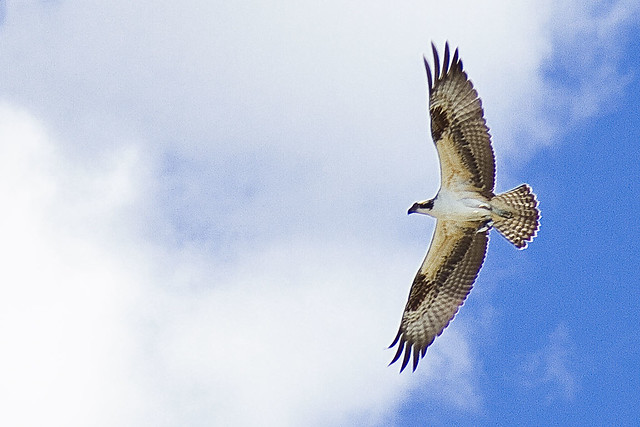
Hey, look, we saw an Osprey.
from wikipedia
The Osprey (Pandion haliaetus), sometimes known as the sea hawk, fish eagle or fish hawk, is a diurnal, fish-eating bird of prey. It is a large raptor, reaching more than 60 cm (24 in) in length and 180 cm (71 in) across the wings. It is brown on the upperparts and predominantly greyish on the head and underparts, with a black eye patch and wings.
The Osprey tolerates a wide variety of habitats, nesting in any location near a body of water providing an adequate food supply. It is found on all continents except Antarctica although in South America it occurs only as a non-breeding migrant.
As its other common name suggests, the Osprey’s diet consists almost exclusively of fish. It possesses specialised physical characteristics and exhibits unique behaviour to assist in hunting and catching prey. As a result of these unique characteristics, it has been given its own taxonomic genus, Pandion and family, Pandionidae. Four subspecies are usually recognised. Despite its propensity to nest near water, the Osprey is not a sea-eagle.

– photo by Mitch Waxman
Personal preference for motorized transport on the water aside, the folks from the North Brooklyn Boat House took great care of us and the afternoon went pretty well. Aside from the Osprey, we witnessed several other avian critters- including the Great Blue Heron which I’ve been chasing around the Creek all year. Unfortunately, the camera rig I carry isn’t purpose built for this sort of thing. The images in today’s post are pretty close to “actual pixels”, a 100% crop of a larger image, and look a bit rougher than my normal photos accordingly.
Bird photography, done properly, requires a powerful and expensive lens to get right.
from nytimes.com
Ospreys — large birds with dramatic brown and white markings and four-foot wing spans — occupy the top of the food chain, eating all kinds of fish, and are thus important indicators of the health of their environment. Along with other birds of prey, they were decimated by the widespread use of the pesticide DDT in the 1950s and ’60s, which led to a thinning of eggshells. Once DDT was banned in 1972, however, ospreys began a remarkable comeback, especially in the Northeast.
– photo by Mitch Waxman
Even those of us familiar with the Creeklands have been startled by the diversity of specie observed during these surveys. Your humble narrator, as an omnivore consumer of visual data, has little to no expertise in such matters- but those well versed with ornithological endeavors have been left slack jawed at the thriving ecosystem observed around the so called “dead sea” of the Newtown Creek.
from dec.ny.gov
The osprey is probably the longest studied and monitored raptor in New York. The New York State Department of Environmental Conservation (NYSDEC) monitors the status and productivity of the majority of New York’s population. Each year, both ground and aerial surveys are conducted by NYSDEC to document osprey nests in the state.
From 1980-1987, the NYSDEC released 36 young ospreys taken from nests on Long Island in an attempt to establish a third or “satellite” population in southwestern New York. During the seven years of the project, 30 young ospreys were released into the wild. This has lead to successful nests in the area, including nine nesting pairs in 1998. There are also close to a dozen breeding pairs in central New York and one in Southeastern New York in Sullivan County.
something disquieting

– photo by Mitch Waxman
Truly does one struggle against the darkness. A vast and slavering dog, it is checked and kept by sturdy chains with a stout collar, but it is always just a few steps behind. Were it let loose, the very pillars of the world would crumble and shake. Caged, a storm rages, with cyclonic fires whose winds carry exultations of lament- and all of hell follows in its wake. Better to get out than dwell upon existential angst, and visit that ribbon of urban neglect known as the fabled Newtown Creek, so off I went.

– photo by Mitch Waxman
Witness, if you will, the sort of life which inhabits this debased waterway. Once common, wading birds like this (presumptively) Great Blue Heron have returned to the shallows and sediment mounds in recent years. While photographing this nearly cryptic specie, your humble narrator was approached by a private security man. Girding for the usual lecture given by the “rent a cops” of the Creeklands, I was instead pleasantly surprised when the fellow engaged me in conversation.

– photo by Mitch Waxman
The guardsman claimed that he had witnessed a startling and unexpected mammalian apparition on more than one occasion at Maspeth Creek. The animal he described as inhabiting the shoreline cannot possibly be here, as it would defy all logic and sense. Dogs, cats, rats- even raccoons and coyotes have been reported with some frequency over the years. Their presence is logical, explainable, and entirely mundane. The security guard however, told me that he has seen a Beaver here. “A musk rat” I suggested? “No, a beaver”, he said.
morning bright

– photo by Mitch Waxman
For once, the smell at the corner of 49th street and 56th road/Laurel Hill Blvd./Rust street isn’t being caused by the infamously aromatic Maspeth Creek tributary of the larger Newtown Creek.
It’s the three headless chickens which are rotting away on the train tracks.

– photo by Mitch Waxman
These bird corpses turned up at this crossroad shortly after the last full moon, without their heads, and have been left to moulder away. My personal theory, which has been enhanced by a recent addition on the other track of dinnerware adorned with coins and candles, is that this is some sort of “Santeria” thing- however- there are other logical possibilities…

– photo by Mitch Waxman
It is entirely possible that this trio “made a break for it” from a nearby “pollo vivo” establishment, were walking down the tracks, and were struck by a passing train which decapitated them. Often has this, your Newtown Pentacle, adjured against walking these active and street grade trackways- proclaiming the existential and mortal dangers of such activity to urban explorers and other photographers. Here is tangible evidence of what might happen to you.

– photo by Mitch Waxman
There might also be some sort of bird mafia at work around West Maspeth, and these three chickens might have been left out in public view as a lesson to those who might snitch to the authorities about their illicit activities. “Dese boids mights beze Canaries takins a doit nap”. You don’t screw around with the Goodfeathers around Maspeth.

– photo by Mitch Waxman
Jocularity notwithstanding, it is likely a religious thing we are looking at here. The number three is significant, as is the positioning of the bodies at the crossroads of a north/south and east/west path. As stated in the past, your humble narrator is not overly familiar with the syncretic religions of the Caribbean or Central American cultures, but can spot “magick” at a hundred paces.
wonderful likewise

– photo by Mitch Waxman
Often spotted but seldom photographed, this is (apparently) a Great Blue Heron which has been evading my lens on the fabled Newtown Creek all year. Often too far away to claim a clear shot, or darting about the sky madly, I’ve been chasing this bird for a very long time.
from wikipedia
It is the largest North American heron and, among all extant herons, it is surpassed only by the Goliath Heron and the White-bellied Heron. It has head-to-tail length of 91–137 cm (36–54 in), a wingspan of 167–201 cm (66–79 in), a height of 115–138 cm (45–54 in), and a weight of 2.1–3.6 kg (4.6–7.9 lb). Notable features include slaty flight feathers, red-brown thighs, and a paired red-brown and black stripe up the flanks; the neck is rusty-gray, with black and white streaking down the front; the head is paler, with a nearly white face, and a pair of black plumes running from just above the eye to the back of the head. The feathers on the lower neck are long and plume-like; it also has plumes on the lower back at the start of the breeding season. The bill is dull yellowish, becoming orange briefly at the start of the breeding season, and the lower legs gray, also becoming orangey at the start of the breeding season. Immature birds are duller in color, with a dull blackish-gray crown, and the flank pattern only weakly defined; they have no plumes, and the bill is dull gray-yellow. Among standard measurements, the wing chord is 43–48 cm (17–19 in), the tail is 15.2–19 cm (6.0–7.5 in), the culmen is 13.1–15.2 cm (5.2–6.0 in) and the tarsus is 15.7–21 cm (6.2–8.3 in).

– photo by Mitch Waxman
Just in case you’re wondering, the weird background blur you see was produced entirely “in camera” rather than via the wonders of photoshop. Your humble photographer was onboard a boat headed in the opposite direction than that which the heron was traveling in, and I was horizontally tracking its flight while narrowly “zone focused”- producing the motion blur.
from harborestuary.org
Collectively known as the Harbor Herons, this suite of species includes: Great Egret (Ardea alba), Snowy Egret (Egretta thula), Glossy Ibis (Plegadis falcinellus, Little Blue Heron (Egretta caerulea), Cattle Egret (Bubulcus ibis), Tricolored Heron (Egretta tricolor), Green Heron (Butorides striatus), Black-crowned Night-Heron (Nycticorax nycticorax), and Yellow-crowned Night-Heron. Herons and their allies are not new to the NY metropolitan region (Bernick and Elbin, in preparation). Since enforcement of the Clean Water Act of 1972, the Harbor Herons have significantly colonized the NY/NJ Harbor Region. Water quality has improved (NJ Harbor Dischargers Group 2006), but quality wetland habitat has become scarce, degraded, and fragmented.. Birds of traditionally isolated habitats, secure from human disturbance, have adapted to human- altered landscapes (Parsons and Burger 1982). Some species thrive as ̳human subsidized‘ and learn to forage among landfills, loaf on the rip rap, and raise their young on islands nestled between barges and smoke stacks (Burger 1981a, Parsons 1987, 1990, Maccarone and Parsons 1994, Maccarone and Brzorad 1998).

– photo by Mitch Waxman
It’s always surprising to see an animal of this size and niche status here at the Newtown Creek, especially considering the comments of State officials offered to me a few months back describing the place as a “dead sea”. If you click through to the full set of images surrounding these four at my Flickr page, you’ll see the bird hunting amongst the waterline stones of a “rip rap” shoreline which is quite typical for the Brooklyn side of the Creek between Maspeth Creek and Meeker Avenue.
That’s right, this bird is flying around under the Kosciuszko Bridge through the heart of the Greenpoint and Blissville Oil Spills.
The great blue heron nests colonially and usually in tall living or dead trees. The nest is a large flat platform of twigs. Nests may be used for more than a year. The nest will become larger each year as the birds add more nesting material.
Breeding begins from early March through April and usually ends in July. Each pair lays 3 to 7 eggs and incubation lasts 25 to 29 days. Both parents incubate the eggs and care for the young. The young are usually ready to fly at 60 days after hatching and will leave the nest at between 64 to 90 days. They may then breed at two years of age.

– photo by Mitch Waxman
Consultation is appreciated by those who are familiar with the world of birding, for- as mentioned in the past- every time I try to identify a bird I end up with egg on my face. From references found online, I seem to be correct in my identification, but have often been wrong in the past.
What do you think, gentle readers? Use the comments link below if you can bless or damn my assessment of the specie.
from dec.ny.gov
An estuary is a place where salty water from the ocean mixes with fresh water from the land and creates a unique and special place for marine species to live, feed, and reproduce. Estuaries are transitional areas where the ocean tides bring in nutrients and animals, while freshwater runoff reduces the stress caused by saltwater and carries even more nutrients. Often, estuaries have a restriction across the mouth, like a barrier beach or sand bar which offers protection from the full force of ocean waves and storms. Estuaries are a critical part of the life cycle of many different species. They are the spawning and nursery area for thousands of animals who seek out the quieter waters of estuaries to provide a protected nursery for their offspring. Estuaries also provide a food rich resting area for migrating waterfowl like black ducks, harlequin ducks, scoters, and scaup. Wading birds like the great blue heron, great egret, and glossy ibis, and snowy egret nest in colonies on islands found in New York Harbor, Long Island Sound and Gardiners Bay. Raptors like osprey and northern harriers also nest and feed throughout the marine district of New York.
_______________________________________________________________
August 5th, 2012- Newtown Creek Alliance Walking Tour- The Insalubrious Valley- This Sunday

– photo by Mitch Waxman
Newtown Creek Alliance historian Mitch Waxman will be leading a walk through the industrial heartlands of New York City, exploring the insalubrious valley of the Newtown Creek.
The currently undefended border of Brooklyn and Queens, and the place where the Industrial Revolution actually happened, provides a dramatic and picturesque setting for this exploration. We’ll be visiting two movable bridges, the still standing remains of an early 19th century highway, and a forgotten tributary of the larger waterway. As we walk along the Newtown Creek and explore the “wrong side of the tracks” – you’ll hear tales of the early chemical industry, “Dead Animal and Night Soil Wharfs”, colonial era heretics and witches and the coming of the railroad. The tour concludes at the famed Clinton Diner in Maspeth- where scenes from the Martin Scorcese movie “Goodfellas” were shot.
Lunch at Clinton Diner is included with the ticket.
Details/special instructions.
Meetup at the corner of Grand Street and Morgan Avenue in Brooklyn at 11 a.m. on August 5, 2012. The L train serves a station at Bushwick Avenue and Grand Street, and the Q54 and Q59 bus lines stop nearby as well. Check MTA.info as ongoing weekend construction often causes delays and interruptions. Drivers, it would be wise to leave your vehicle in the vicinity of the Clinton Diner in Maspeth, Queens or near the start of the walk at Grand St. and Morgan Avenue (you can pick up the bus to Brooklyn nearby the Clinton Diner).
Be prepared: We’ll be encountering broken pavement, sometimes heavy truck traffic as we move through a virtual urban desert. Dress and pack appropriately for hiking, closed-toe shoes are highly recommended.
Clinton Diner Menu:
- Cheese burger deluxe
- Grilled chicken over garden salad
- Turkey BLT triple decker sandwich with fries
- Spaghetti with tomato sauce or butter
- Greek salad medium
- Greek Salad wrap with French fries
- Can of soda or 16oz bottle of Poland Spring
for August 5th tickets, click here for the Newtown Creek Alliance ticketing page


 The Newtown Pentacle