Posts Tagged ‘cemetery’
Greenwood Cemetery, October 28th, 2010
– photos by Mitch Waxman
A trip to Greenwood Cemetery in Brooklyn, seeking AND FINDING the spot where Robert Suydam lays with his bride. You have no idea how much it freaks a humble narrator out when the realization that H.P. Lovecraft’s stories aren’t altogether fictional sets in.
from dagonbytes.com – H.P. Lovecraft’s Horror at Red Hook
Robert Suydam sleeps beside his bride in Greenwood Cemetery. No funeral was held over the strangely released bones, and relatives are grateful for the swift oblivion which overtook the case as a whole. The scholar’s connexion with the Red Hook horrors, indeed, was never emblazoned by legal proof; since his death forestalled the inquiry he would otherwise have faced. His own end is not much mentioned, and the Suydams hope that posterity may recall him only as a gentle recluse who dabbled in harmless magic and folklore.
As for Red Hook – it is always the same. Suydam came and went; a terror gathered and faded; but the evil spirit of darkness and squalor broods on amongst the mongrels in the old brick houses, and prowling bands still parade on unknown errands past windows where lights and twisted faces unaccountably appear and disappear. Age-old horror is a hydra with a thousand heads, and the cults of darkness are rooted in blasphemies deeper than the well of Democritus, The soul of the beast is omnipresent and triumphant, and Red Hook’s legions of blear-eyed, pockmarked youths still chant and curse and howl as they file from abyss to abyss, none knows whence or whither, pushed on by blind laws of biology which they may never understand. As of old, more people enter Red Hook than leave it on the landward side, and there are already rumours of new canals running underground to certain centres of traffic in liquor and less mentionable things.
pale garden
 |
 |
 |
|||
| The first posting in this series was “City of Marble and Beryl“, from the 7th of April in 2010. | 1 | The second posting in this series was “effulgent valleys“, from the 7th of May in 2010. | 1 | The third posting in this series was “Strange Prayers “, from the 7th of June in 2010. | |
June 27, 2010

– photo by Mitch Waxman
There are more shots in the following series up at my flickr page, if you care to view a few more of them. On the 27th of June, the day after a full moon, I found a white candle in front of the seeming altar. A few other incidentals were scattered about.

– photo by Mitch Waxman
Two cigars were in place, both had been lit at some point, but not smoked.

– photo by Mitch Waxman
There was a curious residue in the grass, which looked to me like candle wax or some other sort of resinous substance.
July 26, 2010

– photo by Mitch Waxman
The 26th of July was a full moon, and I showed up the day of… just to see if any preparatory elements had appeared for the night’s ceremony. There were charred bits of grain and burned bone in the spot where the candle wax or resin was last month.

– photo by Mitch Waxman
The white candle was smashed, probably by groundskeepers during routine mowing. I actually ran into a groundskeeper on this trip, an amiable but suspicious man who volunteered “I see all kinds shit up around here, bottles- knives- whatnot” when I queried him about the spot.
August 26, 2010

– photo by Mitch Waxman
The full moon was on the 24th in August, and obligation kept me from St. Michael’s until the 26th. Luckily, whoever is working this ritual site is fastidious, whereas the groundskeeping crew were concentrating on other more… modern… sections of the cemetery.

– photo by Mitch Waxman
This time around, there was a pan of what looked like peanuts (a kind of nuts at least), beans, and some sort of grain floating about in a frothy bath of water. There was intense rain just the day before, and the water very well might have been a natural accumulation.

– photo by Mitch Waxman
This time around, the candle was green, and nestled close to the altar.

– photo by Mitch Waxman
Melted white wax was also apparent.

– photo by Mitch Waxman
Additionally, there was a broken egg in the grass.
September 23, 2010

– photo by Mitch Waxman
Almost disappointed that “my man” didn’t show up on the moon of September 23rd, a humble narrator instead decided to think about the history of the place and the set of assumptions I’ve been operating under in recording this macabre series of scenes.

– photo by Mitch Waxman
First, the things I know for certain. The frequency of events at this location have been dropping off, after a flurry of activity at the start of the holy year at Easter. The site is set up along the meridian points of a compass, and it seems to have been following a lunar calendar since the early summer.

– photo by Mitch Waxman
Meridian points.

– photo by Mitch Waxman
South

– photo by Mitch Waxman
East

– photo by Mitch Waxman
West

– photo by Mitch Waxman
North and approximately 100-150 yards away.

– photo by Mitch Waxman
North and approximately 175 yards away. Bingo.

– photo by Mitch Waxman
Clockwork.

– photo by Mitch Waxman
A plate of great price, north of the new site.

– photo by Mitch Waxman
An odd necklace just south.

– photo by Mitch Waxman
Can this be a medicine bag?

– photo by Mitch Waxman
Just East was this torn apart bird. My first instinct was that this was a kill by one of the many felines which patrol the cemetery,

– photo by Mitch Waxman
But this isn’t how cats kill, and the bird’s sundered remains were all present and the tell tale signs of carnivorous consumption were absent.
pounding on the rocks

– photo by Mitch Waxman
In accordance with habits cultivated, your humble narrator spent the lunar maximum visiting the vast garden cemetery complexes which adorn the Greater Newtown Pentacle during the waning of October. Surveys of these necropolitan complexes often reveal surprise and delight, and figure prominently in the rambling narrative which regular readers of this journal have grown accustomed to. Extant clues to the deep history of our communities can often be found carved into the nitre dripping monuments and grave markers which adorn and define the cemetery belt.
St. Michael’s Cemetery is found in Astoria, a charming victorian affair which has a surprisingly diverse roll call of interments.
from St. Michael’s
St. Michael’s Cemetery is situated in the borough of Queens in New York City. Established in 1852, St. Michael’s is one of the oldest religious, nonprofit cemeteries in the New York City metropolitan area which is open to people of all faiths. It is owned and operated by St. Michael’s Church, an Episcopal congregation located on the Upper West Side of Manhattan.
The original property for St. Michael’s Cemetery was purchased in 1852 by the Rev. Thomas McClure Peters and occupied seven acres. Over the years St. Michael’s gradually acquired additional land to its present size of approximately eighty-eight acres. Because it was Dr. Peters intention to provide a final dignified resting place for the poor who could not otherwise afford it, areas within the cemetery were assigned to other free churches and institutions of New York City. These areas are still held for the institutions they were assigned. As a service to its diverse constituency, St. Michael’s continues to this day provide burial space for individuals and families from all classes, religions and ethnicities. St. Michael’s reflects the demographic and historical trends of New York City. Walking through the older sections of the cemetery, you will find burials representing the 19th and early 20th century immigrants.

– photo by Mitch Waxman
Not so far from Newtown Pentacle HQ that it can’t be reasonably accessed, traversed, and returned from in a timely interval, my frequent strolls through the place are always intriguing. At 88 acres, it’s not the monster that the Olivette/Lutheran or Calvary/Zion objectives represent, and my proximity to it offers me the closest thing to true parkland in this section of Astoria (which does not have two enormous steel bridges spanning it). September and October of 2010, of course, were remarkable for the severe weather that swept across Queens (including an actual Tornado), and the toll taken on the ancient arboretum cemeteries during those days of angry skies is apparent to even casual notice.
from wikipedia
Cemetery authorities face a number of tensions in regard to the management of cemeteries.
One issue relates to cost. Traditionally a single payment is made at the time of burial, but the cemetery authority incurs expenses in cemetery maintenance over many decades. Many cemetery authorities find that their accumulated funds are not sufficient for the costs of long-term maintenance. This shortfall in funds for maintenance results in three main options: charge much higher prices for new burials, obtain some other kind of public subsidy, or neglect maintenance. For cemeteries without space for new burials, the options are even more limited. Public attitudes towards subsidies are highly variable. People with family buried in local cemeteries are usually quite concerned about neglect of cemetery maintenance and will usually argue in favour of public subsidy of local cemetery maintenance, whereas other people without connection to the area often argue that public spending comes from their taxes and therefore should be spent on the living in the district rather than being “wasted” on the dead.
Another issue relates to limited amount of land. In many larger towns and cities, the older cemeteries which were initially considered to be large often run out of space for new burials and there is no vacant adjacent land available to extend the cemetery or even land in the same general area to create new cemeteries. New cemeteries are generally established on the periphery of towns and cities, where large tracts of land are still available. However, people often wish to be buried in the same cemetery as other relatives, creating pressure to find more space in existing cemeteries and are not interested in being buried in new cemeteries with which there is no sense of connection to their family.
A third issue is the maintenance of monuments and headstones, which are generally the responsibility of families, but often become neglected over time. Decay and damage through vandalism or cemetery maintenance practices can render monuments and headstones either unsafe or at least unsightly. On the other hand, some families do not forget the grave but constantly visit, leaving behind flowers, plants, and other decorative items that create their own maintenance problem.

– photo by Mitch Waxman
The Osage Oranges, Maclura Pomifera if you might, have dropped onto the ground in accordance with their nature. A detailed posting on St. Michael’s atavist vegetation was offered nearly one year ago- “Things you learn from being a Ghoul“- which discusses the fruit, my discovery and identification of it, and various empirical theories about the enigmatic and quite prehistoric cultivar. I am keen on acquisition of an Osage wood staff, and fashioning a camera monopod from it, but “one must never remove anything from a graveyard” is one of the commandments etched into my iron road and I shall obey my maxim.
from wikipedia
The trees acquired the name bois d’arc, or “bow-wood”, from early French settlers who observed the wood being used for war clubs and bow-making by Native Americans. Meriwether Lewis was told that the people of the Osage Nation “esteem the wood of this tree for the making of their bows, that they travel many hundred miles in quest of it.” Many modern bowyers assert the wood of the Osage-orange is superior even to English Yew for this purpose, though this opinion is by no means unanimous. The trees are also known as “bodark” or “bodarc” trees, most likely originating from a corruption of “bois d’arc.” The Comanches also used this wood for their bows. It was popular with them because it is strong, flexible and durable. This tree was common along river bottoms of the Comanchería.

– photo by Mitch Waxman
A shame, for the Osage Oranges are actually highly prized as natural pesticides, and sell at a per piece price at major online auction sites. Offered at 6 for $5, such a harvest might find a hearty welcome here at NPHQ, which is underfunded and is a place where belts continue to be tightened and teabags used thrice.
Any reading this missive interested in alleviating the wicked poverty which approaches a humble narrator might wish to purchase the first Newtown Pentacle book– Newtown Creek, for the Vulgarly Curious– which can ordered by clicking this link. It’s available as a nicely bound paper book which will be shipped out to your choice of address, or in a downloadable ebook format (which is HIGHLY discounted)– I would add.
from wikipedia
Osage-orange, Horse-apple, Bois D’Arc, or Bodark (Maclura pomifera) is a small deciduous tree or large shrub, typically growing to 8–15 metres (26–49 ft) tall. It is dioeceous, with male and female flowers on different plants. The fruit, a multiple fruit, is roughly spherical, but bumpy, and 7–15 cm in diameter, and it is filled with a sticky white latex sap. In fall, its color turns a bright yellow-green and it has a faint odor similar to that of oranges.
Maclura is closely related to the genus Cudrania, and hybrids between the two genera have been produced. In fact, some botanists recognize a more broadly defined Maclura that includes species previously included in Cudrania and other genera of Moraceae.
Osajin and Pomiferin are flavonoid pigments present in the wood and fruit, comprising about 10% of the fruit’s dry weight. The plant also contains the flavonol morin.
Recent research suggests that elemol, another component extractable from the fruit, shows promise as a mosquito repellent with similar activity to DEET in contact and residual repellency.

– photo by Mitch Waxman
But… Mitch… -you ask- St. Michael’s? Wasn’t that the place with the weird ritual site that you posted about in “City of Marble and Beryl“, “Effulgent Valleys“, and “Strange Prayers” a few months back? What the heck, man, you just kind of dropped the whole thing after promising to keep us posted on it?
Actually, I’ve been making it a point to be in St. Michael’s after the full moon since then, but you’re just going to have to wait till tomorrow for all that…
from wikipedia
Magical rituals are the precisely defined actions (including speech) used to work magic. Bronisław Malinowski describes ritual language as possessing a high “coefficient of weirdness,” by which he means that the language used in ritual is archaic and out of the ordinary, which helps foster the proper mindset to believe in the ritual. S. J. Tambiah notes, however, that even if the power of the ritual is said to reside in the words, “the words only become effective if uttered in a very special context of other action.” These other actions typically consist of gestures, possibly performed with special objects at a particular place or time. Object, location, and performer may require purification beforehand. This caveat draws a parallel to the felicity conditions J. L. Austin requires of performative utterances. By “performativity” Austin means that the ritual act itself achieves the stated goal. For example, a wedding ceremony can be understood as a ritual, and only by properly performing the ritual does the marriage occur. Émile Durkheim stresses the importance of rituals as a tool to achieve “collective effervescence,” which serves to help unify society. Psychologists, on the other hand, describe rituals in comparison to obsessive-compulsive rituals, noting that attentional focus falls on the lower level representation of simple gestures. This results in goal demotion, as the ritual places more emphasis on performing the ritual just right than on the connection between the ritual and the goal. However, the purpose of ritual is to act as a focus and the effect will vary depending on the individual.
The Man Who Could Dodge Bullets

– photo by Mitch Waxman
One of the great traditions in the history of fraternal ethnic organizations is the art of storytelling, and a tale often told by those who “belong” is about the Castellamarese War.
It’s an old New York story, full of gun play, revenge, and intrigue. Powerful black sedans with a cadre of Tommy Gun toting racketeers speeding around the streets, innocents getting mowed down, and a cast of legendary characters like Lucky Luciano, Albert Anastasia, Vito Genovese, Meyer Lansky, and Salvatore Maranzano exacting vengeance on their enemies. From the bloody heap, the “commission” was born, a board of directors which governed the various crime families. Nothing new here, you know this story- it was sort of fictionalized in the Godfather movies, and there are any number of books, TV Shows, and movies which describe it in some detail.
At least, they claim to- I don’t believe everything I’m told, and just ask anyone- there’s no such thing as the Mafia.
Anyway, this is First Calvary Cemetery, and pictured above is the grave of Joe Masseria.
from wikipedia
The Five Families are the five major Italian-American Mafia crime families which have dominated organized crime in New York City since the 1930s. Prior to this was the Maranzano Family and the Masseria Family which ended up fighting each other during a period known as the Castellammarese War. The Five Families, under the suggestion of Lucky Luciano and Meyer Lansky, were responsible for the establishment of The Commission, a council which demarcated territory between the previously warring factions and governs American Mafia activities in the United States. The Five Families in New York remain as the powerhouse of the Italian Mafia in the US.

– photo by Mitch Waxman
What I can affirm is that there were fresh flowers inside the Masseria tomb, on an October morning in 2010.
from wikipedia
On April 15, 1931, Joe Masseria was assassinated at one of his favorite restaurants, Nuova Villa Tammaro in Coney Island, Gangland legend has it that Masseria dined with Charles “Lucky” Luciano before his death. While they played cards, Luciano excused himself to the bathroom, when Benjamin “Bugsy” Siegel, Vito Genovese, Albert Anastasia and Joe Adonis rushed in and shot Masseria to death, his four bodyguards having mysteriously disappeared. The New York Daily News reported that the boss died “with the ace of spades, the death card, clutched in a bejeweled paw.”
However, both the New York Times and the New York Herald Tribune paint a different picture. Neither newspaper mentions Luciano being present, although Luciano was brought in for questioning by the police. The Herald Tribune reported that Masseria arrived at the restaurant in his armored steel car in the company of three other men shortly before 3pm. Scarpato’s mother-in-law, Anna Tammaro, waited while they played cards. According to two eyewitnesses, two well-dressed young men drove up and parked their car at the curb. They strolled leisurely into the place, and the shooting began immediately. Some 20 shots were fired. Then the two gunmen came out without any visible signs of haste, entered their automobile and drove away. Masseria was hit with four bullets in the back and one in the back of the head, identified as .32 and .38 caliber, and in an alley next to the restaurant, police recovered two revolvers.

Joe Masseria, photo courtesy Wikipedia
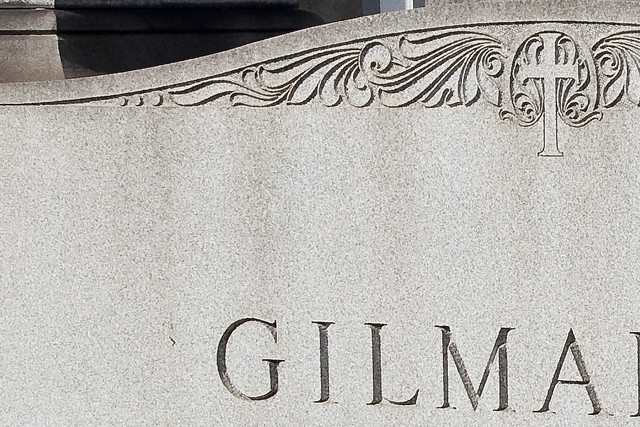
a world yet inchoate
– photo by Mitch Waxman
Unutterable, the name which must not be mentioned torments a humble narrator. Sure knowledge that the mortal remains of its bearer lie amongst the emerald devastations of First Calvary Cemetery renders a psychological state in my feeble mind which can only be compared to the plight of Tantalus.
from wikipedia
In mythology, Tantalus became one of the inhabitants of Tartarus, the deepest portion of the Underworld, reserved for the punishment of evildoers; there Odysseus saw him. The association of Tantalus with the underworld is underscored by the names of his mother Plouto (“riches”, as in gold and other mineral wealth), and grandmother, Chthonia (“earth”).
Tantalus was initially known for having been welcomed to Zeus’ table in Olympus, like Ixion. There he is said to have misbehaved and stolen ambrosia and nectar to bring it back to his people, and revealed the secrets of the gods.
Most famously, Tantalus offered up his son, Pelops, as sacrifice. He cut Pelops up, boiled him, and served him up in a banquet for the gods. The gods became aware of the gruesome nature of the menu, so they didn’t touch the offering; only Demeter, distraught by the loss of her daughter, Persephone, absentmindedly ate part of the boy’s shoulder. Clotho, one of the three Fates, ordered by Zeus, brought the boy to life again (she collected the parts of the body and boiled them in a sacred cauldron), rebuilding his shoulder with one wrought of ivory made by Hephaestus and presented by Demeter. The revived Pelops grew to be an extraordinarily handsome youth, so much so that the god Poseidon fell in love with him and abducted him to Mount Olympus. Later, Zeus threw Pelops out of Olympus due to his anger at Tantalus. The Greeks of classical times claimed to be horrified by Tantalus’s doings; cannibalism, human sacrifice and infanticide were atrocities and taboo.
Tantalus’s punishment for his act, now a proverbial term for temptation without satisfaction (the source of the word “tantalise”), was to stand in a pool of water beneath a fruit tree with low branches. Whenever he reached for the fruit, the branches raised his intended meal from his grasp. Whenever he bent down to get a drink, the water receded before he could get any. Over his head towers a threatening stone, like that of Sisyphus.

– photo by Mitch Waxman
Reduced to performing a visual inventory of the multitudes here, I have been walking a search pattern composed of interlocking octagons, trampling across the loam of grief and loss. Several times, disturbing subsidence and vegetation choked ruts have nearly caused severe injury, as I’m not watching out for where I am but rather for where I’m going.
This is a video game technique (shoot where they’re going to be, not where they are), one which can be hazardous to follow in the existential realities which surround that extinction of joy known as the Newtown Creek.
from wikipedia
Søren Kierkegaard and Friedrich Nietzsche were two of the first philosophers considered fundamental to the existentialist movement, though neither used the term “existentialism” and it is unclear whether they would have supported the existentialism of the 20th century. They focused on subjective human experience rather than the objective truths of mathematics and science, which they believed were too detached or observational to truly get at the human experience. Like Pascal, they were interested in people’s quiet struggle with the apparent meaninglessness of life and the use of diversion to escape from boredom. Unlike Pascal, Kierkegaard and Nietzsche also considered the role of making free choices, particularly regarding fundamental values and beliefs, and how such choices change the nature and identity of the chooser. Kierkegaard’s knight of faith and Nietzsche’s Übermensch are exemplars who define the nature of their own existence. These idealized individuals invent their own values and create the very terms under which they excel. Kierkegaard and Nietzsche were also precursors to other intellectual movements, including postmodernism, nihilism, and various strands of psychology.

– photo by Mitch Waxman
Several of the less moribund residents of Calvary were observed, feeding upon the grassy hillside. When queried as to the location of my well hidden foil, they answered with aloof indifference, and the seeming leader of their flock began to extrude bodily waste. They were not startled by my presence, here in this lonely place, but most animals know that I mean them no harm and hardly react to me.
They did seem to be a bit startled when I said the name which is not to be uttered out loud.
from wikipedia
Anthropomorphism is the attribution of human characteristics to animals or non-living things, phenomena, material states and objects or abstract concepts. Examples include animals and plants and forces of nature such as winds, rain or the sun depicted as creatures with human motivations, and/or the abilities to reason and converse. The term derives from the combination of the Greek ἄνθρωπος (ánthrōpos), “human” and μορφή (morphē), “shape” or “form”.It is strongly associated with art and storytelling where it has ancient roots. Most cultures possess a long-standing fable tradition with anthropomorphised animals as characters that can stand as commonly recognised types of human behavior.

– photo by Mitch Waxman
Enigma, my search for the elusive final resting place of the Massachusetts based dealer in far eastern art has taken me to distant and forgotten sections of the City of Greater New York. I have consulted with asiatic mystics in Manhattan’s Chinatown, visited a heretical Kabbalist in Brooklyn, and have drawn the ire of certain extant allies of the dead man whose influence and reach extend into the federal government and modernity itself who wish me to remain silent on the subject.
from wikipedia
Willy Gilligan is a fictional character played by Bob Denver on the 1960s TV show Gilligan’s Island and its many sequels.
Gilligan wears a trademark red shirt, pale trousers and white navy cap. He was the first mate on the S. S. Minnow when, during a storm, he threw an anchor overboard without the line attached, which left the boat shipwrecked on an “uncharted” desert island with all aboard. Gilligan is considered a cultural icon and is frequently seen as the show’s breakout character.
In the U.S. Navy, Gilligan served with The Skipper, and saved the Skipper from being struck and killed by a runaway depth charge. After retirement, The Skipper used his savings to buy the Minnow, and hired his “little buddy” Gilligan as first mate.
Gilligan’s past and family were not mentioned during the series, except for his older brother, from whom he swiped his ever-present red shirt, a sister whose best friend was broken up by her boyfriend, and an uncle who was apparently illiterate. He once mentioned he was born in Pennsylvania, but no city was specified. He would sometimes mention his childhood friends, Skinny Mulligan and Fatso Flannigan, possibly implying that he came from a predominately Irish-American neighborhood.

– photo by Mitch Waxman
This place is called Calvary. The word is derived from several imperial dialects, which translate the aramaic Gûlgaltâ into Greek as Golgotha or alternately as “place of [the] skull” – Κρανίου Τόπος (Kraniou Topos) and then into Latin as Calvariae Locus. However you say it, it indicates the site of the crucifixion of the Christ outside of Jerusalem, and the anticlimax of the New Testament.
Modernity translates the term as Calvary. First Calvary, of course, is the St. Calixtus section of the great necropolis.
from wikipedia
Pope Saint Callixtus I or Callistus I was pope from about 217 to about 222, during the reigns of the Roman Emperors Elagabalus and Alexander Severus. He was martyred for his Christian faith and is a saint of the Roman Catholic Church.His contemporary and enemy, the author of Philosophumena (probably Hippolytus of Rome), relates that Callixtus, as a young slave, was put in charge of collected funds by his master Carpophorus, funds which were given as alms by other Christians for the care of widows and orphans; Callixtus lost the funds and fled from Rome, but was caught near Portus. According to the tale, Callixtus jumped overboard to avoid capture but was rescued and taken back to his master. He was released at the request of the creditors, who hoped he might be able to recover some of the money, but was rearrested for fighting in a synagogue when he tried to borrow money or collect debts from some Jews. Philosophumena claims that, denounced as a Christian, Callixtus was sentenced to work in the mines of Sardinia. He was released with other Christians at the request of Hyacinthus, a eunuch presbyter, who represented Marcia, the favourite mistress of Emperor Commodus. At this time his health was so weakened that his fellow Christians sent him to Antium to recuperate and he was given a pension by Pope Victor I. Callixtus was the deacon to whom Pope Zephyrinus entrusted the burial chambers along the Appian Way. In the third century, nine Bishops of Rome were interred in the Catacomb of Callixtus, now also called the Capella dei Papi. These catacombs were rediscovered by the archaeologist Giovanni Battista de Rossi in 1849.


 The Newtown Pentacle