Archive for the ‘Long Island City’ Category
a world yet inchoate
– photo by Mitch Waxman
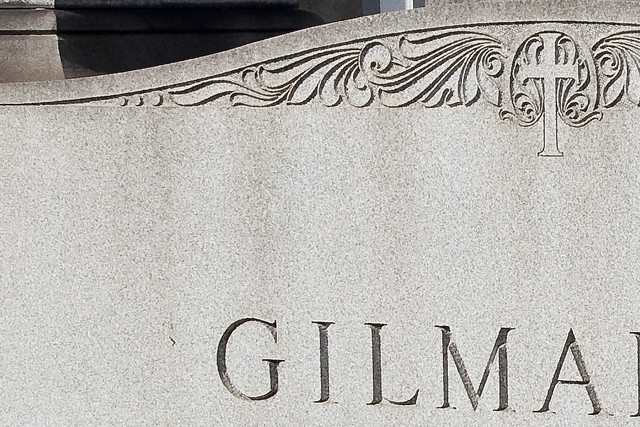
Unutterable, the name which must not be mentioned torments a humble narrator. Sure knowledge that the mortal remains of its bearer lie amongst the emerald devastations of First Calvary Cemetery renders a psychological state in my feeble mind which can only be compared to the plight of Tantalus.
from wikipedia
In mythology, Tantalus became one of the inhabitants of Tartarus, the deepest portion of the Underworld, reserved for the punishment of evildoers; there Odysseus saw him. The association of Tantalus with the underworld is underscored by the names of his mother Plouto (“riches”, as in gold and other mineral wealth), and grandmother, Chthonia (“earth”).
Tantalus was initially known for having been welcomed to Zeus’ table in Olympus, like Ixion. There he is said to have misbehaved and stolen ambrosia and nectar to bring it back to his people, and revealed the secrets of the gods.
Most famously, Tantalus offered up his son, Pelops, as sacrifice. He cut Pelops up, boiled him, and served him up in a banquet for the gods. The gods became aware of the gruesome nature of the menu, so they didn’t touch the offering; only Demeter, distraught by the loss of her daughter, Persephone, absentmindedly ate part of the boy’s shoulder. Clotho, one of the three Fates, ordered by Zeus, brought the boy to life again (she collected the parts of the body and boiled them in a sacred cauldron), rebuilding his shoulder with one wrought of ivory made by Hephaestus and presented by Demeter. The revived Pelops grew to be an extraordinarily handsome youth, so much so that the god Poseidon fell in love with him and abducted him to Mount Olympus. Later, Zeus threw Pelops out of Olympus due to his anger at Tantalus. The Greeks of classical times claimed to be horrified by Tantalus’s doings; cannibalism, human sacrifice and infanticide were atrocities and taboo.
Tantalus’s punishment for his act, now a proverbial term for temptation without satisfaction (the source of the word “tantalise”), was to stand in a pool of water beneath a fruit tree with low branches. Whenever he reached for the fruit, the branches raised his intended meal from his grasp. Whenever he bent down to get a drink, the water receded before he could get any. Over his head towers a threatening stone, like that of Sisyphus.

– photo by Mitch Waxman
Reduced to performing a visual inventory of the multitudes here, I have been walking a search pattern composed of interlocking octagons, trampling across the loam of grief and loss. Several times, disturbing subsidence and vegetation choked ruts have nearly caused severe injury, as I’m not watching out for where I am but rather for where I’m going.
This is a video game technique (shoot where they’re going to be, not where they are), one which can be hazardous to follow in the existential realities which surround that extinction of joy known as the Newtown Creek.
from wikipedia
Søren Kierkegaard and Friedrich Nietzsche were two of the first philosophers considered fundamental to the existentialist movement, though neither used the term “existentialism” and it is unclear whether they would have supported the existentialism of the 20th century. They focused on subjective human experience rather than the objective truths of mathematics and science, which they believed were too detached or observational to truly get at the human experience. Like Pascal, they were interested in people’s quiet struggle with the apparent meaninglessness of life and the use of diversion to escape from boredom. Unlike Pascal, Kierkegaard and Nietzsche also considered the role of making free choices, particularly regarding fundamental values and beliefs, and how such choices change the nature and identity of the chooser. Kierkegaard’s knight of faith and Nietzsche’s Übermensch are exemplars who define the nature of their own existence. These idealized individuals invent their own values and create the very terms under which they excel. Kierkegaard and Nietzsche were also precursors to other intellectual movements, including postmodernism, nihilism, and various strands of psychology.

– photo by Mitch Waxman
Several of the less moribund residents of Calvary were observed, feeding upon the grassy hillside. When queried as to the location of my well hidden foil, they answered with aloof indifference, and the seeming leader of their flock began to extrude bodily waste. They were not startled by my presence, here in this lonely place, but most animals know that I mean them no harm and hardly react to me.
They did seem to be a bit startled when I said the name which is not to be uttered out loud.
from wikipedia
Anthropomorphism is the attribution of human characteristics to animals or non-living things, phenomena, material states and objects or abstract concepts. Examples include animals and plants and forces of nature such as winds, rain or the sun depicted as creatures with human motivations, and/or the abilities to reason and converse. The term derives from the combination of the Greek ἄνθρωπος (ánthrōpos), “human” and μορφή (morphē), “shape” or “form”.It is strongly associated with art and storytelling where it has ancient roots. Most cultures possess a long-standing fable tradition with anthropomorphised animals as characters that can stand as commonly recognised types of human behavior.

– photo by Mitch Waxman
Enigma, my search for the elusive final resting place of the Massachusetts based dealer in far eastern art has taken me to distant and forgotten sections of the City of Greater New York. I have consulted with asiatic mystics in Manhattan’s Chinatown, visited a heretical Kabbalist in Brooklyn, and have drawn the ire of certain extant allies of the dead man whose influence and reach extend into the federal government and modernity itself who wish me to remain silent on the subject.
from wikipedia
Willy Gilligan is a fictional character played by Bob Denver on the 1960s TV show Gilligan’s Island and its many sequels.
Gilligan wears a trademark red shirt, pale trousers and white navy cap. He was the first mate on the S. S. Minnow when, during a storm, he threw an anchor overboard without the line attached, which left the boat shipwrecked on an “uncharted” desert island with all aboard. Gilligan is considered a cultural icon and is frequently seen as the show’s breakout character.
In the U.S. Navy, Gilligan served with The Skipper, and saved the Skipper from being struck and killed by a runaway depth charge. After retirement, The Skipper used his savings to buy the Minnow, and hired his “little buddy” Gilligan as first mate.
Gilligan’s past and family were not mentioned during the series, except for his older brother, from whom he swiped his ever-present red shirt, a sister whose best friend was broken up by her boyfriend, and an uncle who was apparently illiterate. He once mentioned he was born in Pennsylvania, but no city was specified. He would sometimes mention his childhood friends, Skinny Mulligan and Fatso Flannigan, possibly implying that he came from a predominately Irish-American neighborhood.

– photo by Mitch Waxman
This place is called Calvary. The word is derived from several imperial dialects, which translate the aramaic Gûlgaltâ into Greek as Golgotha or alternately as “place of [the] skull” – Κρανίου Τόπος (Kraniou Topos) and then into Latin as Calvariae Locus. However you say it, it indicates the site of the crucifixion of the Christ outside of Jerusalem, and the anticlimax of the New Testament.
Modernity translates the term as Calvary. First Calvary, of course, is the St. Calixtus section of the great necropolis.
from wikipedia
Pope Saint Callixtus I or Callistus I was pope from about 217 to about 222, during the reigns of the Roman Emperors Elagabalus and Alexander Severus. He was martyred for his Christian faith and is a saint of the Roman Catholic Church.His contemporary and enemy, the author of Philosophumena (probably Hippolytus of Rome), relates that Callixtus, as a young slave, was put in charge of collected funds by his master Carpophorus, funds which were given as alms by other Christians for the care of widows and orphans; Callixtus lost the funds and fled from Rome, but was caught near Portus. According to the tale, Callixtus jumped overboard to avoid capture but was rescued and taken back to his master. He was released at the request of the creditors, who hoped he might be able to recover some of the money, but was rearrested for fighting in a synagogue when he tried to borrow money or collect debts from some Jews. Philosophumena claims that, denounced as a Christian, Callixtus was sentenced to work in the mines of Sardinia. He was released with other Christians at the request of Hyacinthus, a eunuch presbyter, who represented Marcia, the favourite mistress of Emperor Commodus. At this time his health was so weakened that his fellow Christians sent him to Antium to recuperate and he was given a pension by Pope Victor I. Callixtus was the deacon to whom Pope Zephyrinus entrusted the burial chambers along the Appian Way. In the third century, nine Bishops of Rome were interred in the Catacomb of Callixtus, now also called the Capella dei Papi. These catacombs were rediscovered by the archaeologist Giovanni Battista de Rossi in 1849.
keenest eagerness

– photo by Mitch Waxman
Oh yes, lords and ladies of Newtown, we have arrived once more at the apex of the autumnal season of spooky here in the Newtown Pentacle. Consequently, attention must once more turn to the cemetery belt, and the fossilized heart of our community known as Calvary Cemetery.
Cherubim, which are actually the most terrifying and thickly fundamentalist of all the angelic race, were representationally presented to your humble narrator at Calvary Cemetery (First Calvary of course) recently. Adorning a recent interment’s monument, this enigmatic statuary wore curious adornment.
from wikipedia
The term cherubim is cognate with the Assyrian term karabu, Akkadian term kuribu, and Babylonian term karabu; the Assyrian term means ‘great, mighty’, but the Akkadian and Babylonian cognates mean ‘propitious, blessed’. In some regions the Assyro-Babylonian term came to refer in particular to spirits which served the gods, in particular to the shedu (human-headed winged bulls); the Assyrians sometimes referred to these as kirubu, a term grammatically related to karabu. They were originally a version of the shedu, protective deities sometimes found as pairs of colossal statues either side of objects to be protected, such as doorways. However, although the shedu were popular in Mesopotamia, archaeological remains from the Levant suggest that they were quite rare in the immediate vicinity of the Israelites. The related Lammasu (human-headed winged lions — to which the sphinx is similar in appearance), on the other hand, were the most popular winged-creature in Phoenician art, and so most scholars suspect that Cherubim were originally a form of Lammasu. In particular, in a scene reminiscent of Ezekiel’s dream, the Megiddo Ivories — ivory carvings found at Megiddo (which became a major Israelite city) — depict an unknown king being carried on his throne by hybrid winged-creatures.

– photo by Mitch Waxman
Spending as much time in graveyards as I do, puzzles often present themselves to me in the shape of ordinary things, but I’ve learned to be cautious as well as curious. “Too smart for my own good” a humble narrator must often remind himself that “a cigar is sometimes just a cigar” and not read significances into odd costume trinkets which fetter the necks of plastic angels.
Note: Brrr… Angels have always scared the shit out of me. Like Demons, they are automatons enforcing a status quo, unreasonable soldiers in a war which has nothing to do with me. They’re also not “cute”. What we refer to as Cherubs are actually “Putto“.
from wikipedia
Angels of the First Sphere work as heavenly guardians of God’s throne.
Seraphim
- Seraphim (singular “Seraph”), mentioned in Isaiah 6:1-7 [6], serve as the caretakers of God’s throne and continuously shout praises: “Holy, holy, holy is the Lord of hosts. All the earth is filled with His Glory.” The name Seraphim means “the burning ones.
- “The Seraphim have six wings; two covering their faces, two covering their bodies (“feet”), and two with which they fly.
- Two of which are named Seraphiel and Metatron, according to some books. Seraphiel is said to have the head of an eagle. It is said that such a bright light emanates from them that nothing, not even other angelic beings, can look upon them. It is also said that there are four of them surrounding God’s throne, where they burn eternally from love and zeal for God.
Cherubim
- They have four faces: one of each a man, an ox, a lion, and an eagle. The ox-face is considered the “true face”, as later on in Ezekiel the ox’s face is called a cherub’s face (Chapter 10). They have four conjoined wings covered with eyes, and they have ox’s feet.
- Cherubim are considered the elect beings for the purpose of protection. Cherubim guard the way to the tree of life in the Garden of Eden (Genesis 3:24) and the throne of God (Ezekiel 28:14-16).
- Modern English usage has blurred the distinction between Cherubim and Putti. Putto (pl. Putti) refers to the winged human baby/toddler-like beings traditionally used in figurative art.
- The Cherubim are mentioned in Genesis 3:24 [7]; Exodus 25:17-22; 2 Chronicles 3:7-14; Ezekiel 10:12–14 [9], 28:14-16[8]; 1 Kings 6:23–28 [10]; and Revelation 4:6-8.
Thrones or Ophanim
- The Thrones (Gr. thronos) or Elders, also known as the Erelim or Ophanim, are a class of celestial beings mentioned by Paul of Tarsus in Colossians 1:16 (New Testament). They are living symbols of God’s justice and authority, and have as one of their symbols the throne. These high celestial beings appear to be mentioned again in Revelation 11:16.
- The Ophanim (Heb. ofanim: Wheels, also known as Thrones, from the vision of Daniel 7:9) are unusual looking even compared to the other celestial beings; They appear as a beryl-coloured wheel-within-a-wheel, their rims covered with hundreds of eyes.
- They are closely connected with the Cherubim: “When they moved, the others moved; when they stopped, the others stopped; and when they rose from the earth, the wheels rose along with them; for the spirit of the living creatures [Cherubim] was in the wheels.” Ezekiel 10:17 NRSV.

Superfund me

– photo by Mitch Waxman
LO, BEHOLD, and TREMBLE… for the Newtown Pentacle is back in session…
Over several of the last few years, agents and officials of the Federal Government have conducted a strange and secretive investigation into certain conditions within and around the ancient New York waterway called the Newtown Creek.
The public first learned of it in 2009, when a vast series of public meetings and pronouncements were offered by agents of the Environmental Protection Agency which confirmed and introduced the news that the ancient corridor of industry and forbidden history called the Newtown Creek was being considered for inclusion on the Federal Superfund list.
This listing would bestow extraordinary powers over the waterway, and ultimate authority, to the Federal Government. Effectively, the 3.8 mile long border of Brooklyn and Queens with its enormous number of crumbling bulkheads, worm eaten piers, and supposedly empty warehouses are now the responsibility of the G-Men. Uninquiring souls let the occurrence pass as one of the major developments in a spasmodic war on environmental pollution and the toxic legacy of the industrial revolution.
from epa.gov
Release date: 09/27/2010
Contact Information: John Senn (212) 637-3667, senn.john@epa.gov
(New York, N.Y.) The U.S. Environmental Protection Agency (EPA) today added Newtown Creek in New York City to its Superfund National Priorities List of the country’s most hazardous waste sites. The final listing will allow EPA to conduct a comprehensive evaluation of the creek to determine what remedial actions need to be implemented. Various sediment and surface water samples have been taken along the creek. Potentially harmful contaminants such as pesticides, metals and polychlorinated biphenyls (PCBs) have been detected in Newtown Creek along with volatile organic compounds (VOCs). VOCs are potentially harmful contaminants that can easily evaporate into the air.
“The toxic pollution in Newtown Creek is more than a century in the making. EPA is placing Newtown Creek on the Superfund list to ensure the creek receives a thorough cleanup,” said EPA Regional Administrator Judith Enck. “Newtown Creek is a key urban waterway, which provides recreational and economic resources to many communities. Throughout the investigation and cleanup, we will work closely with the communities along the creek to achieve a revitalization of this heavily-contaminated urban waterway.”
EPA proposed Newtown Creek be added to the Superfund NPL list in September 2009. EPA received and considered public comments on its proposal before making its final decision.

– photo by Mitch Waxman
On Monday the 27th of September in this year of 2010, the EPA announced the Superfund listing of Newtown Creek would be moving forward.
Interesting coincidences abound for this date:
The first Ford Model T rolled off the assembly line in 1908 in Detroit, Einstein had his E=MC2 formula published for the first time in 1905, Crete fell to the Turks in 1669, and the Jesuits were granted a Papal charter in 1540. The Warren Commission released its report on the assassination of President John F. Kennedy in 1964, the Ottoman Siege of Vienna began in 1529, the Taliban captured Kabul in 1996, and Thomas Nast was born in 1840.
It is also 110 years and 19 days after this report appeared in the NY Times, and some 122 years and 11 days since this report appeared in the same publication.
also from epa.gov
EPA had previously responded to requests by members of Congress to evaluate specific sites along Newtown Creek by publishing a September 2007 report that contained a review of past and ongoing work being conducted to address the Greenpoint oil spill as well as recommendations regarding future work to assist with the spill response. The state of New York referred the site to EPA due to the complex nature of the contamination in the creek. EPA’s Superfund study and cleanup are expected to focus on the sediments in the creek and on identifying and addressing sources of pollution that continue to contribute to the contamination.
Newtown Creek is part of the core area of the New York-New Jersey Harbor Estuary, which has been designated by EPA as an “estuary of national significance.” Despite the ongoing pollution problems, some residents currently use the creek for recreational purposes such as kayaking, while others eat the fish they catch from the creek.

– photo by Mitch Waxman
According to statements rendered by Government representatives, the actual work on the remediation project is not scheduled to begin in earnest for several months (if not years), as a period of further study and evaluation of the endemic situation before the final formulation of their plans to ferret out and eradicate all that there is which may be buried down there.
The government plans on removing hundreds of metric tons of the sediment which lines the bottom of the Newtown Creek. Privileged to have been included on the conference call during which EPA announced their decision to the third estate, your humble narrator queried EPA personnel as to the methodology of its removal (terrestrial industries versus maritime) and whether they had determined a probable destination for the contaminant laced material they intend to dredge out.
Both questions seemed to have been unexpected, and they reported that answers will be readily uncovered when the final action plan is unveiled sometime in the near future.
additionally, from epa.gov
In the mid -1800s, the area adjacent to the 3.8-mile Newtown Creek was one of the busiest hubs of industrial activity in New York City. More than 50 industrial facilities were located along its banks, including oil refineries, petrochemical plants, fertilizer and glue factories, sawmills, and lumber and coal yards. The creek was crowded with commercial vessels, including large boats bringing in raw materials and fuel and taking out oil, chemicals and metals. In addition to the industrial pollution that resulted from all of this activity, the city began dumping raw sewage directly into the water in 1856. During World War II, the creek was one of the busiest ports in the nation. Some factories and facilities still operate along it, and various adjacent contaminated sites have contributed to its contamination. Today, as a result of its industrial history, including countless spills, Newtown Creek is badly polluted.
In the early 1990s, New York State declared that Newtown Creek was not meeting water quality standards under the Clean Water Act. Since then, a number of government-sponsored cleanups of the creek have taken place. The New York City Department of Environmental Protection has sampled sediment and surface water at a number of locations along the creek since 1980. In early 2009, EPA sampled the sediment throughout the length of Newtown Creek and its tributaries. EPA will review existing information about Newtown Creek to develop a plan for further investigation.

– photo by Mitch Waxman
The professional press also on the call seemed more interested in the Gowanus Canal, how the Mayor felt about the announcement, and grew fixated on the cost of the cleanup effort. EPA clearly spelt out that its budgeting process has barely begun, and they can neither supply a final cost estimate or time table at this early date. This is actually the logical course, as the secrets of the Newtown Creek must- as always- bubble up and reveal themselves to those who stare deeply into its occluded depths.
And, in their own time, all the poisons in the mud will leach out.
and also, from epa.gov
EPA conducted an Expanded Site Investigation (ESI) of Newtown Creek in 2009 as part of the Hazard Ranking System scoring process for NPL listing under Superfund. Based on the ESI, which was focused on Newtown Creek itself and not its tributaries, EPA concluded that metals, volatile organic compounds, and semi-volatile organic compounds (including polycyclic aromatic hydrocarbons and polychlorinated biphenyls) were present in Creek sediments at elevated concentrations. The variety and distribution of the detected contaminants suggests that they originated from a variety of sources. Previous environmental investigations of Newtown Creek, or specific portions of the Creek, also disclosed that sediments in Newtown Creek are contaminated by a wide variety of hazardous substances. Environmental investigations of upland parcels adjacent to or nearby the Creek have disclosed contamination of those parcels by hazardous substances similar to hazardous substances found in sediments in Newtown Creek.
harmless stupidity

– photo by Mitch Waxman
Nothing dire today, lords and ladies of Newtown. Neither prophecy nor portent will be presented this day, and sarcastic ironies have the day off. Just a few shots from a walk in the beginning of august, down part of what I consider “the beat”- an area I regularly observe and keep tabs on. Such self appointed territories are really just places that I move through often, mostly on my way to somewhere else. In this case- the somewhere else was Dutch Kills, and I was walking down Skillman Avenue by the Sunnyside Railyard from Astoria.

– photo by Mitch Waxman
Illegal dumping, when done with a certain “bon vivant”, is an art form here in the Newtown Pentacle. There is the casually tossed McDonalds bag thrown from a speeding car, the cast off carton or scrap of plastic sheeting, little bits of string. These are the work of mere amateurs. The good stuff is often found at the edges of neighborhoods, dumped by working guys, who have to stack things properly purely because that’s all that muscle memory will allow them to do.

– photo by Mitch Waxman
These were all shot along the same street, within a few blocks of each other. The rotting tomatoes drew me in, but when I saw these paint cans so perfectly posed and lit- a sudden realization that this was “going to be “one of those days”, here, in the Newtown Pentacle.

– photo by Mitch Waxman
Down the block, the rococo considerations and delicate chiaroscuro which went into this collection of cast off drapery and garments calls to mind certain lavish moments of Flemish art history dating back to the apex of the Dutch decadence. Can these disparate dumpings be the work of only one hand?

– photo by Mitch Waxman
When this exhausted can of Olive Oil was set so gingerly in the vernal verge, did the executor of the deed realize the resplendent triumph of it’s placement?


