Archive for the ‘DUKBO’ Category
acquired archaism
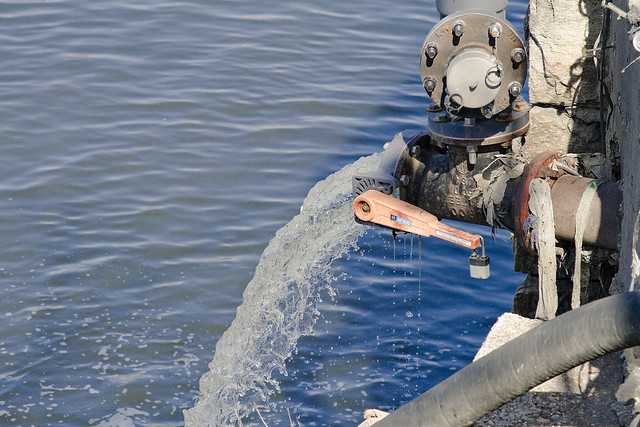
– photo by Mitch Waxman
The internationalists and potentates whose congress calls itself the so called United Nations would have you observe “World Water Day” on this date. This cabal of diplomats, intriguers, and acolytes desire you to imagine and contemplate the assertion that at least a sixth of the living human infestation has no reliable access to pure water. From their headquarters in the Shining City of Manhattan- designed by the gallic crypto fascist LeCorbusier- their edict rings out, and we all must take heed of “Agenda 21”. Pictured in the shot above is the largest source of fresh water flowing into the Newtown Creek, some two to three miles from their base.
from wikipedia
World Water Day has been observed on 22 March since 1993 when the United Nations General Assembly declared 22 March as World Day for Water.
This day was first formally proposed in Agenda 21 of the 1992 United Nations Conference on Environment and Development (UNCED) in Rio de Janeiro, Brazil. Observance began in 1993 and has grown significantly ever since; for the general public to show support, it is encouraged for the public to not use their taps throughout the whole day, the day has become a popular Facebook trend.
The UN and its member nations devote this day to implementing UN recommendations and promoting concrete activities within their countries regarding the world’s water resources. Each year, one of various UN agencies involved in water issues takes the lead in promoting and coordinating international activities for World Water Day. Since its inception in 2003, UN-Water has been responsible for selecting the theme, messages and lead UN agency for the World Day for Water.

– photo by Mitch Waxman
Burgeoning, the human infestation continues to intensify upon the skin of the planet, threatening to overwhelm the fragile biosphere with a monoculture of killer apes. Sophistry and numerical manipulation make the case for Agenda 21 to play out, attempting to induce guilt and damned realization into the mainly western minds of the post industrial world, those who are well fed and watered. Your humble narrator plans on not flushing the toilet today, much to the chagrin of both “Our Lady of the Pentacle” and our little dog Zuzu. Additionally, none of us will eat or drink. A fast day will be observed for the suffering multitudes.
from unwater.org
There are 7 billion people to feed on the planet today and another 2 billion are expected to join by 2050. Statistics say that each of us drinks from 2 to 4 litres of water every day, however most of the water we ‘drink’ is embedded in the food we eat: producing 1 kilo of beef for example consumes 15,000 litres of water while 1 kilo of wheat ’drinks up’ 1,500 litres.
When a billion people in the world already live in chronic hunger and water resources are under pressure we cannot pretend the problem is ‘elsewhere’.

– photo by Mitch Waxman
The unfortunate truth, globally, is that much of the fresh water which the human infestation might consume is fouled by sewage. Whether it is agricultural lagoons of animal waste, municipal infrastructure or lack thereof, or outright industrial effluent- this is the true issue which Agenda 21 ignores. If you want to save the multitudes of the developing world- eliminate malaria and a host of other pathogens almost overnight- build sanitary sewers. Of course, we haven’t managed to swing this in New York City let alone sub Saharan Africa, so you might as well despair.
from nycgovparks.org
Social Hour: World Water Day, Thursday, March 22, 2012. 6:30 P.M.–8:00 P.M.
Celebrate World Water Day by learning more about the Croton Reservoir and Central Park’s historic role in supplying New York City with fresh drinking water. Co-presented with the NYC Department of Environmental Protection.
This event is recommended for adults (18 and over) only.
Provided at no cost to you! No advance registration. More details, including rain plans and directions, are on the Central Park Conservancy calendar.
shocking moan

– photo by Mitch Waxman
Amongst the shocking grotesques of Brooklyn’s DUKBO, or Down Under the Kosciuzscko Bridge Onramp, one such as myself finds confirmation of all those things I wish I didn’t know. Following my nose, as it were, an odiferous cloud drew me to this particular corner seeking to investigate whether some cauldron of ichor might have been overturned or to discover whatever it might be that could produce such a miasmic stink.

– photo by Mitch Waxman
A pile of industrial site runoff ran lugubriously toward the sewers, obeying gravity. The effluent carried with it some odd and somewhat fibrous substance. The smell intensified as I neared the fence line, and the runoff was clearly organic, shimmering beneath the thermonuclear eye of god itself with a greasy iridescence.

– photo by Mitch Waxman
Close inspection revealed the presence of avian feathers in the runoff, betraying the origin of the brownish gray liquid. This was clearly chicken feces, running in a rivulet toward the oil stained streets which adjoin and parallel the gargantuan thoroughfare known as the Brooklyn Queens Expressway that is carried by the pendulous Kosciuzscko Bridge.

– photo by Mitch Waxman
The variegated texture exhibited by the pavement is coincidental, and due to the habits of local concrete contractors who cleanse their machinery on the street, dumping what washes from their trucks wherever it may fall. There are large sections of this neighborhood whose sidewalks and streets exhibit the appearance of volcanic flow, where tons of waste concrete cured while seeking those self same drains which a feather laden stream of poultry feces was attempting to enter on this day.
Choked with cement, the sewers become the center of a fetid lagoon, but such sights are common in DUKBO.

– photo by Mitch Waxman
The operation which plies its trade at this corner is a poultry merchant, one which trucks the hapless birds to this warehouse. My understanding is that they are involved in the wholesale section of the business, supplying neighborhood Halal abattoirs, “Pollo Vivo” dealers, and certain Asiatic Restaurants which are scattered around Brooklyn and Queens with fresh stock. Unlike the native born’s habit of purchasing a familiar and largely inoffensive carcass- a plucked, butchered, and often steamed or bleached cadaver- on sale at chain supermarkets and “traditional” Yankee butcher shops- many newer immigrants in the area prefer to inspect their food animals while still alive.
Prosaic, the practice is regarded as barbaric by area wags who prefer to maintain some insulation from the bloody business of supplying industrial quantities of animal protein to an ever growing human infestation.

– photo by Mitch Waxman
Urban sophisticates tend to overlook these sort of details, forgetting that every “organic” or “factory farm” chicken may not have been a healthy bird before it was roughly extinguished. Recent immigration from the queer foreign courts of Asia and other more southernly latitudes has carried with it a certain skepticism about such matters. Inspection of eye, beak, and feet is paramount in certain circles- especially when it concerns the food laid out for children.
They have no trust in the USDA, it’s curious marks and unintelligible grading system for food quality- all of which were codified by bureaucrats.

– photo by Mitch Waxman
Of course, what stretch of the imagination could conjure for them the image of that prize bird stacked in crates ten deep just 3 blocks from the Newtown Creek, imprisoned in those exhaust clouds which bubble and froth invisibly down from the BQE? Could they understand that this is a neighborhood of scrap yards, garbage depots, oil tank farms, and former home to oil refineries, bone boilers, and chemical refineries? Can anyone imagine what these birds are breathing in?
A question often asked of your humble narrator these days concerns the status of those who might engage in subsistence fishing on the Newtown Creek, and the consequences of consuming such a catch.

– photo by Mitch Waxman
The question which is offered as an answer in itself is “do you have any idea how much of the food you buy as “organic” moves through the shadowed warehouses and poison atmospherics of the Newtown Creek?” and “what makes you think you’re any different than those fishermen”?
Seldom do I receive an answer, for when faced with considering such realities about their own food supply, even the clear eyed and prosaic will reveal themselves to be chicken shit.
habitual secretiveness

– photo by Mitch Waxman
DUKBO, on the Brooklyn side of that parable laden river of urban neglect called the Newtown Creek, is an industrial zone which most New Yorkers wouldn’t want to acknowledge ownership of. The particular stretch which is focused on today is not long for this world, as the replacement of the Kosciuszko Bridge will obliterate these streets from the map when construction begins in 2014.

– photo by Mitch Waxman
Owing to the impermanence of this area, and the certain doom it will enjoy, your humble narrator has been making it a point to divert my path into its shadowed corridors and record what might exist here. As mentioned to many, one of the goals of this- your Newtown Pentacle- is to leave behind some sort of record of what the Creeklands were before the massive changes wrought by Superfund, the Kosciuszko Bridge replacement, and all the other mega projects planned for the area begin.
It is, in my opinion, important to have the realities of this place reported on by a source not affiliated with commercial or governmental interests, and to allow some future researcher to witness the inheritances of the past as they were at the start of this century. The paucity of documentation about Newtown Creek at the start of the 20th century are a major impediment to studying its history.
That’s my “elevator speech”, by the way.

– photo by Mitch Waxman
Of course, the specific focus of today’s posting has little to do with history, rather it’s the utter immolation suffered by this vehicle (refer to a Newtown Pentacle post of January 4, 2012 titled “Old School 2” for context). It seems that DUKBO continues to be a great place to ditch an unwanted vehicle, and the complete destruction of this automobile speaks to a considerable interval between ignition and the intervention of the NYFD.

– photo by Mitch Waxman
That’s an assumption, by the way, based on the absolute destruction of the vehicle interior. The absence of doors, engine hood, and other usual amenities found on modern cars (not present lying in some heap on the sidewalk) suggests that the vehicle was probably stripped, abandoned, and torched- but that is another assumption. Both of these are wide interpretations born of having grown up in South Brooklyn during the 1980’s, a time when an epidemic of car thefts and vehicular arson ran rampant and vehicles in similar condition would regularly be encountered along the Belt Parkway and its service roads.
Kids in my neighborhood became very familiar with the difference between “an accident” and an “on purpose”.

– photo by Mitch Waxman
Can’t blame NYFD for not getting to it in time for anything else than extinguishing the husk, as this is the middle of nowhere and residential housing is quite distant in any direction. At night, this a ghost town, with shuttered businesses and truck lots, and little or no traffic. Who can guess what transpires here, in the dead of night amidst the darkness of DUKBO?

– photo by Mitch Waxman
If you’re missing what looks like a mid size SUV or perhaps a minivan, this corner in DUKBO seems to be a great place to start looking for what remains of it.
verdant valley

– photo by Mitch Waxman
While preparing the slideshow which was recently presented at the Ridgewood Democratic Club, which is one of two updated versions of the thing (differing lengths), I’ve been churning the content waters deeply. One of the little collections of images which I pulled together was called “Kosciuszko Bridge”.

– photo by Mitch Waxman
For awhile now, special attention has been paid to this decaying structure, due to those plans held by State employees and agencies to replace it with a modern bridge designed to overcome many of the flaws exhibited by the 1939 era “Meeker Avenue Bridge” – which was later renamed as the Kosciuszko Bridge in 1940.

– photo by Mitch Waxman
It’s a lumbering and brutish design, inelegant, undistinguished, and strictly utilitarian. Which sort of makes sense given its construction during the latter half of the Great Depression.

– photo by Mitch Waxman
Literally, and figuratively, this is Down Under the Kosciuszko Bridge Onramp, DUKBO. This is on the Brooklyn side, incidentally.

– photo by Mitch Waxman
This post isn’t intended to carry any deep insight or reveal some historical truth. To confess, I’m showboating a bit today, and featuring something that won’t be here too much longer.

– photo by Mitch Waxman
One thing you will notice in these shots is the horrific amount of corrosion which the bridge displays. This is, of course, why the State plans on replacing it in a few years time.

– photo by Mitch Waxman
Naked, the bridge shows the lines of force which it’s engineered around, and for a structure that carries something like 200,000 vehicle crossings a day- that’s a lot of force. The Kosciuszko Bridge trusses are just so damned ugly about it, unlike the graceful curvilinear shaping of the Hellgate or Bayonne arches.

– photo by Mitch Waxman
The reason it’s so high, around 150 feet of clearance at low water, is that ocean going ships used to come all the way back here. Not sail, although that was a consideration in 1939, but the smokestacks of ocean liners were what it was flung into the sky to accommodate.

– photo by Mitch Waxman
Sliding over to the Queens bank, where the piles are driven into compacted mud and sand instead of bedrock, the legs of the bridge straddle the former home of Phelps Dodge. The neighborhood around these parts formed the border between the villages of Berlin and Blissville.

– photo by Mitch Waxman
From what I’ve been told, the former Phelps Dodge site is in private hands, but parts of it will house the new bridge which will replace the 1939 model. From the planning statements I’ve read, the new Kosciuszko Bridge won’t be quite so high.

– photo by Mitch Waxman
It seems that the needs of the trucking industry will be acknowledged in the design of the onramps, which will not present quite as steep a grade to the angle of their approaches. I’ll miss the scale of the current bridge, I fear.

– photo by Mitch Waxman
Like the nearby Megalith at Court Square in Long Island City, the Kosciuszko Bridge provides a geographical frame of reference for miles around. The only other bridges of sufficient scale to provide such service span the East River or provide connection to… Staten Island…

– photo by Mitch Waxman
The Kosciuszko Bridge, on the Queens side, follows the shallow valley between Laurel and Berlin Hills, both of which are graded down shadows of their former selves. There must have been dense woods here once, bisected by a shallow stream that fed into the Newtown Creek.

– photo by Mitch Waxman
The Maespetche Indians who lived here were mostly wiped out by Smallpox by the 1700’s, and by that time the Dutch had already established a few homesteads here. When the English arrived, often overland from Eastern Long Island, they mocked the degenerate Dutch with their old fashioned customs and bizarre beliefs.

– photo by Mitch Waxman
The English had plenty of controversies in this area themselves, with the bizarre adherents of the “Friends” cult showing up time and again from New England via the Long Island Sound, the presence of accused witches, and all sorts of odd religious experimentation by commoner and courtier alike going on.

– photo by Mitch Waxman
All that sort of nonsense ended in the early 1800’s, when the post revolutionary industrial boom got started here in DUKBO. General Chemical came in the 1840’s, and joined with the distilleries and fat renderers who had been here for years to participate in what we would call “the industrial revolution”.
Things really kicked into gear when the Long Island Railroad laid down track in the 1860’s and 70’s.

– photo by Mitch Waxman
Of course, in 1848, Dagger John Hughes buried Esther Ennis and consecrated Calvary Cemetery as the official burying ground of the Roman Catholic Church. Construction of the cemetery on Laurel Hill was largely finished by the late 1850’s, which removed approximately 360 million tons of topsoil from the hill and installed an enormous drainage system within it to dry the swampy land.

– photo by Mitch Waxman
In the 1890’s, there were still homes and saloons, schools and churches here. Calvary grew by land acquisition and donation, and industrial pursuits rendered the whole area around these parts a smoky, soot stained mess.
And then, there was the smell.

– photo by Mitch Waxman
The smell is legendary in the historical record, it seems that it’s all that the riders of the Long Island Railroad could talk about. Health Department records preserve complaints presented by residents of Manhattan who opined that the stink actually extended all the way to Turtle Bay (approximately 34th street).

– photo by Mitch Waxman
All that is gone now, although on humid days after heavy rains, the stink is still more than just a memory.
As are the chemicals in the ground and water which all that industrial growth left behind for the future.

– photo by Mitch Waxman
Definitely. I’m going to miss the big K when it’s gone, wonder what interesting things will be found in DUKBO when the shovels hit the dirt.
After all- who can guess, all there is, that might be buried down there?
demoniac alteration

– photo by Mitch Waxman
Fiery concatenation and syncopated horror haunt my steps whenever visting DUKBO.
Sarcastic and conceit laden, the label I give to this place is nevertheless apropos, for it is very much Down Under the Kosciuszko Bridge Onramp.
Welcome to DUKBO on the Brooklyn side of Newtown Creek- beneath the thrice damned Kosciuszko Bridge. It’s the sort of place which might best be described as either an “M1 industrial zone” or as a “literal hell on earth”.
Either way, it has been like this around here since around the Civil War.
from Harper’s weekly, Volume 38, 1894- courtesy Google books
AN INSALUBRIOUS VALLEY.
The city of Brooklyn, having purged itself of the malodorous political institutions that were so long a blot upon its southern border, might well turn its attention to some nuisances of a more literally malodorous kind that flourish along its northern border, a detailed description of which will be found in another column of the Weekly’. It appears that in an early day the valley of Newtown Creek, which is the boundary between Kings and Queens counties, was selected by various manufacturers as an eligible site for the location of factories. The location was then far on the outskirts of the city, and no doubt quite unobjectionable. A great variety of institutions were set iu operation here, including those useful and necessary but unpleasant factories whose purpose it is to transform the animal refuse of a city into merchantable produce. The gases generated by these factories had an odor almost unendurable, as any one can testify who was accustomed to travel on the Long Island Railroad from the Thirty-fourth Street ferry in years gone by.

– photo by Mitch Waxman
Elucidating on J. Rosenberg’s “model tallow rendering factory”, or the infamous Night Soil Dock of Conrad Wissell, or the extant nightmares of the Kings County Chemical works would be superfluous if describing the 19th century industries located on either side of the Newtown Creek as “dirty”.
They were good guys, who at least attempted to reform their industrial practices. It was the smaller operators in the distillery and fat rendering trades who were truly vile, at least according to the historical record.
Describing the transport and storage of rotting butchers scrap, animal waste, rotten eggs, and dead horses- all of which sat stinking in the summer sun while waiting to be weighed by the rendering plant bosses- or envisioning the attendant plagues of insect and rodentine vermin which followed these redolent piles (whose numbers were checked only by the acid rain and those environmental calamities which were caused by unregulated petroleum and chemical interests) from points all over the cities of Brooklyn, Long Island City, and New York would surely be a form of macabre and historical pornography.
However, that’s what the businesses here used as raw materials.
from The Sanitary Era, Volume 1, 1887, courtesy google books
Newtown Creek — No city in the Union has so foul a pest hole at its boundaries as Brooklyn. The sludge acid discharged from the works of the Standard Oil Company seems to possess an ominous potency for stirring up the sewage in the creek, and its black and thickened current seethes with bubbles of sulphuretted hydrogen. The shores, banked with this acid and with nameless filth, empoison the atmosphere at low water, while every rising tide seems to free a new supply of sludge. When to the oil industry is added the manufacture of fertilizers and a plenitude of pigs along Queens County shore, the sources of supply for a great nuisance or a grievous plague are discernible to all but official eyes and nostrils. Newtown Creek should be filled up, though not with sludge acid, and the nuisance makers removed to a distance. Our, Health Commissioner is authority for the statement that “You might as well try to fight the devil as the Standard Oil Company.”

– photo by Mitch Waxman
There have always been jobs here, the sort of jobs which those who cannot find employment in conventional occupations covet. Topical observation of the area reveals the modern presence of scrap yards, abattoirs, warehouse and trucking concerns, and light manufacturing facilities. Of course, the gargantuan National Grid property is nearby, but that’s a horse of a different shade.
There are a LOT of scrap yards in this little slice, this angle between the neighborhoods of Greenpoint and East Williamsburg, which creates a concentrating point for heavy metals. Of course, this is still preferable to the lagoons of sludge acid and animal waste which distinguished the place 100 years ago.
from The City record, Volume 6, Part 4, 1878, courtesy google books
Newtown Creek for many years has been a source of nuisance. It receives the contents of several of the large sewers ot Brooklyn. From above Penny Bridge to the East river are factories of various descriptions, oil refiners, fat inciters, gut cleaners, distilleries, car stables, super-phosphate factories, ammonia works, varnish works, and last, but not least, immense piles of stable manure, stored for future shipment, the refuse from all of which runs into the creek, and polluting the waters to such an extent as to have killed all the fish.
At low tide acres of land, covered to the depth of several inches with fat, the refuse of the oil-stills, are exposed. At high tide the oily portion of this refuse floats on the surface of the water, still giving forth its characteristic tarry odor. To add to this, many oil works, when the storage tanks are full, run their waste alkali and even their sludge-acid into the creek; in the latter case giving rise to the well known sludge smell.

– photo by Mitch Waxman
Faceless, those who labor here find themselves stained with “the colour”, an iridescent sheen permeating the Creeklands that no known detergent can easily remove. These laborers are exposed to precipitate from the endless truck and automotive traffic passing by on the highway and bridge above, a dusty particulate rises from tire shattered roadways, and the very air they breathe is a poisonous fume of industrial chemicals and spent fuel. Live poultry concerns, some quite large, maintain depots here as well. The birds, like the workers, quickly display the colour.
This colour is like no earthly hue, rather it is like something from out of space, and a stark contrast to the Shining City of the western horizon just a few miles away.
from nytimes.com
THE NUISANCES MUST GO; Gov. Flower Says that Newtown Creek Must Be Purified. FIVE FACTORIES ORDERED CLOSED Private Business Not to be Allowed to Jeopardize the Health of Brooklyn and Long Island City


 The Newtown Pentacle