Posts Tagged ‘Brooklyn’
weird and alluring
Relics and Ruins in today’s post.

– photo by Mitch Waxman
The presence of the new DEP Sludge Boat Hunts Point, docked at the Brooklyn Navy Yard, was what got me out of Queens on a cold January day. The MTA introducing mid journey service alterations are what made me late. The weather was tolerable, but January and the East River are highly incompatible to one such as myself. A desire, for a strong cup of coffee, prevailed.
Vouched for, my escort allowed me a moment or two to observe that which lies within the ancient borders of this former ship yard, which once launched Battleships (thanks again R).
One thing that caught my attention, while waving the camera about, was a derelict rail transfer bridge.
from wikipedia
The United States Navy Yard, New York, also known as the Brooklyn Navy Yard and the New York Naval Shipyard (NYNSY), is a shipyard located in Brooklyn, New York, 1.7 miles (2.7 km) northeast of the Battery on the East River in Wallabout Basin, a semicircular bend of the river across from Corlear’s Hook in Manhattan. It was bounded by Navy Street, Flushing and Kent Avenues, and at the height of its production of warships for the United States Navy, it covered over 200 acres (0.81 km2).

– photo by Mitch Waxman
Often referred to as a gantry crane by most, the correct terminology (I’m told) is actually “a transfer bridge.” The rail guys don’t enjoy the rest of us using “Gantry,” so don’t go there.
The body of water which the Navy Yard is embedded into is Wallabout Bay, named for the vestigial Wallabout Creek. The specific section of the bay that this rusted relic abuts is actually Wallabout Channel, a canalized industrial channel with a CSO discharge on one side and the East River on the other. Supposedly, this canal roughly follows the path of a long ago Wallabout Creek, as it was known by a fellow named Joris back in the 1630’s.
from wikipedia
The Wallabout became the first spot on Long Island settled by Europeans when several families of French-speaking Walloons opted to purchase land there in the early 1630s, having arrived in New Netherland in the previous decade from Holland. Settlement of the area began in the mid-1630s when Joris Jansen Rapelje exchanged trade goods with the Canarsee Indians for some 335 acres (1.36 km2) of land at Wallabout Bay, but Rapelje, like other early Wallabout settlers, waited at least a decade before relocating full-time to the area, until conflicts with the tribes had been resolved.

– photo by Mitch Waxman
An impossible amount of effort, spent over multiple centuries, has been expended in this particular place and clustering in every corner are relics and reminders of the past. There isn’t a rusty screw on this property that’s not important, from the industrial archaeological point of view. In many ways, that’s the issue in ancient locations like the Brooklyn Navy Yard. Is this a museum, or an industrial complex?
The Navy Yard is actually both, but there are plenty of old skeletons lying about the place, like this rusted out 20th century rail transfer bridge.
from 1900’s “Annual Report of the War Department, Report of the Chief of Engineers Part 2“, courtesy google books
IMPROVEMENT OF WALLABOUT CHANNEL NEW YORK
Wallabout Channel consists of a waterway extending in a half circle around the inside of the island known as Cob Dock, which lies in Wallabout Bay, off the United States Navy Yard at Brooklyn, N.Y. and is a part of the United States property. Wallabout Channel connects with Wallabout Bay east and west of Cob Dock.
Wallabout Bay is a slight indentation of the East River at a point about opposite the navy yard.
Wallabout Channel is separated into two parts, called the east and west channels, by a stone causeway which connects the mainland with Cob Dock. The east channel which is about 2,000 feet long and from 250 to 350 feet wide and had available depths of from 15 to 20 feet along the line of deepest water, diminishing to 5 feet along the sides is the part now embraced in the approved project for improvement.
The mean range of tide is 4 5 feet

– photo by Mitch Waxman
The Brooklyn Navy Yard once hosted a small nation’s worth of rail infrastructure, connecting with the Brooklyn Eastern District Terminal and the Williamsburg waterfront tracks. Most of the internal Navy Yard rail, as far as I can tell, seemed to be about transporting materials from shore to ship and from place to place within the facility. I am no expert on this subject, so take a grain of salt with that statement, and click on the “trainweb.org” link below for the whole story.
Cryptically referred to as “Structure 713,” this railroad float bridge actually received a look, around a decade ago, from my pal John McCluskey – check his 2006 shots out here.
from trainweb.org
This float bridge was modified somewhat in 1983, when the overhead supported dual spans seen in the image above were replaced with a pontoon supported float bridge. Actually, there were two pontoon supported float bridges installed.
The first pontoon supported float bridge was a through plate girder type, believed to have been floated over from the Delaware, Lackawanna & Western Railroad’s Hoboken, NJ facility. However, this float bridge developed an as yet undetermined conflict before being use, necessitating a replacement. It is understood, that the float bridge or pontoon was too wide to between the gantry foundations, but this is unconfirmed.
The second pontoon supported float bridge, a pony truss would be installed instead, and the plate girder would be abandoned next to the bulkhead to the left. This pony truss float bridge was taken from the Brooklyn Eastern District Terminal’s North 9th Street location, following the closure of that facility in August 1983.
This float bridge was last used in 1995 by New York Cross Harbor RR for a subway car rebuilder that located to the Navy Yard.

– photo by Mitch Waxman
Once upon a time, there were many locations on the western coast of Long Island wherein a rail car might find a spot to board a boat and head to points north and west, but 20-30 years ago the “powers that be” decided to turn their backs on industry, and expensive equipment like this float bridge was just allowed to rust away. Rail tracks were wrenched away from the ground to make way for residential real estate development, an action played out all across the greater harbor, and not just in Brooklyn and Queens.
from nyc.gov
At the time of its construction, the Brooklyn Navy Yard was one of six such yards commissioned by the United States Navy. In its initial years, the Brooklyn Navy Yard functioned primarily as a depot for supplies, but during the early 19th century, it served as the Navy’s primary shipbuilding and repair facility. Shipbuilding activity increased during the War of 1812, when the yard fitted out more than 100 naval vessels. During the mid-19th century, the growth of shipping and port activities in New York City further enhanced the Navy Yard’s development. During the Civil War, the Navy Yard served as a key depot for the distribution of stores and supplies to the Union fleet, and the Naval Laboratory prepared most of the medicines used by the Union Navy.

– photo by Mitch Waxman
As mentioned in prior posts, your humble narrator attends a lot of meetings and presentations which are offered by the modern day “powers that be.” Other than their enormous affection for bicycling and an epic level of hubris, one of the topics often bemoaned by the planners and pundits is the inability suffered by modern industry to move their goods about by any means other than automotive truck. Serious investment in rail, and particularly rail to barge transportation, is something they’ll often mention as a curative for the congested nature of area roads.
from dlib.nyu.edu
The origins of the Brooklyn Navy Yard, officially known as the New York Naval Shipyard, date back to 1801, when the United States Navy acquired what had previously been a small, privately owned shipyard in order to construct naval vessels. Historic vessels constructed or launched at the Navy Yard include Robert Fulton’s steam frigate, the Fulton, the USS Arizona, the USS Missouri, and the USS Antietam. During the Civil War, the Navy Yard employed about 6,000 people. By 1938, it provided jobs for over 10,000 people. When the Defense Department ceased shipbuilding activities at the Navy Yard in 1966, 88 vessels had been manufactured at the facility. It had also grown to encompass 291 acres with 270 major buildings, 24 miles of railroad tracks, 23,278 linear feet of crane tracks, 18 miles of paved roads, 16,495 feet of berthing space, 9 piers, 6 dry docks, and 22 shops housing 98 different trades. In 1967, the Brooklyn Navy Yard was acquired by the City of New York and was converted for private commercial use.

– photo by Mitch Waxman
In modern times, the Navy Yard is run by a private entity, one which has embraced a somewhat asymmetrical viewpoint on how to best utilize the property. Movie production houses like Steiner Studios, warehousing businesses like BH Photo, even an urban farm operation are found within the gates of the Navy Yard. The friend who got me in through the security check has a small venture here, one which I’m going to describe in a future post at this – your Newtown Pentacle.
from panynj.gov
The Federal Highway Administration (FHWA) and the Port Authority of New York and New Jersey (PANYNJ) are preparing a NEPA Tier I Environmental Impact Statement (EIS) to evaluate alternatives to improve the movement of goods in the region by enhancing the transportation of freight across New York Harbor. Given the existing freight movement system, forecasted increases in demand translate directly into increased truck traffic in the freight distribution network. The region’s ability to serve its markets is increasingly threatened by its heavy reliance on trucking goods over an ageing and congested roadway network, while non-highway freight modes, particularly rail and waterborne, remain underdeveloped and underutilized.
“follow” me on Twitter- @newtownpentacle
vital organs
A boid at da Navy Yerd.

– photo by Mitch Waxman
Happy Martin Luther King Jr. birthday day, a holiday officially observed on the third Monday in January, in compliance with the Federal “Uniform Monday Holiday Act.” King’s actual birthday was January 15th. As it’s a holiday, a single shot is offered today, captured at the Brooklyn Navy Yard just last week. This is looking southwest, towards lower Manhattan, depicting a seagull photo bombing my shot. I’ve got a couple of other interesting scenes which were observed at the Navy Yard, which will be examined at this – your Newtown Pentacle – in the coming week.
“follow” me on Twitter- @newtownpentacle
scented waters
Solitude and the solemnity of my beloved Creek.

– photo by Mitch Waxman
It has officially been three weeks since I laid eyes upon Newtown Creek and it is official, I miss her. The sense of desolating isolation, the abandonment of hope, the loneliness of it all. Often have I wished that there were more people who could appreciate her for what she is, but most of those who encounter the Newtown Creek have an immediate desire to somehow alter her. Me, I try to appreciate her for what she is and leave behind only a set of footprints.
from wikipedia
A loner is a person who avoids or does not actively seek human interaction or prefers to be alone. There are many reasons for solitude, intentional or otherwise, and “loner” does not imply a specific cause. Intentional reasons include spiritual and religious considerations or personal philosophies. Unintentional reasons involve temperament, being highly sensitive, having more extreme forms of shyness, or various mental disorders, being introverted or prefer quiet over commotion.

– photo by Mitch Waxman
Most of these people are carpetbaggers from out of state think tanks, Albany bureaucrats, or do gooder types who moved to hipster Brooklyn in order to catechize the unwashed. They’re not bad folks, in fact they’re well intentioned, but seriously- leave the old girl to herself. She’s got enough problems with the Feds crawling over the place, and neither of us like too much in the way of company.
from wikipedia
Loneliness is a complex and usually unpleasant emotional response to isolation or lack of companionship. Loneliness typically includes anxious feelings about a lack of connectedness or communality with other beings, both in the present and extending into the future. As such, loneliness can be felt even when surrounded by other people. The causes of loneliness are varied and include social, mental or emotional factors.
– photo by Mitch Waxman
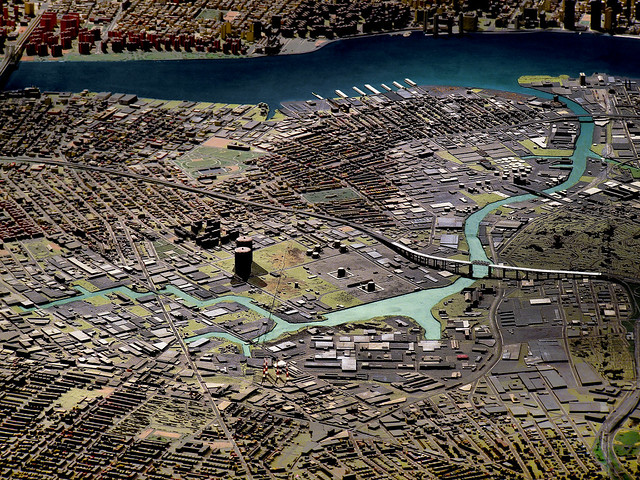
Most New Yorkers couldn’t find her on a map of the 5 boroughs, despite Newtown Creek’s position at the center of it. She’s like some ancestral specter, lurking at the flickering edges of a candle’s light, and only seen by those who truly wish to. Disregard her story, and her dangers, at your own peril, for until you accept what she is and what’s happened here over the centuries…
from wikipedia
The encounter with the shadow plays a central part in the process of individuation. Jung considered that ‘the course of individuation…exhibits a certain formal regularity. Its signposts and milestones are various archetypal symbols’ marking its stages; and of these ‘the first stage leads to the experience of the SHADOW’. If ‘the breakdown of the persona constitutes the typical Jungian moment both in therapy and in development’, it is this which opens the road to the shadow within, coming about when ‘Beneath the surface a person is suffering from a deadly boredom that makes everything seem meaningless and empty … as if the initial encounter with the Self casts a dark shadow ahead of time’. Jung considered as a perennial danger in life that ‘the more consciousness gains in clarity, the more monarchic becomes its content…the king constantly needs the renewal that begins with a descent into his own darkness’ — his shadow – which the ‘dissolution of the persona’ sets in motion.
“The shadow personifies everything that the subject refuses to acknowledge about himself” and represents “a tight passage, a narrow door, whose painful constriction no one is spared who goes down to the deep well”. If and when ‘an individual makes an attempt to see his shadow, he becomes aware of (and often ashamed of) those qualities and impulses he denies in himself but can plainly see in others — such things as egotism, mental laziness, and sloppiness; unreal fantasies, schemes, and plots; carelessness and cowardice; inordinate love of money and possessions — …[a] painful and lengthy work of self-education”.
The dissolution of the persona and the launch of the individuation process also brings with it ‘the danger of falling victim to the shadow … the black shadow which everybody carries with him, the inferior and therefore hidden aspect of the personality’ — of a merger with the shadow.
“follow” me on Twitter- @newtownpentacle
ragged purple
My all time favorite tugboat shot.

– photo by Mitch Waxman
This was shot on November 17, 2010.
It’s a memorable date, as a fellow named Andrew Cuomo came to Newtown Creek to announce the formal settlement between NYS and ExxonMobil, concerning the Greenpoint oil spill. The Brian Nicholas entered the Creek at an optimal moment, lighting wise.
“follow” me on Twitter- @newtownpentacle
fastened ajar

– photo by Mitch Waxman
These are my “tripod” shots from the night time excursion to Greenwood Cemetery which Atlas Obscura invited your humble narrator along on. I’m actually rather fond of both the one above and the second to last shots presented in this post. The only sources of light were being radiated by distant street lights shining through a heavy fog from those Brooklyn streets surrounding the victorian era cemetery, and from the candles set out by the Obscura people. What you’re looking at is beyond the range of human vision, as it was so dark that I had to briefly use a flashlight to allow my camera a lit vantage upon which it could lock in its metering.
from nytimes.com
At noon, yesterday, Mr. STEPHEN WHITNEY, one of the oldest and wealthiest of our citizens, died at his residence in Bowling-green. Some of his intimate friends state that he was but 70 years of age, while others affirm that he had completed his 80th year. He entered business, in this City, at an early period of his life, and has always been considered strictly upright in his dealings, but at the same time close and sharp in effecting bargains. These characteristics laid the foundation for a fortune which has accumulated of late years, until it is estimated at the enormous amount of $8,000,000.

– photo by Mitch Waxman
This photo was from within the tomb itself. While taking this shot, I felt the need to call Forgotten-NY’s Kevin Walsh and say “guess where I am?”. When I told him where, he wasn’t surprised at my answer, which was odd. As you can see, the Atlas Obscura crew had installed quite an abundance of candles.
from wikipedia
In 1827, he joined William Backhouse Astor, son of John Jacob Astor, in building a Merchants’ Exchange Building at the corner of Wall and William Streets. The New York Stock and Exchange Board moved their operations from the Tontine Coffee House to the new building, adopting it as their first permanent home. In the 1840s he was involved in the founding of Green-Wood Cemetery in Brooklyn.

– photo by Mitch Waxman
There’s an interesting dome which caps the Whitney mausoleum. For some reason, it struck me that there must be some sort of message or symbolism encoded in it which I cannot discern, which is common when you lose the cultural context which would be obvious to the dwellers of days gone by. The whole structure is laden with iconic symbolism, much of which is obtusely viewed by modern eyes.
also from wikipedia
Whitney was among the first multi-millionaires in the city. Many accounts refer to his fortune as second only to that of John Jacob Astor, who died in 1848 with an estate of $20 million. Whitney’s wealth was estimated at his death to be at least $8 million, although some thought it was $10 or even $15 million. Unlike the Astors, he was not given to public philanthropy, and the result is that the Whitney name is not remembered in the city the way that the Astor name is.

– photo by Mitch Waxman
Another long exposure tripod shot, I’m actually quite taken with this one. One of my favorite things to do in settings such as this is to leave the shutter wide open for up to a minute, sometimes longer, in total darkness. The shot above was actually 30 seconds long, and the flares you see coming from the candles are actually beams of their light illuminating the fog as it rolls by. Again, this shot displays a dynamic range of both color and detail that were completely invisible to my naked eye. Yay for me, something works for a change.
from green-wood.com
Founded in 1838 as one of America’s first rural cemeteries, the Green-Wood Cemetery soon developed an international reputation for its magnificent beauty and became the fashionable place to be buried. By 1860, Green-Wood was attracting 500,000 visitors a year, rivaling Niagara Falls as the country’s greatest tourist attraction. Crowds flocked to Green-Wood to enjoy family outings, carriage rides and sculpture viewing in the finest of first generation American landscapes. Green-Wood’s popularity helped inspire the creation of public parks, including New York City’s Central and Prospect Parks.

– photo by Mitch Waxman
So, that’s what I saw when I went to Greenwood Cemetery in Brooklyn on a chill and foggy November night. Have a good holiday, lords and ladies, and eat too much. Newtown Pentacle will be in single image mode until Monday, when further vainglorious efforts to “break out of my rut” will be displayed.
“follow” me on Twitter- @newtownpentacle


 The Newtown Pentacle