Posts Tagged ‘H.P. Lovecraft’
History of the Necronomicon by H. P. Lovecraft
Notes:
- Don’t miss the Hunter’s Point Avenue Bridge Centennial tomorrow, on December 11th, a free event. For more on the HPA Bridge Centennial, click here.
- Also, please consider purchasing a copy of the first Newtown Pentacle book: “Newtown Creek for the Vulgarly Curious” – a fully annotated 68 page, full-color journey from the mouth of Newtown Creek at the East River all the way back to the heart of darkness at English Kills, with photos and text by Mitch Waxman.

Woodside Botanica – photo by Mitch Waxman
History of the Necronomicon
by H. P. Lovecraft
Written 1927. Published 1938.
Original title Al Azif — azif being the word used by Arabs to designate that nocturnal sound (made by insects) suppos’d to be the howling of daemons.
Composed by Abdul Alhazred, a mad poet of Sanaá, in Yemen, who is said to have flourished during the period of the Ommiade caliphs, circa 700 A.D. He visited the ruins of Babylon and the subterranean secrets of Memphis and spent ten years alone in the great southern desert of Arabia — the Roba el Khaliyeh or “Empty Space” of the ancients — and “Dahna” or “Crimson” desert of the modern Arabs, which is held to be inhabited by protective evil spirits and monsters of death. Of this desert many strange and unbelievable marvels are told by those who pretend to have penetrated it. In his last years Alhazred dwelt in Damascus, where the Necronomicon (Al Azif) was written, and of his final death or disappearance (738 A.D.) many terrible and conflicting things are told.
He is said by Ebn Khallikan (12th cent. biographer) to have been seized by an invisible monster in broad daylight and devoured horribly before a large number of fright-frozen witnesses. Of his madness many things are told. He claimed to have seen fabulous Irem, or City of Pillars, and to have found beneath the ruins of a certain nameless desert town the shocking annals and secrets of a race older than mankind. He was only an indifferent Moslem, worshipping unknown entities whom he called Yog-Sothoth and Cthulhu.

Vanderbilt Study – photo by Mitch Waxman
In A.D. 950 the Azif, which had gained a considerable tho’ surreptitious circulation amongst the philosophers of the age, was secretly translated into Greek by Theodorus Philetas of Constantinople under the title Necronomicon. For a century it impelled certain experimenters to terrible attempts, when it was suppressed and burnt by the patriarch Michael. After this it is only heard of furtively, but (1228) Olaus Wormius made a Latin translation later in the Middle Ages, and the Latin text was printed twice — once in the fifteenth century in black-letter (evidently in Germany) and once in the seventeenth (prob. Spanish) — both editions being without identifying marks, and located as to time and place by internal typographical evidence only.

Altar at Mt. Zion cemetery fenceline – photo by Mitch Waxman
The work both Latin and Greek was banned by Pope Gregory IX in 1232, shortly after its Latin translation, which called attention to it. The Arabic original was lost as early as Wormius’ time, as indicated by his prefatory note; and no sight of the Greek copy — which was printed in Italy between 1500 and 1550 — has been reported since the burning of a certain Salem man’s library in 1692.
An English translation made by Dr. Dee was never printed, and exists only in fragments recovered from the original manuscript. Of the Latin texts now existing one (15th cent.) is known to be in the British Museum under lock and key, while another (17th cent.) is in the Bibliothèque Nationale at Paris. A seventeenth-century edition is in the Widener Library at Harvard, and in the library of Miskatonic University at Arkham. Also in the library of the University of Buenos Aires.
Numerous other copies probably exist in secret, and a fifteenth-century one is persistently rumoured to form part of the collection of a celebrated American millionaire. A still vaguer rumour credits the preservation of a sixteenth-century Greek text in the Salem family of Pickman; but if it was so preserved, it vanished with the artist R. U. Pickman, who disappeared early in 1926. The book is rigidly suppressed by the authorities of most countries, and by all branches of organised ecclesiasticism. Reading leads to terrible consequences. It was from rumours of this book (of which relatively few of the general public know) that Robert W. Chambers is said to have derived the idea of his early novel The King in Yellow.
Greenwood Cemetery, October 28th, 2010
– photos by Mitch Waxman
A trip to Greenwood Cemetery in Brooklyn, seeking AND FINDING the spot where Robert Suydam lays with his bride. You have no idea how much it freaks a humble narrator out when the realization that H.P. Lovecraft’s stories aren’t altogether fictional sets in.
from dagonbytes.com – H.P. Lovecraft’s Horror at Red Hook
Robert Suydam sleeps beside his bride in Greenwood Cemetery. No funeral was held over the strangely released bones, and relatives are grateful for the swift oblivion which overtook the case as a whole. The scholar’s connexion with the Red Hook horrors, indeed, was never emblazoned by legal proof; since his death forestalled the inquiry he would otherwise have faced. His own end is not much mentioned, and the Suydams hope that posterity may recall him only as a gentle recluse who dabbled in harmless magic and folklore.
As for Red Hook – it is always the same. Suydam came and went; a terror gathered and faded; but the evil spirit of darkness and squalor broods on amongst the mongrels in the old brick houses, and prowling bands still parade on unknown errands past windows where lights and twisted faces unaccountably appear and disappear. Age-old horror is a hydra with a thousand heads, and the cults of darkness are rooted in blasphemies deeper than the well of Democritus, The soul of the beast is omnipresent and triumphant, and Red Hook’s legions of blear-eyed, pockmarked youths still chant and curse and howl as they file from abyss to abyss, none knows whence or whither, pushed on by blind laws of biology which they may never understand. As of old, more people enter Red Hook than leave it on the landward side, and there are already rumours of new canals running underground to certain centres of traffic in liquor and less mentionable things.
Working Harbor September Sunset tour 5
Today’s fun is a chunk of H.P. Lovecraft’s The Dunwich Horror, with photos I shot at the Working Harbor Committee September 15th Sunset tour. For the whole story, at wikisource.org– click here.

– photo by Mitch Waxman
In the meantime a quieter yet even more spiritually poignant phase of the horror had been blackly unwinding itself behind the closed door of a shelf-lined room in Arkham. The curious manuscript record or diary of Wilbur Whateley, delivered to Miskatonic University for translation had caused much worry and bafflement among the experts in language both ancient and modern; its very alphabet, notwithstanding a general resemblance to the heavily-shaded Arabic used in Mesopotamia, being absolutely unknown to any available authority. The final conclusion of the linguists was that the text represented an artificial alphabet, giving the effect of a cipher; though none of the usual methods of cryptographic solution seemed to furnish any clue, even when applied on the basis of every tongue the writer might conceivably have used. The ancient books taken from Whateley’s quarters, while absorbingly interesting and in several cases promising to open up new and terrible lines of research among philosophers and men of science, were of no assistance whatever in this matter. One of them, a heavy tome with an iron clasp, was in another unknown alphabet—this one of a very different cast, and resembling Sanskrit more than anything else. The old ledger was at length given wholly into the charge of Dr Armitage, both because of his peculiar interest in the Whateley matter, and because of his wide linguistic learning and skill in the mystical formulae of antiquity and the middle ages.

– photo by Mitch Waxman
Armitage had an idea that the alphabet might be something esoterically used by certain forbidden cults which have come down from old times, and which have inherited many forms and traditions from the wizards of the Saracenic world. That question, however, he did not deem vital; since it would be unnecessary to know the origin of the symbols if, as he suspected, they were used as a cipher in a modern language. It was his belief that, considering the great amount of text involved, the writer would scarcely have wished the trouble of using another speech than his own, save perhaps in certain special formulae and incantations. Accordingly he attacked the manuscript with the preliminary assumption that the bulk of it was in English.

– photo by Mitch Waxman
Dr Armitage knew, from the repeated failures of his colleagues, that the riddle was a deep and complex one; and that no simple mode of solution could merit even a trial. All through late August he fortified himself with the mass lore of cryptography; drawing upon the fullest resources of his own library, and wading night after night amidst the arcana of Trithemius’ Poligraphia, Giambattista Porta’s De Furtivis Literarum Notis, De Vigenere’s Traite des Chiffres, Falconer’s Cryptomenysis Patefacta, Davys’ and Thicknesse’s eighteenth-century treatises, and such fairly modern authorities as Blair, van Marten and Kluber’s script itself, and in time became convinced that he had to deal with one of those subtlest and most ingenious of cryptograms, in which many separate lists of corresponding letters are arranged like the multiplication table, and the message built up with arbitrary key-words known only to the initiated. The older authorities seemed rather more helpful than the newer ones, and Armitage concluded that the code of the manuscript was one of great antiquity, no doubt handed down through a long line of mystical experimenters. Several times he seemed near daylight, only to be set back by some unforeseen obstacle. Then, as September approached, the clouds began to clear. Certain letters, as used in certain parts of the manuscript, emerged definitely and unmistakably; and it became obvious that the text was indeed in English.

– photo by Mitch Waxman
On the evening of September second the last major barrier gave way, and Dr Armitage read for the first time a continuous passage of Wilbur Whateley’s annals. It was in truth a diary, as all had thought; and it was couched in a style clearly showing the mixed occult erudition and general illiteracy of the strange being who wrote it. Almost the first long passage that Armitage deciphered, an entry dated November 26, 1916, proved highly startling and disquieting. It was written,he remembered, by a child of three and a half who looked like a lad of twelve or thirteen.

– photo by Mitch Waxman
Today learned the Aklo for the Sabaoth (it ran), which did not like, it being answerable from the hill and not from the air. That upstairs more ahead of me than I had thought it would be, and is not like to have much earth brain. Shot Elam Hutchins’s collie Jack when he went to bite me, and Elam says he would kill me if he dast. I guess he won’t. Grandfather kept me saying the Dho formula last night, and I think I saw the inner city at the 2 magnetic poles. I shall go to those poles when the earth is cleared off, if I can’t break through with the Dho-Hna formula when I commit it. They from the air told me at Sabbat that it will be years before I can clear off the earth, and I guess grandfather will be dead then, so I shall have to learn all the angles of the planes and all the formulas between the Yr and the Nhhngr. They from outside will help, but they cannot take body without human blood. That upstairs looks it will have the right cast. I can see it a little when I make the Voorish sign or blow the powder of Ibn Ghazi at it, and it is near like them at May Eve on the Hill. The other face may wear off some. I wonder how I shall look when the earth is cleared and there are no earth beings on it. He that came with the Aklo Sabaoth said I may be transfigured there being much of outside to work on.

– photo by Mitch Waxman
Morning found Dr Armitage in a cold sweat of terror and a frenzy of wakeful concentration. He had not left the manuscript all night, but sat at his table under the electric light turning page after page with shaking hands as fast as he could decipher the cryptic text. He had nervously telephoned his wife he would not be home, and when she brought him a breakfast from the house he could scarcely dispose of a mouthful. All that day he read on, now and then halted maddeningly as a reapplication of the complex key became necessary. Lunch and dinner were brought him, but he ate only the smallest fraction of either. Toward the middle of the next night he drowsed off in his chair, but soon woke out of a tangle of nightmares almost as hideous as the truths and menaces to man’s existence that he had uncovered.

– photo by Mitch Waxman
On the morning of September fourth Professor Rice and Dr Morgan insisted on seeing him for a while, and departed trembling and ashen-grey. That evening he went to bed, but slept only fitfully. Wednesday—the next day—he was back at the manuscript, and began to take copious notes both from the current sections and from those he had already deciphered. In the small hours of that night he slept a little in a easy chair in his office, but was at the manuscript again before dawn. Some time before noon his physician, Dr Hartwell, called to see him and insisted that he cease work. He refused; intimating that it was of the most vital importance for him to complete the reading of the diary and promising an explanation in due course of time. That evening, just as twilight fell, he finished his terrible perusal and sank back exhausted. His wife, bringing his dinner, found him in a half-comatose state; but he was conscious enough to warn her off with a sharp cry when he saw her eyes wander toward the notes he had taken. Weakly rising, he gathered up the scribbled papers and sealed them all in a great envelope, which he immediately placed in his inside coat pocket. He had sufficient strength to get home, but was so clearly in need of medical aid that Dr Hartwell was summoned at once. As the doctor put him to bed he could only mutter over and over again, ‘But what, in God’s name, can we do?’

– photo by Mitch Waxman
Dr Armitage slept, but was partly delirious the next day. He made no explanations to Hartwell, but in his calmer moments spoke of the imperative need of a long conference with Rice and Morgan. His wilder wanderings were very startling indeed, including frantic appeals that something in a boarded-up farmhouse be destroyed, and fantastic references to some plan for the extirpation of the entire human race and all animal and vegetable life from the earth by some terrible elder race of beings from another dimension. He would shout that the world was in danger, since the Elder Things wished to strip it and drag it away from the solar system and cosmos of matter into some other plane or phase of entity from which it had once fallen, vigintillions of aeons ago. At other times he would call for the dreaded Necronomicon and the Daemonolatreia of Remigius, in which he seemed hopeful of finding some formula to check the peril he conjured up.
‘Stop them, stop theml’ he would shout. ‘Those Whateleys meant to let them in, and the worst of all is left! Tell Rice and Morgan we must do something—it’s a blind business, but I know how to make the powder… It hasn’t been fed since the second of August, when Wilbur came here to his death, and at that rate…’
Working Harbor September Sunset tour 4
Today’s fun is a chunk of H.P. Lovecraft’s The Shadow Out of Time, with photos I shot at the Working Harbor Committee September 15th Sunset tour. For the whole story, at wikisource.org– click here. (We’ll be returning to Mount Zion Cemetery and its revelations tomorrow)

– photo by Mitch Waxman
There was a mind from the planet we know as Venus, which would live incalculable epochs to come, and one from an outer moon of Jupiter six million years in the past. Of earthly minds there were some from the winged, starheaded, half-vegetable race of palaeogean Antarctica; one from the reptile people of fabled Valusia; three from the furry pre-human Hyperborean worshippers of Tsathoggua; one from the wholly abominable Tcho-Tchos; two from the arachnid denizens of earth’s last age; five from the hardy coleopterous species immediately following mankind, to which the Great Race was some day to transfer its keenest minds en masse in the face of horrible peril; and several from different branches of humanity.

– photo by Mitch Waxman
I talked with the mind of Yiang-Li, a philosopher from the cruel empire of Tsan-Chan, which is to come in 5,000 A.D.; with that of a general of the greatheaded brown people who held South Africa in 50,000 B.C.; with that of a twelfth-century Florentine monk named Bartolomeo Corsi; with that of a king of Lomar who had ruled that terrible polar land one hundred thousand years before the squat, yellow Inutos came from the west to engulf it.
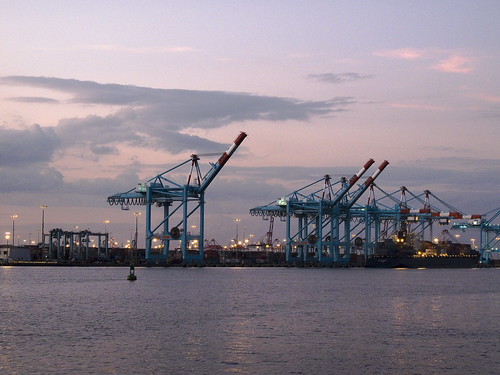
– photo by Mitch Waxman
I talked with the mind of Nug-Soth, a magician of the dark conquerors of 16,000 A.D.; with that of a Roman named Titus Sempronius Blaesus, who had been a quaestor in Sulla’s time; with that of Khephnes, an Egyptian of the 14th Dynasty, who told me the hideous secret of Nyarlathotep, with that of a priest of Atlantis’ middle kingdom; with that of a Suffolk gentleman of Cromwell’s day, James Woodville; with that of a court astronomer of pre-Inca Peru; with that of the Australian physicist Nevil Kingston-Brown, who will die in 2,518 A.D.; with that of an archimage of vanished Yhe in the Pacific; with that of Theodotides, a Greco-Bactrian official Of 200 B.C.; with that of an aged Frenchman of Louis XIII’s time named Pierre-Louis Montagny; with that of Crom-Ya, a Cimmerian chieftain of 15,000 B.C.; and with so many others that my brain cannot hold the shocking secrets and dizzying marvels I learned from them.

– photo by Mitch Waxman
I awaked each morning in a fever, sometimes frantically trying to verify or discredit such information as fell within the range of modern human knowledge. Traditional facts took on new and doubtful aspects, and I marvelled at the dream-fancy which could invent such surprising addenda to history and science.

– photo by Mitch Waxman
I shivered at the mysteries the past may conceal, and trembled at the menaces the future may bring forth. What was hinted in the speech of post-human entities of the fate of mankind produced such an effect on me that I will not set it down here.

– photo by Mitch Waxman
After man there would be the mighty beetle civilisation, the bodies of whose members the cream of the Great Race would seize when the monstrous doom overtook the elder world. Later, as the earth’s span closed, the transferred minds would again migrate through time and space – to another stopping-place in the bodies of the bulbous vegetable entities of Mercury. But there would be races after them, clinging pathetically to the cold planet and burrowing to its horror-filled core, before the utter end.

– photo by Mitch Waxman
Meanwhile, in my dreams, I wrote endlessly in that history of my own age which I was preparing – half voluntarily and half through promises of increased library and travel opportunities – for the Great Race’s central archives. The archives were in a colossal subterranean structure near the city’s center, which I came to know well through frequent labors and consultations. Meant to last as long as the race, and to withstand the fiercest of earth’s convulsions, this titan repository surpassed all other buildings in the massive, mountain-like firmness of its construction.

– photo by Mitch Waxman
The records, written or printed on great sheets of a curiously tenacious cellulose fabric were bound into books that opened from the top, and were kept in individual cases of a strange, extremely light, rustless metal of greyish hue, decorated with mathematical designs and bearing the title in the Great Race’s curvilinear hieroglyphs.
These cases were stored in tiers of rectangular vaults-like closed, locked shelves – wrought of the same rustless metal and fastened by knobs with intricate turnings. My own history was assigned a specific place in the vaults of the lowest or vertebrate level – the section devoted to the culture of mankind and of the furry and reptilian races immediately preceding it in terrestrial dominance.

– photo by Mitch Waxman
But none of the dreams ever gave me a full picture of daily life. All were the merest misty, disconnected fragments, and it is certain that these fragments were not unfolded in their rightful sequence. I have, for example, a very imperfect idea of my own living arrangements in the dream-world; though I seem to have possessed a great stone room of my own. My restrictions as a prisoner gradually disappeared, so that some of the visions included vivid travels over the mighty jungle roads, sojourns in strange cities, and explorations of some of the vast, dark, windowless ruins from which the Great Race shrank in curious fear. There were also long sea voyages in enormous, many-decked boats of incredible swiftness, and trips over wild regions in closed projectile-like airships lifted and moved by electrical repulsion.

– photo by Mitch Waxman
Beyond the wide, warm ocean were other cities of the Great Race, and on one far continent I saw the crude villages of the black-snouted, winged creatures who would evolve as a dominant stock after the Great Race had sent its foremost minds into the future to escape the creeping horror. Flatness and exuberant green life were always the keynote of the scene. Hills were low and sparse, and usually displayed signs of volcanic forces.

– photo by Mitch Waxman
Of the animals I saw, I could write volumes. All were wild; for the Great Race’s mechanised culture had long since done away with domestic beasts, while food was wholly vegetable or synthetic. Clumsy reptiles of great bulk floundered in steaming morasses, fluttered in the heavy air, or spouted in the seas and lakes; and among these I fancied I could vaguely recognise lesser, archaic prototypes of many forms – dinosaurs, pterodactyls, ichthyosaurs, labyrinthodonts, plesiosaurs, and the like-made familiar through palaeontology. Of birds or mammals there were none that I could discover.
Working Harbor September Sunset tour 3
Today’s fun is a chunk of H.P. Lovecraft’s The Call of Cthulhu, with photos I shot at the Working Harbor Committee September 15th Sunset tour. For the whole story, at wikisource.org– click here.
All text, of course, is by Lovecraft-

– photo by Mitch Waxman
…I suppose that only a single mountain-top, the hideous monolith-crowned citadel whereon great Cthulhu was buried, actually emerged from the waters. When I think of the extent of all that may be brooding down there I almost wish to kill myself forthwith. Johansen and his men were awed by the cosmic majesty of this dripping Babylon of elder daemons, and must have guessed without guidance that it was nothing of this or of any sane planet. Awe at the unbelievable size of the greenish stone blocks, at the dizzying height of the great carven monolith, and at the stupefying identity of the colossal statues and bas-reliefs with the queer image found in the shrine on the Alert, is poignantly visible in every line of the mate’s frightened description.

– photo by Mitch Waxman
Without knowing what futurism is like, Johansen achieved something very close to it when he spoke of the city; for instead of describing any definite structure or building, he dwells only on broad impressions of vast angles and stone surfaces—surfaces too great to belong to anything right or proper for this earth, and impious with horrible images and hieroglyphs. I mention his talk about angles because it suggests something Wilcox had told me of his awful dreams. He said that the geometry of the dream-place he saw was abnormal, non-Euclidean, and loathsomely redolent of spheres and dimensions apart from ours. Now an unlettered seaman felt the same thing whilst gazing at the terrible reality.

– photo by Mitch Waxman
Johansen and his men landed at a sloping mud-bank on this monstrous Acropolis, and clambered slipperily up over titan oozy blocks which could have been no mortal staircase. The very sun of heaven seemed distorted when viewed through the polarising miasma welling out from this sea-soaked perversion, and twisted menace and suspense lurked leeringly in those crazily elusive angles of carven rock where a second glance showed concavity after the first showed convexity.

– photo by Mitch Waxman
Something very like fright had come over all the explorers before anything more definite than rock and ooze and weed was seen. Each would have fled had he not feared the scorn of the others, and it was only half-heartedly that they searched—vainly, as it proved—for some portable souvenir to bear away.
It was Rodriguez the Portuguese who climbed up the foot of the monolith and shouted of what he had found. The rest followed him, and looked curiously at the immense carved door with the now familiar squid-dragon bas-relief. It was, Johansen said, like a great barn-door; and they all felt that it was a door because of the ornate lintel, threshold, and jambs around it, though they could not decide whether it lay flat like a trap-door or slantwise like an outside cellar-door. As Wilcox would have said, the geometry of the place was all wrong. One could not be sure that the sea and the ground were horizontal, hence the relative position of everything else seemed phantasmally variable.

– photo by Mitch Waxman
Briden pushed at the stone in several places without result. Then Donovan felt over it delicately around the edge, pressing each point separately as he went. He climbed interminably along the grotesque stone moulding—that is, one would call it climbing if the thing was not after all horizontal—and the men wondered how any door in the universe could be so vast. Then, very softly and slowly, the acre-great lintel began to give inward at the top; and they saw that it was balanced.
Donovan slid or somehow propelled himself down or along the jamb and rejoined his fellows, and everyone watched the queer recession of the monstrously carven portal. In this phantasy of prismatic distortion it moved anomalously in a diagonal way, so that all the rules of matter and perspective seemed upset.

– photo by Mitch Waxman
The aperture was black with a darkness almost material. That tenebrousness was indeed a positive quality; for it obscured such parts of the inner walls as ought to have been revealed, and actually burst forth like smoke from its aeon-long imprisonment, visibly darkening the sun as it slunk away into the shrunken and gibbous sky on flapping membraneous wings. The odour rising from the newly opened depths was intolerable, and at length the quick-eared Hawkins thought he heard a nasty, slopping sound down there. Everyone listened, and everyone was listening still when It lumbered slobberingly into sight and gropingly squeezed Its gelatinous green immensity through the black doorway into the tainted outside air of that poison city of madness.
Poor Johansen’s handwriting almost gave out when he wrote of this. Of the six men who never reached the ship, he thinks two perished of pure fright in that accursed instant. The Thing cannot be described—there is no language for such abysms of shrieking and immemorial lunacy, such eldritch contradictions of all matter, force, and cosmic order. A mountain walked or stumbled. God! What wonder that across the earth a great architect went mad, and poor Wilcox raved with fever in that telepathic instant? The Thing of the idols, the green, sticky spawn of the stars, had awaked to claim his own. The stars were right again, and what an age-old cult had failed to do by design, a band of innocent sailors had done by accident. After vigintillions of years great Cthulhu was loose again, and ravening for delight.


 The Newtown Pentacle