Posts Tagged ‘Long Island City’
acquired archaism
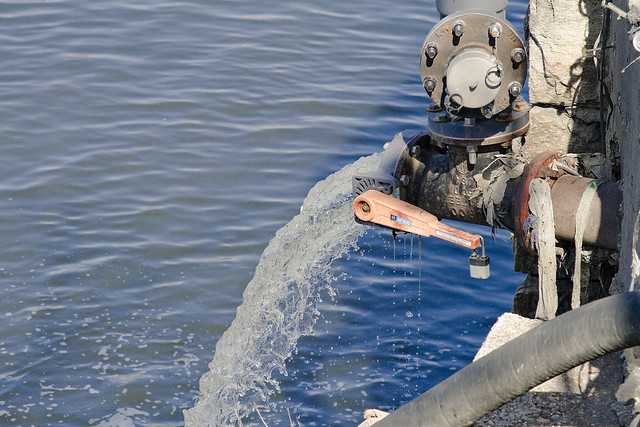
– photo by Mitch Waxman
The internationalists and potentates whose congress calls itself the so called United Nations would have you observe “World Water Day” on this date. This cabal of diplomats, intriguers, and acolytes desire you to imagine and contemplate the assertion that at least a sixth of the living human infestation has no reliable access to pure water. From their headquarters in the Shining City of Manhattan- designed by the gallic crypto fascist LeCorbusier- their edict rings out, and we all must take heed of “Agenda 21”. Pictured in the shot above is the largest source of fresh water flowing into the Newtown Creek, some two to three miles from their base.
from wikipedia
World Water Day has been observed on 22 March since 1993 when the United Nations General Assembly declared 22 March as World Day for Water.
This day was first formally proposed in Agenda 21 of the 1992 United Nations Conference on Environment and Development (UNCED) in Rio de Janeiro, Brazil. Observance began in 1993 and has grown significantly ever since; for the general public to show support, it is encouraged for the public to not use their taps throughout the whole day, the day has become a popular Facebook trend.
The UN and its member nations devote this day to implementing UN recommendations and promoting concrete activities within their countries regarding the world’s water resources. Each year, one of various UN agencies involved in water issues takes the lead in promoting and coordinating international activities for World Water Day. Since its inception in 2003, UN-Water has been responsible for selecting the theme, messages and lead UN agency for the World Day for Water.

– photo by Mitch Waxman
Burgeoning, the human infestation continues to intensify upon the skin of the planet, threatening to overwhelm the fragile biosphere with a monoculture of killer apes. Sophistry and numerical manipulation make the case for Agenda 21 to play out, attempting to induce guilt and damned realization into the mainly western minds of the post industrial world, those who are well fed and watered. Your humble narrator plans on not flushing the toilet today, much to the chagrin of both “Our Lady of the Pentacle” and our little dog Zuzu. Additionally, none of us will eat or drink. A fast day will be observed for the suffering multitudes.
from unwater.org
There are 7 billion people to feed on the planet today and another 2 billion are expected to join by 2050. Statistics say that each of us drinks from 2 to 4 litres of water every day, however most of the water we ‘drink’ is embedded in the food we eat: producing 1 kilo of beef for example consumes 15,000 litres of water while 1 kilo of wheat ’drinks up’ 1,500 litres.
When a billion people in the world already live in chronic hunger and water resources are under pressure we cannot pretend the problem is ‘elsewhere’.

– photo by Mitch Waxman
The unfortunate truth, globally, is that much of the fresh water which the human infestation might consume is fouled by sewage. Whether it is agricultural lagoons of animal waste, municipal infrastructure or lack thereof, or outright industrial effluent- this is the true issue which Agenda 21 ignores. If you want to save the multitudes of the developing world- eliminate malaria and a host of other pathogens almost overnight- build sanitary sewers. Of course, we haven’t managed to swing this in New York City let alone sub Saharan Africa, so you might as well despair.
from nycgovparks.org
Social Hour: World Water Day, Thursday, March 22, 2012. 6:30 P.M.–8:00 P.M.
Celebrate World Water Day by learning more about the Croton Reservoir and Central Park’s historic role in supplying New York City with fresh drinking water. Co-presented with the NYC Department of Environmental Protection.
This event is recommended for adults (18 and over) only.
Provided at no cost to you! No advance registration. More details, including rain plans and directions, are on the Central Park Conservancy calendar.
transparent walls

– photo by Mitch Waxman
Criticism received for the Newtown Pentacle posting “Dim Entity” included the terms “false and misleading” and offered that the post’s assertation that the Federal Express site at Dutch Kills was offered as compensation for the loss of their location in Manhattan to make room for the new construction of luxury housing was abjectly false. Instead, this particular depot has instead been relocated to the Bronx rather than Queens, I have been informed.
As is Newtown Pentacle policy on the subject, and has been since day one, when I’m wrong corrections are eagerly accepted and passed on to you, my Lords and Ladies of Newtown.

– photo by Mitch Waxman
In defense, the term “I guess” was used several times in the post, and it doesn’t change my allegation that hundreds if not thousands of truck trips through western Queens will be engendered by the siting of this facility. For those of you who do not live in the immediate locale, a dire and growing problem experienced by the populations of North Brooklyn and Western Queens is the geometric growth of trucks passing through the area.
Natural consequence of geography, being the terminal point of Long Island closest to the shining city of Manhattan, heavy trucks move constantly around us. Exhaust fumes paint the faces of our children with soot, and during humid weather the air is heavy with smoky effluvium.

– photo by Mitch Waxman
Regardless of personal feeling about the matter, the fact of the siting of this depot was implied as being a quid pro quo, which offended sources have flatly denied. As such, retraction of that implication is offered.

– photo by Mitch Waxman
Doesn’t change the fact that whenever a dirty industrial business needs land, it is found in Queens or Brooklyn or the Bronx or Staten Island. Look at the recent series of announcements of forthcoming municipal projects planned for possible construction within a mile of Newtown Creek as proof of this- whether it be a power plant that runs on sewage emissions, or one that runs on garbage instead.
Project Firebox 36

– photo by Mitch Waxman
This sun kissed scarlet sentinel of the public trust is stationed at Queens Plaza South, alongside the fabulous Queensboro bridge. In the storied past, this crimson crier witnessed less than savory activities, but that was the old Queens Plaza. Modernity has brought a certain solemnity to its days, yet it stands at the ready should the presence of certain men and women, who travel in big red trucks, be required.
concealed fires

– photo by Mitch Waxman
A few interesting photos adorn today’s posting, progeny of the prodigious amount of exploration a humble narrator has been occupied with for the last couple of weeks. There are so many great things “in the works” which haven’t been publicly announced yet, and which I’m bursting at the seams to tell you about, that I’m all a twitter.
2012 promises to be one of the great years for you to see and experience the Newtown Creek for yourself, as the early stages of several walking and boat tours are in the works.
– photo by Mitch Waxman
In the last two weeks, I’ve walked the entire creek in pursuance of one of these projects, which will be finalized and made public quite soon. I’ve worn out a pair of shoes, and shot literally thousands of photos for this project. My path has carried me from Bushwick to Long Island City and Greenpoint to Maspeth.
I’ve dodged trucks and trains, violated perhaps three separate sets of legal restrictions, and encountered a vast coterie of characters both malign and inspirational.

– photo by Mitch Waxman
Within the next couple of weeks, announcements of many, many public events will begin. Meanwhile, the concrete devastations of Western Queens and the oil choked sands of North Brooklyn have been catalogued and categorized, concatenated and containerized.
It’s going to be a great summer.
raptured vision

– photo by Mitch Waxman
My habit is to be early to appointments, public meetings, or gatherings. On this particular day, a Newtown Creek Alliance meeting was set to occur in hoary Greenpoint at the modern Newtown Creek Wastewater Treatment Plant, and a humble narrator decided to make use of being better than an hour early by strolling through the engineered hillocks of First Calvary Cemetery here in Queens.
Late afternoon was giving way to sunset, and my path took me from the secondary gates near the former Penny Bridge toward the main entrance at Greenpoint Avenue.

– photo by Mitch Waxman
Unlike many of my sojourns around the place, no goal governed my steps- I wasn’t “looking for someone”. Instead, a peaceful and contemplative mood governed my steps and allowance was made for serendipity. That’s the spire of St. Raphael’s on Greenpoint Avenue in the distance, by the way.
Amongst the marble and granite, however, a surprising monument was discovered.

– photo by Mitch Waxman
Weathered and unmarked, this anonymous cruciform was found. Appearing to be a wooden cross with white bronze worked onto its surface, it was frankly a stunning moment for me to discover this artifact here. Partially because of its modest and quite staid appearance- understatement and tasteful discretion hardly define the monuments at Calvary- but mostly because of the incredible value that the metal would bring to the Crows (metal collectors and scrappers) who harvest such materials for sale to the scrap industry.
It was stunning to find such a thing can remain hidden in this place which has suffered so much from their attentions.


 The Newtown Pentacle