Posts Tagged ‘photowalk’
down interminably

– photo by Mitch Waxman
A recent walk through Ravenswood, which is an ancient neighborhood found on the industrial western coastline of Queens, left an impression that the place has been undergoing some sort of siege for an interminable period. High masonry walls with imposing fences and warnings of 24 hour video surveillance admonish the passerby. At the crown of every barrier or at the angled corners of buildings one observes the “devil’s rope” with its wired barbs and razor edges. Everywhere dogs slaver at the end of long chains, hungering for delight.
What happens around here at night, which has made such armoring necessary, one is forced to wonder.
from barbwiremuseum.com
THE INVENTION OF BARBED WIRE
Joseph F. Glidden of Dekalb, Illinois attended a county fair where he observed a demonstration of a wooden rail with sharp nails protruding along its sides, hanging inside a smooth wire fence. This inspired him to invent and patent a successful barbed wire in the form we recognize today. Glidden fashioned barbs on an improvised coffee bean grinder, placed them at intervals along a smooth wire, and twisted another wire around the first to hold the barbs in a fixed position.
THE BARBED WIRE BOOM
The advent of Glidden’s successful invention set off a creative frenzy that eventually produced over 570 barbed wire patents. It also set the stage for a three-year legal battle over the rights to these patents.
THE FATHER OF BARBED WIRE
When the legal battles were over, Joseph Glidden was declared the winner and the Father of Barbed Wire. The aftermath forced many companies to merge facilities or sell their patent rights to the large wire and steel companies.
ACCEPTING THE DEVIL’S ROPE
When livestock encountered barbed wire for the first time, it was usually a painful experience. The injuries provided sufficient reason for the public to protest its use. Religious groups called it “the work of the devil,” or “The Devil’s Rope” and demanded removal.

– photo by Mitch Waxman
Take this snazzy little number, occupying a 2,500 square foot lot, the dwelling offers a princely 1,250 square feet of living space, 2 parking spots, and it’s historic.
It has a long history in Ravenswood- this structure was built all the way back in 1927, before Big Allis or the Roosevelt Island Bridge. When it went up, along with the rest of 9th street, this was the border of sanity and wholesomeness. Next stop after Ravenswood were the asylums and orphanages of Blackwell’s Island (now Roosevelt Island).
Futilely have I sought tales of escaped lunatics swimming here during escape attempts, but I’m certain that in 1927, the communal sounds of lament and madness would have been omnipresent.
from wikipedia
- 1637 – Dutch Governor Wouter Van Twiller first purchases the island, then known as Hog Island, from the Canarsie Indians
- 1666 – After the English defeat the Dutch, Captain John Manning seizes the island, which becomes known as Manning’s Island.
- 1686 – Manning’s son-in-law, Robert Blackwell, becomes the island’s new owner and namesake
- 1796 – Blackwell’s great-grandson Jacob Blackwell constructs the Blackwell House, the island’s oldest landmark, New York City’s sixth oldest house and one of the city’s few remaining examples of 18th-century architecture
- 1828 – the City of New York purchases the island for $32,000
- 1832 – The city erects a penitentiary on the island.
- 1839 – The New York City Lunatic Asylum opens, including the Octagon Tower, still standing. The Asylum, which was designed by Alexander Jackson Davis, at one point holds 1,700 inmates, twice its designed capacity.
- 1852 – A workhouse is built on the island to hold petty violators in 220 cells.
- 1856 – The Smallpox Hospital, designed by James Renwick Jr. opens; later, when it falls into disrepair, it will be known as the “Renwick Ruin”
- 1858 – The Asylum burns down, and is rebuilt in the same location.
- 1872 -The Blackwell Island Light, a 50-foot (15 m) Gothic style lighthouse now on the National Register of Historic Places, is built by convict labor on the island’s northern tip under Renwick’s supervision.
- 1889 – The Chapel of the Good Shepherd, designed by Frederick Clarke Withers, opens.
- 1895 – Inmates from the Asylum are transferred to Ward’s Island, and patients from the hospital there are transferred to Blackwell’s Island. The Asylum is renamed Metropolitan Hospital.
- 1909 – The Queensboro Bridge, which passes over the island but does not provide direct vehicular access to it, opens.
- 1921 – Blackwell’s Island is renamed Welfare Island
- 1935 – The penitentiary on Riker’s Island opens, and the last convicts on Welfare Island are transferred there.

– photo by Mitch Waxman
One common remark, whether it be from Charles Dickens or Nellie Bly or the host of sensationalist writers who described the island of asylums and orphanages in the late 19th and early 20th centuries, commented on the chorus of sobbing and madness which arose from the populations of lunatics and (what we would describe in modernity as developmentally disabled) retarded children imprisoned there. The fate of such unfortunates in early modern times was not a happy one, and analogies to both the German writer Kafka and the English asylum known as Bedlam are appropriate.
Of course, just as it is today, having such an institutional neighbor enriches the local economy. A mental hospital needs workers, and employs a vast supply chain to bring the necessities of life. Everything from vegetables to gurneys must be brought in, maintenance of boilers and the machinery of such places must be performed, and a vast staff of quasi medical workers are required. In many towns and cities across modern America, the local prison has replaced the industrial mill as the principal employer, and the prison industry is one of the fastest growing sectors of the United States economy.
from pbs.org
Corporations are running many Americans prisons, but will they put profits before prisoners?
A grim new statistic: One in every hundred Americans is now locked behind bars. As the prison population grows faster than the government can build prisons, private companies see an opportunity for profit.
This week, NOW on PBS investigates the government’s trend to outsource prisons and prisoners to the private sector. Critics accuse private prisons of standing in the way of sentencing reform and sacrificing public safety to maximize profits.
“The notion that a corporation making a profit off this practice is more important to us than public safety or the human rights of prisoners is outrageous,” Judy Greene, a criminal policy analyst, tells NOW on PBS.

– photo by Mitch Waxman
That nameless thing which has never drawn a breath, whose queer intelligence lurks within the spire of the sapphire megalith and gazes hungrily down upon the world of men, encourages and makes such a prison economy viable. It will ensure that new laws and restrictions are put in place by an army of loyal acolytes that suck at it’s poison teats, and its many servants in the media conglomerates continue to propagate a general aura of fear and loathing of “the other” suggesting the presence of a predatory element amongst the populace which makes the existence of such institutions seem not just necessary but prudent. More importantly, this prison industry is extremely profitable, and above all else that thing in the megalith encourages profit.
In the early 21st century, prison technologies now adorn private homes of substance and taste, and Orwell’s Big Brother need not surveil the streets for the private citizenry has already installed video security systems and razor wire which accomplish the goal for it. The gaol needs no walls, for terror has made us all inmates.
from wikipedia
In 1984, there is a perpetual war between Oceania, Eurasia and Eastasia, the super-states which emerged from the atomic global war. “The book”, The Theory and Practice of Oligarchic Collectivism by Emmanuel Goldstein, explains that each state is so strong it cannot be defeated, even with the combined forces of two super-states—despite changing alliances. To hide such contradictions, history is re-written to explain that the (new) alliance always was so; the populaces accustomed to doublethink accept it. The war is not fought in Oceanian, Eurasian or Eastasian territory but in the arctic wastes and a disputed zone comprising the sea and land from Tangiers (northern Africa) to Darwin (Australia). At the start, Oceania and Eastasia are allies combatting Eurasia in northern Africa.
That alliance ends and Oceania allied with Eurasia fights Eastasia, a change which occurred during the Hate Week dedicated to creating patriotic fervour for the Party’s perpetual war. The public are blind to the change; in mid-sentence an orator changes the name of the enemy from “Eurasia” to “Eastasia” without pause. When the public are enraged at noticing that the wrong flags and posters are displayed they tear them down—thus the origin of the idiom “We’ve always been at war with Eastasia”; later the Party claims to have captured Africa.
“The book” explains that the purpose of the unwinnable, perpetual war is to consume human labour and commodities, hence the economy of a super-state cannot support economic equality (a high standard of life) for every citizen. Goldstein also details an Oceanian strategy of attacking enemy cities with atomic rockets before invasion, yet dismisses it as unfeasible and contrary to the war’s purpose; despite the atomic bombing of cities in the 1950s the super-states stopped such warfare lest it imbalance the powers. The military technology in 1984 differs little from that of the Second World War, yet strategic bomber aeroplanes were replaced with Rocket Bombs, helicopters were heavily used as weapons of war (while they didn’t figure in WW2 in any form but prototypes) and surface combat units have been all but replaced by immense and unsinkable Floating Fortresses, island-like contraptions concentrating the firepower of a whole naval task force in a single, semi-mobile platform (in the novel one is said to have been anchored between Iceland and the Faroe Islands, suggesting a preference for sea lane interdiction and denial).

– photo by Mitch Waxman
Modernity looks back on Blackwell’s Island, with its snake pit asylums and communal poor houses as some sort of anachronism. Left behind in the starry past, along with witch hunts and bad science, we have evolved past such childish attempts at mercy and embraced a more open and kind philosophy toward our challenged or confused or socially unacceptable brethren. This is a new age, enlightened and informed by scientific reason rather than instinct and custom. Right?
Ever wonder how they’ll describe us in 100 years, when some unborn academics perform their dissertations on the “age of terror”?
Remember, in a war of terror, whichever side scares the other more is the winner. A decade in, which side has become more terrifying to you, the nuclear armed super state with a well armed and paranoid population or the dusty mafiosos of a failed desert empire?
Incidentally, today is the anniversary of the General Slocum disaster, which was the greatest disaster in the history of New York City prior to the events of 2001, and which bears mention at this- your Newtown Pentacle.
from wikipedia
Some analysts, such as Noam Chomsky, posit that a state of perpetual war is an aid to (and is promoted by) the powerful members of dominant political and economic classes, helping maintain their positions of economic and political superiority.
Some have also suggested that entering a state of perpetual war becomes progressively easier in a modern democratic republic such as the United States due to the continuing development of interlocking relationships between those who benefit directly from war and the large and powerful companies that indirectly benefit and shape the presentation of the effects and consequences of war (i.e., the formation of a military-industrial complex).
There has been some criticism from anti-war activists and Bush critics, for example, that the Bush administration’s ties to Halliburton influenced the decision to go to war in Iraq and Afghanistan. These claims have been denied by the George W. Bush White House.
However, the concept of a military-industrial complex was first suggested by President Eisenhower and the idea that military action can be seen as a form of market-creation goes at least as far back as speeches beginning in 1930 prior to the publication of War Is a Racket in 1935. The economic make-up of the 5th century BC Athens-led Delian League also bears resemblance to the economic ramifications of preparing for perpetual war.
With the advent of perpetual war, communities have begun to construct War Memorials with names of the dead while the wars are ongoing. See Northwood Community Park’s memorial which has space for 8000 names (approximately 4,500 used at time of construction) and plans to update it yearly.
noble and familiar

– photo by Mitch Waxman
Wandering aimlessly through the section of Long Island City which forms the hazed border of Dutch Kills and Ravenswood recently, your humble narrator was taken aback by the fortress like appearance of the local domiciles and businesses. Perhaps this unremarked series of blocks in western Queens harbors and shelters itself- in secret- against some unbound curse or horror unknown to neighboring communities, an invisible and omnipresent dread requiring stout gates and heavy iron clasps to vouchsafe life and limb?
I’ve never observed it in daylight, whatever this lurking fear might be, it must only come out at night.
from wikipedia
The land was acquired in 1814 by Col. George Gibbs, a businessman from New York City who developed it. Gibbs died in 1833, and the land was divided into nine parcels by three developers. From 1848, there were several mansions built on this land, but the high class housing did not survive. The spring of 1853 brought the opening of a post office of its own and country store “run by Messrs. Moore & Luyster, and Mr. Samuel H. Moore of that firm received the appointment of postmaster, handling the mails in a corner of the store.”
Ravenswood, unlike Astoria, Queens, never became a village; there was no disposition at any time to become independent as there was insufficient population or commercial activity to justify such a move. Ravenswood remained an exclusive hamlet within the Town of Newtown until its absorption with the Village of Astoria, and the hamlets of Hunters Point, Blissville, Sunnyside, Dutch Kills, Steinway, Bowery Bay and Middleton in Newtown Township into Long Island City in 1870. “Ravenswood enthusiastically accepted incorporation into Long Island City in 1870 and this absorption of the quiet village into the mainstream of commerce and industry spelled the end of the old era.”

– photo by Mitch Waxman
Freakish thoughts arise often during these long walks about the Newtown Pentacle, arising perhaps from the sheer oddness of what one might encounter on these perambulations- or from other strange energies encountered in the environment. When transversing the area around Big Allis and it’s various transformer farms, odd cracklings and resonances emerge from my headphones which I cannot be certain are merely electromagnetic anomalies caused by the titan powerplant. Certain evidences are consciously sought, of course, but long ago the universe was granted sway over my steps as I scuttle about the earth, and if New York City wants me to see something- she takes me there.
It is best not to disobey the City.
from wikipedia
Big Allis, formally known as Ravenswood No. 3, is a giant electric power generator originally commissioned by Consolidated Edison Company (ConEd) and built by the Allis-Chalmers Corporation in 1965. Currently owned by Transcanada Corp., it is located on 36th Avenue and Vernon Boulevard in western Queens, New York.
During 1963, Allis-Chalmers announced that ConEd had ordered the “world’s first MILLION-KILOWATT unit…big enough to serve 3,000,000 people.” This sheer scale helped the plant become popularly known as “Big Allis”.
At the time of its installation, it was the world’s largest steam energy generating facility. It is located on the Ravenswood site, consisting of Units 1, 2, 3 and 4, as well as several small Gas Turbines (GTs), and an oil depot. The site overall produces about 2,500 MW, or approximately 20% of New York City’s current energy needs. The current installed capacity of Big Allis is around 980 MW.

– photo by Mitch Waxman
A certain commandment is “to see”. Bombarded with visual stimuli, the extraordinary nature of New York City becomes commonplace and quite ordinary in daily observance, and difficulty is found in filtering. This statuary on 9th street in Ravenswood… I don’t want to research its possible meanings or significance… find out who is represented or what tradition presents itself in style or execution…
Alright, I’m pretty sure it’s a Maronite Cross. The Maronites are a group of Lebanese Christians who revere St. Maron of Chrysostom, a city near Antioch in his time which was around 16 centuries ago. They are part of what is known as “Eastern Catholic Churches“, which may follow atavist theurgical or theological paths which differ from the “Roman Catholic” faction, yet are nevertheless in full communion with the Bishop of Rome.
from wikipedia
Saint Maroun (also Maron or Maro; Syriac: ܡܪܝ ܡܪܘܢ, Mār(y) Mārōn; Arabic: مار مارون) was a 5th century Syriac Christian monk who after his death was followed by a religious movement that became known as the Maronites. The Church that grew from this movement is the Maronite Church. St. Maroun was known for his missionary work, healing and miracles, and teachings of a monastic devotion to God. He was a priest that later became a hermit. His holiness and miracles attracted many followers and drew attention throughout the empire.

– photo by Mitch Waxman
As mentioned in the past, a simple 5 point methodology for discovering the hidden ecstasies of this ancient place has evolved around wholesale surrender to the directionless cosmos:
- Keep, the sun on your back.
- Turn, left only.
- Follow, a cat- if encountered.
- Move, in an alert fashion.
- Interact, with the humans only when necessary.
For some reason, around Ravenswood, I always find myself heading for Big Allis. Mayhap it’s some electromagnetoception sort of thing…
from wikipedia
In bees, it has been observed that magnetite is embedded across the cellular membrane of a small group of neurons; it is thought that when the magnetite aligns with the Earth’s magnetic field, induction causes a current to cross the membrane which depolarizes the cell.
Crocodiles are believed to have magnetoception, which allows them to find their native area even after being moved hundreds of miles away. Some have been strapped with magnets to disorient them and keep them out of residential areas.
In 2008, a research team led by Hynek Burda using Google Earth accidentally discovered that magnetic fields affect the body orientation of cows and deer during grazing or resting. In a followup study in 2009, Burda and Sabine Begall observed that magnetic fields generated by power lines disrupted the orientation of cows from the Earth’s magnetic field.
Certain types of bacteria (magnetotactic bacteria) and fungi are also known to sense the magnetic flux direction; they have organelles known as magnetosomes containing magnetic crystals for this purpose.
microcosmic bonds

– photo by Mitch Waxman
Another of the locations which recent efforts assisting the estimable Kevin Walsh in his “2nd Saturdays” series of walking tours brought me to was the Woodside LIRR station.
For an infrastructure geek like myself, this facility offers an immersion in total joy. The MTA elevated lines which follow Roosevelt Avenue soar above, while on a lower level sits a separate system of trussed steel- the east and west tracks of the LIRR shuttle commuters back and forth between Shining City and crowded suburbs in an easterly suburbia.
Mr. Walsh himself was to arrive on one of these LIRR trains, and I humbly awaited the master.
from wikipedia
Woodside is a neighborhood in the western portion of the New York City borough of Queens. It is bordered on the south by Maspeth, on the north by Astoria, on the west by Sunnyside and on the east by Elmhurst and Jackson Heights. Some areas are widely residential and very quiet, while others (especially closer to Roosevelt Avenue) are more urban. The neighborhood is located in Queens Community Board 1 and Queens Community Board 2.
In the 19th century the area was part of the Town of Newtown (now Elmhurst). The adjacent area of Winfield was largely incorporated into the post office serving Woodside and as a consequence Winfield lost much of its identity distinct from Woodside.
With large scale residential development in the 1860s, Woodside became the largest Irish American community in Queens. In the early 1930s, the area was approximately 80% Irish. Even as the neighborhood has seen growth in ethnic diversity today, the area still retains a strong Irish American presence. There are a number of Irish pubs and restaurants scattered across Woodside.

– photo by Mitch Waxman
While pacing nervously, I was keenly aware of interested glances from local constable and fellow citizen alike.
That shabby man, unshaven and clad in a filthy black raincoat… What is he doing? He looks nervous and occluded, that sweaty fellow who is avoiding eye contact with others. Why is he pacing back and forth like that, and what might he be carrying in that enormous black bag? Doesn’t he seem anxious, as if waiting for something to happen?
Being noticed by the conservative and bourgeois is something that has plagued me always- even as a schoolchild, in auditorium assemblies populated by a thousand maniacs- fellow younglings screaming and dancing about while your humble narrator was quietly reading… I would be singled out for excoriation by certain factions of the school administration which always displayed open hostility to me.
Even today, coworkers might be snorting a line of amphetamines off their desks and I will be called to task for an empty coffee cup left too long untended.
from wikipedia
The Mythological Cycle, comprising stories of the former gods and origins of the Irish, is the least well preserved of the four cycles. The most important sources are the Metrical Dindshenchas or Lore of Places and the Lebor Gabála Érenn or Book of Invasions. Other manuscripts preserve such mythological tales as The Dream of Aengus, The Wooing Of Étain and Cath Maige Tuireadh, The (second) Battle of Magh Tuireadh. One of the best known of all Irish stories, Oidheadh Clainne Lir, or The Tragedy of the Children of Lir, is also part of this cycle.
Lebor Gabála Érenn is a pseudo-history of Ireland, tracing the ancestry of the Irish back to before Noah. It tells of a series of invasions or “takings” of Ireland by a succession of peoples, the fifth of whom was the people known as the Tuatha Dé Danann (“Peoples of Goddess Danu”), who were believed to have inhabited the island before the arrival of the Gaels, or Milesians. They faced opposition from their enemies, the Fomorians, led by Balor of the Evil Eye. Balor was eventually slain by Lug Lámfada (Lug of the Long Arm) at the second battle of Magh Tuireadh. With the arrival of the Gaels, the Tuatha Dé Danann retired underground to become the fairy people of later myth and legend.
The Metrical Dindshenchas is the great onomastic work of early Ireland, giving the naming legends of significant places in a sequence of poems. It includes a lot of important information on Mythological Cycle figures and stories, including the Battle of Tailtiu, in which the Tuatha Dé Danann were defeated by the Milesians.
It is important to note that by the Middle Ages the Tuatha Dé Danann were not viewed so much as gods as the shape-shifting magician population of an earlier Golden Age Ireland. Texts such as Lebor Gabála Érenn and Cath Maige Tuireadh present them as kings and heroes of the distant past, complete with death-tales. However there is considerable evidence, both in the texts and from the wider Celtic world, that they were once considered deities.
Even after they are displaced as the rulers of Ireland, characters such as Lug, the Mórrígan, Aengus and Manannan appear in stories set centuries later, betraying their immortality. A poem in the Book of Leinster lists many of the Tuatha Dé, but ends “Although [the author] enumerates them, he does not worship them”. Goibniu, Creidhne and Luchta are referred to as Trí Dé Dána (“three gods of craftsmanship”), and the Dagda’s name is interpreted in medieval texts as “the good god”. Nuada is cognate with the British god Nodens; Lug is a reflex of the pan-Celtic deity Lugus, the name of whom may indicate “Light”; Tuireann may be related to the Gaulish Taranis; Ogma to Ogmios; the Badb to Catubodua.

– photo by Mitch Waxman
Such persecution, coupled to my own antisocially vicious nature and bizarre mannerisms, has resulted in a very thin skinvelope surrounding your humble narrator. Paranoid, socially crippled, and hostile, in order to stave off madness a decision was made long ago to hide in public. Scuttle about the edges of this vile infestation and gross exaggeration of the human hive, and avoid all but topical contact with it’s residents. A cocoon was spun, and happily occupied.
In recent years, however, novel philosophies and aspirations have motivated me to move in different and delusional directions and to scuttle forth and walk the earth.
from wikipedia
According to an Irish dinsenchas (“place-lore”) poem in the 12th century Book of Leinster, Crom Cruach’s cult image, consisting of a gold figure surrounded by twelve stone figures, stood on Magh Slécht (“the plain of prostration”) in County Cavan, and was propitiated with first-born sacrifice in exchange for good yields of milk and grain. Crom is said to have been worshipped since the time of Eremon. An early High King, Tigernmas, along with three quarters of his army, is said to have died while worshipping Crom on Samhain eve, but worship continued until the cult image was destroyed by St. Patrick with a sledgehammer.
This incident figures prominently in medieval legends about St. Patrick, although it does not appear in his own writings, nor in the two 7th century biographies by Muirchu and Tírechán. In the 9th century Tripartite Life of Saint Patrick the deity is called Cenn Cruach, and his cult image consists of a central figure covered with gold and silver, surrounded by twelve bronze figures. When Patrick approaches it he raises his crozier, the central figure falls face-down, with the imprint of the crozier left in it, and the surrounding figures sink into the earth. The “demon” who inhabits the image appears, but Patrick curses him and casts him to hell. Jocelin’s 12th century Life and Acts of St. Patrick tells much the same story. Here the god is called Cenncroithi, interpreted as “the head of all gods”, and when his image falls the silver and gold covering it crumble to dust, with the imprint of the crozier left on bare stone.

– photo by Mitch Waxman
Childish and puerile, my pedantic credos include “what would Superman do?”, “do what you say, and say what you do”, “the world only makes sense when you force it to”, and the recently added gem “make no assumptions”. Accordingly, while walking this strange path that I’ve found myself on, an attempt to maintain an open mind and absorb as much knowledge as possible from the best sources available has been underway.
Which brings me back to why I was attracting so much interest from gentry and security personnel alike while waiting for Mr. Walsh at the LIRR station in Woodside, Queens.
from wikipedia
In Irish and Scottish mythology, the Cailleach (Irish pronunciation: [ˈkalʲəx], Irish plural cailleacha [ˈkalʲəxə], Scottish Gaelic plural cailleachan /kaʎəxən/), also known as the Cailleach Bheur, is a divine hag, a creatrix, and possibly an ancestral deity or deified ancestor. The word simply means ‘old woman’ in modern Scottish Gaelic, and has been applied to numerous mythological figures in Scotland, Ireland and the Isle of Man.
In Scotland, where she is also known as Beira, Queen of Winter, she is credited with making numerous mountains and large hills, which are said to have been formed when she was striding across the land and accidentally dropped rocks from her apron. In other cases she is said to have built the mountains intentionally, to serve as her stepping stones. She carries a hammer for shaping the hills and valleys, and is said to be the mother of all the goddesses and gods.
The Cailleach displays several traits befitting the personification of Winter: she herds deer, she fights Spring, and her staff freezes the ground.

– photo by Mitch Waxman
Of course, I seldom go anyplace in Queens these days without reading up on it, and this station was at the edge of the John Andrew Kelley property (Woodside takes it’s name from that of his mansion) near the Snake Woods- which popular aphorism in the 19th century referred to as “Suicide’s Paradise”.
The actual spot that the LIRR station occupies was first (european) occupied by the Puritan Wiliam Sackett, who later sold the property to a man named Levirich. The LIRR arrived in the 1860’s and occupied several locations in Woodside until settling into the familiar layout of our modern tracks in 1917.
The ancient Sackett farmhouse was scourged in a mysterious fire which occurred in 1890.

– photo by Mitch Waxman
Pictured above is Woodside Court, which the informed opine as being the oldest apartment house in the neighborhood, dating from 1916. Often have I wondered what it must be like to live in this place along the tracks. When this building was constructed, Woodside was an Irish enclave housing- along with Elmhurst- a substantial percentage of the refugees who fled from the 19th century holocausts, and their American born children.
from wikipedia
In Irish mythology, the aos sí (Irish pronunciation: [iːs ˈʃiː], older form aes sídhe [eːs ˈʃiːə]) are a supernatural race comparable to the fairies or elves. They are said to live underground in the fairy mounds, across the western sea, or in an invisible world that coexists with the world of humans. This world is described in “The Book of Invasions” (recorded in the Book of Leinster) as a parallel universe in which the aos sí walk amongst the living.
In the Irish language, aos sí means “people of the mounds” (the mounds are known in Irish as “the sídhe”). In Irish literature the people of the mounds are also referred to as the daoine sídhe ([‘diːnʲə ‘ʃiːə]), and in Scottish Gaelic literature as the daoine sìth. They are said to be the ancestors, spirits of nature, or goddesses and gods.

– photo by Mitch Waxman
The story which microbiological experts transmit describes the Famines as being caused ultimately by the pathogenic organism known as Phytophthora infestans. Water based, this microscopic menace didn’t follow the immigrants to North America, as Phytophthora infestans is native to the place- just like the Potato.
Originating in the mist shrouded highlands of central Mexico, Phytophthora infestans arrived in Ireland via a batch of potato seedlings sent to Belgium in 1845. Additionally, several modern states including the United States have made attempts at weaponizing the oomycete.
from wikipedia
A Fuath (pronounced foo-ah) (Fuathan pl.) is an evil, Gaelic mythological water spirit. In Irish Gaelic, the word “fuath” means “hate”.
Its name is sometimes used as a regional variance for Kelpie or Uisges in Northern Ireland or the Bean-Nighe. The Scottish use the name to refer to generic water spirits who inhabit the sea, rivers, fresh water, or sea loches. Sometimes, this name is even given to highland or nature spirits, but all forms with the name are evil.
Their appearance ranges from covered in shaggy, yellow fur to just having a mane down its back, webbed toes, tails with spikes, and no nose. They are prone to wearing green, whether it be a dress, robe, or kirtle, as it is the color of faeries.
They sometimes intermarry with human beings (typically the female), whose offspring will share a mane, tail, and/or webbed digits. Their banes include sunlight and cold steel, which will kill them instantly. They grow restless upon crossing a stream.
An alternative name for this class of monsters is Arrachd.
June 6th, Magic Lantern Show at Greater Astoria Historical Society

Metropolitan Avenue Bridge, English Kills – photo by Mitch Waxman
I’ve neglected to inform you all of the Magic Lantern Show which this, your Newtown Pentacle, is staging at the Greater Astoria Historical Society on Monday, June 6th at 7pm. There won’t be any archaic museum pieces in use, of course- my magic lantern is all digital and uses a standard and quite modern projector- but the concept is much the same. A photographer captures some hellish reality from the wild and shadowed corners of the world, and presents them with the intention of revealing hidden truths to a comfortable and otherwise wholesome audience who would never encounter this reality otherwise.
from a Newtown Pentacle post of April 13th, 2011
Just under an hour long, this Magic Lantern Show about Newtown Creek is personally narrated, and transports the viewer to every corner of the Newtown Creek- every tributary and street end, on the water and above it, and is presented in the idiosyncratic and off beat manner which has become familiar to regular readers of this- your Newtown Pentacle. It attempts to explain certain core questions in under an hour which have been repeatedly presented to me over the last couple of years, and the entire talk is illustrated with both my own photography and the product of my historical research:
- What exactly do you mean by the “Newtown Pentacle”?
- When did the Newtown Creek begin to matter?
- Why should I care, how does the Newtown Creek affect me, as I live in Manhattan?
- Where exactly is this place?
- Who is responsible for this mess, and exactly who is it that’s going to clean it up?
- How can I get involved and help my community revitalize and or restore the Newtown Creek?

Empire State Building rising over industrial Brooklyn and Newtown Creek – photo by Mitch Waxman
It would probably be “politique” to mention that this is not a Newtown Creek Alliance event, which is one of the many organizations which I’ve become affiliated and identified with. Instead this is purely a Newtown Pentacle show, which the studied philosophs who inhabit the upper echelons of the Greater Astoria Historical Society are allowing me to present in their convenient location on Astoria’s Broadway- stumbling distance from the R,M, and N trains. The efficacy of gambling their precious time and effort upon such a poor specimen as myself would be proven by the event being well attended, and the negligible $5 fee at the door should prove an easy burden for most to bear. Therefore, a narrator humbly invites and requests your support and attendance.
from astorialic.org
Mon Jun 6, 7:00 pm
Travel the length and breadth of Americas most polluted waterway, the Newtown Creek, with newtownpentacle.com‘s Mitch Waxman.
Breathtaking photography illustrates the journey, exploring the various tributaries and discussing the industrial history of New York City‘s least known waterway.
Witty and irreverent, the narration describes Waxman‘s own discovery of this place and the fantastic journey it has taken him on.
Question and Answer period follows.

DUKBO, Down Under the Kosciuszko Bridge Onramp – photo by Mitch Waxman
The actual presentation is just over a hour long, and during it, you’ll travel the length and breadth of the Newtown Creek- every tributary and bridge, each keystone of historical import will be illustrated with both personal experience and historical meaning. For those of you new to the story of the Newtown Creek (or the neighborhood) this will make a fine primer. Attempts will be made by your humble narrator to reveal this willfully hidden place, and introduce the uninitiated to the hellish flames of revelation which only the Newtown Creek can offer.

Greenpoint Avenue Bridge over Newtown Creek – photo by Mitch Waxman
The places I go, the things I see… often strain credulity. This is not the world you know, this 3.8 mile long waterway located directly across the East River from Manhattan’s Bellevue Psychiatric Hospital which provides the currently undefended border of Brooklyn and Queens. If it can happen, it has happened here, and if it happened here it happened worse and grander than anywhere else it ever happened. Come visit the night soil and offal dock, hear the stories of the great men- Bliss and Kingsland and Flowers and Degnon and Cooper. This is the place where the Industrial Revolution actually happened, where the death of nature itself was accomplished, and our modern world was born.
Welcome to the Newtown Creek, poison heart of the Newtown Pentacle…
burst open

– photo by Mitch Waxman
Recent business, if you must ask, is the reason I found myself visiting …Staten Island… Kevin Walsh of forgotten-ny.com wanted, sensibly enough given the sylvan landscaping and thoughtful architecture of the place, to offer a walking tour of St. George as part of his ambitious schedule of “2nd Saturday” walking tours. As an accomplice in his fiendish revelations, I was forced to return to this place by land.
It is one thing to motor past …Staten Island… on a ship or highway, and another thing entirely to touch it with your feet. This is when you are helpless, a pedestrian lost in a land of motor vehicles and steep hills, and movement noticed behind dark curtains might said to be an implied rather than suggested hint of an occluded occupant.
from silive.com
For the past two days, visitors to a park in Staten Island’s Fort Wadsworth section have stumbled upon a gory mystery — a mutilated animal, possibly a dog or a goat, wrapped in a white sheet.
Parkgoers found two such animals in Von Briesen Park yesterday and this morning, city Parks Department officials confirmed.
The discovery has sparked speculation of ritual sacrifice and cult activity, and has led one Port Richmond woman to douse part of the ground where one animal was found with holy water, in an attempt to ward off what she believes is an evil presence.
– photo by Mitch Waxman
Overly sensitive to sleights, always ready to interpret malicious intent in an innocent gesture, your humble narrator nevertheless prides himself on what Brooklyn kids might call “spidey sense”. When certain instincts and triggers begin to fire off, the imperative to “get out of dodge” becomes overwhelming and flight ensues, if I am clever enough to acknowledge this “tingle”.
Every time I’m on the island which Richmond County squats upon, I start to tingle.
from silive.com
Staten Island ranks second in the overall suicide rate out of all five boroughs, behind only Manhattan, according to the most recent state Department of Health statistics.
In 2005, the most recent year available, there were 6.9 suicides on the Island per 100,000 people. Manhattan was the only borough that had more, with 7.6 suicides per 100,000; rates for the Bronx, Brooklyn and Queens were 4.8, 4.6 and 5.4, respectively.
Sudden changes in behavior or personality; feelings of desperation, helplessness, hopelessness, aloneness, loss and depression; previous suicide attempt; and most importantly, suicide statements expressing a desire or intention to die are all some of the warning signs that sometimes go overlooked, experts say.

– photo by Mitch Waxman
Over the years paying attention to this “tingle”, sometimes felt by Our Lady of the Pentacle instead of me, has aided me in avoiding multiple encounters with the Constabulatory, allowed me to escape a burning building twice, and facilitated in sidestepping some of the dire consequences of a degenerate youth. Additionally, I seem to know which days it would be fortuitous to call in sick to work, intuitively avoid traffic jams and transit logjams, and when some baser denizen of the NY streets sets their sights on me- I know it.
It has long been my belief that physical cowardice is a genetic inheritance, a gift from timorousness ancestors who managed to run away before the Vikings or Mongols found them.
from wikipedia
Snug Harbor was founded by the 1801 bequest of New York tycoon Captain Robert Richard Randall for whom the nearby neighborhood of Randall Manor is named. Randall left his country estate, Manhattan property bounded by Fifth Avenue and Broadway and Eighth and 10th Streets, to build an institution to care for “aged, decrepit and worn-out” seamen. The opening of the sailor’s home was delayed by extended contests of the will by Randall’s disappointed heirs. When Sailors’ Snug Harbor opened in 1833, it was the first home for retired merchant seamen in the history of the United States. It began with a single building, now the centerpiece in the row of five Greek Revival temple-like buildings on the New Brighton waterfront.
Captain Thomas Melville, a retired sea captain and brother of Moby-Dick author Herman Melville, was governor of Snug Harbor from 1867 to 1884.
In 1890, Captain Gustavus Trask, the governor of Snug Harbor, built a Renaissance Revival church, the Randall Memorial Chapel and, next to it, a music hall, both designed by Robert W. Gibson.
Approximately 1,000 retired sailors lived at Snug Harbor at its peak in the late 19th century, when it was among the wealthiest charities in New York. Its Washington Square area properties yielded a surplus exceeding the retirement home’s costs by $100,000 a year.

– photo by Mitch Waxman
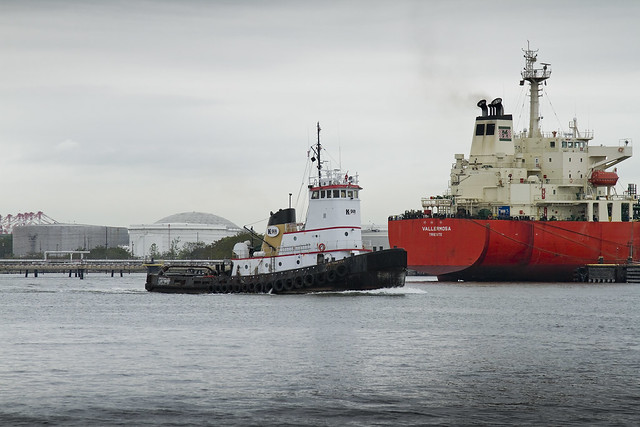
There are places which terrify, and intimidate. …Staten Island… with it’s hoary past and terrifying implications of Old World conspiracy- accomplishes both for me. I prefer to focus on what floats past the place, observing from the safety of running water, rather than delve too deeply into the rumors of those things which have been witnessed in the trees near Willowbrook.
from artsjournal.com
All “aged decrepit and warn-out sailors” were accepted. Even some blacks. Eventually the Harbor also allowed steamboat sailors and inland sailors from lakes and rivers too, but they were no doubt frowned upon as not being adventurous enough. Once, while trying to affix a sculpture to one of the walls, we found a sealed-off compartment containing a book of photographs of hundreds of inmates (as the retired seamen were called). Here and there were some dark faces. All races and nationalities were welcomed. Only “habitual alcoholics and those with contagious disease or immoral character were banned.”


