Author Archive
things to do!

for an expanded description of the October 13th Kill Van Kull tour, please click here

for an expanded description of the October 20th Newtown Creek tour, please click here
unwittingly felt

– photo by Mitch Waxman
Laura K. Moran, pictured above, seems to be frozen in place despite the fact that she’s moving at a pretty good clip as evinced by the bow wake she’s kicking up. What’s happening is an interesting visual trick, something which I was clued into back in my comics artist days by the legend who was Will Eisner.
Eisner was a master thinker of visual storytelling, and knew every trick in the book, it was honor to be in the same room with him.
One of his imparted aphorisms was that if something was intended to describe speed, it needed to “follow the eye”.
from wikipedia
William Erwin “Will” Eisner (March 6, 1917 – January 3, 2005) was an American comic writer, artist and entrepreneur. He is considered one of the most important contributors to the development of the medium and is known for the cartooning studio he founded; for his highly influential series The Spirit; for his use of comics as an instructional medium; for his leading role in establishing the graphic novel as a form of literature with his book A Contract with God and Other Tenement Stories.
The comics community paid tribute to Eisner by creating the Will Eisner Comic Industry Awards, more commonly known as “the Eisners”, to recognize achievements each year in the comics medium. Eisner enthusiastically participated in the awards ceremony, congratulating each recipient. In 1987, with Carl Barks and Jack Kirby, he was one of the three inaugural inductees of the Will Eisner Comic Book Hall of Fame.

– photo by Mitch Waxman
Justine McAllister, also moving “to the left” in the shot above similarly seems frozen, although she too is moving at a high rate of speed.
Here’s why.
For those of us who learned to read in a “left to right” pattern, our brains are wired to perceive anything moving in the inverse direction as either slowed down or as being in a static pose. In comic books, you’ll notice that Superman (for example) seems to be moving faster if he leaves the panel or frame to the right.
Televised sports coverage places the camera to the left of the action, which makes it appear that the fastball pitch is really moving. Those whose language training occurred in a right to left system have the opposite perception- for instance those who read the Japanese language natively would see these tugs as speeding along.
from wikipedia
Scripts are also graphically characterized by the direction in which they are written. Egyptian hieroglyphs were written either left to right or right to left, with the animal and human glyphs turned to face the beginning of the line. The early alphabet could be written in multiple directions,[10] horizontally (left-to-right or right-to-left) or vertically (up or down). It was commonly written boustrophedonically: starting in one (horizontal) direction, then turning at the end of the line and reversing direction.
The Greek alphabet and its successors settled on a left-to-right pattern, from the top to the bottom of the page. Other scripts, such as Arabic and Hebrew, came to be written right-to-left. Scripts that incorporate Chinese characters have traditionally been written vertically (top-to-bottom), from the right to the left of the page, but nowadays are frequently written left-to-right, top-to-bottom, due to Western influence, a growing need to accommodate terms in the Latin script, and technical limitations in popular electronic document formats. The Uighur alphabet and its descendants are unique in being written top-to-bottom, left-to-right; this direction originated from an ancestral Semitic direction by rotating the page 90° counter-clockwise to conform to the appearance of vertical Chinese writing. Several scripts used in the Philippines and Indonesia, such as Hanunó’o, are traditionally written with lines moving away from the writer, from bottom to top, but are read horizontally left to right.

– photo by Mitch Waxman
Maurania 3, also presented as an example, is standing still in the shot above- yet appears to be sauntering along the Hudson River (despite the visual indication of the bow wake). Not to get all Oliver Sachs here, but this visual language has always fascinated me. Sachs makes a cogent argument that whereas there is a certain chromatic frequency which is something which we can all agree on as being the color red, each individual perceives their own interpretation of the color based on brain wiring and cultural training. This is something very interesting to me.
This highly technical and quite neurological Maritime Sunday edition of the Newtown Pentacle will now be exiting the frame to the right.
Big announcements this week- more walking tours and other ways for your humble narrator to annoy you in person are coming.
from wikipedia
Oliver Wolf Sacks, CBE (born 9 July 1933, London, England), is a British biologist, neurologist, writer, and amateur chemist who has spent the major portion of his career in the United States. He lives in New York City, and was professor of neurology and psychiatry at Columbia University and held the position of “Columbia Artist”. He previously spent many years on the clinical faculty of Yeshiva University’s Albert Einstein College of Medicine. In September, 2012, Dr. Sacks was appointed clinical professor of neurology at NYU Langone Medical Center, with support from The Gatsby Charitable Foundation. He is also holds the position of visiting professor at the UK’s University of Warwick.
Sacks is the author of numerous bestselling books, including several collections of case studies of people with neurological disorders. His 1973 book Awakenings was adapted into an Academy Award-nominated film of the same name in 1990 starring Robin Williams and Robert De Niro. He, and his book Musicophilia: Tales of Music and the Brain, were the subject of “Musical Minds”, an episode of the PBS series Nova.
fantastic notions

– photo by Mitch Waxman
One observes a lot of things during the long scuttles around the loquacious Newtown Creek for which your humble narrator has developed a certain reputation. More often than not, it’s some relict architecture or a keystone to some long forgotten industrial saga. Sometimes, it’s just an opportunity to watch the machinery of the great human hive at work- other times, it’s just some bitch.

– photo by Mitch Waxman
Not too long ago, on Greenpoint Avenue in Brooklyn, at the house of the estimable engine 238- it was this enigmatic canid which drew my attention. An old girl, one wasn’t sure if she was the mascot or resident dog of the house- an FDNY tradition. Let’s face it, anyplace which doesn’t have a resident dog isn’t really worth visiting, and firefighters spend an awful lot of time at work. Didn’t have time to stop and inquire, and this girl was too busy enjoying a late summer afternoon to answer questions put to her by some wandering mendicant.

– photo by Mitch Waxman
Can’t tell you if she was rescued from a blaze, or just wandered into the place- unfortunately. Dogs don’t need context, after all, as they mainly worry about “the now” and don’t think about “before” or “then”. Normally, a Saturday posting would concern itself with a “Project Firebox” subject, but today a shout is sent out to “Project Firedog” and this beautiful bitch in Greenpoint.
coloured hills

– photo by Mitch Waxman
There are lots of things to do this weekend, lords and ladies. To begin, or end with- depending on ones perspective- this is the closing weekend of the Newtown Creek Armada. A fun and public art project by Laura Chipley, Nate Kensinger, and Sarah Nelson Wright- the show is found at the Newtown Creek Wastewater Treatment Plant’s Nature Walk.
check out details and hours at the armada site.

– photo by Mitch Waxman
On Sunday, and this comes verbatim from newtowncreekalliance.org-
“Sept 30 – Water Quality event with North Brooklyn Coat Club and Friends
The Capitol to Capitol by Canoe expedition lands at NBBC, and a water quality discussion ensues! The event will feature presentations from a number of local organizations including the Newtown Creek Alliance, Riverkeeper, Metropolitan Waterfront Alliance and New York City Water Trails Association. We will also be celebrating the arrival of the Capital to Capitol by Canoe expedition in NYC. A project of the Canadian Wildlife Federation, this 1800 kilometer paddle will travel on rivers, lakes, canals, harbours and bays from Ottawa to Washington D.C. in a 34 foot voyageur canoe.

– photo by Mitch Waxman
Also going on this weekend- Saturday is “Field Trip Day” in Greenpoint, a free event.
Calling all urban explorers, history buffs, and lovers of Greenpoint. Drift with us through the culture and history of Greenpoint, Brooklyn, a tucked away neighborhood sculpted by its maritime and industrial past.
Field Trip day is dedicated to the art of the wander, and discovery through exploration. Come and see Greenpoint for the first time or with new eyes: for on this one day she will reveal herself through the Field Trip app, on-site installations, challenges, and quests.
Discover where colored pencils came from, get up close and personal with one of the most polluted waterways in the US, and take down your opponents in a dramatic restaging of a Civil War ironclad battle! Together we’ll find hidden places, discover secret histories, and learn skills long forgotten.
There are no right choices, no wrong turns – but there are treasures to be uncovered just out of sight.
Click here for more info and registration
limned delicately
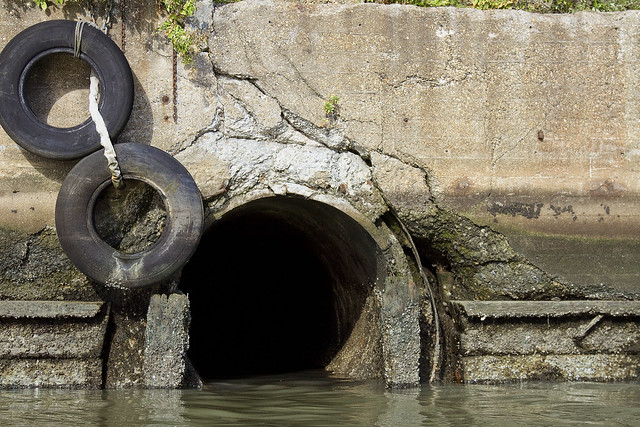
– photo by Mitch Waxman
One has always enjoyed strange interests and pastimes, even as a child. Vivid, memories of a next door neighbor (who owned a commercial vessel which was part of the Sheepshead Bay fishing fleet) displaying a captured deep sea creature- the sort whose teeth are transparent, skin is shiny black, and bearing a bioluminescent lantern protruding from its forehead- persist decades after viewing it dying in a bucket. Joy is found wandering about cemeteries and wasted heaths, or anyplace shunned by the common gentry.
from “Beyond Good and Evil” by Friedrich Nietzsche, Chapter IV. Apophthegms and Interludes
Wer mit Ungeheuern kämpft, mag zusehn, dass er nicht dabei zum Ungeheuer wird. Und wenn du lange in einen Abgrund blickst, blickt der Abgrund auch in dich hinein.
Translation: He who fights with monsters might take care lest he thereby becomes a monster. And when you gaze long into an abyss the abyss also gazes into you.

– photo by Mitch Waxman
Early experience has led one to appreciate, seek, and cultivate interest in the macabre. Hidden truths, occultist fantasy, the lure of the “real”- all have carried your humble narrator to bizarre locales in search of thrills. Delight is found in jars of formaldehyde cured anatomies, displays of skeletonized life forms, and the arcana of the mortician and police scientist. One thing which bizarre experience has taught me is that there are certain things which cannot be “unseen”, which will alter your perceptions of the normal.
from wikipedia.org
The original Maelstrom (described by Poe and others) is the Moskstraumen, a powerful tidal current in the Lofoten Islands off the Norwegian coast. The Maelstrom is formed by the conjunction of the strong currents that cross the straits (Moskenstraumen) between the islands and the great amplitude of the tides.
In Norwegian the most frequently used name is Moskstraumen or Moskenstraumen (current of [island] Mosken).
The fictional depictions of the Maelstrom by Edgar Allan Poe and Jules Verne describe it as a gigantic circular vortex that reaches the bottom of the ocean, when in fact it is a set of currents and crosscurrents with a rate of 18 km/hr.

– photo by Mitch Waxman
During my student years, a part time job at a photo developing company provided me with visions of horror normally reserved for the world weary gendarme. A certain police command in Brooklyn utilized our services to process evidentiary photographs and videotapes, and the horrors witnessed in these scraps of visual data imparted a real and lasting sympathy for the men and women who operate on the front lines of society. A child half consumed by zoo animals, bodies clad in the proverbial “cement overcoat” hauled from long residency in Jamaica Bay, the hapless victims of vehicular accidents. If you know a cop or ambulance driver, buy them a drink, as they have seen too much.
from The Shadow Over Innsmouth by H. P. Lovecraft
Complaints from many liberal organizations were met with long confidential discussions, and representatives were taken on trips to certain camps and prisons. As a result, these societies became surprisingly passive and reticent. Newspaper men were harder to manage, but seemed largely to cooperate with the government in the end. Only one paper – a tabloid always discounted because of its wild policy – mentioned the deep diving submarine that discharged torpedoes downward in the marine abyss just beyond Devil Reef. That item, gathered by chance in a haunt of sailors, seemed indeed rather far-fetched; since the low, black reef lay a full mile and a half out from Innsmouth Harbour.
People around the country and in the nearby towns muttered a great deal among themselves, but said very little to the outer world. They had talked about dying and half-deserted Innsmouth for nearly a century, and nothing new could be wilder or more hideous than what they had whispered and hinted at years before. Many things had taught them secretiveness, and there was no need to exert pressure on them. Besides, they really knew little; for wide salt marshes, desolate and unpeopled, kept neighbors off from Innsmouth on the landward side.
 – photo by Mitch Waxman
Perhaps this is why, whenever I am on Newtown Creek (which is rather frequently, after all) insistence on getting close to the open intestines of the cruel megalopolis is insisted on by your humble narrator. Miasmal, these pipeways contain the hidden and truly occult unknowable. Darkness shrouds and shelters unknowable realities in this system of engineered horror, whose construction largely dates back to a time in which a Kaiser still ruled Germany. An extensive urban mythology exists which speculates upon what might be found in this kingdom of the rat, along those weirs and subterranean grottoes fed by decay, filth, and all that which might be discarded by the sunlit world above.
Truly- who can guess, all that there is, that might be buried down here?
from “The Divine Comedy by Dante Alighieri“, translated by Henry Wadsworth Longfellow Inferno, Canto III
“Through me the way into the suffering city,
Through me the way to the eternal pain,
Through me the way that runs among the lost.
Justice urged on my high artificer;
My maker was divine authority,
The highest wisdom, and the primal love.
Before me nothing but eternal things were made,
And I endure eternally.
Abandon every hope, ye who enter here.”


