Archive for the ‘Blissville’ Category
of them
I cannot understand why others do not find these things quite as thrilling as I do.

– photo by Mitch Waxman
On one of my constitutionals, a humble narrator found himself at the veritable edge of Queens, heading in a southerly direction through Blissville on my way to “the Pernt.” Hoary Greenpoint can be accessed from Queens via just a few easily defensible littoral spots, one of them being an eponymous path called “Greenpoint Avenue” and the bridge which is named for it.
It’s a double bascule draw bridge which spans my beloved Newtown Creek, and I refer to the area surrounding it in both Brooklyn and Queens as “DUGABO” which is short for “Down Under the Greenpoint Avenue Bridge Onramp.”

– photo by Mitch Waxman
Off in the distance to the east, another one of these Thermopylae like passages is visible, the Kosciuszko Bridge.
Should hostilities between Brooklyn and Queens ever break out, it is certain that their respective militaries will make every effort to take and control these passes. Ultimately, you’d want absolute command and control over Pulaski, Kosciuszko, and Greenpoint Avenue Bridges, although sentries and artillery units would no doubt be deployed all along the Newtown Creek to guard against an amphibious invasion. The crumbling bulkheads and industrial fence lines would no doubt make for a daunting landing, and the Queens faction would have a de facto advantage in the conflict due to their ability to deploy artillery on LIRR flatbed cars.

– photo by Mitch Waxman
The Brooklyn side would be devastated by the first wave of a rail based artillery attack, given the massive presence of oil storage tanks on the southern shoreline. The sewer plant would be an easily targeted site, but vast reserves of Kings County loyalist troops can be found to the South and could easily be brought to the front by the G line. I’m sure there would be a fierce battle in the G tunnel underneath the Vernon/Manhattan avenue area, fought by locally raised units. Lentol’s Leathernecks, and Nolan’s Raiders, would fortify on either side of the tube, with setups reminiscent of WW1 trenches. It wouldn’t be long before both sides resorted to the usage of wonder weapons like poison gas, supplies of which are easily attainable on either side of the fabled Newtown Creek.
Queens would likely attempt the use of the 7 line to ferry in reinforcement troops like Van Bramer’s Sunnyside Battalion and Dromm’s Sikh and Gurkha Jackson Heights Commandos and the terrifying forces of the Meng Men from Flushing and Elmhurst, while Brooklyn would likely use the L line to bring in Reynoso’s Roughnecks, Levin’s Loppers, and Reyna’s Reapers from points east and south. Further to the east – where the borders of Brooklyn and Queens are not aqueous but rather terrestrial in nature – Dilan’s Death Dealers, Liz Crowley’s Maquis Freedmen, and Joe Crowley’s Fenians (backed up on their flank by Grodenchik’s Garroters, Vallone’s Vanquishers, and Katz’s Killers) would all be engaged in a Stalingrad like guerrilla struggle over Maspeth, Ridgewood, and Fresh Pond.
Media attention on the conflict would be of course be focused on LIC and Greenpoint, since you could see that from Manhattan’s east side.
Irregular sappers, freelancers like the Gambinos and Latin Kings, would no doubt be utilized by both sides in this Blood War of the Boroughs.

– photo by Mitch Waxman
Whilst musing about the idea of internecine and interborough warfare, I suddenly realized that traffic had stopped flowing on the Greenpoint Avenue Bridge. Worrying that the dark day had arrived at last when the border of Brooklyn and Queens would be marked by fire and death, it suddenly became apparent that the DOT was preparing to open the bridge to allow a maritime transit.
Whooopppeeee!!!

– photo by Mitch Waxman
To all of those stopped in traffic, it must have appeared odd, seeing some despoiled creature In a filthy black raincoat jumping up and down while squealing with joy and waving a camera around.
A minor inconvenience experienced by others is often a moment of joy for me.
I got busy with the camera, and ran out onto the non movable part of the roadway, which is normally quite a chancey thing to do on the highly travelled span over Newtown Creek, as you’d get squished by a truck.

– photo by Mitch Waxman
God help me, but I just love watching a draw bridge at work. Also, check out those bike lanes. I encouraged a bicyclist to make a try for it, telling him he could easily jump the gap if he got enough headway speed. He ignored me and played with his phone instead.
Some people, I tell you, have no sense of adventure.

– photo by Mitch Waxman
The apogee of the bridge roadway’s open posture was attained shortly, and it rose in monolithic fashion. This is likely the position that the Bridge would be fixed into should hostilities between Brooklyn and Queens break out, which is offered as a strategic and or tactical note to the future combatants.

– photo by Mitch Waxman
In my incessant research of all things Newtown Creek, an eventuality in which the Creek would have become militarized was actually set down by the War Department of the United States, during the World Wars period of the early 20th century.
Naval Destroyers (sometimes the presence of a battleship is discussed as well) were set to be stationed along the Newtown Creek (as well as the East and Hudson rivers) and its tributaries to defend the Petroleum and Industrial bases along its shorelines from air or naval attack. The anticipated pathway which a German invasion fleet would have followed involved a passage through Jamaica Bay and the Narrows in pursuance of invading Manhattan at the Battery and Brooklyn via Bay Ridge. The naval guns on Newtown Creek would have been trained on the Narrows, shooting artillery in a parabola over all of Brooklyn and bombarding enemy vessels on the waterway. The defensive plan was to create a “death zone” between and supported by Forts Totten (Staten Island) and Hamilton (Bay Ridge). Governors Island was also meant to play a role in the deployment of long range defenses and weaponry.
I know, sounds silly to we children of the atom, but this was an actual military plan. It’s part of the reason why the Kosciuszko and Long Island Expressway over Dutch Kills were built as high as they are, to allow the smoke stacks of ocean going Naval Ships purchase. The East River Bridge heights were also built with the Brooklyn Navy Yard and the presence of Capital Ships in NY Harbor during times of war in mind. It’s one of those “alt history” scenarios which leads to a fascinating thought experiment – a Kriegsmarine and Wehrmacht invasion of New York Harbor (their ACTUAL plans, btw, would have included the setup of a German base of operations at Sandy Hook). Just to reiterate – the Germans were ACTUALLY and ACTIVELY planning for this.

– photo by Mitch Waxman
Of course, an invasion of the United States would have been contingent on the Germans not being involved in two major European land conflicts simultaneously, and Germany being at peace with the UK and the Royal Navy. The invasion of NY Harbor would have represented about a third of the German assault, with other units landing at Cape Cod in Massachussets and in Virginia. A simultaneous landing of troops from the Japanese Empire would have occurred in Seattle and in San Diego.
Lost in my alt history thoughts, I suddenly realized that I didn’t know which vessel the bridge had opened for, and a quick dog trot to the fences of the eastern side of the bridge was enacted.

– photo by Mitch Waxman
The Mary H tug was towing a fuel barge, no doubt headed some three and change miles back from the East River to the Bayside Fuel depot found nearby another one of the flash points in a Borough on Borough war – the Metropolitan Avenue Bridge. Both Grand Street and Metropolitan Avenue Bridges span narrow passes on the Creek, where small arms fire and snipers would be easily able to command and control access between the two warring sides.
What would be the cause of a war between the two boroughs? Good question, lords and ladies.

– photo by Mitch Waxman
My bet is that it would be a trade dispute, with Brooklyn enacting a restrictive tariff on all things artisinal and organic.
“follow” me on Twitter- @newtownpentacle
sights familiar
Newtown Pentacle’s 2015 Year in review
January, 2015

– photo by Mitch Waxman
This is the Newtown Pentacle “Year in Review” post, which is replete with links to earlier postings. The links were chosen for inclusion based on my own predilection. Either the photos contained in them don’t suck, or they were written to cover something significant that passed in front of my camera. There’s some pretty good stuff contained herein, IMHO. There will be a single image posted on Thursday the 31st and Friday the 1st, and new material will resume on Monday the 4th at this, your Newtown Pentacle.
2015 started off with a bang – and the loss of a dear friend – Captain John Doswell, who was eulogized in this post on January 5th. Out of a desire to escape from existential reality, I went searching for the Vampires that hang around the House of Moses down in Red Hook. Life kept on happening though, and while enduring an excruciating interval in Manhattan’s Gas Light district, a neat relic of tenement New York at a Church on 14th and 1st was described.
February, 2015

– photo by Mitch Waxman
A humble narrator spends a lot of time outdoors and concurrently complains endlessly about the weather. Too hot, too cold, humid, dry, raining, or way windy – I’m a regular complaint department on the subject. This post from February depicts a frozen over Newtown Creek, and what turned out to be creosote oil migrating out of a wooden maritime structure called a “dolphin.” “Other Objects” discusses curious altars and offerings discovered adorning certain corners in Astoria from around the time of the lunar new year. Over at Bushwick Inlet on the East River, in hoary Greenpoint, a spectacular fire at the Citystorage building was observed.
March, 2015
x
– photo by Mitch Waxman
When the Big Little Mayor announced his intentions to deck over the Sunnyside Yards, which is literally “in my back yard,” I was forced to say “not.” As history is ultimately the best weapon in my quiver, the video above was created and disseminated to the web. A dedicated effort to focus in on Queens was made in 2015, after having spent most of 2014 over in Greenpoint. Strange Oceans focused in on “used to be 5ptz” on Davis Street in LIC. Not Permitted continued to discuss the Sunnyside Yards issue, and Very Confines witnessed mystery discharges into the Newtown Creek at the currently undefended border of Brooklyn and Queens.
April, 2015

– photo by Mitch Waxman
One spent quite a bit of time and effort visiting the “House of Moses” in 2015, and “Resting and Brooding” spent a bit of time observing the heart of Robert Moses’s empire here in Astoria – mighty Triborough. On the south end of Steinway Street, a tropical bird was noticed that was suffering from neglect in “Nearby Where,” and “Were Related” revealed where the City government stores a bunch of its gear under the Queensboro Bridge and at North Henry Street in Greenpoint.
May, 2015

– photo by Mitch Waxman
One of my highlights for 2015 was getting invited down into the Second Avenue Subway project, which spawned a series of posts. “Who can guess” “all that there is” “that might be” “buried” and “down there” arrived in Newtown Pentacle subscribers email, Twitter streams, or Facebook feeds in late May of 2015. Earlier in the month, “historical realities” explored DUPBO – Down Under the Pulaski Bridge Onramp – back at Newtown Creek.
June, 2015
– photo by Mitch Waxman
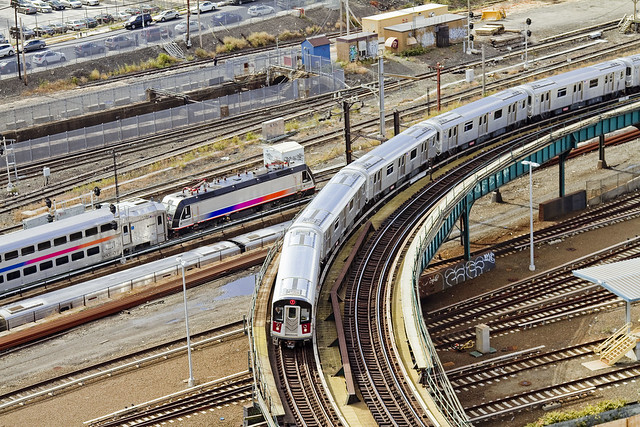
In June of 2015, I was operating at full throttle. Opening about the ridiculous lack of public bathrooms to be found in the greatest City on the planet in “fully inanimate,” discussing the ongoing Superfund situation at Newtown Creek in “arduous details,” and asserting that 7 line Subway is far and away the most photogenic of NYC’s mass transit options in “simple swains,” and I got to bring the camera out with the Working Committee on a tour of Gowanus Bay in “quaint fusion.” The HarborLab group built and delivered a dock to Newtown Creek’s Dutch Kills tributary for the usage of LaGuardia Community College’s science programs, and I tagged along to document the effort in “jouncing descent,” “grim facade,” “listless drooping,” and “stinking shallows.”
July, 2015

– photo by Mitch Waxman
“Amidst Glare” showcased the last photos my old camera ever took, before an accident destroyed the thing. A call out to Newtown Pentacle’s readers for financial aid in replacing it was answered handsomely, which warmed the calcified vesicle which passes for my heart. “Racing Ahead” returned to the House of Moses, and wished the Marine Parkway Bridge a happy birthday. An uncharacteristic post explored the macroscopic world of an Astoria cucumber patch in “vine encumbered,” whereas “Portal Guardians” brought me right back home to the gutter.
August, 2015

– photo by Mitch Waxman
Walking from Astoria to lower Manhattan one sunny day, via the Williamsburg Bridge, was discussed in “victoriously swept,” and led to another visit to the House of Moses in “pale vapors.” The House of Moses is citywide, and Greenpoint’s iteration was explored a bit in “staves and axes.” Over at Staten Island’s own Kill Van Kull waterway, a pretty significant bridge rebuilding project is underway at the Bayonne Bridge, which was detailed in “decadent element.” Calvary Cemetery in LIC’s Blissville neighborhood was profiled in “ordinary interpretation.” Closer to home, Astoria’s Broadway was invaded this summer by an army of drunks which the 114th Precinct refused to notice. I forced them to notice in a flurry of posts and social media efforts, starting with “unknown things,” and “parched and terrible.” My efforts at documenting the neighborhood and its issues continued with “later civilizations.”
September, 2015

– photo by Mitch Waxman
In September, like every other idiot with a camera and tripod in North America, I was up on the roof photographing the so called “super blood moon” in “khephrens gateway.” The battle of the Borrachos continued here in Astoria, in “another city.” “Drifting Sand” visited Astoria’s Steinway Mansion and offered a shout out to Newtown Pentacle’s most frequent commenter – George the Atheist – for his tireless documentation of the sinful manner in which the cultural heritage of Queens is treated. At Newtown Creek, the area I refer to as DUGABO – Down Under the Greenpoint Avenue Bridge – was discussed in “horrors and marvels.” I got to gather some night shots from mid channel on the Newtown Creek in “gorgeous concealment,” and tripod shots of the Dutch Kills tributary of Newtown Creek were offered in “could furnish.”
October, 2015

– photo by Mitch Waxman
With tour season winding down in the late fall, my wandering about the City of Greater New York increased. Over at Newtown Creek’s Unanmed Canal at North Henry Street, a Newtown Creek Alliance event allowed me some purchase to explore the unexpected ossuary found at a semi abandoned DSNY Marine Transfer Dock in “gently heaving.” An Atlas Obscura night time event at Brooklyn’s Greenwood Cemetery provided time and opportunity to provide some fairly surreal “night into day” shots in “breathing marble.” Back in Astoria, “swinging and plunging” showcased some passing maritime action at Hells Gate, and showcase a cool car spotted at the border of old Astoria in “other metals.” Newtown Creek has finally seen MTA re activating its rail presence, albeit for the purpose of shipping trash around, and the garbage trains at the Blissville Yard were described in “viewless aura.”
November, 2015

– photo by Mitch Waxman
Halloween was spent at the corner pub which I refer to as my district office – Doyle’s at the Times Square of Astoria, 42nd and Broadway. Costumed hordes allowed me to photograph them in “rose oddly.” Oddly, my energy levels in November were quite high, whereas Consolidated Edison was busy dealing with low levels of residential supply found in Astoria as detailed in “full joys.” Discussion of manhole covers resumed in “discoursed of,” Mayor de Blasio and his agenda were derided in “mountain folk,” and LIC’s Montauk Cutoff was discussed in “these views.” The Montauk Cutoff post explored my growing interest and fascination with low light photography, and a series of posts about a pre dawn walk from Astoria to industrial Maspeth – “grotesque night,” “betraying myself,” “duplicate and exceed,” and “ultimate effect” displayed what I saw on an uncharacteristically warm November night. Finally, DUKBO – Down Under the Kosciuszko Bridge(s) Onramp(s) – and the NYS DOT construction project, was visited in “brought up,” and “leftward fork.”
December, 2015
– photo by Mitch Waxman
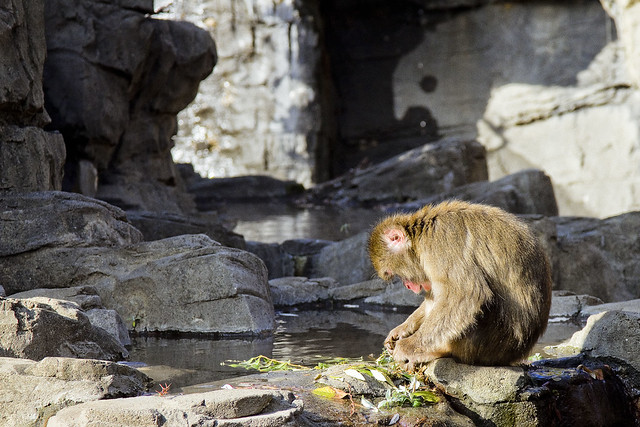
The close of 2015 began as it started, with the death of a good friend – Kill Van Kull chronicler and Photographer John Skelson, who was eulogized in “Marine Things.” The forbidden north coast of Queens, and Luyster Creek, was visited in “known specie,” and the Queens side of DUKBO described in “cyclopean endeavor.” A boat trip on Newtown Creek found a Hindu god lurking along the bulkheads in “systemic horror,” and an encounter with some cheeky monkeys in Central Park was described in “urge primal.”
“follow” me on Twitter- @newtownpentacle
antique forms
Visiting with the Alsops, in today’s post.

– photo by Mitch Waxman
Famously, the Roman Catholic Church purchased the land which would become LIC’s Calvary Cemetery back in 1848 from the Alsop family, who had inhabited it since the time of the Dutch decadence. The first Alsop on the land was a fellow named Thomas Wandell, who had ran afoul of Lord Protector Cromwell back in England and decided his best move was to hide out in the American colonies, specifically the ones which ran the flag of the Staten Generaal up the pole. The property was occupied during the American insurrection by none other than Lord Cornwallis and General Howe, and the experience of the Alsops regarding the forced quartering of troops and the damages inflicted on home and hearth by Hessian and Dragoon alike actually helped inform the Constitution of the United States’s ban on the practice. By 1848, the family line had dispersed and there was only one full blooded Alsop left in Queens. His estate sold the property to the Church, with the provision that the Catholics would maintain – in perpetuity – the Alsop family graveyard within the larger cemetery.
The Alsop plot is a theoretically unique place upon the earth, a Protestant graveyard entirely enclosed within a Catholic one. This doesn’t sound like too big a deal to modern ears, but back in the 1700’s, the Protestant Reformation and the Eighty Years War were still pretty present in people’s minds.

– photo by Mitch Waxman
The Protestant Reformation, incidentally, is the filter by which one such as myself processes the news of the day. When you’re reading about insurgents and terrorists in the Middle East, it’s hard not to think that “those people” are savages and barbarians. That’s because… well, this post is written in English… Europe’s experience with this sort of thing has sort of faded into the historical firmament.
Martin Luther was excommunicated from the Catholic Church back in 1521, which is coincidentally the same period in which Catholic Spain conquered the Mexica Aztec culture and appropriated an enormous quantity of precious metals and wealth from them. Churches in Spain, to this day, have a lot of Mexican silver worked into their ornamentation. What the Spanish Crown did with most of that silver, though, was fund the war against the Protestant crowns who followed Luther into the cold. It’s how they paid for the Spanish Inquistion, and the Counter Reformation, and it’s how Holland and the Netherlands ended up becoming independent countries after fighting their way out of the Hapsburg empires.
Europe, for a bit more than a century, was ripped apart by the religious wars. Famine, plague, all that good stuff was the result. Ultimately, the Thirty Years war between 1618 and 1648 ended up killing something like 25-40% of what modernity refers to as Germany.
At the end of it, the Crowns of Europe set up authoritarian states which brooked no dissidence and strictly controlled religion, printing, and what we would call “free speech.” The Dutch, and later the English, both began sending their religious zealots to the colonies in the Americas in an effort to try and keep the peace back home.
These zealots – Anabaptists, Puritans, Quakers – even Cromwell himself – were considered to be dangerous and it was best to make them go away. The reformation and its wars were bad for business and everyone agreed that a predictable future was better than the inverse, so the Kings grew ever more powerful in the name of stability.

– photo by Mitch Waxman
Remember too, that 500 years ago, what we know as “Europe” was considered a violent backwater. The royalty were essentially the descendants of inbred motorcycle gangs who had ridden into a city and taken over by force of arms. Death came swiftly for the common people, as any infraction of the rules set down by these undereducated masters incurred reprisals that the ISIS people would be very comfortable with. After the Protestant Reformation’s wars had run their course, Europe entered into a period which is referred to as “the enlightenment” during which the winners of the reformation game consolidated feudal holdings they’d won control over into nation states whose names are familiar to modern ears – France, for instance. The countries which were never burned by the fires of these wars remained feudal duchys of the Catholic Church until quite late in the game – Italy comes to mind.
The absolute monarchs who ruled these new “national” territories were tyrants, so much so that the merchant classes of Europe – the so called Bourgeoise – began to pick up stakes and follow the zealots over to the Americas.
These Bourgeoise, who were heavily influenced by the Freemasons philosophically, are the people who led the revolutions against the European Monarchs, and the influence of the very conservative Catholic Bishops, and who set about trying to create Nation States which would operate in “rational” and “scientific” ways.

– photo by Mitch Waxman
What’s happening today in the Middle East is not entirely unlike the Protestant Reformation. The Protestants were religious fundamentalists driven to violent action by tyrannical and unfair governments who were supported by a clergy that supported and reinforced the power of the tyrants – those motorcycle gangs mentioned above. The Spanish empire was ruled by the Hapsburg family, who also controlled what would one day be called the Austro Hungarian Empire but at the time was called the “Holy Roman Empire.” Both Catholic and Protestant militarized and controlled vast resource bases, and when the Spanish hit the jackpot in Mexico – things flew into high gear. Genocide was an official policy back then, and the reason that the Crusades were abandoned wasn’t entirely because of the rising power of the Ottomans. It was because the Crusades were being aimed at the Albigensians and Cathars in France and what we would call Germany.
As Americans, we are the inheritors of a particularly Anglophile point of view. The fact that this POV exists at all is because the Spanish Armada never made it to the Thames.

– photo by Mitch Waxman
For a straight up history of the Alsops, check out this post presented at this – your Newtown Pentacle – back in 2011. Institutional memory is something that I constantly rattle on about. Something has gone wrong with our culture – it just might be Facebook – in recent years. A scandal or tragedy occurs, and everybody acts as if it’s something that’s happening for the first time. Ignorance of history seems willful, which breeds a sense of fatalism on the part of many. The world is not going to hell in a hand basket, rather, it’s been there before.
How did the Europeans solve the religious wars which decimated them for nearly 150 years? Totalitarian governments and absolute monarchy, that’s how, which sparked the age of colonialism. How did they solve that? Republics and representational democracy. Where that led – the second thirty years war – WW1 and 2. Which led to the Cold War…
I’ve got to stop hanging out in cemeteries, because places like the Alsop plot are how every story ends.
“follow” me on Twitter- @newtownpentacle
shall continue
A few shots from the late summer, in today’s post.

– photo by Mitch Waxman
As of this writing, my Mac is still in the shop getting repaired, so a humble narrator finds himself reduced to pulling out older shots from my archives. The computer experienced some sort of electrical failure, which is the sort of thing that is beyond my capabilities to diagnose and repair. Software problems I can handle, but component failures require a specialist – much in the same way that I can deal with psychological or emotional problems on my own, but a doctor is needed to sew, or set, or medicate, or even operate when it’s something mechanical that afflicts the chassis.
Spotted this half truck over on the forbidden north coast of Queens back at the end of the summer while incessantly wandering about and exploring, and the shot is somewhat indicative of how I feel without my desktop computer. The desktop remains the “master cylinder” of my work life, and I’m diminished without it.

– photo by Mitch Waxman
Into each life, a little rain must fall. That’s what my grandmother used to tell me, but she was a Russian Jew, and you will never be able to appreciate the sort of fatalism which people like my “Bubbie” lived with. Her story was like something out of a Dostoyevsky novel, including a mad dash across the Atlantic to America and a quick immersion into the garment industry sweat shops of NYC during the First World War. That was followed by the Great Depression, and the Second World War… you get the idea. Bubbie told stories of a lost brother who was beheaded by drunken Cossacks when he was just 13, which helped to explain her particular world view.
Think you’ve got problems? Drunken Cossacks, ’nuff said.

– photo by Mitch Waxman
Regardless of the familial stories involving a world which was literally “beyond the Pale,” this has been a bad year for my gizmos. The camera disaster back in July, which saw my trusty capture device lying shattered on an Astoria street, was a setback. Add in the unfolding computer problems – 2015 has really been a crap year for me.
Bah. Christmas is cancelled. Hang your head down as you walk along the streets, and consider the plight of the world like a good nihilist. Everything is shit.
“follow” me on Twitter- @newtownpentacle
viewless aura
Blissville, in today’s post.

– photo by Mitch Waxman
Blissville, for those of you not in the know, is the section of Long Island City which the Greenpoint Avenue Bridge connects to. One refers to this area as DUGABO – Down Under the Greenpoint Avenue Bridge Onramp – as I like to stay ahead of the Real Estate Guys on this sort of thing. DUGABO is an M1 zone, meaning that it is zoned for heavy industry. A couple of blocks to the north, it becomes a “mixed use” zone, and there’s a scattered series of homes and commercial storefronts in the area – a lot of the building stock actually dates back to the 19th century.
The LIRR trackways run along the coast of Newtown Creek, and you’ll find several bits of railroad infrastructure along the shoreline. In focus today, the Blissville Yard, which has found new occupation.

– photo by Mitch Waxman
The Blissville Yard is a series of trackways designed for storage of rolling stock. It connects to the Hunters Point tracks via a rail bridge that crosses Dutch Kills, and there used to be a connection to the Sunnyside Yards and the Degnon terminal railway spurs via the Montauk Cutoff which is no longer an active track. The modern use of the Blissville Yard is governed by the New York and Atlantic company, which is a private corporation that handles freight services for the Long Island Railroad. If you see a black and emerald colored engine operating along the LIRR tracks, that’s them.

– photo by Mitch Waxman
Not too long ago, the Waste Management company, which enjoys a profitable relationship with NYC’s Department of Sanitation, opened a new facility on the Queens side of the Newtown Creek. Waste Management handles the exit from our municipality of the putrescent or “black bag” garbage collected by the municipal DSNY. The company has been operating for several years out of an enormous facility on Varick Street in what should be called Bushwick, but is referred to in modernity as East Williamsburg.
At Varick Street, Waste Management and New York and Atlantic operate the so called “garbage train” along the Bushwick Branch of the LIRR. Now, in Queens, they are operating another garbage train out of the Blissville Yard and the newish Review Avenue Waste Transfer Station – which is across the street from Calvary Cemetery. Those green box cars in the shot above?
That’s the Garbage Train.

– photo by Mitch Waxman
DUGABO proper, the street where you’ll find the at grade crossings for the garbage train is appropriately called Railroad Avenue. To the west, you’ll find the Blissville Yard and the SimsMetal company. SimsMetal handles the recyclable materials collected by DSNY and others. To the east, you’ll find other new arrivals (new as in the last decade, which isn’t even yesterday to “historian me”) like Waste Managements “Green Asphalt” facility.
This little roadway alongside the Greenpoint Avenue Bridge has become a locus point for heavy trucks, literally thousands of heavy trucks loaded down with garbage, on a daily basis.

– photo by Mitch Waxman
The putrescent waste is processed at Waste Management, and loaded into these green boxes, which are then positioned onto rail cars. The garbage train(s) proceed eastward to the Fresh Pond yard. From Fresh Pond, they begin a long and circuitous journey which sees them leave Long Island via the Hell Gate Bridge and head north through the the Bronx via the Owls Head yard. Leaving NYC, they head most of the way to Albany, where another rail bridge allows them to cross the Hudson and enter the continent. Where they go after that seems to be a state secret, although I’ve been told that there are a series of tapped out coal mines in Pennsylvania and West Virginia which are gradually being filled back up.
Future archaeologists are going to love us, I tell you.
“follow” me on Twitter- @newtownpentacle


 The Newtown Pentacle