Archive for the ‘Dutch Kills’ Category
halting tongue

– photo by Mitch Waxman
As mentioned in prior postings, an awful lot of time is consumed around Newtown Pentacle HQ in the pursuit of historical anecdote and photographic documentation of the Newtown Creek’s storied past. Often, I’m asked “where do you do your research?”. In the case of today’s posting, it’s the amazing archives of municipal journals and industrial journals which can accessed at google books.
NEW VERNON AVENUE BRIDGE OPEN LONG ISLAND CITY
1908 image from “Illustrated History of the Borough of Queens, New York City By Georg von Skal, Flushing Journal, Flushing, N.Y” – courtesy google books
The Pulaski Bridge is a block or so from the spot where the Vernon Avenue Bridge spanned the creek (between Vernon Ave. in Queens and Manhattan Avenue in Brooklyn), until the Pulaski was erected in 1959 1954. The “Vernon Avenue Bridge” pictured above is the 1908 variant, as there was more than one version of the Vernon Avenue Bridge over the years- including an early swing bridge.

– photo by Mitch Waxman
Included today is this helpful graphic, shot from the Pulaski Bridge, illustrating the abutments of the old bridge. Both are street ends today. In Brooklyn, one will find a park and in Queens, one will find an unofficial dock.
Also:

– photo by Mitch Waxman
An NCA event, which I for one am pretty stoked about:
April NCA meeting hosts Dr. Eric Sanderson
April 26, 2012 at 6pm
Ridgewood Democratic Club, 6070 Putnam Avenue, Ridgewood, NY 11385
In addition to important updates from our members – in particular the Bioremedition Workgroup has been very busy! – we will be hosting a special presentation on the “Historical Ecology of Newtown Creek”.
Dr. Eric Sanderson, senior conservation ecologist at the Wildlife Conservation Society and author of “Mannahatta: A Natural History of New York City” (Abrams, 2009), will describe recent studies of the historical ecology of Newtown Creek, describing the original wetlands, creek channels, topography and vegetation of the area. He will show a series of 18th and 19th century maps of the watershed of the creek and discuss the process of synthesizing them into an integrated ecological picture that can be used to inform and inspire natural restoration and cultural appreciation of the Newtown Creek watershed. This work is part of the Welikia Project (welikia.org), an investigation into the historical ecology of the five boroughs of New York City and surrounding waters.
dull wonder

– photo by Mitch Waxman
Ongoing observations of the FedEx construction project at Dutch Kills are impossible for your humble narrator to avoid, as my daily travels often necessitate that my incessant marching carry me past the place. Luckily, recent phases of the project have created lapses in the fencing around the site which have allowed visual access that doesn’t require climbing upon or dangling from either traffic signals or the Long Island Expressway.
from dutchkillscivic.com
In 1642, licenses were granted to some Dutch citizens to settle in Queens. “Kill” is a Dutch word meaning “little stream.” Since Dutch men settled around the “Kill,” (in Long Island City) the name Dutch Kills was adopted. The “Kill” (or stream) is a tributary of Newtown Creek, which divides Queens from Brooklyn.
During the Revolutionary War, British troops were billeted in a series of farmhouses on 39th Avenue (Beebe Avenue). These houses stood until 1903 when they were torn down to make way for the railroad. In the early 1900’s the Queensborough Bridge was opened. Proximity to Manhattan, presence of railroads, and Long Island all contributed to the importance of Dutch Kills.

– photo by Mitch Waxman
I’ve conducted a few private walking tours of the area around Dutch Kills in recent weeks, mainly for groups of European and American students, many of whom were aghast at the scale of this endeavor and stunned by the lack of dust abatement going on. Wisely, several of them held handkerchiefs to their mouth and nose while walking by.
from wikipedia
Dust abatement refers to the process of inhibiting the creation of excess soil dust, a pollutant that contributes to excess levels of particulate matter.
Frequently employed by local governments of arid climates such as those in the Southwest United States, dust abatement procedures may also be required in private construction as a condition of obtaining a building permit.
Dust abatement methods include the regular spraying of water on loose dirt in construction sites, the paving of or applying magnesium chloride to dirt roads, and restricting access to dusty areas.
Abatement oil (an organic, lubricating and penetrating oil) most commonly used to remove debris such as dust and asbestos. Application of this product is normally done by lathering onto the surface and then removing with a clean dry cloth.

– photo by Mitch Waxman
One of the things which I’m growing increasingly apprehensive about is the “occupational exposure” to the endemic pollutants surrounding and suffusing the Newtown Creek waterway. As mentioned in earlier postings, when visiting a sewer plant I no longer react to the smell and consider a visit to a Waste Transfer station on the banks of English Kills to be a pleasurable diversion.
The sudden illness and death of my friend and mentor Bernie Ente a year ago weighs heavily on my mind even now, and little doubt exists in my mind that the Creek had at least a tangential role in his decline.
from wikipedia
An occupational exposure limit is an upper limit on the acceptable concentration of a hazardous substance in workplace air for a particular material or class of materials. It is typically set by competent national authorities and enforced by legislation to protect occupational safety and health. It can be a tool in risk assessment and in the management of activities involving handling of dangerous substances. There are many dangerous substances for which there are no formal occupational exposure limits. In these cases, control banding strategies can be used to ensure safe handling.

– photo by Mitch Waxman
In the world of the Newtown Creek- where the very air you breathe is a poisonous fume, where sickly trees fed by a morbid nutrition struggle to burst forth from the shattered cement, where the water is a sickly shade of antifreeze green, and where every surface is coated with a queer and iridescent “colour”- what strange and undesirable substance might be carried by the lightest of breezes?
Who can guess all there is, that might be buried down there, which has been granted freedom?
from dec.ny.gov
To protect humans and the environment from damage by air pollution, DEC continually measures levels of pollutants in the air. DEC regularly reports the results of these measurements — in the case of ozone, which at high levels can be a threat to human health, the results and predicted pollution levels are reported in real time, on DEC’s website and through broadcast media.
DEC measures air pollutants at more than 80 sites across the state, using continuous and/or manual instrumentation. These sites are part of the federally-mandated National Air Monitoring Stations Network and the State and Local Air Monitoring Stations Network. Real time direct reading measurements include gaseous criteria pollutants (ozone, sulfur dioxide, oxides of nitrogen, carbon monoxide), PM2.5 (fine particulate with diameter less than 2.5 microns), and meteorological data. Filter based PM2.5, lead, and acid deposition samples are collected manually and shipped to the laboratory for analysis.
Monitoring air for pollutants is a complex technical task, requiring not only direct measurement, but also measurement standards and quality assurance to ensure that the information provides a correct understanding of air quality in New York State. Ambient air quality reports provide the data and interpretations to the technical community and the public.

– photo by Mitch Waxman
These concerns about exposure to the poisons of the watershed have been expressed to the team of medical professionals who keep my health at delicate balance. Queries are advanced from this group of doctors as to why I just can’t leave this place to its own devices and disposition. What compulsion is it that drives one time and again to venture into this veritable lions den of carcinogens, corrosives, and environmental corruption?
from wikipedia
In human context, self-destructive behaviour is a widely used phrase that conceptualises certain kinds of destructive acts as belonging to the self. It also has the property that it characterises certain kinds of self-inflicted acts as destructive. The term comes from objective psychology, wherein all apparent self-inflicted harm or abuse toward oneself is treated as a collection of actions, and therefore as a pattern of behaviour.
Acts of “self-destruction” may be merely metaphorical (“social suicide”) or literal (suicide). Generally speaking, self-destructive actions may be deliberate, born of impulse, or developed as a habit. The term however tends to be applied toward self-destructions that are potentially habit-forming or addictive, and are thus potentially fatal.

– photo by Mitch Waxman
Simply put, it has become my belief that if Newtown Creek and it’s tributaries can “be solved”, a thorough understanding of the problem- both historical and modern- will be required. Such a magnificent puzzle as the one this place represents, located at the very navel of New York City, might offer a solution to larger national puzzles. It’s my hope that in some small way, this blog can help to “connect the dots” when somebody far more intelligent than myself applies themselves to the issue in the future.
The answer won’t be offered by me, of course, as I must always remain an outsider cursed to watch and record but never to participate in such things.
from wikipedia
The optimisism bias (also known as unrealistic or comparative optimism) is a self-serving bias where an individual perceives that they are less at risk of experiencing a negative event compared to others. The optimistic bias is seen in a number of different scenarios, including causing individuals to believe that they are less at risk of being a victim of a crime, smokers to believe they are less likely to contact lung cancer or disease than other smokers, and even first-time bungee jumpers believe that they are less at risk of an injury than other jumpers. Although this bias occurs in both positive and negative events, there is more research and evidence that the bias is stronger for negative events. However, there are different consequences that come from these events: positive events often result in feelings of well being and self-esteem, while negative events lead to consequences with more risk, such as engaging in risky behaviors and not taking precautionary measures. The optimistic bias can also be viewed in terms of expectancies about specific events
rarest flowers
A number of “Things to do” have materialized of late, so it is time for your Newtown Pentacle calendar of April events and/or fun things to do.

– photo by Mitch Waxman
There are a whole lot of things in the planning phases which I can’t tell you about yet, but suffice to say that this should be an amazing summer. Diversions on land and water will soon be announced, including boat tours of Newtown Creek and the greater harbor beyond.

– photo by Mitch Waxman
First up, today there will be a protest in Manhattan concerning recent City plans- via newtowncreekalliance.org
Rally to oppose Thermal “Waste-to-Energy” Facilities
April 9th, 2012
On Monday, April 9th at 10am, environmental justice groups, environmental organizations, community leaders and elected officials from Brooklyn, the Bronx and Manhattan will rally to oppose the Bloomberg administration’s plan for thermal “Waste-to-Energy” facilities (a.k.a. incinerators). Two of the proposed sites for this facility are on the shores of Newtown Creek, and our communities host 40% of the city’s waste transfer facilities, so we are adding our voice to the cause. Click here for our previous post on the issue, and download two fact sheets on Waste-to-Energy here and here.

– photo by Mitch Waxman
Secondly, from workingharbor.com
All About Tugs—Inside the Tugboat Industry
Tuesday, April 17 at 6.p.m.
Special evening program will feature documentary films with commentary by tug captains and crew presenting an insider’s look at the tugboat industry—its colorful history, present-day work, and vital importance.
Community Church of New York, 40 East 35th Street, Manhattan
Tickets are $25 ($20 for seniors). They can be purchased at www.workingharbor.com and include a reception with food, beer, wine and other beverages.
New York, NY, April 2, 2012 — Everybody loves tugboats, those iconic little workhorses that push ships ten times their size through narrow waterways and tow barges laden with fuel oil through busy harbors. “It is like the “Little Engine That Could,” or the mouse that pulled the thorn out of the lion’s paw,” said filmmaker Tom Garber, whose documentary, Tugging Through Time: The History of New York Harbor Tugboats, will be featured, The Working Harbor Committee (WHC), a not-for-profit organization dedicated to educating the public about the history and present-day importance of the Port of New York and New Jersey, is sponsoring the presentation. Since 2002 WHC has taken more than 20,000 people on Hidden Harbor® boat tours to visit behind-the-scenes waterfront places that most people never get the chance to see. “Tugboats are always the biggest hit,” said Captain John Doswell, the organization’s executive director. WHC also runs the annual New York Harbor Tugboat Race. “People always ask what it is like to be on board. Our ‘All About Tugs’ program will answer that question.”

– photo by Mitch Waxman
Third, also from newtowncreekalliance.org
Earth Day BYO Picnic Lunch at the Newtown Creek Nature Walk
Sunday, April 22nd at 1 p.m.
Come join in for this casual celebration of the victory that is the Newtown Creek Nature Walk. Bring your own brown bag lunch and join the Newtown Creek champions who worked hard for years to win this unique waterfront park.
Sunday, April 22nd at the Newtown Creek Wastewater Treatment Plant Nature Walk between 1pm – 2pm.
– photo by Mitch Waxman
Fourth, another NCA event, which I for one am pretty stoked about:
April NCA meeting hosts Dr. Eric Sanderson
April 26, 2012 at 6pm
Ridgewood Democratic Club, 6070 Putnam Avenue, Ridgewood, NY 11385
In addition to important updates from our members – in particular the Bioremedition Workgroup has been very busy! – we will be hosting a special presentation on the “Historical Ecology of Newtown Creek”.
Dr. Eric Sanderson, senior conservation ecologist at the Wildlife Conservation Society and author of “Mannahatta: A Natural History of New York City” (Abrams, 2009), will describe recent studies of the historical ecology of Newtown Creek, describing the original wetlands, creek channels, topography and vegetation of the area. He will show a series of 18th and 19th century maps of the watershed of the creek and discuss the process of synthesizing them into an integrated ecological picture that can be used to inform and inspire natural restoration and cultural appreciation of the Newtown Creek watershed. This work is part of the Welikia Project (welikia.org), an investigation into the historical ecology of the five boroughs of New York City and surrounding waters.
Finally,

Obscura Day 2012, Thirteen Steps around Dutch Kills
April 28th, 10 a.m.
Your humble narrator will be narrating humbly at this year’s Obscura Day event on April 28th, leading a walking tour of Dutch Kills. The tour is already half booked up, and as I’m just announcing it, grab your tickets while you can.
“Found less than one mile from the East River, Dutch Kills is home to four movable (and one fixed span) bridges, including one of only two retractible bridges remaining in New York City. Dutch Kills is considered to be the central artery of industrial Long Island City and is ringed with enormous factory buildings, titan rail yards — it’s where the industrial revolution actually happened. Bring your camera, as the tour will be revealing an incredible landscape along this section of the troubled Newtown Creek Watershed.”
For tickets and full details, click here :
obscuraday.com/events/thirteen-steps-dutch-kills-newtown-creek-exploration
yellow rays

– photo by Mitch Waxman
Recorded recently in the neighborhood of Dutch Kills, not the waterway but the neighborhood which the waterway once flowed into. It’s confusing, as the waterway is often cited or mentioned in these postings and is “way over there” from the perspective of the neighborhood- which is found between Ravenswood, the East River, and Astoria. Large hotels are on the rise in the area, and there’s a whole lot of construction underway. For street artists, this is a bit of a playground.

– photo by Mitch Waxman
Personally, this is my kind of stuff. Garish in color and whimsical, not like the dark sarcasm and obviate ideations often observed in Brooklyn. Moreover, where one would expect to find elaborate renderings of “tags”, figurative cartooning trumps.

– photo by Mitch Waxman
A fairly even temper hangs about the brow of a humble narrator today, and this splash of color is much appreciated by this withering shadow.
acquired archaism
– photo by Mitch Waxman
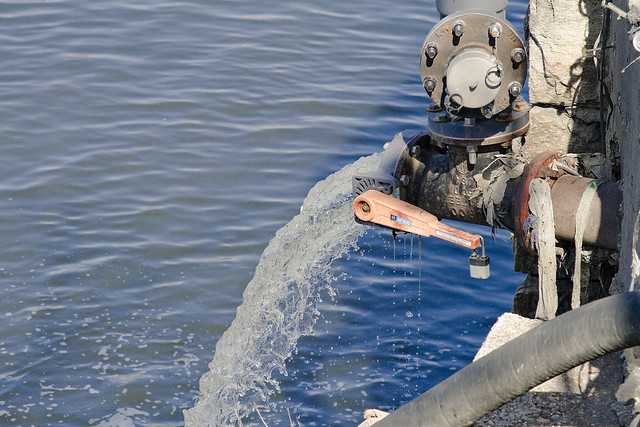
The internationalists and potentates whose congress calls itself the so called United Nations would have you observe “World Water Day” on this date. This cabal of diplomats, intriguers, and acolytes desire you to imagine and contemplate the assertion that at least a sixth of the living human infestation has no reliable access to pure water. From their headquarters in the Shining City of Manhattan- designed by the gallic crypto fascist LeCorbusier- their edict rings out, and we all must take heed of “Agenda 21”. Pictured in the shot above is the largest source of fresh water flowing into the Newtown Creek, some two to three miles from their base.
from wikipedia
World Water Day has been observed on 22 March since 1993 when the United Nations General Assembly declared 22 March as World Day for Water.
This day was first formally proposed in Agenda 21 of the 1992 United Nations Conference on Environment and Development (UNCED) in Rio de Janeiro, Brazil. Observance began in 1993 and has grown significantly ever since; for the general public to show support, it is encouraged for the public to not use their taps throughout the whole day, the day has become a popular Facebook trend.
The UN and its member nations devote this day to implementing UN recommendations and promoting concrete activities within their countries regarding the world’s water resources. Each year, one of various UN agencies involved in water issues takes the lead in promoting and coordinating international activities for World Water Day. Since its inception in 2003, UN-Water has been responsible for selecting the theme, messages and lead UN agency for the World Day for Water.

– photo by Mitch Waxman
Burgeoning, the human infestation continues to intensify upon the skin of the planet, threatening to overwhelm the fragile biosphere with a monoculture of killer apes. Sophistry and numerical manipulation make the case for Agenda 21 to play out, attempting to induce guilt and damned realization into the mainly western minds of the post industrial world, those who are well fed and watered. Your humble narrator plans on not flushing the toilet today, much to the chagrin of both “Our Lady of the Pentacle” and our little dog Zuzu. Additionally, none of us will eat or drink. A fast day will be observed for the suffering multitudes.
from unwater.org
There are 7 billion people to feed on the planet today and another 2 billion are expected to join by 2050. Statistics say that each of us drinks from 2 to 4 litres of water every day, however most of the water we ‘drink’ is embedded in the food we eat: producing 1 kilo of beef for example consumes 15,000 litres of water while 1 kilo of wheat ’drinks up’ 1,500 litres.
When a billion people in the world already live in chronic hunger and water resources are under pressure we cannot pretend the problem is ‘elsewhere’.

– photo by Mitch Waxman
The unfortunate truth, globally, is that much of the fresh water which the human infestation might consume is fouled by sewage. Whether it is agricultural lagoons of animal waste, municipal infrastructure or lack thereof, or outright industrial effluent- this is the true issue which Agenda 21 ignores. If you want to save the multitudes of the developing world- eliminate malaria and a host of other pathogens almost overnight- build sanitary sewers. Of course, we haven’t managed to swing this in New York City let alone sub Saharan Africa, so you might as well despair.
from nycgovparks.org
Social Hour: World Water Day, Thursday, March 22, 2012. 6:30 P.M.–8:00 P.M.
Celebrate World Water Day by learning more about the Croton Reservoir and Central Park’s historic role in supplying New York City with fresh drinking water. Co-presented with the NYC Department of Environmental Protection.
This event is recommended for adults (18 and over) only.
Provided at no cost to you! No advance registration. More details, including rain plans and directions, are on the Central Park Conservancy calendar.


 The Newtown Pentacle