Archive for the ‘Upper West Side’ Category
breathing body
“follow” me on Twitter at @newtownpentacle

– photo by Mitch Waxman
Before leaving Manhattan to transit back to the blessed soils of ancient Astoria, while walking down West 59th street (or Central Park South, as the well off would prefer) the other night, one was was suddenly confronted with a corruption of the ordinary scene when the FDNY showed up in no small numbers.
From what I could surmise, one of the many hotels along the edge of Central Park was in the midst of an emergency which demanded their presence.
from wikipedia
Central Park South is the portion of 59th Street that forms the southern border of Central Park in the borough of Manhattan in New York City. It runs from Columbus Circle at Eighth Avenue on the west to Grand Army Plaza at Fifth Avenue on the east. Entry into Central Park is provided at Scholars Gate at Fifth Avenue, Artists Gate at Sixth, Artisans Gate at Seventh, and Merchants Gate at Eighth Avenue.
Central Park South contains four famous upscale hotels: the Plaza Hotel, the Ritz-Carlton (Central Park), which is the flagship of the Ritz-Carlton chain, the Park Lane, and JW Marriott Essex House. Central Park South is one of the most cosmopolitan streets in the world, and is located steps away from Fifth Avenue and Madison Avenue shopping, the Time Warner Center, and Carnegie Hall. Some of the most expensive apartments in the United States are found here.

– photo by Mitch Waxman
No concern whatsoever possessed me for the actual emergency, of course. Normal human empathy is an under developed organ in my emotional quiver, and the fate of Manhattan’s upper class visitors is well beyond any threshold at which my meager talents and abilities would be measurably effective. Like one of the anonymous ghouls that populate popular cinematic fiction, flesh eating and mindless, I was attracted by the tumult of flashing lights and sirens and stumbled forward.
from wikipedia
The flesh-hungry undead have been a fixture of world mythology dating at least since The Epic of Gilgamesh, in which the goddess Ishtar promises:
I will knock down the Gates of the Netherworld, I will smash the door posts, and leave the doors flat down, and will let the dead go up to eat the living! And the dead will outnumber the living!

– photo by Mitch Waxman
The whole event was very exciting, with strangely attired people carrying esoteric equipment about. A great sense of urgency, along with an omnipresent flow of vehicular traffic which snaked along the street negotiating the narrows formed by the gargantuan service trucks employed by fire fighting personnel. Multiple vehicles all were flashing their lights, and I counted at least one ladder and two other units as well as a couple of Ambulances. That’s a lot of light on a fairly dark street.
The German tourists were positively agog.
from wikipedia
Most of the engines in FDNY’s fleet are Seagrave Commander II’s and Seagrave Marauder II’s and include 500 gallon water tanks and either 1000 or 2000 gallon per minute pumps. The 2000gpm pumps are primarily located in the high-rise districts and are considered high pressure pumpers. With the loss of apparatus which occurred as a result of the September 11 attacks, FDNY began to use engines made by other companies including Ferrara and E-One. The FDNY is making the move from a fixed cab to a “Split-Tilt” cab, so the Seagrave Marauder II Pumper will fill the FDNY’s new order for 69 new pumpers.
Truck companies are generally equipped with Seagrave aerials. Ladder length varies and often depends on the geographic area to which the unit is assigned. Those in the older sections of the city often use tiller trucks to allow for greater maneuverability. Before Seagrave was the predominant builder, Mack CF’s built with Baker tower ladders were popular. Most FDNY aerials are built with 75’, 95′ or 100′ ladders. Tiller ladders, rear mount ladders and mid-mount tower ladders are the types of trucks used. In 2010, a new contract was issued for 10–100′ rear-mount ladder trucks to Ferrara Fire Apparatus, using a chassis and stainless steel cab custom-designed to FDNY specifications. Delivery of the first of these new trucks is anticipated in the 1st quarter of 2011.

– photo by Mitch Waxman
Then the cops showed up.
I’ve always obeyed a singular rule in the Shining City of Manhattan, which is to depart and quit any location currently occupied once the cops show up. Following this dictum has kept your humble narrator from experiencing several unpleasant moments over the years, and kept my relations with the Police at an absolute minimum.
Accordingly, one spun upon his well worn heels and headed east toward the subway, which would carry me away from the Shining City towards the rolling hills of raven haired Astoria via its deeply buried tunnels.
from wikipedia
The FDNY, the largest municipal fire department in the United States, and the second largest in the world after the Tokyo Fire Department, has approximately 11,080 uniformed officers and firefighters and over 3,300 uniformed EMTs and paramedics. It faces extraordinarily varied firefighting challenges in many ways unique to New York. In addition to responding to building types that range from wood-frame single family homes to high-rise structures, there are many secluded bridges and tunnels, as well as large parks and wooded areas that can give rise to major brush fires. New York is also home to one of the largest subway systems in the world, consisting of hundreds of miles of tunnel with electrified track. The multifaceted challenges they face add yet another level of firefighting complexity and have led to the FDNY’s motto, New York’s Bravest.
what manner
“follow” me on Twitter at @newtownpentacle
– photo by Mitch Waxman
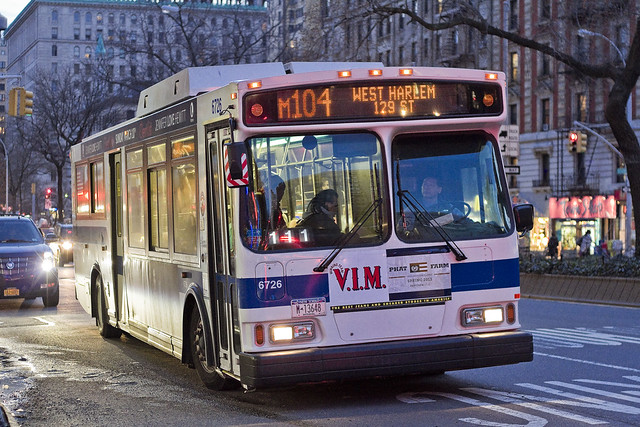
Hideous memory recalls an age whereupon your humble narrator dwelt within the Shining City of Manhattan.
The Upper West Side, as I knew it (I lived upper upper west side, just a few blocks shy of Harlem), was a bit seedier in those days than it is today. The neighborhood has gone strictly upper crust in the last decade and has in the process lost an idiosyncratic charm which once possessed it.
Atavist professional relationships from that period of my life persist, which have drawn me uptown on a semi regular basis over the last few weeks.
from wikipedia
The Upper West Side is bounded on the south by 58th Street, Central Park to the east, and the Hudson River to the west. Its northern boundary is somewhat less obvious. Although it has historically been cited as 110th Street, which fixes the neighborhood alongside Central Park, it is now sometimes considered to be 125th Street, encompassing Morningside Heights. This reflects demographic shifts in Morningside Heights, as well as the tendency of real estate brokers to co-opt the tony Upper West Side name when listing Morningside Heights and Harlem apartments. The area north of West 96th Street and east of Broadway is also identified as Manhattan Valley. The overlapping area west of Amsterdam Avenue to Riverside Park was once known as the Bloomingdale District.

– photo by Mitch Waxman
An Accountant and an Optometrist are my only ties to this place, for like me, most of my friends have long vacated. The latter relationship, the one with my Optometrist, has been developing into a bit of an ongoing and somewhat endless saga but I won’t bore you with tales of incompetence today. A few old acquaintances still inhabit here, but most of the restaurants and bars frequented during a long tenancy are either lost or have transformed beyond all recognition due to the influences of the Real Estate Industrial Complex.
Big Nick’s is still open, thank christ.
Regarding the legendary Sal and Carmines Pizza… “Hank the Elevator Guy” texted me the other day with this exact quote:
“Ah, even with sal now making pizza for god this place still got it, carmine is still there looking like he always did, pissed off. But the pizza is just the way it always is. Pretty fucking good.”
from businessweek.com
…thousands of homebuilders, real estate agents, civil-rights leaders, and bankers who aim to deliver a similar message to Congress: Preserve government support for housing. Together, these groups represent what one might call, with apologies to President Dwight D. Eisenhower, a real estate-industrial complex that transcends partisan politics, geography, and socio-economic divides.

– photo by Mitch Waxman
One could simply take the Astoria to Manhattan bound train to midtown and transfer from the Broadway local to… a Broadway local… but instead the path one elects to follow is defined by walking from 5th and 59th up to Broadway in the 70’s. Interesting Architecture on the way, well cared for, Upper West Side is the poster child for gentrification.
Not for me anymore, but not some blasted hell hole. Me, I like blasted hell holes.
The only part of the walk I mind is when the carriage horses, whose tenders await customers along Central Park South, gaze at me. I fully understand the role and reality of working animals, attempt not to project an anthropomorphized soul upon them, but it is impossible to not feel empathy for pack animals who spend their days around automobile traffic.
I feel guilty when these critters look me directly in my eye, how about you?
from aspca.org
The ASPCA believes that carriage horses were never meant to live and work in today’s urban setting. In addition to the dangers of working in congested areas, these horses spend their days directly behind cars, trucks and buses, inhaling their fumes. Given the constraints and challenges that New York City presents, and as the primary enforcer of New York City’s carriage horse laws, the ASPCA does not believe New York City can meet the needs of its horses. Neither the New York City environment nor the current law can provide horses with the fundamental necessities to ensure their safety and well being.
fainting and gasping
“follow” me on Twitter at @newtownpentacle

– photo by Mitch Waxman
Hot Dog!
New York City sure is full of them.
Food carts are everywhere in the City these days, selling everything that’s bad for you. Sugary Soda Pop, high salt pretzels, even fatty waffles and doughnuts. Makes you wonder sometimes. Out here in Queens, our food carts do grilled chicken on a stick or shaved ice flavored with fresh squeezed. Only places I reliably see actual Hot Dog food carts seem to be around the places that Manhattan folks go- Shea Stadium Citifield or that big mall in Elmhurst.
from shopqueenscenter.com
You take Manhattan, we’ll take Queens Center – with hundreds of top retail names, a delectable food court and an easy-to-shop, easy-to-love vibe. If you want it, it’s probably here, from A to Z. Stores like American Eagle and Aldo to Baker’s Shoes, Bath and Body Works, Charlotte Russe, Club Monaco, Coach, The Disney Store all the way up the alphabet to Urban Outfitters, Victoria’s Secret and White House/Black Market. Factor in a huge H&M, Modell’s Sporting Goods, Macy’s, JCPenney and more, and the Queens Center experience truly delivers.

– photo by Mitch Waxman
A principle of design which has been in vogue for much of my “career” in advertising and publishing has been “less is more.”
A somewhat decadent notion which was no doubt invented by Czech or German socialist tea drinkers, the theory dictates that graphic communication is best accomplished with as few elements and in as simple a manner and design as possible. Notice the violations of this in the shot above, wherein the words “Hot Dog” appear no less than seven distinct times.
from wikipedia
The term “dog” has been used as a synonym for sausage since 1884 and accusations that sausage makers used dog meat date to at least 1845. In the early 20th century, consumption of dog meat in Germany was common. The suspicion that sausages contained dog meat was “occasionally justified”.
According to a myth, the use of the complete phrase “hot dog” in reference to sausage was coined by the newspaper cartoonist Thomas Aloysius “TAD” Dorgan around 1900 in a cartoon recording the sale of hot dogs during a New York Giants baseball game at the Polo Grounds. However, TAD’s earliest usage of “hot dog” was not in reference to a baseball game at the Polo Grounds, but to a bicycle race at Madison Square Garden, in The New York Evening Journal December 12, 1906, by which time the term “hot dog” in reference to sausage was already in use. In addition, no copy of the apocryphal cartoon has ever been found.

– photo by Mitch Waxman
Hot Dog carts spend their days in Manhattan, of course, where they earn.
Just like the rest of us.
What most of the folks who partake in the salty cylinders of fat which are fired out of these weapons of commerce, and what they really don’t want to know, is where the carts are at night. Some stay in town, traveling uptown and toward the Hudson. Most head to Brooklyn and Queens. Many make a bee line to grimy warehouses along Northern Blvd., or Court Square in LIC, or to factory workshops and open air yards which adjoin that infamous exemplar of municipal neglect known simply and everlastingly as the Newtown Creek.
from wikipedia
The first food carts probably came into being at the time of the early Greek and Roman civilisations, with traders converting old hand-carts and smaller animal drawn carts into mobile trading units. Carts have the distinct advantage of being able to be moved should a location not be productive in sales, as well as transporting goods to/from storage to the place chosen from which to trade.
However, the use of carts exploded with the coming of the railways. Firstly, highly mobile customers required food and drink to keep them warm within the early open carriages. Secondly locomotives needed to stop regularly to take on coal and water, and hence allow their passengers use the toilets, eat and drink. Thirdly, few early trains had any form of buffet or dining car. Finally, when passengers did arrive at their destination, or at a point when they needed to switch trains or modes of transport, some refresehment was required, particularly for poorer passengers who could not afford to stay in the railway-owned hotels. This expansion lead to a mutually successful relationship, with some of the first concession stands and laws developing from mobile traders operating from restricted railway property. This form of concession based operation can be seen still in may countries, but at its most original in the under developed stations and infrastructure of Africa and South East Asia
normal thing
“follow” me on Twitter at @newtownpentacle

– photo by Mitch Waxman
Nothing earth shattering today, lords and ladies, just a few unrelated shots cracked out in the last couple of weeks. Pictured is an anonymous but industrious dog walker with his pack of charges awaiting the arrival of another companion in Long Island City nearby 21st street.
from wikipedia
Professional dog walkers, both individuals and businesses, are paid by dog owners to walk their dogs for them. Some dog walkers will take many dogs for a walk at once, while others will not. Also growing in popularity is dog running. Dog runners are professionals who will take your dog running, usually between 1 and 10 miles for a set fee, usually not more than 2 dogs at a time. In some jurisdictions dog walking businesses must be licensed and have animal first-aid-trained employees. Professional dog walking services can be obtained locally or thorough online referral services.

– photo by Mitch Waxman
Western Queensicans will quickly recognize this joint, housed in the Home Depot parking lot on Northern Blvd. Rocco’s does these absolutely ridiculous sausage sandwiches that are the stuff of cardiologist nightmare, and overstuffed with stewed onion. I was there at night picking up a couple of buckets of joint compound, at Home Depot that is- not Rocco’s, and decided to do some of the low light exercise which has occupied me all winter while running the errand.
from wikipedia
Ready-mixed joint compound is most commonly used in hanging drywall for new or remodeled homes. Application is simple and easy, usually never taking more than three or four coats. When used for new walls, joint compound effectively eliminates all blemishes from the surface of the drywall, such as drilled in screws, hanging tape, or drywall tape. Joint compound can be used to finish gypsum panel joints, corner bead, trim and fasteners, as well as skim coating. In addition, it is also very handy for fixing minor blemishes or damages to walls. It easily patches up holes, bumps, tears, and other minor damages.

– photo by Mitch Waxman
This fruit stand in Manhattan, with hand written signs, was catching a shaft of light which hasn’t been claimed by the upper crust yet. That crazy bokeh blur in the shot is all lens. I’ve been playing around a lot lately with my kit, in accordance with an intention stated a while back to “do a Costanza” and shake up my shooting habits a bit.
from wikipedia
A fruit stand is a primarily open-air business venue that sells seasonal fruit and many fruit products from local business. It might also sell vegetables and various processed items derived from fruit. The fruit stand is a small business structure that is primarily run as an independent sole proprietorship, with very few franchises or branches of larger fruit stand conglomerates.


 The Newtown Pentacle