Archive for the ‘Queens’ Category
The Man Who Could Dodge Bullets

– photo by Mitch Waxman
One of the great traditions in the history of fraternal ethnic organizations is the art of storytelling, and a tale often told by those who “belong” is about the Castellamarese War.
It’s an old New York story, full of gun play, revenge, and intrigue. Powerful black sedans with a cadre of Tommy Gun toting racketeers speeding around the streets, innocents getting mowed down, and a cast of legendary characters like Lucky Luciano, Albert Anastasia, Vito Genovese, Meyer Lansky, and Salvatore Maranzano exacting vengeance on their enemies. From the bloody heap, the “commission” was born, a board of directors which governed the various crime families. Nothing new here, you know this story- it was sort of fictionalized in the Godfather movies, and there are any number of books, TV Shows, and movies which describe it in some detail.
At least, they claim to- I don’t believe everything I’m told, and just ask anyone- there’s no such thing as the Mafia.
Anyway, this is First Calvary Cemetery, and pictured above is the grave of Joe Masseria.
from wikipedia
The Five Families are the five major Italian-American Mafia crime families which have dominated organized crime in New York City since the 1930s. Prior to this was the Maranzano Family and the Masseria Family which ended up fighting each other during a period known as the Castellammarese War. The Five Families, under the suggestion of Lucky Luciano and Meyer Lansky, were responsible for the establishment of The Commission, a council which demarcated territory between the previously warring factions and governs American Mafia activities in the United States. The Five Families in New York remain as the powerhouse of the Italian Mafia in the US.

– photo by Mitch Waxman
What I can affirm is that there were fresh flowers inside the Masseria tomb, on an October morning in 2010.
from wikipedia
On April 15, 1931, Joe Masseria was assassinated at one of his favorite restaurants, Nuova Villa Tammaro in Coney Island, Gangland legend has it that Masseria dined with Charles “Lucky” Luciano before his death. While they played cards, Luciano excused himself to the bathroom, when Benjamin “Bugsy” Siegel, Vito Genovese, Albert Anastasia and Joe Adonis rushed in and shot Masseria to death, his four bodyguards having mysteriously disappeared. The New York Daily News reported that the boss died “with the ace of spades, the death card, clutched in a bejeweled paw.”
However, both the New York Times and the New York Herald Tribune paint a different picture. Neither newspaper mentions Luciano being present, although Luciano was brought in for questioning by the police. The Herald Tribune reported that Masseria arrived at the restaurant in his armored steel car in the company of three other men shortly before 3pm. Scarpato’s mother-in-law, Anna Tammaro, waited while they played cards. According to two eyewitnesses, two well-dressed young men drove up and parked their car at the curb. They strolled leisurely into the place, and the shooting began immediately. Some 20 shots were fired. Then the two gunmen came out without any visible signs of haste, entered their automobile and drove away. Masseria was hit with four bullets in the back and one in the back of the head, identified as .32 and .38 caliber, and in an alley next to the restaurant, police recovered two revolvers.

Joe Masseria, photo courtesy Wikipedia
a world yet inchoate
– photo by Mitch Waxman
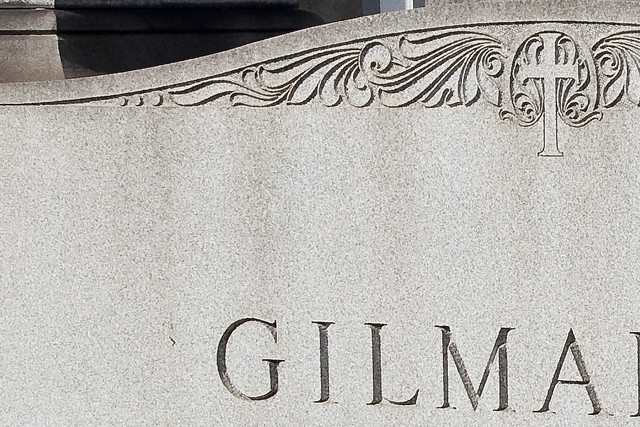
Unutterable, the name which must not be mentioned torments a humble narrator. Sure knowledge that the mortal remains of its bearer lie amongst the emerald devastations of First Calvary Cemetery renders a psychological state in my feeble mind which can only be compared to the plight of Tantalus.
from wikipedia
In mythology, Tantalus became one of the inhabitants of Tartarus, the deepest portion of the Underworld, reserved for the punishment of evildoers; there Odysseus saw him. The association of Tantalus with the underworld is underscored by the names of his mother Plouto (“riches”, as in gold and other mineral wealth), and grandmother, Chthonia (“earth”).
Tantalus was initially known for having been welcomed to Zeus’ table in Olympus, like Ixion. There he is said to have misbehaved and stolen ambrosia and nectar to bring it back to his people, and revealed the secrets of the gods.
Most famously, Tantalus offered up his son, Pelops, as sacrifice. He cut Pelops up, boiled him, and served him up in a banquet for the gods. The gods became aware of the gruesome nature of the menu, so they didn’t touch the offering; only Demeter, distraught by the loss of her daughter, Persephone, absentmindedly ate part of the boy’s shoulder. Clotho, one of the three Fates, ordered by Zeus, brought the boy to life again (she collected the parts of the body and boiled them in a sacred cauldron), rebuilding his shoulder with one wrought of ivory made by Hephaestus and presented by Demeter. The revived Pelops grew to be an extraordinarily handsome youth, so much so that the god Poseidon fell in love with him and abducted him to Mount Olympus. Later, Zeus threw Pelops out of Olympus due to his anger at Tantalus. The Greeks of classical times claimed to be horrified by Tantalus’s doings; cannibalism, human sacrifice and infanticide were atrocities and taboo.
Tantalus’s punishment for his act, now a proverbial term for temptation without satisfaction (the source of the word “tantalise”), was to stand in a pool of water beneath a fruit tree with low branches. Whenever he reached for the fruit, the branches raised his intended meal from his grasp. Whenever he bent down to get a drink, the water receded before he could get any. Over his head towers a threatening stone, like that of Sisyphus.

– photo by Mitch Waxman
Reduced to performing a visual inventory of the multitudes here, I have been walking a search pattern composed of interlocking octagons, trampling across the loam of grief and loss. Several times, disturbing subsidence and vegetation choked ruts have nearly caused severe injury, as I’m not watching out for where I am but rather for where I’m going.
This is a video game technique (shoot where they’re going to be, not where they are), one which can be hazardous to follow in the existential realities which surround that extinction of joy known as the Newtown Creek.
from wikipedia
Søren Kierkegaard and Friedrich Nietzsche were two of the first philosophers considered fundamental to the existentialist movement, though neither used the term “existentialism” and it is unclear whether they would have supported the existentialism of the 20th century. They focused on subjective human experience rather than the objective truths of mathematics and science, which they believed were too detached or observational to truly get at the human experience. Like Pascal, they were interested in people’s quiet struggle with the apparent meaninglessness of life and the use of diversion to escape from boredom. Unlike Pascal, Kierkegaard and Nietzsche also considered the role of making free choices, particularly regarding fundamental values and beliefs, and how such choices change the nature and identity of the chooser. Kierkegaard’s knight of faith and Nietzsche’s Übermensch are exemplars who define the nature of their own existence. These idealized individuals invent their own values and create the very terms under which they excel. Kierkegaard and Nietzsche were also precursors to other intellectual movements, including postmodernism, nihilism, and various strands of psychology.

– photo by Mitch Waxman
Several of the less moribund residents of Calvary were observed, feeding upon the grassy hillside. When queried as to the location of my well hidden foil, they answered with aloof indifference, and the seeming leader of their flock began to extrude bodily waste. They were not startled by my presence, here in this lonely place, but most animals know that I mean them no harm and hardly react to me.
They did seem to be a bit startled when I said the name which is not to be uttered out loud.
from wikipedia
Anthropomorphism is the attribution of human characteristics to animals or non-living things, phenomena, material states and objects or abstract concepts. Examples include animals and plants and forces of nature such as winds, rain or the sun depicted as creatures with human motivations, and/or the abilities to reason and converse. The term derives from the combination of the Greek ἄνθρωπος (ánthrōpos), “human” and μορφή (morphē), “shape” or “form”.It is strongly associated with art and storytelling where it has ancient roots. Most cultures possess a long-standing fable tradition with anthropomorphised animals as characters that can stand as commonly recognised types of human behavior.

– photo by Mitch Waxman
Enigma, my search for the elusive final resting place of the Massachusetts based dealer in far eastern art has taken me to distant and forgotten sections of the City of Greater New York. I have consulted with asiatic mystics in Manhattan’s Chinatown, visited a heretical Kabbalist in Brooklyn, and have drawn the ire of certain extant allies of the dead man whose influence and reach extend into the federal government and modernity itself who wish me to remain silent on the subject.
from wikipedia
Willy Gilligan is a fictional character played by Bob Denver on the 1960s TV show Gilligan’s Island and its many sequels.
Gilligan wears a trademark red shirt, pale trousers and white navy cap. He was the first mate on the S. S. Minnow when, during a storm, he threw an anchor overboard without the line attached, which left the boat shipwrecked on an “uncharted” desert island with all aboard. Gilligan is considered a cultural icon and is frequently seen as the show’s breakout character.
In the U.S. Navy, Gilligan served with The Skipper, and saved the Skipper from being struck and killed by a runaway depth charge. After retirement, The Skipper used his savings to buy the Minnow, and hired his “little buddy” Gilligan as first mate.
Gilligan’s past and family were not mentioned during the series, except for his older brother, from whom he swiped his ever-present red shirt, a sister whose best friend was broken up by her boyfriend, and an uncle who was apparently illiterate. He once mentioned he was born in Pennsylvania, but no city was specified. He would sometimes mention his childhood friends, Skinny Mulligan and Fatso Flannigan, possibly implying that he came from a predominately Irish-American neighborhood.

– photo by Mitch Waxman
This place is called Calvary. The word is derived from several imperial dialects, which translate the aramaic Gûlgaltâ into Greek as Golgotha or alternately as “place of [the] skull” – Κρανίου Τόπος (Kraniou Topos) and then into Latin as Calvariae Locus. However you say it, it indicates the site of the crucifixion of the Christ outside of Jerusalem, and the anticlimax of the New Testament.
Modernity translates the term as Calvary. First Calvary, of course, is the St. Calixtus section of the great necropolis.
from wikipedia
Pope Saint Callixtus I or Callistus I was pope from about 217 to about 222, during the reigns of the Roman Emperors Elagabalus and Alexander Severus. He was martyred for his Christian faith and is a saint of the Roman Catholic Church.His contemporary and enemy, the author of Philosophumena (probably Hippolytus of Rome), relates that Callixtus, as a young slave, was put in charge of collected funds by his master Carpophorus, funds which were given as alms by other Christians for the care of widows and orphans; Callixtus lost the funds and fled from Rome, but was caught near Portus. According to the tale, Callixtus jumped overboard to avoid capture but was rescued and taken back to his master. He was released at the request of the creditors, who hoped he might be able to recover some of the money, but was rearrested for fighting in a synagogue when he tried to borrow money or collect debts from some Jews. Philosophumena claims that, denounced as a Christian, Callixtus was sentenced to work in the mines of Sardinia. He was released with other Christians at the request of Hyacinthus, a eunuch presbyter, who represented Marcia, the favourite mistress of Emperor Commodus. At this time his health was so weakened that his fellow Christians sent him to Antium to recuperate and he was given a pension by Pope Victor I. Callixtus was the deacon to whom Pope Zephyrinus entrusted the burial chambers along the Appian Way. In the third century, nine Bishops of Rome were interred in the Catacomb of Callixtus, now also called the Capella dei Papi. These catacombs were rediscovered by the archaeologist Giovanni Battista de Rossi in 1849.
scenes familiar, and loved

– photo by Mitch Waxman
Exhausted, determined to return to my lonely paths and isolated experiences, the only solace possible for an Outsider such as myself is amongst the tomb legions. Exertion and social obligation has brought me, repeatedly within the last few months, amongst the vivacious and brightly lit corridors of the human infestation and forced me into uncomfortable and uncontrolled interaction with those who thrive in such circumstance. Gaunt yet flabby, the squamous shadow of your humble narrator is cast comfortably in only one place- the fossilized heart of this Newtown Pentacle.
Welcome back, to Calvary.
from wikipedia
Calvary Cemetery is located at 49-02 Laurel Hill Blvd. in Woodside in the New York City borough of Queens, New York. The cemetery is managed by the Trustees of St. Patrick’s Cathedral, New York. It is one of the oldest and largest cemeteries in the United States. In 1847, faced with cholera epidemics and a shortage of burial grounds in Manhattan, the New York State Legislature passed the Rural Cemetery Act authorizing nonprofit corporations to operate commercial cemeteries. Old St. Patrick’s Cathedral trustees had purchased land in Maspeth in 1846, and the first burial in Calvary Cemetery there was in 1848. By 1852 there were 50 burials a day, half of them the Irish poor under seven years of age

– photo by Mitch Waxman
At the center of Calvary Cemetery, First Calvary that is, is a concrete temple which functions as a mortuary chapel in addition to maintaining an abbreviated schedule of Mass. The noted Catholic architect Raymond F. Almirall, responding to the request of Archbishop Farley in 1903, designed this beaux arts masterpiece to be constructed for the then princely sum of $200,000. Farley conceived of this place, and the subterranean structure beneath it, after a trip to the Holy See in Rome.
for more on Archbishop Farley, from google books
In 1884 Pope Leo XIII made him private chamberlain with the title monsignor, and Cardinal McCloskey appointed him permanent rector of the church of Saint Gabriel, New York, where he remained until he was made archbishop. In 1891 he was madevicar-general of the archdiocese of New York. In 1892 he was made domestic prelate to Leo XIII, and in 1895 prothonotary apostolic, all of which positions gave him special privileges. In December 1895 he was consecrated titular bishop of Zeugma, and became assistant to the archbishop of New York. When the see of New York became vacant by the death of Archbishop Corrigan (1902), the lists of names sent to Rome by the suffragan bishops and permanent rectors each had at the head the name of Bishop Farley as first choice for archbishop. He received his appointment from Leo XIII, but the pallium was conferred under Pius X, on 15 Sept. 1902. He was the fourth archbishop of New York and governed one of the largest Roman Catholic dioceses in the world. He was the metropolitan of the ecclesiastical province of New York, which is composed of eight dioceses outside the archdiocese which includes also the Bahama Islands; six in the State of New York and two in New Jersey. The author of the ‘Life of Cardinal McCloskey,’ Archbishop Farley was also a contributor to various magazines, and took great interest in movements for the social welfare of the city. He was created cardinal by Pope Pius X, 27 Nov. 1911. At the time of his death (1918) the archdiocese of New York comprised a Catholic population estimated at 1,350,000; 1,117 priests; 388 churches; parochial schools attended by 91,140 children; 25 orphanages; 27 hospitals, and other institutions, benevolent and educational.

– photo by Mitch Waxman
Beneath the chapel, as it was designed, there is meant to be a two square acre catacomb whose only connection to the surface world is a shaft which rises some fifty feet to the surface. The Chapel itself utilizes the normal cruciform plan favored by the Roman Catholics since antiquity, and is some 60×120 feet, and a cupola rises some 90 feet above level ground and is crowned by a statue of the “Risen Christ”.
The cavern beneath the chapel is similarly in a the shape of a cross and designed as a mausoleum for the fallen priests of the city.
from google books, a popular mechanics article about the place
From the architect’s point of view, the most unusual feature is the method of construction of the dome and the groined vault on which it rests, both of which are regarded by experts as feats in reinforced concrete construction. The dome is 40 ft. across and the height from the floor to the lantern is 38 ft. It rises 50 ft. higher from that point and its total weight is 360 tons. The vault has eight penetrations, four large and four small, and both the lining of golden yellow brick and the pink Minnesota sandstone trimmings are held in place simply by adhesion to the concrete. In order to build this dome, it was necessary to build a falsework with all the accuracy of a mould, so that the brick could be laid against the forms, and the concrete with its steel reinforcement placed in the moulds. When the concrete had set, the falsework was removed, and the great dome stood as an imposing architectural crown to the structure, as well as a feat in construction.
The crypts or catacombs are for the burial of the priests of the diocese of New York, under the charge of which the cemetery is maintained. At present, but one section of the catacombs has been completed with accommodations for twenty-four bodies in the concrete niches. But the section can be extended underground in four directions, and at any time an addition for seventy-two more bodies can be made. For a cryptal burial there is a lift set into the floor of the chapel to lower the body to the level of the crypts.

– photo by Mitch Waxman
Despite my mongrel familiarity with this place, your humble narrator has always avoided entering the chapel due mainly to a combination of cowardice and empathy.
Imagine the reaction of some wholesome priest or grieving parishioner when seeing this scuttling alien shamble into their sanctum sanctorum. They might look up and see an odd creature in a dirty black raincoat, with its widely separated glassy eyes and tightly stretched fish belly white skin betraying the presence of yellowing bone and rotting organ beneath, and question the faith that keeps them here. How could a merciful god allow an abomination such as myself to exist- a furtive fuligin clad thing stinking of the Newtown Creek’s corruptions- let alone enter the most hallowed ground in the Archdiocese while the thermonuclear eye of god still shines down from on high? Certainly at night such manifestations of the macabre can be expected, but during the day?
It’s usually best for all that I remain at the side of the room, the rear of the bus, and near the end of the line- lest lightning strike another in error.
from wikipedia
The Rural Cemetery Act led to Queens being a borough of cemeteries. Queens is home to 29 cemeteries holding more than five million graves and entombments, so that the “dead population” of the borough is more than twice the size of its live population. The large concentration of cemeteries on the border of Brooklyn and Queens is another effect of the law. Under the Act, each individual cemetery organization was limited to no more than 250 acres (1 km²) in one county, but some organizations circumvented that limit by purchasing larger parcels straddling the boundaries of two counties. As result, 17 cemeteries straddle the border between Queens and Brooklyn. As with Queens, the “dead population” of Brooklyn is estimated to exceed its living population. In 1917 a state legislator from Queens complained that the law and the concentration of cemeteries that it had produced resulted in more than one-fifth of Queens’ land being exempt from property tax. As of 1918 more than 22,000 acres (89 km2) of land in Queens were owned by private tax-exempt cemeteries. Under current New York law, all cemetery property is exempt from property taxation, but current law allows the governments of Brooklyn, Queens, and certain other New York counties to limit the establishment of new cemeteries within their boundaries.

– photo by Mitch Waxman
Nevertheless, this day, I mustered the tiny sparks of manhood within me and drawing a sharp breath- entered the chapel. Which was… disappointing. “Rather mundane, and shabbily maintained given the pristine groundskeeping and manicured care given the monuments outside” was my initial reaction. Also, it was rather dark within, and I was forced to use the camera flash in addition to setting my camera to a high ISO setting. Notice, if you would, the lack of dust in the air of the place- which would be catching and reflecting the flash back at the lens- backscatter as its called.
This is a rather important point, as we’ll discuss later on in the post.
from wikipedia
The term backscatter in photography refers to light from a flash or strobe reflecting back from particles in the lens’s field of view causing specks of light to appear in the photo. This gives rise to what are sometimes referred to as orb artifacts. Photographic backscatter can result from snowflakes, rain or mist, or airborne dust. Due to the size limitations of the modern compact and ultra-compact cameras, especially digital cameras, the distance between the lens and the built-in flash has decreased, thereby decreasing the angle of light reflection to the lens and increasing the likelihood of light reflection off normally sub-visible particles. Hence, the orb artifact is commonplace with small digital or film camera photographs.

– photo by Mitch Waxman
My main concern was finding the possible location of the fifty foot shaft mentioned in the paragraph above, which is meant to be at the center of the building. The mosaic floor has obviously suffered the effects of use and a century of weathering, but there was this metal edged structure in it that was roughly the size and shape of a standard coffin. Unless I’m missing my guess, this is the hatch to that shaft.
I have been wrong before, so don’t take my word for it, but according to my researches, this is where it SHOULD be- and it fits the description as put forward in the Popular Mechanics article linked to above.
from wikipedia
The first place to be referred to as catacombs were the underground tombs between the 2nd and 3rd milestones of the Appian Way in Rome, where the bodies of the apostles Peter and Paul, among others, were said to have been buried. The name of that place in late Latin was catacumbae, a word of obscure origin, possibly deriving from a proper name, or else a corruption of the Latin phrase cata tumbas, “among the tombs”. The word referred originally only to the Roman catacombs, but was extended by 1836 to refer to any subterranean receptacle of the dead, as in the 18th-century Paris catacombs.

– photo by Mitch Waxman
The cavern below is meant to house individually cemented cells for the dead clerics, and these individual resting places- as well as the ossuary that eventually houses their more enduring remains in the Italian and French manner- is lined with stone quarried from the domed hills of Vermont- a nearby northern state of sylvan wildernesses which produce and maintains a vast mythology even in this age of reason and ration.
One wonders why the alluvial deposits of the Green Mountain state were called upon to line and ornament this unseen chamber, and if it might have relation to the odd occurrences in and around Townshend Vermont in 1927 and 1928.
from wikisource.org
The whole matter began, so far as I am concerned, with the historic and unprecedented Vermont floods of November 3, 1927. I was then, as now, an instructor of literature at Miskatonic University in Arkham, Massachusetts, and an enthusiastic amateur student of New England folklore. Shortly after the flood, amidst the varied reports of hardship, suffering, and organized relief which filled the press, there appeared certain odd stories of things found floating in some of the swollen rivers; so that many of my friends embarked on curious discussions and appealed to me to shed what light I could on the subject. I felt flattered at having my folklore study taken so seriously, and did what I could to belittle the wild, vague tales which seemed so clearly an outgrowth of old rustic superstitions. It amused me to find several persons of education who insisted that some stratum of obscure, distorted fact might underlie the rumors.
The tales thus brought to my notice came mostly through newspaper cuttings; though one yarn had an oral source and was repeated to a friend of mine in a letter from his mother in Hardwick, Vermont. The type of thing described was essentially the same in all cases, though there seemed to be three separate instances involved – one connected with the Winooski River near Montpelier, another attached to the West River in Windham County beyond Newfane, and a third centering in the Passumpsic in Caledonia County above Lyndonville. Of course many of the stray items mentioned other instances, but on analysis they all seemed to boil down to these three. In each case country folk reported seeing one or more very bizarre and disturbing objects in the surging waters that poured down from the unfrequented hills, and there was a widespread tendency to connect these sights with a primitive, half-forgotten cycle of whispered legend which old people resurrected for the occasion.
What people thought they saw were organic shapes not quite like any they had ever seen before. Naturally, there were many human bodies washed along by the streams in that tragic period; but those who described these strange shapes felt quite sure that they were not human, despite some superficial resemblances in size and general outline. Nor, said the witnesses, could they have been any kind of animal known to Vermont. They were pinkish things about five feet long; with crustaceous bodies bearing vast pairs of dorsal fins or membranous wings and several sets of articulated limbs, and with a sort of convoluted ellipsoid, covered with multitudes of very short antennae, where a head would ordinarily be. It was really remarkable how closely the reports from different sources tended to coincide; though the wonder was lessened by the fact that the old legends, shared at one time throughout the hill country, furnished a morbidly vivid picture which might well have coloured the imaginations of all the witnesses concerned. It was my conclusion that such witnesses – in every case naive and simple backwoods folk – had glimpsed the battered and bloated bodies of human beings or farm animals in the whirling currents; and had allowed the half-remembered folklore to invest these pitiful objects with fantastic attributes.

– photo by Mitch Waxman
Mission accomplished, and thankful that I happened into the place when it was deserted, your humble narrator decided to crack out a few more shots. Again, I messed around a little with exposure settings, hoping to combat the limited amount of available light within the structure. I emphatically state that beyond brightness and contrast, basic sharpening and color temperature adjustments- these shots are unaltered. The camera raw files are available for examination, and upon request, will be made downloadable.
from wikipedia
A camera raw image file contains minimally processed data from the image sensor of either a digital camera, image scanner, or motion picture film scanner. Raw files are so named because they are not yet processed and therefore are not ready to be printed or edited with a bitmap graphics editor. Normally, the image is processed by a raw converter in a wide-gamut internal colorspace where precise adjustments can be made before conversion to a “positive” file format such as TIFF or JPEG for storage, printing, or further manipulation, which often encodes the image in a device-dependent colorspace. These images are often described as “RAW image files”, although there is not actually one single raw file format. In fact there are dozens if not hundreds of such formats in use by different models of digital equipment (like cameras or film scanners).
Raw image files are sometimes called digital negatives, as they fulfill the same role as negatives in film photography: that is, the negative is not directly usable as an image, but has all of the information needed to create an image. Likewise, the process of converting a raw image file into a viewable format is sometimes called developing a raw image, by analogy with the film development process used to convert photographic film into viewable prints. The selection of the final choice of image rendering is part of the process of white balancing and color grading.
Like a photographic negative, a raw digital image may have a wider dynamic range or color gamut than the eventual final image format, and it preserves most of the information of the captured image. The purpose of raw image formats is to save, with minimum loss of information, data obtained from the sensor, and the conditions surrounding the capturing of the image (the metadata).

– photo by Mitch Waxman
Palpable and real, visits to First Calvary are draining experiences, from a psychic point of view. You are surrounded by rich imagery and the text screeds that adorn the monuments, which means that whether you want to or not, the names of those who are interred here are being read subconsciously and forcing themselves into your mind. The territory surrounding the place is the tautologically fabulous properties which comprise the Queens bank of that maligned font of inspiration which is the Newtown Creek (The Creeklands, as I call them), and the intricate steel lacing of bridge and rail that confines and contains whatever might be lurking beneath it. The experience is overwhelming, from a sensory point of view, and drains the experiencer of both cognitive alertness and physical energy. In short, after a 75-90 minute interval spent here, you want nothing more than to just lie down on the soft grass and sleep.
from wikipedia
Orb artifacts are captured during low-light instances where the camera’s flash is implemented, such as at night or underwater. The artifacts are especially common with compact or ultra-compact cameras, where the short distance between the lens and the built-in flash decreases the angle of light reflection to the lens, directly illuminating the aspect of the particles facing the lens and increasing the camera’s ability to capture the light reflected off normally sub-visible particles. The orb artifact can result from retroreflection of light off solid particles (e.g., dust, pollen), liquid particles (water droplets, especially rain) or other foreign material within the camera lens. The image artifacts usually appear as either white or semi-transparent circles, though may also occur with whole or partial color spectrums, purple fringing or other chromatic aberration. With rain droplets, an image may capture light passing through the droplet creating a small rainbow effect.

– photo by Mitch Waxman
So, here you are.
By the standards set by pop culture, the little white shape you see in the above shot at the “11 o’clock” position is a ghost orb, in a photograph shot at the Calvary Cemetery Chapel at 11:03 am on October 8th, 2010. Or dust.
What do you think? Click through to the larger size of the shot above at flickr and check it out at higher resolution.
Superfund me

– photo by Mitch Waxman
LO, BEHOLD, and TREMBLE… for the Newtown Pentacle is back in session…
Over several of the last few years, agents and officials of the Federal Government have conducted a strange and secretive investigation into certain conditions within and around the ancient New York waterway called the Newtown Creek.
The public first learned of it in 2009, when a vast series of public meetings and pronouncements were offered by agents of the Environmental Protection Agency which confirmed and introduced the news that the ancient corridor of industry and forbidden history called the Newtown Creek was being considered for inclusion on the Federal Superfund list.
This listing would bestow extraordinary powers over the waterway, and ultimate authority, to the Federal Government. Effectively, the 3.8 mile long border of Brooklyn and Queens with its enormous number of crumbling bulkheads, worm eaten piers, and supposedly empty warehouses are now the responsibility of the G-Men. Uninquiring souls let the occurrence pass as one of the major developments in a spasmodic war on environmental pollution and the toxic legacy of the industrial revolution.
from epa.gov
Release date: 09/27/2010
Contact Information: John Senn (212) 637-3667, senn.john@epa.gov
(New York, N.Y.) The U.S. Environmental Protection Agency (EPA) today added Newtown Creek in New York City to its Superfund National Priorities List of the country’s most hazardous waste sites. The final listing will allow EPA to conduct a comprehensive evaluation of the creek to determine what remedial actions need to be implemented. Various sediment and surface water samples have been taken along the creek. Potentially harmful contaminants such as pesticides, metals and polychlorinated biphenyls (PCBs) have been detected in Newtown Creek along with volatile organic compounds (VOCs). VOCs are potentially harmful contaminants that can easily evaporate into the air.
“The toxic pollution in Newtown Creek is more than a century in the making. EPA is placing Newtown Creek on the Superfund list to ensure the creek receives a thorough cleanup,” said EPA Regional Administrator Judith Enck. “Newtown Creek is a key urban waterway, which provides recreational and economic resources to many communities. Throughout the investigation and cleanup, we will work closely with the communities along the creek to achieve a revitalization of this heavily-contaminated urban waterway.”
EPA proposed Newtown Creek be added to the Superfund NPL list in September 2009. EPA received and considered public comments on its proposal before making its final decision.

– photo by Mitch Waxman
On Monday the 27th of September in this year of 2010, the EPA announced the Superfund listing of Newtown Creek would be moving forward.
Interesting coincidences abound for this date:
The first Ford Model T rolled off the assembly line in 1908 in Detroit, Einstein had his E=MC2 formula published for the first time in 1905, Crete fell to the Turks in 1669, and the Jesuits were granted a Papal charter in 1540. The Warren Commission released its report on the assassination of President John F. Kennedy in 1964, the Ottoman Siege of Vienna began in 1529, the Taliban captured Kabul in 1996, and Thomas Nast was born in 1840.
It is also 110 years and 19 days after this report appeared in the NY Times, and some 122 years and 11 days since this report appeared in the same publication.
also from epa.gov
EPA had previously responded to requests by members of Congress to evaluate specific sites along Newtown Creek by publishing a September 2007 report that contained a review of past and ongoing work being conducted to address the Greenpoint oil spill as well as recommendations regarding future work to assist with the spill response. The state of New York referred the site to EPA due to the complex nature of the contamination in the creek. EPA’s Superfund study and cleanup are expected to focus on the sediments in the creek and on identifying and addressing sources of pollution that continue to contribute to the contamination.
Newtown Creek is part of the core area of the New York-New Jersey Harbor Estuary, which has been designated by EPA as an “estuary of national significance.” Despite the ongoing pollution problems, some residents currently use the creek for recreational purposes such as kayaking, while others eat the fish they catch from the creek.

– photo by Mitch Waxman
According to statements rendered by Government representatives, the actual work on the remediation project is not scheduled to begin in earnest for several months (if not years), as a period of further study and evaluation of the endemic situation before the final formulation of their plans to ferret out and eradicate all that there is which may be buried down there.
The government plans on removing hundreds of metric tons of the sediment which lines the bottom of the Newtown Creek. Privileged to have been included on the conference call during which EPA announced their decision to the third estate, your humble narrator queried EPA personnel as to the methodology of its removal (terrestrial industries versus maritime) and whether they had determined a probable destination for the contaminant laced material they intend to dredge out.
Both questions seemed to have been unexpected, and they reported that answers will be readily uncovered when the final action plan is unveiled sometime in the near future.
additionally, from epa.gov
In the mid -1800s, the area adjacent to the 3.8-mile Newtown Creek was one of the busiest hubs of industrial activity in New York City. More than 50 industrial facilities were located along its banks, including oil refineries, petrochemical plants, fertilizer and glue factories, sawmills, and lumber and coal yards. The creek was crowded with commercial vessels, including large boats bringing in raw materials and fuel and taking out oil, chemicals and metals. In addition to the industrial pollution that resulted from all of this activity, the city began dumping raw sewage directly into the water in 1856. During World War II, the creek was one of the busiest ports in the nation. Some factories and facilities still operate along it, and various adjacent contaminated sites have contributed to its contamination. Today, as a result of its industrial history, including countless spills, Newtown Creek is badly polluted.
In the early 1990s, New York State declared that Newtown Creek was not meeting water quality standards under the Clean Water Act. Since then, a number of government-sponsored cleanups of the creek have taken place. The New York City Department of Environmental Protection has sampled sediment and surface water at a number of locations along the creek since 1980. In early 2009, EPA sampled the sediment throughout the length of Newtown Creek and its tributaries. EPA will review existing information about Newtown Creek to develop a plan for further investigation.

– photo by Mitch Waxman
The professional press also on the call seemed more interested in the Gowanus Canal, how the Mayor felt about the announcement, and grew fixated on the cost of the cleanup effort. EPA clearly spelt out that its budgeting process has barely begun, and they can neither supply a final cost estimate or time table at this early date. This is actually the logical course, as the secrets of the Newtown Creek must- as always- bubble up and reveal themselves to those who stare deeply into its occluded depths.
And, in their own time, all the poisons in the mud will leach out.
and also, from epa.gov
EPA conducted an Expanded Site Investigation (ESI) of Newtown Creek in 2009 as part of the Hazard Ranking System scoring process for NPL listing under Superfund. Based on the ESI, which was focused on Newtown Creek itself and not its tributaries, EPA concluded that metals, volatile organic compounds, and semi-volatile organic compounds (including polycyclic aromatic hydrocarbons and polychlorinated biphenyls) were present in Creek sediments at elevated concentrations. The variety and distribution of the detected contaminants suggests that they originated from a variety of sources. Previous environmental investigations of Newtown Creek, or specific portions of the Creek, also disclosed that sediments in Newtown Creek are contaminated by a wide variety of hazardous substances. Environmental investigations of upland parcels adjacent to or nearby the Creek have disclosed contamination of those parcels by hazardous substances similar to hazardous substances found in sediments in Newtown Creek.
uncanny light

– photo by Mitch Waxman
Disillusioned, desolate, and diseased– the endless byways of the Newtown Pentacle beckon- calling out to me- the barren, the confused, the discarded.
Always, it seems, an Outsider must keep to the shadows. This is best.
Paranoid, absent minded, and an unreliable physical coward– the feckless quisling who serves as your humble narrator once more offers devotions and attention to a great pattern etched beneath the cement, marching across its sunlit reality like some obsequious pilgrim. Certain realities have been made abundantly clear over the vernal months, confirming specific fears and betraying closely held beliefs. A stalking horse walks my lands.
While lost in the above soliloquy one afternoon, I was walking from Astoria to South Street Seaport‘s Pier 17, when I found this scene in Long Island City.

– photo by Mitch Waxman
Another crew of workmen were observed standing in a similar pit on the other side of the street- 23rd street, if you’re curious. My assumption was that they were feeding this copper tubing from one side of the street to the other, for some purpose of which I cannot hazard a guess. Perhaps the acolytes of that which does not think, or breathe, yet hungers; that thing which is rumored to exist in the crown of the nearby Citibank Megalith– desired to have a constant connection to the Court Square diner’s coffee station.
Who can guess, all there is… that might be down there?


