Posts Tagged ‘Bronx’
half seen
In today’s post- the mysterious Bronx.

-photo by Mitch Waxman
I know little to nothing about the Bronx, and have probably only been in the Borough less than 20 times over the course of my entire life. Circumstance never carries me north, toward its heights. What I do know of this vast enigma has only been glimpsed from the edges of the place. I understand it to be quite an interesting place, but to one such as myself, it is enigma. I always say that “I’m saving it for the future,” meaning that someday I’ll start turning my attention that way.
There are definitely groups of people living there, as I’ve photographed them from the littoral periphery.

-photo by Mitch Waxman
Willful ignorance such as this assists me in maintaining a laser like narrow focus on a single subject, but there are large sections of the City for which little to no interest exists in me. I don’t care about downtown Brooklyn, for instance, and consider myself lucky to avoid being there. Nothing wrong with the place, just not my cup of tea. Also, I find the upper east side of Manhattan completely “meh.”
This unknown country of the north intrigues, but I’m not ready to look at it yet.

-photo by Mitch Waxman
Someday I plan to do a little exploring up here, and perhaps attempt some tremulous interaction with the dwellers therein. Supposedly, there is something to the place beyond the odd stadium, bridge, or rail yard.
Of course, its not going to be anywhere as close to cool as Queens is, but there might be some dark secret or two to be unearthed beyond the Hells Gate, and “winter is coming.”
Things to do!
Working Harbor Committee presents: Great North River Tugboat Races and Competition, September 1st, 2013
9:30-11:30 a.m. at West 42nd Street and the Hudson River. Spectator Boat tickets now on sale.
long narrative

– photo by Mitch Waxman
Today’s shots are from “da Bronx”, captured last year while following the estimable Kevin Walsh of Forgotten-NY fame around. Mr. Walsh was busy planning a walking tour of the area, and his companion at arms- Richard Melnick of the Greater Astoria Historical Society, was along as well. While they were debating the finer points of Bronx history and an overall narrative structure for the excursion, I made myself busy photographing the various sights.
To wit- the Van Cortlandt House museum.
The Van Cortlandt family were prominent members of New York’s mercantile class and its social and business milieus. The business of trade connected the Van Cortlandt’s with mercantile families in the West Indies, European ports, and other American port cities. Additionally, their Dutch heritage linked them with many wealthy and powerful New York families. Marriages forged strong ties between the Van Cortlandt’s and the Schuyler, Phillipse, Jay, DePeyster, and White families of New York.

– photo by Mitch Waxman
The Knickerbocracy, a 19th century term used to describe the land and slave owning class of Dutch who stuck around after the English arrived and took over, is what the Van Cortlandts were a part of. No small amount of ennui was felt by the English and later the Anglo Americans towards the Dutch, who largely took off for northern and western New York State as the city began to grow.
Like Tolkien’s elves, they headed for the forests and quiet wooded sections of the country- gradually diminishing in prominence and social importance during their diaspora.
The English looked down upon them, describing them as superstitious and degenerate.
also from vancortlandthouse.org
After 140 years of occupancy by the Van Cortlandt family and their slaves, in 1889 the property was sold to the City of New York and made a public parkland. It was added to the National Register of Historic Places in 1967 and became a National Historic Landmark in 1976. The house has been operated as a public museum since 1897.

– photo by Mitch Waxman
Nearby the historic structure is a statue of a Civil War General, and one of the the founders of the National Guard- General Josiah Porter. Reports by those who knew him in life described the statue as bearing an uncannily accurate likeness to the actual fellow, and accolades were awarded to the sculptor for his skillful rendering.
from nycgovparks.org
This sculpture of General Josiah Porter (1830–1894) was created by William Clark Noble (1858–1938) and dedicated in 1902. It was commissioned at a cost of $20,000, and was a gift to the City of New York by the National Guard Association of New York State.
Porter is reputed to have been the first Harvard College graduate to enlist in the Union Army during the Civil War. He was made a first lieutenant in the Massachusetts Volunteers in 1861, and promoted to captain that same year. In 1865, he commanded the 22nd Regiment of the National Guard of New York (who would sponsor the statue), and in 1867, received the rank of major. Porter’s distinguished service led him to be promoted to colonel in 1869, and then to major general and adjutant general in 1886.

– photo by Mitch Waxman
General Porter met an undignified and messy end, dying in Manhattan on an elevated train line while on his way home from a party. The headline at the New York Times described the General as dying of “apoplexy”.
An archaic term, apoplexy is described by the redoubtable Wikipedia as “From the late 14th to the late 19th century, the word “apoplexy” was also used to describe any sudden death that began with a sudden loss of consciousness, especially one in which the victim died within a matter of seconds after losing consciousness. The word “apoplexy” may have been used to describe the symptom of sudden loss of consciousness immediately preceding death and not a verified disease process. Sudden cardiac deaths, ruptured cerebral aneurysms, certain ruptured aortic aneurysms, and even heart attacks may have been described as apoplexy in the past.”
from nytimes.com
“The train moved on, and I was left alone with the General, who was left lying on the platform near the edge. I asked the ticket chopper to help me carry the General to the waiting room. The man refused. He said something about the helpless officer ‘having a load.” which I indignantly denied. I explained that he had suddenly been taken sick. I tried to carry the General into the waiting room myself, but found that I could not do so. I then went inside the waiting room, where the ticket chopper had gone, and where the ticket agent was. I again asked help, but neither of the men would do anything. The result was that I was compelled to leave the sufferer stretched upon the platform in the cold night air while I went in search of a cab.
eery pinnacle
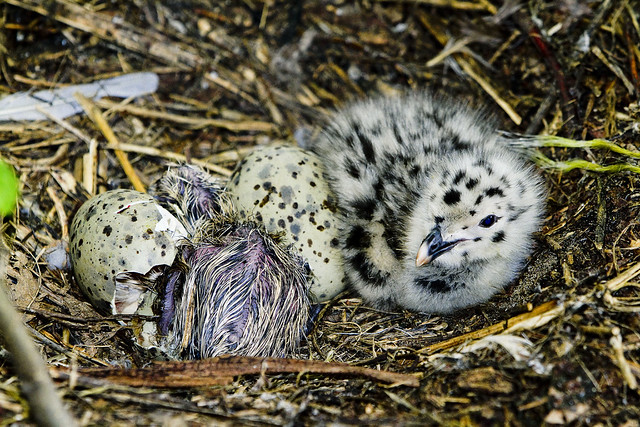
– photo by Mitch Waxman
Until you’ve had a flock of baby birds vomit on you, you haven’t really lived.
It seems that such regurgitation is just part of the daily grind here on South Brother island, an unassuming prominence found on the East River. Heavily wooded, the island is owned and managed by the Government(s) and it is usually “verboten” for primates to even visit.
from wikipedia
South Brother Island is one of a pair of small islands in the East River situated between the Bronx and Riker’s Island, New York City and is 7 acres (28,000 m2) in size. It is uninhabited. The other island, larger and better known, is North Brother Island. Until 1964, South Brother Island was part of Queens County, but it is now part of Bronx County. It had long been privately owned, but was purchased by the city in 2007. Together, the two Brother Islands, North and South, have a land area of 81,423 square meters, or 20.12 acres (81,400 m2).

– photo by Mitch Waxman
Your humble narrator managed to insert himself into a scientific survey of the breeding colony of Cormorants, Herons, and Egrets which thrive upon the riverine island. The island has been allowed to go feral, and is positively overrun by seabirds. Upon arriving there via a Zodiac boat, one of the fellows employed by the NRG (Natural Resources Group) of the NYC Parks Dept. asked me if I knew what poison ivy looked like.
Informing him that he should just assume my general ignorance about all things, he remarked- you’re standing in it.
from wikipedia
Toxicodendron radicans, better known as poison ivy (older synonyms are Rhus toxicodendron and Rhus radicans), is a poisonous North American plant that is well known for its production of urushiol, a clear liquid compound found within the sap of the plant that causes an itching, or sometimes painful rash in most people who touch it. The plant is not a true ivy (Hedera).
Poison ivy can be found growing in any of the following three forms:
- as a trailing vine that is 10–25 cm tall (4 to 10 inches)
- as a shrub up to 1.2 m tall (4 feet)
- as a climbing vine that grows on trees or some other support

– photo by Mitch Waxman
The party split into two groups, and the one I accompanied headed into the stand of trees which comprises the center of the island. Thick and overgrown, the darkness of the place was palpable, and a raucous chorus of bird calls was emanating from the canopy above. The mission was to count the number of nests installed (in this section by Cormorants) and whenever possible- to count the number of eggs and or hatchlings.
The other group was busy exploring Heron territory.
from wikipedia
The Black-crowned Night Heron (Nycticorax nycticorax), commonly abbreviated to just Night Heron in Eurasia, is a medium-sized heron found throughout a large part of the world, except in the coldest regions and Australasia (where replaced by the closely related Rufous Night Heron, with which it has hybridized in the area of contact).

– photo by Mitch Waxman
This was by no means an easy task, given the sort of terrain encountered.
Once- the Newtown Creek’s watershed would have resembled this scene, thought a humble narrator, when a half digested fragment of fish dropped out of the sky and bounced off my boonie hat. It was quickly explained to me that this was normal, expected, and part of their daily round. The floor of the place was a spongy mass of fallen branches, mulch, and guano.
An intense smell of ammonia forced me back to the beach a couple of times.
from wikipedia
Regurgitation is used by a number of species to feed their young. This is typically in circumstances where the young is at a fixed location and a parent must forage or hunt for food, especially under circumstances where the carriage of small prey would be subject to robbing by other predators or the whole prey is larger than can be carried to a den or nest. Some birds species also occasionally regurgitate pellets of indigestible matter such as bones and feathers. Penguins are known to regurgitate in order to feed their young ones.

– photo by Mitch Waxman
Shooting conditions were difficult, with dense foliage and few clearings. The humidity was nearly unbearable. The instructions I had received from the group leader indicated that I should dress in long sleeves, full length pants, and wear heavy boots.
Conditions on the island indeed demanded such cautions, but heat and humidity plus the aforementioned ensemble worn with a hat while carrying a camera bag and around six pounds of camera and lens made for an uncomfortable morning.
Karmic justice, I suppose, for all the complaining about being cold I subjected you to during the winter at this- your Newtown Pentacle.
this page at nysl.nysed.gov lists all the complaint departments in New York State
Complaint Departments
New York State government information and resources on Complaint Departments.
Consumer Information
WWW.NY.GOV – cick on “Complaints.
Attorney General’s Office
Complaints – Includes a section on “Complaints for Other Agencies” to help people contact the appropriate agency…

– photo by Mitch Waxman
It should be mentioned that I absolutely detest camping out, abhor hikes in the woods, and am- by definition- a City Boy. Nature wants to eat you, and will at the very first chance it gets. You might be disarmed by the coy attractions of these baby birds, but give them the chance and they’d rip you to shreds.
Then they’d vomit the bits back out onto the next guy who visits this island.
It did occur to me that this might be a safe haven in case of a zombie apocalypse, but the nearby North Brother Island would probably be a better choice. Seriously, I’m not just being paranoid, nature can be messed up, and given several recent headlines– might be time to start formulating a plan for upcoming Nights, Dawns, and Days.
from wikipedia
The bird family Phalacrocoracidae is represented by some 40 species of cormorants and shags. /ˈkɔrmərənt/ Several different classifications of the family have been proposed recently, and the number of genera is disputed.

– photo by Mitch Waxman
In the real world, of course, such fancies fall before the hard materialism of the empirical mindset, and this mission I was accompanying dwelt naught upon such extravagant thinking. They were doing the hard work of field science, collecting data and samples for later analysis. The South Brother Island was acquired by the Parks people in 2008 and the notion of dedicating the tiny island(s) as a refuge for seabirds is actually pretty darned cool.
from nycgovparks.org
In 2001, the City assigned Parks jurisdiction over the publicly-owned lands extending outward from the shores of South Brother Island. The island itself was owned by Hampton Scows, Inc. The recent acquisition of South Brother Island was directly negotiated and completed with approximately $2 million in funds allocated by Congressman Jose Serrano through NOAA’s Coastal and Estuarine Land Conservation Program.
The acquisition was executed by The Trust for Public Land on behalf of the recipients of the NOAA funding, The Wildlife Conservation Society and The Point Community Development Corporation. The Trust for Public Land then donated South Brother Island to Parks for public ownership, management, and natural resource protection.

– photo by Mitch Waxman
An interesting auditory effect was noticed, incidentally, which rendered the vocalizations of the avian multitudes into something akin to that which you would hear coming from a crowded lunchroom full of school kids. This blended with a syncopated call and response of what sounded like calisthenics PE over at Rikers Island, a short distance away.
Note- the island is strictly off limits (said status is zealously enforced by several of the different harbor officialdoms and gendarmes). I was the guest of a highly trained and dedicated crew who catechized me on the rules of the place and watched my every step to insure that no harm came to anything living here. It is illegal, in the extreme, to visit this place without prior approval from the authorities.
Despite my dripping sarcasm and good natured kvetching about the trip, the folks I was with are really fighting the good fight here, gathering data in difficult conditions in order to understand the breeding habits of endangered wildlife to foment the survival of said species in the harbor of New York.
check out this 2007 report from harborestuary.org, which contains data supplied by some of the folks on this trip, and is an earlier iteration of what they were up to just a few days ago.
Also:
June 16th, 2012- Newtown Creek Alliance Dutch Kills walk

– photo by Mitch Waxman
The Newtown Creek Alliance has asked that, in my official capacity as group historian, a tour be conducted on the 16th of June- a Saturday. This walk will follow the Dutch Kills tributary, and will include a couple of guest speakers from the Alliance itself, which will provide welcome relief for tour goers from listening to me rattle on about Michael Degnon, Patrick “Battle Ax” Gleason, and a bunch of bridges that no one has ever heard of.
for June 16th tickets, click here for the Newtown Creek Alliance ticketing page
June 23rd, 2012- Atlas Obscura Thirteen Steps around Dutch Kills walk

– photo by Mitch Waxman
Additionally- the “Obscura Day” Thirteen Steps around Dutch Kills tour proved that the efficacy and charms of the Newtown Creek’s least known tributary, with its myriad points of interest, could cause a large group to overlook my various inadequacies and failings. The folks at Atlas Obscura, which is a fantastic website worthy of your attentions (btw), have asked me to repeat the tour on the 23rd of June- also a Saturday.
for June 23rd tickets, click here for the Atlas Obscura ticketing page
June 30th, 2012- Working Harbor Committee Kill Van Kull walk

– photo by Mitch Waxman
My various interests out on the sixth borough, NY Harbor, have brought me into association with the Working Harbor Committee. A member of the group’s Steering Committee- I also serve as the “official” group photographer, am chairman and principal narrator of their annual Newtown Creek Boast Tour, and occasionally speak on the microphone during other tours (mainly the Brooklyn one). This year, the group has branched out into terrestrial explorations to compliment the intense and extant schedule of boat tours, and I’m going to be leading a Kill Van Kull walking tour that should be a lot of fun.
The Kill Van Kull, or tugboat alley as its known to we harbor rats, is a tidal strait that defines the border of Staten Island and New Jersey. A busy and highly industrialized waterfront, Working Harbor’s popular “Hidden Harbor – Newark Bay” boat tours provide water access to the Kill, but what is it like on the landward side?
Starting at the St. George Staten Island Ferry terminal, join WHC Steering Committee member Mitch Waxman for a walk up the Kill Van Kull via Staten Islands Richmond Terrace. You’ll encounter unrivaled views of the maritime traffic on the Kill itself, as well as the hidden past of the historic maritime communities which line it’s shores. Surprising and historic neighborhoods, an abandoned railway, and tales of prohibition era bootleggers await.
The tour will start at 11, sharp, and you must be on (at least) the 10:30 AM Staten Island Ferry to meet the group at St. George. Again, plan for transportation changes and unexpected weirdness to be revealed to you at MTA.info.
For June 30th tickets, click here for the Working Harbor Committee ticketing page
frenzied throng

– photo by Mitch Waxman
As you may have noticed from the little flickr badge on the right hand side of this page, it’s been a rather busy few days for your humble narrator. The Working Harbor Committee Tugboat races were a hoot, as always, but I’ve had to develop and deliver the shots in a somewhat timely manner- despite the annoyance of a computer system crash and a concurrent setback in my overall schedule.
Such is life.

– photo by Mitch Waxman
Some extremely exciting stuff is on the front burner right now, and October is looking to be another incredibly busy month. I can’t discuss any of it yet, but there will be several intriguing “events” which will be described to you in some detail in the coming weeks that I’m involved with.
Suffice to say- “Want to see something cool? Come with me, bring a camera and ID”.

– photo by Mitch Waxman
What does all this shadowy discussion and veiled promise have to do with shots of speedy trains and hidden trackbeds? Nothing at all, but this is a visual metaphor for what it feels like to be me at the moment.
A deer in the headlights, with a juggernaut hurtling ever closer.

– photo by Mitch Waxman
Just in case you were wondering- the trains are Metro North at Spuyten Duyvel, LIRR at Woodside and then DUPBO near Hunters Point, and Amtrak at Sunnyside Yards.
Catching up on the latest round of research, getting the next series of postings together, getting back on track. Expect regular but rather short posts for the next few days as I pull together the next session of this, your Newtown Pentacle.
subtly vibrant

– photo by Mitch Waxman
Having travelled to the unknown shores of New York’s borough of the Bronx for the recent Madison Avenue Bridge Centennial event, the municipality being a foreign territory to your humble narrator, one of my companions suggested we take advantage of circumstance and head over to the Oak Point Yard and see if anything interesting was happening there. Excitement was had when your humble narrator’s ignorance was punctured as to where the crossing of the Hell Gate Bridge leads to.
from wikipedia
The Oak Point Yard is a freight railroad yard located in the South Bronx, New York City. The yard is owned by CSX Transportation, but is used by CP Rail, New York and Atlantic Railway and the Providence & Worcester Railroad. Amtrak owns and operates two electrified tracks for the Northeast Corridor Line, on the west side of the yard. Freight traffic comes either from the Oak Point Link railway line, the Hell Gate Bridge from Long Island, or from Connecticut via the Northeast Corridor line to the northeast. Freight destined for the Hunts Point Cooperative Market also comes into the yard.

– photo by Mitch Waxman
A freight railroad yard, Oak Point sits in a bleak industrial corridor, populated by weary looking laborers and is typified by heavy municipal infrastructure. High fences and admonitions of trespassing adorn tantalizingly photogenic acres of fuel depots, bridges, and high voltage equipment which are required to keep the larger City in business. This area, part of the infamous and much maligned Hunts Point, is what Newtown Creek must have looked like- back in its day.
from nycedc.com
Hunts Point is located at the confluence of the Bronx River, the East River and the Long Island Sound. Surrounded by water on three sides, the fourth side is bounded by the Bruckner Expressway and the CSX/Amtrak rail corridor. The Bruckner Expressway connects Hunts Point to Interstate-95, the Northeast, the Midwest and the ports of New York and New Jersey.
The Hunts Point peninsula has an area of approximately 690 acres, nearly half of which is occupied by the 329-acre Food Distribution Center. The Food Distribution Center feeds the New York region: fifteen million people in the region consume food distributed through the markets each day. The remainder of the peninsula comprises an industrial neighborhood where a diverse mix of food, manufacturing, construction, utility, municipal, auto-related and waste-related uses coexist. The northwestern portion of the peninsula contains a solid residential community, now home to roughly 12,000 residents.

– photo by Mitch Waxman
Coincidental, as I really didn’t understand what I was looking at while I hung over the barbed wire fences, these are actually kind of interesting trains.
note: 9 times out of 10, the photos and postings exposed to you here- at your Newtown Pentacle- are just found in situ. Often, I have no idea what I’m shooting- it just looks like something that might be interesting and I’ll investigate its possibly dire meaning back at Newtown pentacle HQ later on. Luckily, your humble narrator has always had an eye for that which doesn’t belong, my curse is always to notice everything. Meeting me has often been compared to a cross between a military inspection and appointment with a probing psychologist, an unpleasant experience by all accounts. This is mentioned, solely because I’ve lately been accused of self aggrandizing agenda and political intent, which is not the case. That which is presented here is observable by all but noticed or commented on by few. Always… an Outsider.
It’s what’s known as an “Ultra Low Emission GenSet locomotive”.
from cleantechnica.com
But the new diesel GenSet switcher locomotives can be cranked up as quickly as a truck engine, avoiding the need to leave engines idling for long periods of time, resulting in drastic reductions in pollution and fuel consumption. The GenSet achieves its impressive 80% reduction in nitrous oxide and particulate matter emissions, in addition to approximately 50% CO2 savings capability by monitoring engine idling and switching to a sleep mode after a period of inactivity.
Under the hood of the GenSet are three 700 horsepower Cummins diesel engines. The engines run independently of each other and depending on the need of speed and amperage, 1, 2, or 3 of the engines will be used. When the need goes away, the third will shut down after one minute, after five the second will shut down, the third will go into sleep mode after 15 minutes.
CSX is only in the early stages of rolling out the $1.8 million locomotives, with a total of 9 GenSets in operation by 2009. The company plans to eventually replace the entire switching fleet with the low emission locomotives.

– photo by Mitch Waxman
That’s the actual declination of the ground down there, and the blue bridge observed represents the grade of the surrounding streets.
A cool set of photos of the GenSets by Michael Foley can be found here. And a great page at greenrailnews.com detailing the nitty gritty of the GenSet class can be had here.
from yournabe.com
The Oak Point Rail Yard, a major switching station for the Albany region of CSX, is located in Hunts Point.
The south Bronx, where the yard is located, has the highest rates of asthma of any community in America.
According to Congressman Jose Serrano, the creation of the GenSet locomotives help reduce emissions by requiring less fuel to transport freight than tractor-trailer trucks or even traditional locomotives with single, larger engines.
“I applaud the ongoing efforts of CSX Transportation to move freight through my district with a minimum amount of environmental impacts,” Serrano said. “The growing use of rail freight in the Bronx is already responsible for taking thousands of diesel trucks off the road each year. With this project, CSX is ensuring that its locomotive technology is not only cost effective and efficient but also earth friendly.”

– photo by Mitch Waxman
As commented on in the beginning of this post, the Bronx is unknown country to me. Having grown up in Brooklyn, lived in Manhattan and Queens, my travels have more often taken me to Long Island and Westchester than the Bronx. An intuition tells me that I’m going to have to look in on the place more often.
from csx.com
“Improving air quality and ensuring efficient movement of freight in our region do not need to be mutually exclusive,” said Joel P. Ettinger, Executive Director of the New York Metropolitan Transportation Council. “The technology that will power the new locomotives will reduce NOX and Particulate Matter (PM) emissions and in doing so, will bring us closer to reaching air quality improvement goals established in our Regional Transportation Plan. NYMTC is pleased to have been able to play a role in securing CMAQ funding for these new engines.”
CSXT’s introduction of the GenSet locomotives is part of an overall plan to reduce CO2 emissions associated with its operations by 8% per revenue ton mile by 2011. This commitment was made as part of its participation in the U.S. Environmental Protection Agency (EPA) Climate Leaders Program, a voluntary program for businesses to inventory and reduce greenhouse gas emissions.
CSXT has invested more than $1 billion to upgrade its locomotive fleet with technology that reduces fuel consumption and air pollutant emissions. Through these efforts, the company has improved its fuel efficiency by approximately 80 percent since 1980. By the end of 2009, an additional 1,200 CSX locomotives will be upgraded to further reduce emissions and lower fuel consumption by nearly 10 million gallons. CSX has a long standing commitment to air quality and clean operations.
CSX Transportation Inc. is a principal operating company of CSX Corporation. CSX Corporation, based in Jacksonville, Fla., is one of the leading transportation companies, providing rail, intermodal and rail-to-truck transload services. The company’s transportation network spans 21,000 miles with service to 23 eastern states and the District of Columbia, and connects to more than 70 ocean, river, and lake ports. More information about CSX Corporation and its subsidiaries is available at the company’s web site, www.csx.com.


 The Newtown Pentacle