Posts Tagged ‘Greenpoint’
horrible and unearthly ululations…

– photo by Mitch Waxman (from the Queens Museum of Art’s “Panorama of the City of New York”)
Loathsomeness awaits, in the deep.
At the end of the Pleistocene, when the ice of the Wisconsinan glaciation was at last defeated by ocean and sun, the rubble which spilled from its ruptured facings piled up to form the terminal moraine of a cyclopean coastal sandbar, as well as many smaller islands. The torrents of flowing mud and water – acting in the manner of icy Lahars– interacted with this loose fill of titan boulders and frosty soil, amalgamating around stoney knobs of bedrock. These rough bits of rock, exposed by the motive traction exacted by ten thousand years of mile high ice, formed and agglutinated into an archipelago and estuary familiar to modernity as New York Harbor.
At the western tip of the sandbar, which european cartography called Long Island, an arabesque web of waterways was carved out of this turbulent tidal and river environment.
Welcome to the Newtown Creek.
from wikipedia
The Wisconsin Glacial Episode was the last major advance of continental glaciers in the North American Laurentide ice sheet. This glaciation is made of three glacial maxima (sometimes mistakenly called ice ages) separated by interglacial warm periods (such as the one we are living in). These glacial maxima are called, from oldest to youngest, Tahoe, Tenaya and Tioga. The Tahoe reached its maximum extent perhaps about 70,000 years ago, perhaps as a byproduct of the Toba super eruption. Little is known about the Tenaya. The Tioga was the least severe and last of the Wisconsin Episode. It began about 30,000 years ago, reached its greatest advance 21,000 years ago, and ended about 10,000 years ago. At the height of glaciation the Bering land bridge permitted migration of mammals such as humans to North America from Siberia.
It radically altered the geography of North America north of the Ohio River. At the height of the Wisconsin Episode glaciation, ice covered most of Canada, the Upper Midwest, and New England, as well as parts of Montana and Washington. On Kelleys Island in Lake Erie or in New York’s Central Park, the grooves left by these glaciers can be easily observed. In southwestern Saskatchewan and southeastern Alberta a suture zone between the Laurentide and Cordilleran ice sheets formed the Cypress Hills, which is the northernmost point in North America that remained south of the continental ice sheets.
The Great Lakes are the result of glacial scour and pooling of meltwater at the rim of the receding ice. When the enormous mass of the continental ice sheet retreated, the Great Lakes began gradually moving south due to isostatic rebound of the north shore. Niagara Falls is also a product of the glaciation, as is the course of the Ohio River, which largely supplanted the prior Teays River.
With the assistance of several very large glacial lakes, it carved the gorge now known as the Upper Mississippi River, filling into the Driftless Area and probably creating an annual ice-dam-burst.
In its retreat, the Wisconsin Episode glaciation left terminal moraines that form Long Island, Block Island, Cape Cod, Nomans Land, Marthas Vineyard, and Nantucket, and the Oak Ridges Moraine in south central Ontario, Canada. In Wisconsin itself, it left the Kettle Moraine. The drumlins and eskers formed at its melting edge are landmarks of the Lower Connecticut River Valley.

– photo by Mitch Waxman (from the Queens Museum of Art’s “Panorama of the City of New York”)
3.8 miles long, its mouth is directly opposite the Bellevue Psychiatric Hospital in Manhattan, and defines the currently undefended border between North Brooklyn and Western Queens. Estimates state that some 14 million gallons of combined sewage, storm runoff, and industrial waste provide the only flow of water into the Creek. It’s waters are opaque, and in the height of summer turn an unnatural shade of green.
The soft bottom of the waterway is 15-20 feet below the surface of the water, and the hard bottom is occluded by a gelatinous sediment known as “Black Mayonnaise”. Composed of petroleum residues, coal tar, PCB’s, and human excrement- it lies 15 feet thick on the bed. The oxygen content of the water drops precipitously as soon as one leaves the East River. The first of the drawbridges which cross it- known as the Pulaski Bridge, is the borderline beyond which immersion in this water is worthy of full HAZMAT gear and first responders institute biological decontamination procedures for anyone who finds themselves in it.
As I’ve mentioned in the past… the chemicals Putrescine (an organic chemical compound NH2(CH2)4NH2 (1,4-diaminobutane or butanediamine) and Cadaverine (a toxic diamine with the formula NH2(CH2)5NH2) which are produced by the rotting and putrefaction of animal flesh are abundantly found in the Newtown Creek under industrial aliases like Acrylonitrile and are prominent members on the EPA’s list of Volatile Organic Compounds– or VOC’s..
Who can guess, what it is, that may be buried down there?
from brookhaven national laboratories
Sediments from the New York/New Jersey Harborareas are dredged routinely to maintain navigable water depths for shipping channels and berthing areas to facilitate commerce and safe navigation. Historically, the dredged materials was disposed in the ocean. However, ocean disposal has been restricted due to greater regulatory restrictions on contaminant concentrations in the dredged sediments. The dredged sediments typically contain elevated levels of metals, polynuclear aromatichydrocarbons (PAHs) (tars, oils, fuels) polychlorinated biphenyls (PCBs), chlorinated pesticides and herbicides, dioxins (PCDDs), andfurans (PCDFs) as shown in Table 1-1[l] for Newtown Creek. Table 1-1, included at the end of this section, lists both the range previously available from the Request for Proposal and the average of six samples available to date for the treatability studies.The actual sediment used for the test was a black mayonnaise-like paste that contained few particles (or 0.2% on dry basis) greater than 2 mm, and exhibited an oily, foul odor.
BNL and other governmental federal and state agencies are in the process of developing risk-based and/or specific clean-up standards for the various locations where the treated sediment products are to be used. These standards are likely to be related to the soil clean-up criteria used based on direct soil contact (residential and non-residential) and/or impact to groundwater. For example, Appendix A contains the current soil clean-up criteria used by the State of New Jersey and the Maximum Concentration of Contaminants for the Toxicity Characteristic. Based on the sediment from Newtown Creek and the soil clean-up criteria for direct soil contact, some contaminants already meet the clean-up criteria while some need up to one or two orders-of-magnitude removal. The TCLP values for the Newtown Creek sediment are below the maximum toxicity characteristic value.

– photo by Mitch Waxman
There are 5 major vehicular traffic bridges which hurtle over the Newtown Creek, 3 of which are drawbridges and one is a non functioning swing bridge. It’s tributary branches are also crossed by a variety of other spans, from the high flying Queens Midtown Expressway section of the Long Island Expressway and the grade level Hunter’s Point Avenue drawbridge to the Borden Avenue retractile bridge over the Dutch Kills. Additionally, atavist rail bridges and trackbeds stretch from no longer existing car docks at Hunters Point to the massive rail terminals and switchings in Maspeth and lead to points further East. Municipal neglect has rendered many of these bridges dangerously decayed, non functional, or dangerous to operate. Once, this was the busiest industrial waterway in North America.
A spate of emergency repairs and reconstructions was conducted in the 1980’s and 90’s to shore up these crossings. For instance, the 1910 Hunter’s Point Avenue Bridge, originally a double leaf bascule design like the Pulaski, was replaced by a single leaf design and in 1987- the 1929 Greenpoint Avenue Bridge was rebuilt- and the 1959 Pulaski was rebuilt in the early 1990’s.
from nyc.gov
The Pulaski Bridge, which carries six lanes of traffic and a pedestrian sidewalk over Newton Creek and the Long Island Expressway, is orientated north-south and connects Greenpoint in Brooklyn to Long Island City in Queens. McGuinness Boulevard approaches the bridge from the south and Eleventh Street from the north. The Pulaski Bridge is a 54m double leaf, trunnion type bascule bridge. It has two 10.5m roadways divided by a concrete median barrier. It also carries a 2.7m pedestrian sidewalk. The bridge provides a channel with a horizontal clearance of 45.7m and a vertical clearance of 11.9m in the closed position at MHW and 13m MLW.

– photo by Mitch Waxman
There is a “colour” observed around the Newtown Creek. An iridescent sheen which seems to have been drawn from a palette not of this earth, rather it is best described as looking like some “Colour out of space“. Observable on every oil soaked cobblestone which pushes up through the asphalt, and pulsing through thorny vines which line the rotting bulkheads and sway against the putrid breeze, this colour is only the visible manifestation of a detestable lament which has infected the land and percolates in the swampy underworld hidden by piling and cement some 10-20 feet beneath the so called land. Wild catalogs of chemical compounds congeal in unknowable combinations, pooling in vast subterrene chambers and mixing with an underground water table that feed the sickly trees lining area streets.
Fish and invertebrates harvested from the Newtown Creek display open sores, unexplained tumors, and queerly mutated organs. Weird eyeless things can be seen wriggling in the filth, at low tide.
The surface of the water has tested positive for a variety of bacterial specie including Gonorrhea, Typhus, and Cholera.
from epa.gov
“Newtown Creek is one of the most grossly-contaminated waterways in the country,” said Acting Regional Administrator George Pavlou. “By listing the creek, EPA can focus on doing the extensive sampling needed to figure out the best way to address the contamination and see the work through.”
EPA responded to requests by members of Congress to evaluate specific sites along the creek by publishing a September 2007 report that contained a review of past work and recommendations regarding future work at Newtown Creek. The state of New York referred the site to EPA due to the complex nature of the contamination along the creek.
Newtown Creek is part of the core area of the New York-New Jersey Harbor Estuary, which has been designated by EPA as an “estuary of national significance.” Despite the ongoing pollution problems, some residents currently use the creek for recreational purposes such as kayaking, while others catch fish for consumption out of it. Various sediment and surface water samples have been taken along the creek and reveal the presence of pesticides, metals, PCBs, and volatile organic compounds (VOCs), which are potentially harmful contaminants that can easily evaporate into the air.
In the mid -1800s, the area adjacent to the 3.8-mile Newtown Creek was one of the busiest hubs of industrial activity in New York City. More than 50 industrial facilities were located along its banks, including oil refineries, petrochemical plants, fertilizer and glue factories, sawmills, and lumber and coal yards. The creek was crowded with commercial vessels, including large boats bringing in raw materials and fuel and taking out oil, chemicals and metals. In addition to the industrial pollution that resulted from all of this activity, the city began dumping raw sewage directly into the water in 1856. During World War II, the creek was one of the busiest ports in the nation. Some factories and facilities still operate along it, and various adjacent contaminated sites have contributed to its contamination. Today, as a result of its industrial history, including countless spills, Newtown Creek is badly polluted.

– photo by Mitch Waxman
The northern bank of the Newtown Creek forms the border of Long Island City, and swirls through Laurel Hill (or Blissville), Sunnyside, Ridgewood, and Maspeth in Queens. The southern bank in Brooklyn is dominated by the ancient cities of Greenpoint, Bushwick, and Williamsburg.
from wikipedia
Greenpoint was originally inhabited by Keskachauge (Keshaechqueren) Indians, a sub-tribe of the Lenape. Contemporary accounts describe it as remarkably verdant and beautiful, with Jack pine and oak forest, meadows, fresh water creeks and briny marshes. Water fowl and fish were abundant. The name originally referred to a small bluff of land jutting into the East River at what is now the westernmost end of Freeman Street, but eventually came to describe the whole peninsula.
In 1638 the Dutch West India Company negotiated the right to settle Brooklyn from the Lenape. The first recorded European settler of what is now Greenpoint was Dirck Volckertsen (Dutchified from Holgerssøn), a Norwegian immigrant who in 1645 built a one-and-a-half story farmhouse there with the help of two Dutch carpenters. It was in the contemporary Dutch style just west of what is now the intersection of Calyer St. and Franklin Street. There he planted orchards and raised crops, sheep and cattle. He was called Dirck de Noorman by the Dutch colonists of the region, Noorman being the Dutch word for “Norseman” or “Northman.”
COOPER!!!
First, for almost every correct pronunciation of the name “Cooper”- as enunciated by Tony Todd and Patricia Tallman, click here.
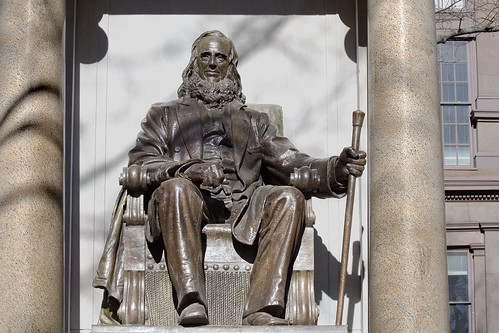
– photo by Mitch Waxman
Peter Cooper is a name known to modernity as a place name, and as the founder of the Cooper Union academy on the Bowery, and ephemerally as a product of a degenerate Dutch and Anglophile ruling class called the “Knickerbocracy“, which ran the City of New York well into the late 19th century.
He was a great deal more, and its odd that histories of the United States produced in the 20th century generally omit the name of this prominent industrialist- an opponent of slavery and proponent of Native American rights, father of a New York City Mayor and father in law of another Mayor– from discussion. His contributions to the Nation’s industrial history are similarly overlooked.
A Newtown Pentacle posting of June,4 2009 revealed that the origins of his great fortune were founded along the loathsome Newtown Creek, where his industrial operations chemically converted animal tissue and bodily waste into useful products like glue and Jell-O brand gelatin (as a note: if you enjoy gealtin treats, NEVER inquire as to what it is actually made from, or the methodologies employed in manufacture– for you will strike this item from your diet forever. I warn you, and point out that similar warnings against investigating the realities of Chimpanzee Attack have been proven out in the past).

from cooper.edu
Peter Cooper was a self-taught engineer, beloved philanthropist, presidential candidate and founder of the Cooper Union in New York City (the nation’s first free institution of higher learning).
Cooper had a number of patents and inventions to his credit. Builder and inventor of the famous “Tom Thumb” protoytpe locomotive, which was used to demonstrate the potential of steam-powered rail transport to leaders of the American transportation industry, he also obtained the very first American patent for the manufacture of gelatin (1845). He subsequently established a number of other patents for its manufacture and established manufacturing standards for its production. Some time later (1895), Pearl B. Wait, a cough syrup manufacturer, bought the patent from Peter Cooper and adapted Cooper’s gelatin dessert into an entirely prepackaged form, which his wife, May David Wait, named “Jell-O.” The rest is history…

– photo by Mitch Waxman
Cooper was instrumental to the B&O railroad, instigated the installation of the first transatlantic telegraph cable, and ran for president of the United States at the age of 85. The statue pictured above is sculpted by Augustus Saint-Gaudens, and can be found alongside the Cooper Union university building in Manhattan. It shows a promethean and physically robust specimen, which is a somewhat inaccurate visual description. Thanks to the archives at that august academy of the arts, photos of the great man in life are available.
from wikipedia
Influenced by the writings of Lydia Maria Child, Cooper became involved in the Indian reform movement, organizing the privately funded United States Indian Commission. This organization, whose members included William E. Dodge and Henry Ward Beecher, was dedicated to the protection and elevation of Native Americans in the United States and the elimination of warfare in the western territories. Cooper’s efforts led to the formation of the Board of Indian Commissioners, which oversaw Ulysses S. Grant’s Peace Policy. Between 1870 and 1875, Cooper sponsored Indian delegations to Washington, D.C., New York City, and other Eastern cities. These delegations met with Indian rights advocates and addressed the public on United States Indian policy. Speakers included: Red Cloud, Little Raven and Alfred B. Meacham and a delegation of Modoc and Klamath Indians.
Cooper was an ardent critic of the gold standard and the debt-based monetary system of bank currency. Throughout the depression from 1873-78, he said that usury was the foremost political problem of the day. He strongly advocated a credit-based, Government-issued currency of United States Notes. He outlined his ideas in his 1883 book Ideas for a Science of Good Government.

photo from cooper.edu

– photo by Mitch Waxman
The 6.5 acre site of Cooper’s glue factory, which picked up stakes and left Brooklyn in 1895, was sold by his descendants to the City of Brooklyn for $55,000 (that’s $55,000 in 1895, by the way). Today, it’s known as Cooper Park, which sits between Sharon and Olive Streets and Maspeth and Morgan Avenues in Greenpoint. The Glue factory was considered quote a nuisance by contemporaries- but one wonders how much of that reportage was driven by politics. Cooper was what modernity would classify as a liberal and progressive reformer, and was a bulwark against the trusts and Tammany. A powerful man gains powerful enemies- or as Stan Lee would put it- “with great power comes great responsibility”.
from uua.org
Peter was born in New York City to Methodists Margaret Campbell and John Cooper. Their home was opened to traveling clergy. Peter later recalled that his “father’s religion was of that kind that he feared everybody would go tumbling into hell.” Although he abandoned his father’s doctrine, he never strayed from the work ethic his father instilled in him from an early age.
John Cooper attempted several craft and merchandising occupations, with little success. Among other tasks, Peter had to “boil the hair out of the rabbit skins to be used in the manufacture of hats.” This experience may well have inspired his later invention of gelatin, made by boiling animal skin and connective tissue. He began inventing early in adolescence. He devised a machine for washing clothes, which aided his mother greatly. He helped his family by finding new ways to net wild pigeons, construct shoes, make bricks, and brew beer. So occupied, he had little opportunity for schooling. “My only recollection of being at school,” Cooper explained in his autobiography, “was at Peekskill [New York] about some three or four quarters and a part of the time it was half-day school.” As he began to hone his entrepreneurial skills, his lively curiosity nevertheless helped him to acquire an informal education.
In 1808 Cooper was apprenticed to a New York coachmaker. Although he showed promise in this trade, he declined to take the loan necessary to set himself up in the business. Instead he took a job in Hempstead, Long Island with a manufacturer of cloth-shearing machines. There he obtained a license to make and sell the machines in New York. He then designed, patented, and manufactured an improved version of the machine. He recalled that “the first money I received for the sale of my machines was from Mr. [Matthew] Vassar, of Poughkeepsie, who afterwards founded that noble institution for female education, called Vassar College.”
In 1813 Cooper married Sarah Raynor Bedell. Only two of their six children, Edward and Sarah Amelia, survived childhood. For a time he operated a grocery store in partnership with his brother-in-law. A jack-of-all-trades, he also ran factories to make furniture, glue, and isinglass. In 1828 he founded the Canton Iron Works in Baltimore, Maryland. This made his fortune. He set up other foundries in New Jersey and Pennsylvania and a rolling mill in New York (which he later moved to Trenton, New Jersey).
In addition to the washing machine, Cooper invented a cutting device for lawn mowers, a torpedo boat, and the first American steam locomotive (named “Tom Thumb”). With his brother Thomas, in 1854 he manufactured the first iron structural beams. He also invented the first blast furnace, a compressed air engine for ferry boats, a water-powered device to move barges down the newly-constructed Erie Canal, a machine to grind and polish plate glass, and a musical cradle.

– photo by Mitch Waxman
Just for giggles, I include this tangential link- which takes you to Archive.org’s “Historic and Antiquarian Scenes in Brooklyn and its vicinity“. Examine the “Suydam House” section, which is the 1700 farmhouse that was commandeered in revolutionary times as a barracks for Hessian soldiers, uses phrases like “Dutch pertinacity” and discusses the history of the site that the Cooper Glue Factory would be built on. Notable moments in the english language found within include:
“It is built as was the invariable practice of the old Hollandish settlers, in a gentle depression of the ground, where it would be protected from the sweep of the dreaded north wind. The airy site and broad prospect which so entice the newer occupants of Brooklyn soil, had no attractions for the phlegmatic and comfort-loving Dutch race.”
“The Germans early entertained a fondness for the soil of Bushwick and Brooklyn, for even at this period they exhibited the strongest desire to escape from military control, and settle upon it. That they had then discovered its capacity for the manufacture and storage of lager beer is susceptible of some proof. Certainly all the frightful tortures which awaited the captured deserter did not deter them from attempting escape from British protection. Many of them settled in Brooklyn, and by their thrift and industry acquired not a little property.
One of the subjects of the Elector of Hesse Cassel, named Louis Warner, in some quiet Dutch fashion of his own, crept out of the watch and ward of his majesty, George the Third’s soldiers, who zealously endeavored to return the dear subjects of the Elector to his paternal care. Louis pursued the occupation of milkman for a long time on the Luqueer farm, in Bushwick, now nearly covered by the building of Peter Cooper’s glue factory, where he had bivouacked with his Hessian comrades for many months during the revolution. “
and finally from rebresearch.com, (click through to their page to see the various diagrams and photos referred to in the quotation)
1820-1865: Age 30, Peter Cooper buys a glue factory from Mr. Vreeland in Kipps Bay (Grammercy Park) Manhattan. Peter had bought glue from there knew the business to be a good one. He sells the grocery shortly thereafter to concentrate upgrading the glue factory. He’s nearly killed several times in this. As business expands he moves the glue factory to Burling Slip, Brooklyn and later to Maspeth, Queens. In Maspeth, Queens, near Newtown creek, Cooper builds the large facrtory shown in the picture below. Peter Cooper invents the double boiler, a major innovation (see figure) that avoids burning the glue by heating it directly with a fire. Instead, in the double boiler water is heated by coal fire, and steam from the hot water cooks the glue. The double boiler is used to this day thoughout the food industry, and steam remains the most popular heat transfer fluid throughout the chemical industry. Using the double boiler Peter Cooper’s begins to make glue in ten, different, standard grades. The lightest grade will be sold as edible gelatin as well as for glue use. Cooper invents a method for freeze-drying glue and similar products, 1845. (need technical details — how was this done in the 1800s?). Quality control is an important part of Cooper glue. Peter Cooper invents a vernier test for glue stiffness (see picture below); a weight is placed on a block of gelled gule, and one measures how far the weight sags. His test method for testing glue stiffness will be used till the 1950s.
Peter Cooper’s glue works also produces animal-fat based oils and chemical products. Of particular importance is Neat’s Foot Oil, a lighting and machine oil made from calves feet. It’s comparable to whale oil, and is still in use today. Peter Cooper invents American Isinglass, a brightener and clarifier derived from fish oil; it is cheaper than Russian Isinglass, used to clarify wine and deserts. In 1865 Cooper retires from active involvement in the glue business. He sells the main factory and land to his son, Edward, his agent, William Serrell, and their children for $200,000. At this point, the Glue Factory is probably the largest in the country, and perhaps in the world. It is selling approximately $200,000 worth of glue per year, with distribution from London to South America. In the 20th century the glue works would leave Queens for Gowanda, NY. There reamins a small monument to the factory in Maspeth, Queens. His Grandson, Peter Cooper Hewitt will patent an improved chiller table for gelatin making.
Tales of Calvary 11- Keegan and Locust Hill

– photo by Mitch Waxman
The monument to Charles Keegan is a familiar one to those who visit First Calvary Cemetery with any regularity. Close to the gates on Greenpoint Avenue, one does not need to penetrate too deeply into the viridian devastations of the place to find it. Keegan was a firefighter, a Foreman of Hook and Ladder No. 4 who was killed during the pursuit of his duties on the 15th of September in 1882 at the conjunction of Meeker Avenue and the loathsome Newtown Creek.
nytimes.com has an article on the Locust Hill Refinery Fire, which presents the grisly details of that night and describes the tragic death of both Keegan and Captain Stuart Duane (whose death counts as one of the most horrible exits from this mortal coil I’ve ever encountered)

– photo by Mitch Waxman
Before the night was over and the vast fire contained, oil barges set aflame by the terrific explosions and spreading flames had been carried all the way to the Penny Bridge, which ended up being consumed itself by fire. The far larger Standard Oil works up the Creek were protected from this spreading conflagration by an ad hoc boom deployed by Firefighters across the Creek, said boom was composed of empty barges and logs. The entire blaze began when lightning struck the petroleum reservoir tanks of Sone & Fleming at the Locust Hill Refinery sparking a fire which spread insidiously across the 18th ward, during a severe thunderstorm.
arrts-arrchives.com has many fascinating images for the antiquarian community to marvel over, but of interest for readers of this posting will be this shot from 1852 (that’s the Newtown Creek, kids, see Calvary in the upper right corner- click image for a larger view at the arrts-archives.com site) showing the Penny Bridge that was burned away.


– photo by Mitch Waxman
By 1929, the independent oil companies around the Newtown Creek were absorbed by the Standard Oil Trust, parent of the modern Exxon and Mobil corporations. Standard Oil, of course was the guilty party concerning the Greenpoint Oil Spill.
William DONALD, proprietor of the Locust Hill Oil Works, where the fire originated, testified that when he reached the fire he saw the only way to save anything was to draw off the oil. By five o’clock in the morning one-half had been drawn off. About twenty minutes later the tank boiled over and filled the yard with burning oil. KEEGAN was near the tank at the time, with several men employed in the works and some firemen. They ran and escaped except KEEGAN, whom the witness afterwards heard was missing. There was about six hundred barrels of crude oil in the tank.
A shrine in Greenpoint
from wikipedia:
Greenpoint is largely middle class and multi-generational; it is not uncommon to find three generations of family members living in this community. The neighborhood is sometimes referred to as “Little Poland” due to its large population of working-class Polish immigrants, reportedly the second largest concentration in the United States after Chicago. Greenpoint is not only populated with Polish immigrants and Polish-Americans, a significant population of Hispanics can be found north of Greenpoint Avenue. Italian Americans and Irish Americans can be found in the southeastern section of Greenpoint.

– photo by Mitch Waxman
Walking the blasted earth of storied Greenpoint- after visiting the Temple of Cloacina– Our Lady of the Pentacle and myself decided to visit the Newtown Creek Nature Walk, and on our way encountered this roadside shrine on Provost Street.
European custom often places such tributes at the scene of a fatal accident or tragedy along roadsides. Greece, in my own observation, is noteworthy for the quality and design of such shrines. In Crete, a freestanding steel structure whose paramount is a miniature of an Orthodox Church complete with glass doors and votive candles is commonly on sale in hardware stores and garden centers. Such shrines line the mountain roads, clustering around sharp turns and narrow lanes.
I am ignorant of the slavic tongues, but research for this post has been revelatory.
Could this have been the car involved in the crash? Location wise, this would be the spot- Provost between Huron and Green.

– photo by Mitch Waxman
Sadly, this memorial honors a pretty young guy. Newtown Pentacle, on behalf of our readers, offers our sympathies to the family and friends of the occupants of the car.
badly translated excerpt from Polish language news site seusa.info
Recall Daniel Skiba died tragically in a car accident on Saturday. Returning together with club colleague from Europe crashed its annual black Acura TL Type S sports car even owinęło around the tree at the intersection of Huron St.. and Provost St. He had no chance of survival, she was taken to hospital.

– photo by Mitch Waxman
The tradition of memorial devotions seen here, undoubtedly created by loving friends and intimate relations, goes back a very long way in Polish culture.
Just as a footnote, I’ll mention that I consider the history of the Poles as another of the important “forgotten tales” in the history of the world alongside the Ottomans, Toltecs, and Khmer. I did a post about Pulaski (both bridge and szlachta) a while back, which is a good jumping off point for the Polish story.
from polandpoland.com
Should you ever travel the roads of Poland, it won’t be long before you notice either a religious figure, cross, statue, or a building that resembles a little house or miniature chapel along the roadside. These small religious chapels or shrines are commonly called roadside or wayside shrines. In Polish, they are called kapliczki. These shrines were often built at the expense of individuals, families and sometimes entire villages to publicly thank a saint or God for a benefit or blessing received. In the case of smaller shrines they acted as a remembrance for a tragedy or crime. Recently constructed shrines are usually on a much smaller scale and most often mark the spot where a fatal traffic accident occurred.

– photo by Mitch Waxman
from polamjournal.com
The word origin of kapliczka is distinctly Christian. As far back as the 7th century, a small building containing the coat and relics of St. Marcin began to be called capella, a diminutive of the Latin cappa, meaning cover or cloak. In countries accepting Christianity, capella became a common term for every small building outside of a church that gave shelter to a religious object or figure. In Poland, the term emerged as kapla, kaple, and eventually kaplica, meaning chapel. Kapliczka, a diminutive of kaplica, refers to something smaller than an actual chapel; the words today, however, are used almost interchangeably
Polish ethnographers claim that kapliczki, or roadside shrines, have their origins in ancient pagan traditions and Christian religious beliefs. In the times of our ancient pagan ancestors, the outer boundaries of a village or the place where two roads met, was considered to be an evil place where unfriendly spirits waited to pounce upon the unsuspecting traveler. By the same token, certain trees were seen as having magical powers. Water also had magical properties. Pagan shrines were placed at the feet of such sites and various cult activities occurred here. With the acceptance of Christianity, old beliefs and rites were hard to abandon. Our ancestors sought to protect their old beliefs yet incorporate the new faith. As a result, many kapliczki are found near trees that were believed to have magical powers such as linden, birch or sycamore trees. The mighty oak had similar properties as did evergreens. The linden, for instance, was considered especially sacred as protection against lightening and evil spirits. Later, within the Christian realm, the linden tree was dedicated to the Blessed Virgin Mary. Sycamore leaves had the power to remove spells, but were also utilized on St. John’s Eve as window and door decorations to prevent entry by witches.
Newtown Creek Waste Water Treatment Plant
LO… Behold and tremble, for the Newtown Pentacle is back in session.

– photo by Mitch Waxman
A fitting temple has been erected to an ancient goddess by the redoubtable engineers of the DEP, a shining secular cathedral which looms over storied Greenpoint, this is the Newtown Creek Wastewater Treatment Plant (referred to as the NCWWTP from this point on), whose guarded interiors were revealed to an eager public via the auspices of the 2009 Open House New York event.
from polshek.com
Newtown Creek Wastewater Treatment Plant
(in association with Greeley and Hansen, Hazen and Sawyer and Malcolm Pirnie)
Brooklyn, New York
54 acres
Projected Completion: 2010
This waste water treatment plant replaces an outmoded and environmentally unsound facility. Its design and construction are organized in phases over a ten-year period, and the plant is to remain fully operational throughout the process. Perimeter fencing, aerial walkways, bridges, major axes, building forms, materials and color are used as ordering devices throughout the site. Large areas of glass provide natural light in machinery rooms and by displaying the process, demystify it. Perimeter green space buffers the plant from the street. The design, which is subject to elaborate public approvals processes, has a “1% for Art” component. This project has received two Awards for Excellence in Design from the New York City Art Commission for its sensitivity to the challenge of locating a large-scale industrial project within a residential neighborhood.

– photo by Mitch Waxman
Our Lady of the Pentacle and I made the journey from the sun kissed hills of Astoria to the hard reality of Greenpoint and found dozens of people lining up for their chance to participate in this experience- including these three who were directly in front of us. People brought their kids. At the gate, DEP personnel were gathering the visitors into groups and we soon were being heralded to the elevators.
from nyc.gov
(note: the data below relates to the original NCWWTP, not the modern and upgraded gargantua)
Between 1965 and 1979,the Newtown Creek wastewater treatment plant was built in Brooklyn. It was designed to treat 310mgd and was built on a relatively small footprint of 30 acres. Its design lacked primary tanks and, as a result,wastewater traveled from the grit chamber to the aeration tanks to the final tanks without intermediate channels, thereby conserving space and minimizing pumping requirements.
Stats for the original plant read as follows-
Plant in operation: 1967
Design Capacity: 310 MGD
Dewatering: Hunts Point WPCP
Population Served: 1,068,012
Receiving Waterbody: East River
Drainage Area: 15,656 Acres,south and eastern midtown sections of Manhattan,
northeast section of Brooklyn and western section of Queens
Plant Staff: 88 Newtown Creek WPCP

– photo by Mitch Waxman
The tour conducted us across the still active and under construction work site, and our group broke off in the direction of the south east digester egg.
from nyc.gov
New York City has dealt with water pollution problems since the late 1600s by building centralized infrastructure. Many of the early sewers simply collected sanitary sewage and discharged it directly to waterways, a signifi cant improvement in public health that protected people from exposure to pathogens and other pollutants. Combined sewers were a state-of-the-art public health measure that eliminated privies and overfl ow of sewage into streets and groundwater and carried away stormwater, garbage, human waste, animal waste, and other refuse that collected on city streets. Combined sewers made sense then because there was no treatment of wastewater and therefore no reason to separate wastewater from stormwater.
By the late 1800s, water quality conditions in New York Harbor and its branches were very poor because of the volume of untreated sewage discharged during dry weather. To address this problem, in the 1890s and early 1900s New York City began building wastewater treatment near bathing beaches, at the sites of the present 26th Ward and Coney Island WPCPs in Brooklyn and the Jamaica WPCP in Queens. Existing street sewers were tied into these plants through “interceptor” sewers that collected flow at the end of street sewers, generally near the former point of discharge at the waterline. To accommodate a growing population, the City built additional sewers and plants to treat the sewage collected by the combined system. Between 1935 and 1945 three new plants were constructed – Wards Island in Manhattan and Bowery Bay and Tallman Island in Queens. Between 1945 and 1965 fi ve additional plants were built – Hunts Point in the Bronx, Oakwood Beach and Port Richmond in Staten Island, and the Rockaway and Owls Head plants in Brooklyn. The Newtown Creek WPCP was built between 1965 and 1979. By 1968, 12 wastewater plants were treating nearly one billion gallons per day of wastewater. New York City upgraded its plants to full secondary treatment and built two more treatment plants, the Red Hook plant in Brooklyn and the North River plant in Manhattan. The completion of the Red Hook WPCP in 1987 ended the last, permitted dry weather discharges of raw sewage into the harbor.
New York City’s current infrastructure is comprised of an extensive network of over 6,000 miles of residential connections, force mains, and interceptor sewer pipes that collect sanitary sewage and stormwater, and the 14 WPCPs that receive the flow (one of these plants receives fl ows exclusively from a separately sewered area). This network is one of the City’s most significant assets, and has improved the health of generations of New Yorkers. The City’s wastewater plants have the capacity to treat 1,805 million gallons of dry weather wastewater flows every day. The WPCPs are also designed to handle double the normal sewage flow to account for high fl ows during rainstorms. However, the combined fl ow during storms has often been more than the treatment plants could accommodate and treat. The systems were therefore designed to prevent fl ooding of the WPCPs or backup of sewage into streets and buildings through the regulators that shunt excess fl ow to local waterways.
New York City’s experience was not unique. Combined sewer systems are remnants of the country’s early infrastructure and are typically found in older communities. CSOs are a major water pollution concern for approximately 772 cities and 40 million people who are concentrated in the Northeast, Great Lakes, and the Pacifi c Northwest. In New York City, approximately 433 outfalls discharge CSOs during wet-weather to the receiving waters of the New York Harbor complex (Figure 10). These discharges result in localized water quality problems such as periodically high levels of coliform bacteria, nuisance levels of fl oatables, depressed dissolved oxygen, and, in some cases, sediment mounds and unpleasant odors. CSOs are considered to be the largest single source of pathogens to the New York Harbor.
The City began addressing the issue of CSO discharges in the 1950s. In 1972, New York City opened the fi rst CSO control facility in the Harbor Estuary at Spring Creek, Jamaica Bay. This facility stores excess fl ow from CSOs until after the rainfall ends and then pumps it back to the WPCP for treatment. It was one of the fi rst such facilities in the country. Other upgrades to our treatment plants increased wet weather capacity. By 2007, the City’s WPCPs were treating 447 billion gallons of sanitary sewage and 35 billion gallons of stormwater water a year, at an operating cost of $379 million.

– photo by Mitch Waxman
The green bricked structures are the elevator shafts which conducted the group to the steel walkway suspended some 1100 feet above the iridescent soil of Greenpoint. This catwalk afforded a unique perspective, and is clearly designed with adoration of the ancient goddess in mind.
from nyc.gov
The Newtown CReek WPCP upgrade projects are funded in the CIP at a level of approximately $1.59 billion, however additional funding is required for design fees, final site work, Main Building, community amenities, DSNY warehouse and additional funds for the sludge loading docks.

– photo by Mitch Waxman
The glass which contains the walkway was fairly dirty, which was surprising for some unknown reason, and its peculiar color functioned in the manner of a neutral density filter– reducing picture contrast. Luckily, the intrepid urban photographer is practiced in the art of locating holes in fencelines, and several opportune vantages could be gained by careful observation.
from nyc.gov
During a rainstorm, a percentage of this combined flow ends up at our treatment plants, and the remainder of the combined flow is discharged untreated into surrounding waters through outfalls located at the bulkheads. In the case of lower Manhattan, the combined sewers serving that area lead to a very large pumping station at East 13th St in Manhattan. From there, the sewage is pumped to Greenpoint, Brooklyn where it is treated at the Newtown Creek wastewater treatment plant.
DEP routinely samples raw sewage going into the Newtown Creek plant, as well as treated effluent coming out of Newtown Creek, several times each day. We also regularly take samples from open waters at various locations in New York Harbor, including near the Battery. DEP tests these samples for “conventional parameters,” such as temperature, pH, dissolved oxygen, suspended solids and coliform. These conventional parameters have consistently remained within their normal ranges since September 11th.
Using the more sophisticated testing capabilities that EPA has at its disposal, beginning September 11th, their staff immediately began supplying us with results from tests for “unconventional parameters” on samples of run-off from the Trade Center site, harbor waters, and sewage. These unconventional parameters include PCB’s, dioxin, asbestos and other organic chemicals and contaminants for which the City’s harbor water quality laboratories do not routinely test. Initial runoff samples taken near Rector Street showed elevated levels of PCB’s, dioxin, asbestos and metals. Follow-up samples showed concentrations of these substances below levels of concern. Samples of harbor water and samples of effluent from the Newtown Creek plant also show the presence of “unconventional parameters” at levels too low to be of concern.

– photo by Mitch Waxman
A DEP representative began his presentation, explaining a brief history of the DEP and the NCWWTP. The digester eggs, whose apex is crowned by the steel walkway upon which we stood, were in full operation. Displaying the various examples of ingenious and advanced technologies, and pointing to several points of interest in the larger yard of the plant, he directed our attentions to a glass hatch which afforded a view of that churning loathsomeness which the digester egg was processing.
from wikipedia
The New York City Department of Environmental Protection (NYCDEP) manages the city’s water supply, providing more than 1.1 billion gallons of water each day to more than 9 million residents throughout New York State through a complex network of nineteen reservoirs, three controlled lakes and 6,200 miles of water pipes, tunnels and aqueducts. The DEP is also responsible for managing the city’s combined sewer system, which carries both storm water runoff and sanitary waste, and fourteen wastewater treatment plants located throughout the city. The DEP carries out federal Clean Water Act rules and regulations, handles hazardous materials emergencies and toxic site remediation, oversees asbestos monitoring and removal, enforces the city’s air and noise codes, bills and collects on city water and sewer accounts, and manages citywide water conservation programs.

– photo by Mitch Waxman
The machinery controls the movement and circulation of the sludge within the egg, and maintained a constant temperature to facilitate the bacterial action within the steel enclosure. Methane gas, a mephitic byproduct of the digestion process, is reclaimed from the works and recycled into the mechanical works of the vast sewage mill. This foul smelling but clean burning emission is used to help maintain a critical temperature mean which is – disturbingly – the internal temperature of the human body.
from nyc.gov, way back in the year 2000
New York City Department of Environmental Protection Commissioner, Joel A. Miele Sr., P.E. will preside at a groundbreaking ceremony marking the start of construction on the final upgrade to secondary treatment at the Newtown Creek Wastewater Treatment Plant. The project will bring the treatment plant into compliance with secondary treatment requirements mandated by the Clean Water Act pertaining to wastewater that flows to the plant from the surrounding drainage area.
“When the Newtown Creek upgrade upgrade is completed, all of New York City’s fourteen wastewater treatment facilities will be in compliance with federal mandates,” said Commissioner Miele. “It is a far reaching project that will contribute to the continuing improvement of the City’s Harbor environments and water quality. In addition,” continued Commissioner Miele, “this facility has been honored by awards for its commitment to the community through its aesthetic design and will also be complemented by two public art projects that will enhance the plant environs.”
The upgrade will include three new chlorine contact tanks and a chlorination building, which will permit year-round disinfection to meet standards for treated wastewater. The facility will also include seven sodium hypochlorite storage tanks, a truck unloading station, and a multi-story building, which will house personnel facilities, administrative offices, a central lab and a shop area. The designs for the disinfection and administration buildings, created by Polshek Partnership, Architects, received Excellence in Design Awards from the New York City Art Commission for the aesthetic appropriateness of their architecture on City-owned property.
In addition, two artists, Vito Acconci and George Trakas, were commissioned by the City of New York Department of Cultural Affairs,” Percent for Art Program to create public art projects at the site of the plant. Mr. Acconci created a fence treatment surrounding the plant and Mr. Tracas designed a Waterfront Nature Walkway along Newtown Creek and Whale Creek Canal.

– photo by Mitch Waxman
The entire city of New York is connected via its sewer infrastructure in one way or another. Covered sewers running beneath city streets were first innovated by the Indus Valley Civilization in 2600 BCE, and notable moments in sewer history were achieved by the ancient Chinese, Romans, and the considerably less ancient British. The 19th century vintage of sewers in Paris actually have a tourist industry devoted to their exploration.
from nymag.com
…Those bulbous, silver-skinned pods you see in the picture at right are “digester eggs,” and they perform the city’s dirtiest but most essential work, using microbes to reduce sludge (a.k.a. sewage minus water) by half. Most of the design is pure engineering, but the spaceship exterior is the work of the estimable Polshek Partnership, known for the Rose Center at the American Museum of Natural History, among many credits….

– photo by Mitch Waxman
One of the things that we try not to think about, as a culture, is disease. The sewers catch every organism that the sunlit population above contracts. Every flyblown bit of dog poop on the street carries insect eggs into the underworld, and the population of humans excrete pharmaceutical residue as well as an encyclopedic palette of pathogens into the flow. Every affliction, from obvious villains like Cholera and Typhus, to venereal pathogens and flesh eating bacteria can be found in the pathways. Who can guess, what it is, that lurks down there?
from nytimes.com
What goes on inside the digesters is slightly more prosaic, but vital to processing millions of gallons of waste water every day. Sludge, which is removed from sewage, is broken down within the digesters into more stable materials: water, carbon dioxide, methane gas and digested sludge, which can be formed into dry cakes and then, after additional processing, used as fertilizer. The shape of the egg helps concentrate grit in the bottom of the tank and gas concentrations at the top. Each egg holds three million gallons of sludge. Four began operating May 23. The rest should be in service by the end of the year.

– photo by Mitch Waxman
Vast outbreaks of disease in the unheralded urban concentrations of the 19th century forced the creation of what was then called the Dept. of Health, but which has transmogrified over the last century into a sprawling utilitarian bureaucracy which is called the DEP.
from nyc.gov
Digesters play a critical role in the wastewater treatment process. During the wastewater treatment process, organic material called sludge is removed from sewage. Sludge is “digested” and processed for beneficial use. Inside of digesters, bacteria break down this sludge into more stable materials. Heat, lack of oxygen, and time are all needed for this to happen. Much of the sludge is converted into water, carbon dioxide and methane gas. The remaining is called digested sludge. Digested sludge is then dewatered to form a cake, which, after additional processing, can be beneficially used as a fertilizer. The eggs are state of the art in digester design as the shape assists in concentrating grit at the bottom of the tank, mixing for improved digestion and the concentration of gas at the top of the tank. Each egg holds 3 million gallons of sludge.
The Newtown Creek plant is the largest of New York City’s 14 wastewater treatment plants. The plant serves approximately 1 million residents in a drainage area of more than 15,000 acres (25 square miles). The plant began operation in 1967 and currently treats 18% of the City’s wastewater with a capacity of 310 million gallons per day (mgd) during dry weather. Upgrade work began in 1998 and will eventually raise plant capacity to 700 mgd during wet weather storms. The upgraded plant will serve a projected population of 1.33 million residents within the relevant drainage area by 2045.
Last September, DEP opened the Waterfront Nature Walk at the Newtown Creek plant, affording the public their first waterfront access to Newtown Creek in decades and advancing Mayor Bloomberg’s PlaNYC goals, ensuring that the public has broader access to the waterfront and increasing water quality throughout the City’s waterways. The Nature Walk was designed by renowned environmental sculptor George Trakas through the New York City Department of Cultural Affairs Percent for Art program in conjunction with DEP’s ongoing upgrade of the plant. The quarter-mile nature walk offers stunning views of the City and of the nearby industrial landscape, as well as many unique architectural features, plantings and construction techniques that were designed by Trakas to evoke the rich, continually evolving environmental, industrial and cultural histories of the local area.

– photo by Mitch Waxman
From the vantage offered by the walkway suspended over the ovum shaped structures, one can observe the “old cities” of Newtown and Bushwick in the manner of Odin, sitting upon the Hlidsjalf. Huginn and Muninn are absent, of course, their wise council and far seeing observations sorely missed.
from ominy.org
The steel trusses of the catwalks were delivered on site, hoisted into place by three tower cranes,and pinned in place.Above The stainless steel claddingoffers exceptional corrosion resistance,an important quality in a facility thatprocesses 1.8 million gallons of sludge per day.
Though early ESD facilities were constructed of poured-in-place concrete, the difficulty and cost of forming the complex shapes necessary for such construction finalized the DEP’s decision to shift the primary material to steel throughout. At the Newtown Creek facility, Polshek crowned and linked the ESDs with steel and glass aerial walkways and turrets that glow like lanterns at night. Steel’s speed of construction, flexibility, and lighter load weight were pivotal factors in the construction phase, as the congested conditions of the 24-hour site required a constant coordination of logistics between architects, engineers, contractors, and facility technicians. With steel, sections of the aerial walkways could be pre-fabricated and assembled on location with minimalscaffolding and workmanship, allowing connections to be welded and bolted in an efficient and convenient way.
The aerial walkways and turrets are made up of a variety of steel members, including structural tubes of ASTM A500 Grade B steel, structural pipe of ASTM A53 Grade B steel, and other shapes and plates of ASTM A36 U.O.N.steel. The turrets are framed with W10x15, W10x33, and W24x68 wide flange members, while the walkways spanning the distance between them are composed of steel trusses made up of W8x15 diagonal braces, W10x22 crossbeams, and W24x104 main beams. Each truss weighs approximately 30 tons.Originally intended as a pedestrian concourse around the ground floor of the plant, architects chose to elevate the walkway due to security concerns and the impracticality of foot traffic between the wide-bases of the ESD’s. But life at the top is not without its challenges. To equalize air pressure and wind loading, the aerial walkways’ enclosure is composed of a series of independent, non-connecting components; a slight separation between the stunning metal roof and the glass paneled siding creates a kind of vented cladding system that allows sufficient air to move in and out of the enclosure under applied air pressure. “These things we knew from the beginning were going to be structural steel elements; there are movement joints in the aerial walkway system that keeps them from cracking at the ends,” saysPolshek architect Greg Clawson.“They’re bridges, basically.” Each walkway section has a pinned connection at one end and a slidingconnection at the other end. The sliding connection sits on a ž-inchbearing plate with a ź-inch Teflonbearing pad.
The walkways were delivered to the site in mainly pre fabricated, shop welded sections. In some instances, other sections were shipped loose for field welding, then fastened in place with structural grade bolts. The main structural work of the aerial walkways was set in place one month after the completion of the digester tanks,which took 102 weeks to complete,at an average of about three months per egg.With diameters of 84 feet and heights of 90 feet, each of the eight egg digesters is clad in S31600 stainless steel, with a low-reflectivity proprietary finish. Similarly, the aerial walkways are clad in an epoxy finish that offers exceptional resistance to atmospheric corrosion and oxidation—key strengths for a facility meant to process 1.8 million gallons of sludge per day. “All the materials throughout are selected to be incredibly durable because it’s a very corrosive environment.” explains Richard Olcott. “Not only because of the salt air and the river air, but because the materials need to last for hundreds of years. Like any other of the projects that were constructed a hundred years ago, you have to build these things to last.”

– photo by Mitch Waxman
In the not so distant past, when New York was the port of embarkation for the world, mariners would comment on the acres long slicks of sewage and garbage which characterized its harbor- and remark upon the multitudes of animal corpses floating in the rivers. In those days of pack animals and horse carriages, a secondary sewage flow of animal waste tormented the population. In a Newtown Pentacle posting from June 4, 2009, the details of the old Tammany system for disposing of waste in New York City (at Newtown Creek, of course) was explored- check out “The Night Soil and Offal Docks, and Jello“.
from wikipedia
Sludge is a generic term for solids separated from suspension in a liquid. This ‘soupy’ material usually contains significant quantities of ‘interstitial’ water (between the solid particles). Commonly sludge refers to the residual, semi-solid material left from industrial wastewater, or sewage treatment processes. It can also refer to the settled suspension obtained from conventional drinking water treatment, and numerous other industrial processes.
When fresh sewage or wastewater is added to a settling tank, approximately 50% of the suspended solid matter will settle out in an hour and a half. This collection of solids is known as raw sludge or primary solids and is said to be “fresh” before anaerobic processes become active. The sludge will become putrescent in a short time once anaerobic bacteria take over, and must be removed from the sedimentation tank before this happens.
This is accomplished in one of two ways. In an Imhoff tank, fresh sludge is passed through a slot to the lower story or digestion chamber where it is decomposed by anaerobic bacteria, resulting in liquefaction and reduced volume of the sludge. After digesting for an extended period, the result is called “digested” sludge and may be disposed of by drying and then landfilling. More commonly with domestic sewage, the fresh sludge is continuously extracted from the tank mechanically and passed to separate sludge digestion tanks that operate at higher temperatures than the lower story of the Imhoff tank and, as a result, digest much more rapidly and efficiently.
Excess solids from biological processes such as activated sludge may still be referred to as sludge, but the term biosolids, is more commonly used to refer to the material, particularly after further processing such as aerobic composting. Industrial wastewater solids are also referred to as sludge, whether generated from biological or physical-chemical processes. Surface water plants also generate sludge made up of solids removed from the raw water.

– photo by Mitch Waxman
Surprisingly, the expected aroma was absent. The catwalks are well ventilated, and in many places open to the air via strategic apertures. Our Lady of the Pentacle and I once had the opportunity to visit NASA in Florida, and received a behind the scenes- clean suit and hairnet- tour of the Space Shuttle’s maintenance facility. A similar sense memory hung around these Greenpoint catwalks, a sensation that one was in the presence of the highest application of scientific understanding and scientific accumen.
from wikipedia
Sewage is created by residences, institutions, hospitals and commercial and industrial establishments. Raw influent (sewage) includes household waste liquid from toilets, baths, showers, kitchens, sinks, and so forth that is disposed of via sewers. In many areas, sewage also includes liquid waste from industry and commerce.
The separation and draining of household waste into greywater and blackwater is becoming more common in the developed world, with greywater being permitted to be used for watering plants or recycled for flushing toilets. A lot of sewage also includes some surface water from roofs or hard-standing areas. Municipal wastewater therefore includes residential, commercial, and industrial liquid waste discharges, and may include stormwater runoff. Sewage systems capable of handling stormwater are known as combined systems or combined sewers. Such systems are usually avoided since they complicate and thereby reduce the efficiency of sewage treatment plants owing to their seasonality. The variability in flow also leads to often larger than necessary, and subsequently more expensive, treatment facilities. In addition, heavy storms that contribute more flows than the treatment plant can handle may overwhelm the sewage treatment system, causing a spill or overflow (called a combined sewer overflow, or CSO, in the United States). It is preferable to have a separate storm drain system for stormwater in areas that are developed with sewer systems.
As rainfall runs over the surface of roofs and the ground, it may pick up various contaminants including soil particles and other sediment, heavy metals, organic compounds, animal waste, and oil and grease. Some jurisdictions require stormwater to receive some level of treatment before being discharged directly into waterways. Examples of treatment processes used for stormwater include sedimentation basins, wetlands, buried concrete vaults with various kinds of filters, and vortex separators (to remove coarse solids).

– photo by Mitch Waxman
Many in the Greenpoint community have compared the organic curves of the digester eggs to mammalian breasts, using a vernacular phrase too vulgar for those gentle eyes that our Newtown Pentacle readership possesses. Associations of sewer systems with a feminine principle is an ancient tradition, dating back to the Etruscans and brought to maturity by the Romans.
from nyc.gov
…Sewage originating south of E. 73rd Street is conveyed to the Newtown Creek WPCP. Sewage is transferred by combined sewers along E. 70th Street and E. 71st Street, which connect with the combined sewer along York Avenue. The Newtown Creek WPCP, with a rated design capacity of 310 mgd, discharges the effluent into the East River. The 2002 average dry weather flow of the Newtown Creek WPCP is 216 mgd and the average total flow is 229 mgd.
The water quality of the East River and New York Harbor is detrimentally affected by the presence of combined sewers, producing the condition known as combined sewer overflow during storm events. Combined sewers convey sanitary sewage and stormwater in a partially separated pipe, which during a storm event allows for high levels of stormwater to spill over the partition and mix with the sanitary sewage. During such storm events the WPCP is estimated to accommodate the increased flow. The result is the discharge of contaminated stormwater into the East River in the area of HSS. The City has implemented measures to control combined sewer overflow with the installation of combined sewer overflow retention tanks that hold the contaminated stormwater during a storm event and later conveys it to a wastewater treatment plant and with the initiation of the floatables control program which utilizes floating containment barriers at some outfalls and skimmers on the water bodies where the contaminated stormwater has been discharged. The floatables control program has been implemented in the area near HSS, thus reducing the impact of storm event discharge.
The Newtown Creek WPCP, constructed in 1967, was designed with a modified aeration system to reduce biological oxygen demand (BOD) levels and total suspended solids (TSS). The levels of treatment were designed with the intention of maintaining fish health and navigability. The effluent is below the required treatment levels set in the Clean Water Act of 1974 for full secondary wastewater treatment. As a result, the City has implemented interim steps of treatment at the Newtown Creek WPCP until the upgrade of the plant is completed, which is expected by the end of 2007.

– photo by Mitch Waxman
This temple of the goddess, risen over the ancient Newtown Creek, allowed me new and unguessed at perspectives on subjects I’ve only known from the muddy and broken pavement surrounding the relict waterway. Pictured is the span of the LIE as it passes over the Dutch Kills.
from sewerhistory.org
Mankind has routinely sought, through the ages, strength and guidance from the spirit world.
The Romans, during the course of their Empire (650 BCE – 400 AD), worshipped many deities … one of them being the Goddess Cloacina – in whom they placed their faith/trust for the well being of Rome’s sewers (and workers); a facet of Rome’s public works infrastructure that was considered vital to their desired way of life – good health through sanitation.
Cloacina was the patron goddess of the Cloaca Maxima (the main drain of the City) and the city’s overall sewer system. Over time, the Romans came to also think of her in a multitude of other ways including; as the goddess of purity, the goddess of filth and the protector of sexual intercourse in marriage. As such, over the ages, she came to be affiliated with Venus; and, gradually became known to many as the Venus Cloacina.

– photo by Mitch Waxman
I’ve heard through rumor and municipal gossip that upon completion, the lighting of the Digester Eggs will be changed to a purple hue, from its current blue. I stridently hope that this is idle talk, as purple and green are the signature colors of comic book villainy, and this facility would be an ideal lair for some megalomaniac to concoct their schemes.
from thaliatook.com
Cloacina is a very ancient Goddess of Rome Who was originally the Goddess of the stream called the Cloaca which ran through the early Roman Forum. In the earliest times the Forum area was a low marshy place prone to flooding by the Tiber and dotted with springs, and too swampy for human use except in times of drought. The Cloaca stream, which drained into the Tiber, was said to have seven tributary brooks that drained all the valleys of the Esquiline and Quirinal hills. In early times the stream was dredged out and lined with stone to make a drainage canal, most likely by the Tarquins, early Kings of Rome, and in time it was covered over to become the main drain of Rome. The course of the original waterway and tributary streams dictated the layout of the buildings and streets of the Forum, for the Romans were reluctant to alter its course in their conservative superstitious respect for the natural spirits or powers. The name Cloacina means “the Purifier”, and the word cloaca became the word for “drain” or “sewer”; in time Cloacina became the Goddess of Sewers. Which sounds terribly unromantic; remember though that the Romans were a very practical people, and that the complex sewer and drainage system that Rome developed kept the city clean, funnelling refuse and rainwater out and away, as well as draining the potentially malaria-infested swamps of the Forum, all of which helped to keep the populace healthy.
The sewer system that grew out of this drainage scheme in the Forum was called the Cloaca Maxima (“the Great Sewer”) and was eventually made up of great underground vaulted tunnels that were large enough for boats to journey in, and strong enough to withstand floods and great storms. Though much of it ran under the Forum, the Cloaca Maxima was sturdy enough to support the roads and buildings erected over it; even if a building burned (as occasionally happened) and collapsed the Cloaca Maxima held up. Parts of it were as wide as 10′ 6″, and as high as 13′ 9″; or rather are, for it is still in use today in Rome, 2000+ years later.

– photo by Mitch Waxman
The tour over, Our Lady of the Pentacle and myself headed around the plant to visit the Newtown Creek Wastewaster Treatment Facility Nature Walk. I’ll discuss this in another post, but for what it is, its a great little park and suggests where the City planners might be taking the waterfront of Newtown Creek.
from Wikipedia
The Cloaca Maxima was one of the world’s earliest sewage systems. Constructed in ancient Rome in order to drain local marshes and remove the waste of one of the world’s most populous cities, it carried an effluent to the River Tiber, which ran beside the city.
The name literally means Greatest Sewer. According to tradition it may have been initially constructed around 600 BC under the orders of the king of Rome, Tarquinius Priscus.
This public work was largely achieved through the use of Etruscan engineers and large amounts of semi-forced labour from the poorer classes of Roman citizens.
Although Livy describes it as being tunnelled out beneath Rome, he was writing centuries after the event. From other writings and from the path that it takes, it seems more likely that it was originally an open drain, formed from streams from three of the neighbouring hills, that were channelled through the main Forum and then on to the Tiber. This open drain would then have been gradually built over, as building space within the city became more valuable. It is possible that both theories are correct, and certainly some of the lower parts of the system suggest that they would have been below ground level even at the time of the supposed construction.


 The Newtown Pentacle