Archive for the ‘Manhattan’ Category
what manner
“follow” me on Twitter at @newtownpentacle
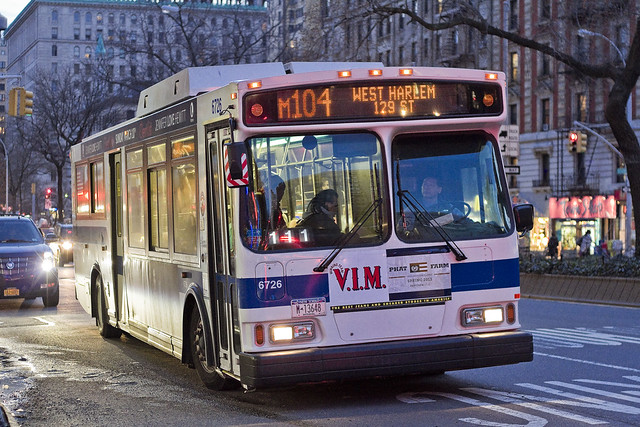
– photo by Mitch Waxman
Hideous memory recalls an age whereupon your humble narrator dwelt within the Shining City of Manhattan.
The Upper West Side, as I knew it (I lived upper upper west side, just a few blocks shy of Harlem), was a bit seedier in those days than it is today. The neighborhood has gone strictly upper crust in the last decade and has in the process lost an idiosyncratic charm which once possessed it.
Atavist professional relationships from that period of my life persist, which have drawn me uptown on a semi regular basis over the last few weeks.
from wikipedia
The Upper West Side is bounded on the south by 58th Street, Central Park to the east, and the Hudson River to the west. Its northern boundary is somewhat less obvious. Although it has historically been cited as 110th Street, which fixes the neighborhood alongside Central Park, it is now sometimes considered to be 125th Street, encompassing Morningside Heights. This reflects demographic shifts in Morningside Heights, as well as the tendency of real estate brokers to co-opt the tony Upper West Side name when listing Morningside Heights and Harlem apartments. The area north of West 96th Street and east of Broadway is also identified as Manhattan Valley. The overlapping area west of Amsterdam Avenue to Riverside Park was once known as the Bloomingdale District.

– photo by Mitch Waxman
An Accountant and an Optometrist are my only ties to this place, for like me, most of my friends have long vacated. The latter relationship, the one with my Optometrist, has been developing into a bit of an ongoing and somewhat endless saga but I won’t bore you with tales of incompetence today. A few old acquaintances still inhabit here, but most of the restaurants and bars frequented during a long tenancy are either lost or have transformed beyond all recognition due to the influences of the Real Estate Industrial Complex.
Big Nick’s is still open, thank christ.
Regarding the legendary Sal and Carmines Pizza… “Hank the Elevator Guy” texted me the other day with this exact quote:
“Ah, even with sal now making pizza for god this place still got it, carmine is still there looking like he always did, pissed off. But the pizza is just the way it always is. Pretty fucking good.”
from businessweek.com
…thousands of homebuilders, real estate agents, civil-rights leaders, and bankers who aim to deliver a similar message to Congress: Preserve government support for housing. Together, these groups represent what one might call, with apologies to President Dwight D. Eisenhower, a real estate-industrial complex that transcends partisan politics, geography, and socio-economic divides.

– photo by Mitch Waxman
One could simply take the Astoria to Manhattan bound train to midtown and transfer from the Broadway local to… a Broadway local… but instead the path one elects to follow is defined by walking from 5th and 59th up to Broadway in the 70’s. Interesting Architecture on the way, well cared for, Upper West Side is the poster child for gentrification.
Not for me anymore, but not some blasted hell hole. Me, I like blasted hell holes.
The only part of the walk I mind is when the carriage horses, whose tenders await customers along Central Park South, gaze at me. I fully understand the role and reality of working animals, attempt not to project an anthropomorphized soul upon them, but it is impossible to not feel empathy for pack animals who spend their days around automobile traffic.
I feel guilty when these critters look me directly in my eye, how about you?
from aspca.org
The ASPCA believes that carriage horses were never meant to live and work in today’s urban setting. In addition to the dangers of working in congested areas, these horses spend their days directly behind cars, trucks and buses, inhaling their fumes. Given the constraints and challenges that New York City presents, and as the primary enforcer of New York City’s carriage horse laws, the ASPCA does not believe New York City can meet the needs of its horses. Neither the New York City environment nor the current law can provide horses with the fundamental necessities to ensure their safety and well being.
fainting and gasping
“follow” me on Twitter at @newtownpentacle

– photo by Mitch Waxman
Hot Dog!
New York City sure is full of them.
Food carts are everywhere in the City these days, selling everything that’s bad for you. Sugary Soda Pop, high salt pretzels, even fatty waffles and doughnuts. Makes you wonder sometimes. Out here in Queens, our food carts do grilled chicken on a stick or shaved ice flavored with fresh squeezed. Only places I reliably see actual Hot Dog food carts seem to be around the places that Manhattan folks go- Shea Stadium Citifield or that big mall in Elmhurst.
from shopqueenscenter.com
You take Manhattan, we’ll take Queens Center – with hundreds of top retail names, a delectable food court and an easy-to-shop, easy-to-love vibe. If you want it, it’s probably here, from A to Z. Stores like American Eagle and Aldo to Baker’s Shoes, Bath and Body Works, Charlotte Russe, Club Monaco, Coach, The Disney Store all the way up the alphabet to Urban Outfitters, Victoria’s Secret and White House/Black Market. Factor in a huge H&M, Modell’s Sporting Goods, Macy’s, JCPenney and more, and the Queens Center experience truly delivers.

– photo by Mitch Waxman
A principle of design which has been in vogue for much of my “career” in advertising and publishing has been “less is more.”
A somewhat decadent notion which was no doubt invented by Czech or German socialist tea drinkers, the theory dictates that graphic communication is best accomplished with as few elements and in as simple a manner and design as possible. Notice the violations of this in the shot above, wherein the words “Hot Dog” appear no less than seven distinct times.
from wikipedia
The term “dog” has been used as a synonym for sausage since 1884 and accusations that sausage makers used dog meat date to at least 1845. In the early 20th century, consumption of dog meat in Germany was common. The suspicion that sausages contained dog meat was “occasionally justified”.
According to a myth, the use of the complete phrase “hot dog” in reference to sausage was coined by the newspaper cartoonist Thomas Aloysius “TAD” Dorgan around 1900 in a cartoon recording the sale of hot dogs during a New York Giants baseball game at the Polo Grounds. However, TAD’s earliest usage of “hot dog” was not in reference to a baseball game at the Polo Grounds, but to a bicycle race at Madison Square Garden, in The New York Evening Journal December 12, 1906, by which time the term “hot dog” in reference to sausage was already in use. In addition, no copy of the apocryphal cartoon has ever been found.

– photo by Mitch Waxman
Hot Dog carts spend their days in Manhattan, of course, where they earn.
Just like the rest of us.
What most of the folks who partake in the salty cylinders of fat which are fired out of these weapons of commerce, and what they really don’t want to know, is where the carts are at night. Some stay in town, traveling uptown and toward the Hudson. Most head to Brooklyn and Queens. Many make a bee line to grimy warehouses along Northern Blvd., or Court Square in LIC, or to factory workshops and open air yards which adjoin that infamous exemplar of municipal neglect known simply and everlastingly as the Newtown Creek.
from wikipedia
The first food carts probably came into being at the time of the early Greek and Roman civilisations, with traders converting old hand-carts and smaller animal drawn carts into mobile trading units. Carts have the distinct advantage of being able to be moved should a location not be productive in sales, as well as transporting goods to/from storage to the place chosen from which to trade.
However, the use of carts exploded with the coming of the railways. Firstly, highly mobile customers required food and drink to keep them warm within the early open carriages. Secondly locomotives needed to stop regularly to take on coal and water, and hence allow their passengers use the toilets, eat and drink. Thirdly, few early trains had any form of buffet or dining car. Finally, when passengers did arrive at their destination, or at a point when they needed to switch trains or modes of transport, some refresehment was required, particularly for poorer passengers who could not afford to stay in the railway-owned hotels. This expansion lead to a mutually successful relationship, with some of the first concession stands and laws developing from mobile traders operating from restricted railway property. This form of concession based operation can be seen still in may countries, but at its most original in the under developed stations and infrastructure of Africa and South East Asia
impious catacombs
“follow” me on Twitter at @newtownpentacle

– photo by Mitch Waxman
Journeying to the Shining City is not an activity which one such as myself enjoys. Traveling locomotively through these mouldering catacombs of concrete and steel while using the so called Subway is inherently unsettling, but being delivered to one of the deeply situated stations such as the 59th and Lex stop is utterly disturbing.
That horrors which lurk and twist and squirm through and within the subterranean deeps of the schist of Manhattan are merely rumors, of course, the stuff of diseased fancy and Hollywood epic. It does not pay dividends to ponder ones fate, should the lights go out when one is… down there… with… them.
from wikipedia
Rats primarily find food and shelter at human places and therefore interact with humans in various ways. More often than not, rats are found in corner stores in New York. In particular, the city’s rats adapt to practices and habits among New Yorkers for disposing of food waste. Curbside overnight disposal from residences, stores, subway and restaurants, as well as littering, contribute to the sustenance of the city’s rats.
Rats have shown the ability to adapt to efforts to control them, and rat infestations have increased as a result of budget reductions, more wasteful disposal of food, etc. Rats in New York have been known to overrun restaurants after hours, crawl up sewer pipes and enter apartments through toilets. They have also attacked homeless people, eaten cadavers in the city morgue, and bitten infants to get food off their faces. In 2003, a fire station in Queens was condemned and demolished after rats had taken over the building.

– photo by Mitch Waxman
Singular needs drew me into the gray monotonies of Manhattan’s vertical valleys. Hyper capitalist heaven, the area adjoining “Rockefeller Center” is long familiar to me. During my post collegiate years, when a night shift at a certain large investment bank supplied me with working capital, my employment was enacted within one of the “international” style office buildings which seem small and atavist in modernity.
from wikipedia
Rats are known to burrow extensively, both in the wild and in captivity, if given access to a suitable substrate. Rats generally begin a new burrow adjacent to an object or structure, as this provides a sturdy “roof” for the section of the burrow nearest to the ground’s surface. Burrows usually develop to eventually include multiple levels of tunnels, as well as a secondary entrance. Older male rats will generally not burrow, while young males and females will burrow vigorously.
Burrows provide rats with shelter and food storage, as well as safe, thermoregulated nest sites. Rats use their burrows to escape from perceived threats in the surrounding environment; for example, rats will retreat to their burrows following a sudden, loud noise or while fleeing an intruder. Burrowing can therefore be described as a “pre-encounter defensive behavior”, as opposed to a “postencounter defensive behavior”, such as flight, freezing, or avoidance of a threatening stimulus.

– photo by Mitch Waxman
While walking to my destination on the Upper West Side, a certain intuition- one of being watched from afar- was upon me. Normally given to flights of paranoid imaginings, the sensation was ignored. Of course, given the crowds of tourists and normal every day New Yorkers flowing about, you’re bound to be watched by someone- or something- in this part of town.
Still, a nagging suspicion persisted that the surveillance sensed was somehow familiar.
from wikipedia
Saint Gertrude of Nivelles (also spelled Geretrude, Geretrudis, Gertrud) (ca. 621 – March 17, 659) was a seventh century abbess who, with her mother Itta, founded the monastery of Nivelles in present-day Belgium. While never formally canonized, Pope Clement XII declared her universal feast day to be March 17 in 1677. She is the patron saint of travelers, gardeners and cats, and against rats and mental illness.

– photo by Mitch Waxman
Spinning about on my heels, the shocking revelation that even here- in the anonymous crowds of Midtown- one was in plain view of a shocking thing which cannot possibly exist which lurks in the cupola of the Sapphire Megalith of Long Island City. One turned north of Broadway, hoping to evade the burning and singular gaze of its triple lobed eye.
from wikipedia
Paranoia [ˌpærəˈnɔɪ.ə] (adjective: paranoid [ˈpærə.nɔɪd]) is a thought process believed to be heavily influenced by anxiety or fear, often to the point of irrationality and delusion. Paranoid thinking typically includes persecutory beliefs, or beliefs of conspiracy concerning a perceived threat towards oneself. (e.g. “Everyone is out to get me.”) Making false accusations and the general distrust of others also frequently accompany paranoia. For example, an incident most people would view as an accident or coincidence, a paranoid person might believe was intentional.
normal thing
“follow” me on Twitter at @newtownpentacle

– photo by Mitch Waxman
Nothing earth shattering today, lords and ladies, just a few unrelated shots cracked out in the last couple of weeks. Pictured is an anonymous but industrious dog walker with his pack of charges awaiting the arrival of another companion in Long Island City nearby 21st street.
from wikipedia
Professional dog walkers, both individuals and businesses, are paid by dog owners to walk their dogs for them. Some dog walkers will take many dogs for a walk at once, while others will not. Also growing in popularity is dog running. Dog runners are professionals who will take your dog running, usually between 1 and 10 miles for a set fee, usually not more than 2 dogs at a time. In some jurisdictions dog walking businesses must be licensed and have animal first-aid-trained employees. Professional dog walking services can be obtained locally or thorough online referral services.

– photo by Mitch Waxman
Western Queensicans will quickly recognize this joint, housed in the Home Depot parking lot on Northern Blvd. Rocco’s does these absolutely ridiculous sausage sandwiches that are the stuff of cardiologist nightmare, and overstuffed with stewed onion. I was there at night picking up a couple of buckets of joint compound, at Home Depot that is- not Rocco’s, and decided to do some of the low light exercise which has occupied me all winter while running the errand.
from wikipedia
Ready-mixed joint compound is most commonly used in hanging drywall for new or remodeled homes. Application is simple and easy, usually never taking more than three or four coats. When used for new walls, joint compound effectively eliminates all blemishes from the surface of the drywall, such as drilled in screws, hanging tape, or drywall tape. Joint compound can be used to finish gypsum panel joints, corner bead, trim and fasteners, as well as skim coating. In addition, it is also very handy for fixing minor blemishes or damages to walls. It easily patches up holes, bumps, tears, and other minor damages.

– photo by Mitch Waxman
This fruit stand in Manhattan, with hand written signs, was catching a shaft of light which hasn’t been claimed by the upper crust yet. That crazy bokeh blur in the shot is all lens. I’ve been playing around a lot lately with my kit, in accordance with an intention stated a while back to “do a Costanza” and shake up my shooting habits a bit.
from wikipedia
A fruit stand is a primarily open-air business venue that sells seasonal fruit and many fruit products from local business. It might also sell vegetables and various processed items derived from fruit. The fruit stand is a small business structure that is primarily run as an independent sole proprietorship, with very few franchises or branches of larger fruit stand conglomerates.
luminous aether
“follow” me on Twitter at @newtownpentacle

– photo by Mitch Waxman
Maritime Sunday is suspended this week in honor of St. Patrick’s day. Last week, I had an opportunity to wave my camera around at St. Patrick’s Old Cathedral in Manhattan, and was allowed to photograph the Irish Language Mass they were conducting. Here’s what I saw…
from oldcathedral.org
Designed by architect Joseph Francois Mangin, St. Patrick’s has great dignity and character in its restrained simplicity. Her sidewalls rise to a height of 75 feet, and the inner vault is 85 feet high. The church is over 120 feet long and 80 feet wide. Near the west wall stands the huge marble altar surrounded by an ornately carved, gold leaf reredos.

– photo by Mitch Waxman
To begin with, these shots are a combination of tripod and handheld. It’s not that bright in the cathedral, but it is lit like a movie set by the interaction of sunlight and stained glass which is augmented by well placed electrical fixtures. Sculptural elements and motifs are plentiful, and it is easy to get lost in photographing small details.
from wikipedia
In 1836, the cathedral was the subject of an attempted sack after tensions between Irish Catholics and anti-Catholic Know-Nothing nativists led to a number of riots and other physical confrontations. The situation worsened when a brain-injured young woman wrote a book telling her “true” story – a Protestant girl who converted to Catholicism, and was then forced by nuns to have sex with priests, with the resulting children being baptized then killed horribly. Despite the book being debunked by a mildly anti-Catholic magazine editor, nativist anger at the story resulted in a decision to attack the cathedral. Loopholes were cut in the church’s outer walls, which had just recently been built, and the building was defended from the rioters with muskets

– photo by Mitch Waxman
Long has one enjoyed the pursuit of photographing ritual spaces of all kinds around the City of New York, but fascination with the era surrounding this cathedral lent a certain nervous excitement to my task. This was the “House of Dagger John“, after all, and its connections with Calvary Cemetery along the Newtown Creek have given it a special status in my eyes.
from wikipedia
John Joseph Hughes (June 24, 1797 – January 3, 1864), was an Irish-born clergyman of the Roman Catholic Church. He was the fourth Bishop and first Archbishop of the Archdiocese of New York, serving between 1842 and his death in 1864.

– photo by Mitch Waxman
The plan for the service (and one must remember that a humble narrator was raised in the Hebrew faith as I stumble through this part- I’m not being vague, sarcastic, or anti anything- rather I’m Jewish and have no real idea what the meshuggenah goyem do) was for the Mass to be vocalized in the Irish Language. There was an Organist and a Cantor performing music, and the adherents stood up and sat back down a couple of times while the Priests said things (in Irish).
from wikipedia
Irish was the predominant language of the Irish people for most of their recorded history, and they brought their Gaelic speech with them to other countries, notably Scotland and the Isle of Man, where it gave rise to Scottish Gaelic and Manx. It has the oldest vernacular literature in Western Europe. In the Elizabethan era the Gaelic language was viewed as something barbarian and as a threat to all things English in Ireland. Consequently, it began to decline under English and British rule after the seventeenth century. The nineteenth century saw a dramatic decrease in the number of speakers especially after the Great Famine of 1845–1852 (where Ireland lost 20–25% of its population either to emigration or death). Irish-speaking areas were especially hit hard. By the end of British rule, the language was spoken by less than 15% of the national population. Since then, Irish speakers have been in the minority except in areas collectively known as the Gaeltacht.

– photo by Mitch Waxman
I met the fellow on the left earlier in the day, one Msgr. Donald Sakano, who was a very nice fellow. He and the other Priests performed several actions while saying things which I’m sure would be familiar to adherents of the Roman Catholic Church, or at least Irish speakers, but not to this Jewish kid from Brooklyn.
The gaps in my knowledge just astound sometimes, actually, how can I not know every single detail of this altar ceremony?
from urbanomnibus.net
Monsignor Donald Sakano is one of those urbanists who certainly possesses a singular perspective, forged from his work at the intersection of ministry, social work and affordable housing development and policy.
For the past four years, as Pastor of the Basilica of Saint Patrick’s Old Cathedral, he has presided over the restoration and transformation of Old Saint Patrick’s buildings — which include The Old Cathedral, the school, the Parish House, St. Michael’s Chapel, the Youth Center and the iconic wall — into a series of community facilities available for outreach, assembly and cultural events, such as our benefit event, which will begin at the St. Patrick’s Youth Center at 268 Mulberry Street.

– photo by Mitch Waxman
It’s funny, as I can bore you to death about Arius, Origen, or Loyola. Want to talk about the Renaissance, Reformation, or Second Great Awakening- I’m all in. Recognizing the common tools and long practiced performance of catholic mass?
No.
I can describe the effects of nearly all the known forms of kryptonite, however.
from wikipedia
The Roman Missal contains the prayers, antiphons and rubrics of the Mass. Earlier editions also contained the Scripture readings, which were then fewer in number. The latest edition of the Roman Missal gives the normal (“ordinary”) form of Mass in the Roman Rite. But, in accordance with the conditions laid down in the motu proprio Summorum Pontificum of 7 July 2007, the 1962 edition of the Roman Missal, the latest of the editions that give what is known as the Tridentine Mass, may be used as an extraordinary form of celebrating the Roman Rite Mass.

– photo by Mitch Waxman
The ceremony continued, and I decided that maybe it wouldn’t be that terrible to get lost in some of that architectural detail for a frame or two, and opened up the shutter for a long exposure. The big difficulty encountered, of course, were the dichotomous ambient conditions whose luminous contrast stretched into narrow bands of shadow and light.
from wikipedia
The Eucharistic Prayer, “the centre and high point of the entire celebration”, then begins with a dialogue between priest and people. This dialogue opens with the normal liturgical greeting, “The Lord be with you”, but in view of the special solemnity of the rite now beginning, the priest then exhorts the people: “Lift up your hearts.” The people respond with: “We lift them up to the Lord.” The priest then introduces the great theme of the Eucharist, a word originating in the Greek word for giving thanks: “Let us give thanks to the Lord, our God,” he says. The congregation joins in this sentiment, saying: “It is right and just.”
The priest then continues with one of many Eucharistic Prayer prefaces, which lead to the Sanctus acclamation: “Holy, Holy, Holy Lord God of hosts. Heaven and earth are full of your glory. Hosanna in the highest. Blessed is he who comes in the name of the Lord. Hosanna in the highest.”

– photo by Mitch Waxman
Following the moment depicted above, the three priests dispersed to the heads of the aisles, whereupon celebrants of the faith formed lines whose reward seemed to be a small cookie or cracker. One presumes that this is “the host” which figures so prominently in the Catholic Mass.
How am I supposed to know, I’m Jewish- by me it’s a cookie.
Happy St. Patrick’s day- and thanks to Jim Garrity and Msgr. Sakano for allowing so poor a specimen as myself to spend the day with them.
from wikipedia
The absence of snakes in Ireland gave rise to the legend that they had all been banished by St. Patrick. chasing them into the sea after they attacked him during a 40-day fast he was undertaking on top of a hill. This hagiographic theme draws on the mythography of the staff of the prophet Moses. In Exodus 7:8–7:13, Moses and Aaron use their staffs in their struggle with Pharaoh’s sorcerers, the staffs of each side morphing into snakes. Aaron’s snake-staff prevails by consuming the other snakes.


 The Newtown Pentacle