Posts Tagged ‘photowalk’
wholly beneath
Detestation of the water lizard, in today’s post.

– photo by Mitch Waxman
“There’s so many of us” is a choral from a song by the LA Punk band Fear, specifically their “Lets Have a War” anthem.
One is reminded of this ditty continually, and as I often find myself chiding narrowly focused members of the municipal governing class during meetings concerning the Newtown Creek situation – and effect upon the waterway of ongoing population loading of North Brooklyn and Western Queens – you have to think holistically about the “system.” The old adage about a Butterfly fluttering its wings in Borneo triggering a series of random atmospheric reactions which eventually result in an Atlantic hurricane often seems to apply. What’s one more truck? C’mon, it’s one truck…
What apocalyptic effect is just one more apartment house going up in Hunters Point, or Flushing for that matter, going to have? Who cares? That’s Corona, don’t you live in Astoria? Worry about yourself. Mind your own business.
That’s what people say, and I respond “think holistically.” That truck has to cross a bridge and drive down local streets, then it has to reverse out. Every truck trip is two truck trips, and it doesn’t just go through Greenpoint – but Bushwick and or Maspeth too. Maybe even Astoria, if it’s headed for the bridge.
The political districts of Western Queens and North Brooklyn serve to carve up the real estate development scenario and make things seem like the rising residential towers are individual examples of a series of an isolated and unconnected series of projects – not some vast littoral construction site that stretches out for a few miles – along the east river and between the Queensboro and Williamsburg bridges. It’s exciting to see the future taking shape, I guess, in the same way that a kitchen fire is exciting.
There is meant to be no cumulative relationship whatsoever between the Greenpoint Landing and Hunters Point South developments, which are separated by the Newtown Creek and connected via the G line subway. The 7 line crowding in Queens is (politically speaking) a Jimmy Van Bramer issue, the impending L line shutdown in Brooklyn a Steve Levin problem. When the L shuts down, MTA will be adding an additional car to the G and they plan on directing the L passengers to Court Square – where they’ll transfer to the 7.
Then they’re both going to have the same problem, the first of many such issues which the interconnected mega development of the east river coastline of Long Island is going to present.

– photo by Mitch Waxman
The reason I haunt the transit corridors is precisely because that’s where you can discern the size and scope of the enormous build out that’s occurring across the boroughs and Queens in particular.
If you ride the 7, you are well aware that the entire transit corridor is booming with new construction, from its eastern terminus in Flushing right through Roosevelt, Corona, Jackson Heights, Woodside, Sunnsyide, and LIC, to its western terminus in Manhattan at the “Hudson Yards” megaproject. The so called “international express” is packed to the gills with commuters the whole way, even late at night. The City’s answer to mass transit congestion has been the creation of bike lanes. Bike lanes aren’t a bad idea by any means, but they don’t address the issues of how people will “get there from here,” and they leave an awful lot of older and disabled people behind.
You have to think holistically about the route of the 7, and the municipal needs of the people who are intended to inhabit all of these newly minted “deluxe apartments in the sky.”

– photo by Mitch Waxman
Holistic, as in totality, informs and instructs. Despite the tens of thousands of new neighbors – and to my knowledge – there are no new fire houses, hospitals, or police stations being planned or built along the corridor and route of the 7. We’re getting every last dollar out of the Bowery Bay sewer plant in Astoria, going strong since 1939, but there isn’t a new one in the works to handle the tens of thousands of new toilets being installed in Queens. Neither the Cops, nor DSNY, seem to be staffing up either.
In many ways, we could really benefit from the advice and talents of the late Robert Moses at this stage of the game. Moses thought holistically, and no matter what he built – there was a park attached to it. Did you know that the difference between expressways and parkways is that the latter has wooded shoulders that count as “parks”? That’s one of Moses’s, who was some kind of evil genius. If Superman was real and lived in NYC instead of Metropolis, Moses would have likely been his Lex Luthor.
Or we can extend the bike lanes into the subway stations, as “There’s so many of us.”
“follow” me on Twitter- @newtownpentacle
subterrene horrors
Wrapping up “manic week,” in today’s post.

– photo by Mitch Waxman
So, last week we handled “depressive” and this week did “manic” with a bit of compulsion, obsession, and a whole pile of disordered thoughts thrown in. Thanks for indulging me, but as mentioned recently – I’ve really needed a vacation from the tyranny of the now (and then). Next week we get back to a couple of historical matters, and there will be a few nice dishes served to you should my current plans for the week all work out.
I’ve decided that there is going to be one more tour in 2016, incidentally. A grueling endurance march, the all day Creekathon will be scheduled and announced next week. Not quite sure how I’m going to structure it yet, and the specifics involving date, time, and organizational steward are still being worked out. Actually, walking the entirety of the Newtown Creek and visiting all the nooks and crannies of LIC, Maspeth, Bushwick, and Greenpoint?
Now that’s manic, yo. I’ll fill y’all in when all the details have been concantenized and so on.

– photo by Mitch Waxman
If you’re in Astoria on Halloween, specifically the Broadway or southern side of the ancient village, and you’d like me to photograph you – in your costume of course – come on by Doyle’s Corner Bar on the intersection of 42nd street and Broadway. I’ll be there by about three in the afternoon and plan on sitting at an outside table while shooting the amazing sidewalk parade of costumes that’s passing by until I get cold (or drunk), which has become something of a Halloween tradition here at Newtown Pentacle HQ. I’ll be the strange old man in a filthy black raincoat who’s waving a camera at strangers while drinking.
Astoria Halloween costume all-stars get featured in a post at this, your Newtown Pentacle, so…

– photo by Mitch Waxman
One is still looking for a Day of the Dead dealie to attend on the 1st. I’ll also take an All Saints Day thingamabob if it’s all I can get, so if you’ve got one or the other… let me know.
Additionally, if anybody is experiencing a haunting or is possessed and you want to tell your story here at the Newtown Pentacle for Halloween, shoot an email to me at newtownpentacle@yahoo.com or just DM me at the Twitter address below.
“follow” me on Twitter- @newtownpentacle
loathsome laughing
Anxiety is my anti-drug, as is malingering.
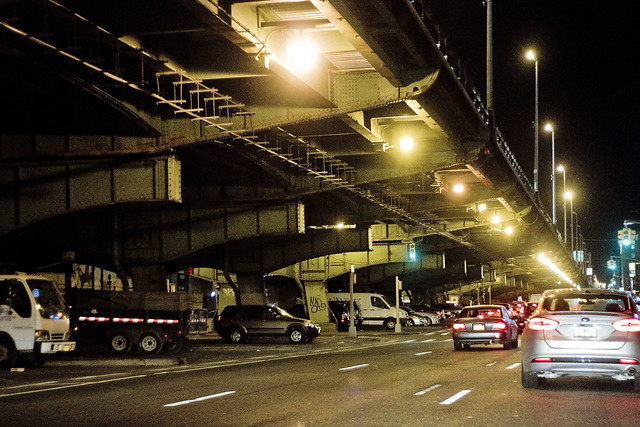
– photo by Mitch Waxman
Ever drink too much coffee? Caffeine-induced anxiety disorder is a subclass of the DSM-5 diagnosis of substance/medication-induced anxiety disorder (DSM-5 is the Diagnostic and Statistical Manual of Mental Disorders, Fifth Edition, which is the bible of mental health providers in the United States, and our associates). It manifests in the form of panic attacks and generalized anxiety. Caffeine will be absorbed almost entirely into the blood stream in about forty five minutes, and it has a half life of two and a half to four and half hours in normal adults. It generally makes people somewhat antagonistic, which explains a lot about the morning rush hour, by my reckoning.
It’s a vasoconstrictor, which is why it wakes people up and also causes them to poop. If you drink enough coffee, you can develop a cardiac arrhythmia, insomnia, and experience mood fluctuations. If you’re on medications like Xanax, or have anti-anxiety prescriptions for drugs such as benzodiazepines, caffeine can chemically interact with them in bad ways.
I’ve always been positively paranoid about cell necrosis and cytotoxicity, as a note.
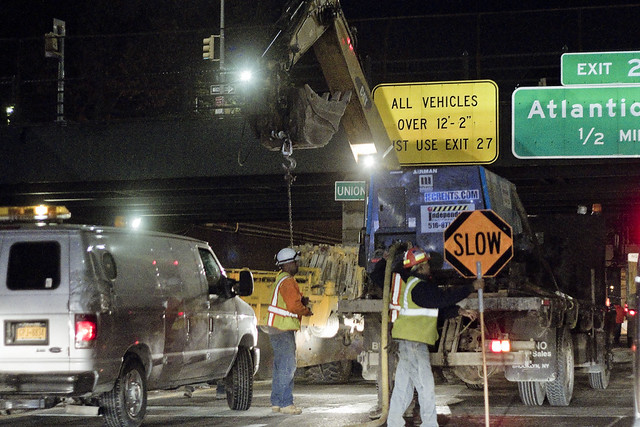
– photo by Mitch Waxman
Full of shame, living in squalor, hoarding animals, and generally feeling apathetic about the whole shebang? You might suffer from Diogenes syndrome, therefore. Named for a minimalist Greek scholar who lived in a jar and masturbated in public, it’s also known as “senior squalor syndrome.” Diogenes was a cynic, which also used to be a “thing,” but I’m not sure how the masturbation figured into things. Yuck.
The world is a scary place, so much so that some people suffer from Encopresis – a psychological and physical condition wherein you hold onto your poop until the inevitable occurs and you need a new pair of pants. A common remedy for being in an excited state would be to pour out an alcoholic drink and “get a hold of yourself,” but then you’re dancing with Korsakoff’s syndrome as well. Even a waking life lived poorly is preferable to those unavoidable spells which come upon me wherein I pass out and hallucinate.
I like to read the DSM-5 at the witching hour, around three o’clock in the morning, whilst standing wet and naked with my feet immersed in a tub of iced salt water, staring at myself in the bathroom mirror. Sometimes, I’ll quaff a glass of boiling hot gin while doing so. You gotta do what you gotta do.

– photo by Mitch Waxman
Often, one wonders if he is lost in some Oneirophrenic trance, but I’ve never abused Ibogaine, at least to my knowledge. As mentioned earlier in the week, two gentlemen of the street were having a conversation about some blood drinking reptilian specie whom the Bush family are a part of which I overheard – which made me wonder if perhaps the DEP is adding Ibogaine in the water, and we’re all just collectively dreaming all of this distopia of ours. What is real? Personally, I’ve never been much for the screaming type of madness, as I’m more of a whimperer, but I have been pricing out “the end is nigh” sandwich boards. So far, Amazon has the best price, but I’m trying to spend money locally and support the small businesses of Queens rather than national retailers.
Back to my tub of ice water and the glass of scalding hot gin…
“follow” me on Twitter- @newtownpentacle
shapeless nemesis
It’s all a plot, I tell you, nothing is accidental and the whole world is “on purpose.”

– photo by Mitch Waxman
Feeling particularly powerless, depressed, and isolated of late – the only solution for one such as myself is to kick his feet about and scuttle around. Persecution and possible prosecution of a humble narrator is always in the forefront of my mind, as it were, so it’s best to just keep moving. Unfortunately, it’s impossible to avoid the “tells” that my movements have been anticipated by some shadowy cabal of possible occultists, if you know how to read the streets. One also grows a bit dizzy when spinning around on his heels to check if any enemies might be coming up from behind.
It’s best to remain vigilant, always. Look at the signage on the food cart above… who ever heard of a halal chili dog? Gotcha, shadowy cabal, you’re not as smart as me – I can spot you people at fifty paces.

– photo by Mitch Waxman
Here in Astoria, I noticed back in the first and second weeks of September that a bright beam of light was emanating into the sky from lower Manhattan. There’s a cover story for this propagated by the government, but I know what’s really going on and so will you when a race of extraterrestrial lizards arrives in flying saucers. Of more immediate concern to me is my so called neighbor, which presents itself as an elderly woman who hordes cats. I know what its really up to, and I’m betting those aren’t really cats either.
There’s always one of her so called cats in her window, pretending to be asleep.

– photo by Mitch Waxman
Don’t ask me to tell you what’s really going on in Astoria’s St. Michael’s Cemetery. The answer, and its occult implications involving an extra dimensional race of non human intelligences who were the former and are the future wardens of the Earth, could spark off a new dark age and return mankind to the status of shivering cave dwellers and ape like savagery were their presence here known generally. It is best that in these places where they walk about in the dark of night, these elder things, that they do so alone and that the only evidence of their travels are piles of swept aside granite.
It is also best for the rest of you to argue about verbal manners and behavioral mores, and leave the occult reality of things to ones like myself who can actually handle the truth that lies beyond your gaze. There is no “safe space” when “they” are discussed, as our specie are as ants to them. On the earth, only that thing with the three lobed burning eye which dwells in in the cupola of LIC’s sapphire megalith can spy them, and even then only dimly.
“follow” me on Twitter- @newtownpentacle
oddly sunburned
Lost in the bowels of the subterrene, in today’s post.

– photo by Mitch Waxman
Innocently enough, while on my way to a photo industrial complex exposition at the Javits Center that I was lured to by the promise of a small payment for participating in a focus group, a major crisis suddenly came rushing up and seized a hold of a humble narrator. One was busy staring at his shoes and pondering how my life had brought me to this pass, when the realization that I was the only person on the 7 train crashed like an ocean wave across the fragile shoreline of the psyche. The sudden manifestation of a thousand nightmares was upon me.
An inflation of my self esteem began to roar like a cataract between the ears and behind the eyes, coupled with a sensation that was both spiritually distracting and which generated uncountable bad and unprofitable ideas – all at once in a rushing torrent of intent.

– photo by Mitch Waxman
My self importance was deflated by the solitude, as I had no one to impress – with a nervous rattling off of some historical minutiae about the Flushing line IRT’s history. What am I without my narcissism? My eyes were pinned wide open in a wild stare, and became uncomfortably dry, as I seemed to have stopped blinking. After a quick check of pulse rate and a crack of my knuckles against the plastic seat to confirm that I was in fact awake and not lying in bed – unconscious and hallucinating – it was decided that this was in fact the waking world. Knowing that nobody back home in Queens would believe me about being alone on the 7 line, my trusty camera was deployed and evidence collected of this momentous event – that I, I of all people, was utterly alone on the subway.
Surely, this would be the sort of thing that would draw the interest of all…

– photo by Mitch Waxman
Bouncing from side to side of the light rail car, which was positively hurtling through the stinking concrete bunkers beneath the megalopolis, suddenly paranoia blossomed in my mind when I realized that in the next carriage there was another singular occupant like myself. Perhaps the focus group at the photo expo was nonexistent? Was this some sort of exquisite trap laid out for an elite group? I sensed the presence of the hidden hand, the shadowed elite, the supranormal, at work. Nothing is random, everything has meaning – I read that on a greeting card for sale in a gas station convenience shop once…
My thoughts raced, and flights of ideation began to assail.

– photo by Mitch Waxman
The train ground to a halt, with an electronic recording announcing that the delay in forward movement was because there was traffic in front of us. I wondered if my counterpart in the next car realized, as I did, that this was some sort of trick. Anything can happen when you’re alone and without witnesses. That’s why, like the band TLC advised back during the 1990’s – I don’t go chasing waterfalls and stick to the hills and valleys I’m used to.
It was my hope that when the skeletal remains of myself, and the other, were eventually found at either terminal stop – Flushing or Hudson Yards – that the images on my camera card would be recoverable and offer some sort of explanation to Our Lady of the Pentacle as to my fate.
Of course, then the train started moving again and I found my way to the Javits Center, but this was a close one.

– photo by Mitch Waxman
Back at home, one found nothing but difficulty in attempting to sleep. There were machines moving around in the sky, some of them carrying Policemen. I set up the camera and watched…
Who can guess, all there is, buried down there – or moving around through the aether, up there?
As a note, the next morning, my facial skinvelope exhibited the dermatological effects characterized by exposure to the burning thermonuclear eye of God itself. I have no explanation to offer.
“follow” me on Twitter- @newtownpentacle


