Posts Tagged ‘photowalk’
traitorous somnolence

– photo by Mitch Waxman
On one of the lonely transmigrations which your humble narrator famously engages in, actually vast pedestrian journeys across the concrete desolations of Western Queens, the walk up 58th street- the former Betts Avenue of colonial era Newtown- might be the loneliest of all. Rimmed by polyandrions of gargantuan acreage, this street hosts no sidewalk to speak of and one must pick ones way in the manner of some roadside mendicant. It is a valley whose cliffs are the masonry walls and iron gates of cemeteries.
This neighborhood is neither Woodside nor Maspeth, it is the angle found between them.
A personal preference is marked for the Eastern side of the street, which follows the stout iron of Mt. Zion’s fences.

– photo by Mitch Waxman
The former home of the so called Maspeth Gypsies, a tribe of Romani whose expulsion by Police in the early 20th century is spoken of in hushed whispers by the Centenarians of ancient Maspeth, Mt. Zion is a cemetery set aside for adherents of the Hebrew faith. It is located across the street from the vastness of 3rd Calvary, a Catholic cemetery. Mt. Zion seems crowded, due to the Hebraic tradition of installing a single occupant in a grave, unlike the Roman Catholic institution across the street.
Its residents, at least in this section of the cemetery, are long gone- most of the stones speak to their passing away in a time period long before even rumors of a Second World War became extant in the community.

– photo by Mitch Waxman
Peeking through the rotting iron of the fences while trudging along the other day, your humble narrator noticed this small offering hidden away between the cast iron palisade and the first row of graves (or last, were you within the parcel).
Similarities to other instances of peasant magick at St. Michael’s Cemetery in Astoria which have been detailed in prior Newtown Pentacle postings should be remarked upon.

– photo by Mitch Waxman
Probably “Afro-Cuban” in origin, the possible etymology of this odd tableau is betrayed by the presence of the Cigar. Tobacco plays a large ritual role in the so called syncretic faiths of Latin and Caribbean religions, and the manufactured item is often used as an offering to the Orisha or Loa- as a symbol of sacrificial wealth or as an embodiment of the virility or power of the magick worker.
Of course, sometimes a cigar is just a cigar, as the oft quoted (and incorrectly attributed) Freudian saying goes.

– photo by Mitch Waxman
The aluminum pan leaning against the monument contained a burnt offering of some kind, which appeared to be a textile wrapped around something occluded from view, and mingled with a piece of thin wood or perhaps the shell of a coconut which has been cut into some sort of odd shape.

– photo by Mitch Waxman
A closer shot of the arrangement. It would appear that some sort of accelerant was used to accomplish the combustion, something that would have burned off quickly like liquor. The fabric seems charred or singed more than immolated, as if the flames were extinguished quickly.
Of course, your humble narrator is no fire inspector nor arson investigation expert (or an authority on afro-cuban syncretic religious practices for that matter), so these callow observations should be considered mere speculation.

– photo by Mitch Waxman
This is not the first time which arcane leave behinds have been personally observed along this wall, which you’ll notice is constructed out of tombstones. A photo has been run here of a hand carved mortar and pestle which contained an odd ashy substance. The image dates back several years which implies that acolytes and devotees of whatever these forces which are being invoked here, in the heart of the Cemetery Belt, have been at work for a very long time.
One wonders, and more than wonders- could the so called Maspeth Gypsies tell us a thing or two about these legend haunted lowlands found at this angle between Woodside and Maspeth?
Project Firebox 31

– photo by Mitch Waxman
Kingsland Avenue in Brooklyn has seen more than its fair share of apocalyptic infernos, as if regular readers of this blog haven’t heard enough about the Sone and Flemings or Locust Hill refinery fires, and never has a firebox been situated in a more appropriate location. There is still a huge and threatening petroleum industry present in modernity, and this lone sentinel is a first responder on permanent vigil should “it” hit the fan.
cryptical books

– photo by Mitch Waxman
Just to affirm that your humble narrator is a multi disciplinary geek, whose nerd credentials cross into multiple devotions and subjects, today’s post takes us to the Hudson River and specifically- Esopus Island. An unremarkable spit of rock sticking out of the water not far from Kingston, Esopus nevertheless is a touchstone for high weirdness.
If these shots were taken in 1918 rather than 2010- one would have seen a bizarre Englishman crawling along the shorelines painting “Do What Thou Wilt Shall be the Whole of the Law” and “Every Man and Every Woman is a Star” on the stony outcrops in red.
from wikipedia
Crowley began another period of magical work on an island in the Hudson River after buying large amounts of red paint instead of food. Having painted “Do what thou wilt” on the cliffs at both sides of the island, he received gifts from curious visitors. Here at the island he had visions of seeming past lives, though he refused to endorse any theory of what they meant beyond linking them to his unconscious. Towards the end of his stay, he had a shocking experience he linked to “the Chinese wisdom” which made even Thelema appear insignificant.

– photo by Mitch Waxman
The self proclaimed “Great Beast” himself, Aleister Crowley spent much of the First World War in New York City, and the wild speculations that he was acting as an agent of British Intelligence during this time just might hold some water. In 1918, that horrible man decided on a “great magical retirement” (he had run out of money and driven at least two women to alcoholism and madness), shaved his head, and borrowed a tent and canoe from one of the many friends whom he cuckolded.
Here’s an image from a postcard depicting Esopus Island in 1907. In his diaries, Crowley called it Oesopus.
from wikipedia
Aleister Crowley (/ˈkroʊli/ kroh-lee; 12 October 1875–1 December 1947), born Edward Alexander Crowley, and also known as both Frater Perdurabo and The Great Beast, was an influential English occultist, astrologer, mystic and ceremonial magician, responsible for founding the religious philosophy of Thelema. He was also successful in various other fields, including mountaineering, chess and poetry. In his role as the founder of the Thelemite philosophy, he came to see himself as the prophet who was entrusted with informing humanity that it was entering the new Aeon of Horus in the early twentieth century.

– photo by Mitch Waxman
Crowley arrived on the island with scant supplies, and was known to have made a trip back to New York at least once to secure needed items. Local farmers, concerned and curious about their new neighbor, brought comestibles to the odd fellow- a charming and neighborly Yankee tradition. Curiously, the hermit spent his time mediating and translating an ancient Chinese text for his own amusement.
Crowley reported that he experienced an epiphany here, something that would overshadow even his own mystical revelations. Which brings us back to H.P. Lovecraft. For two people who are never supposed to have met, Lovecraft and Crowley had a LOT of friends in common.
from dec.ny.gov
Atlantic sturgeon are the stuff of myth and legends. They are the largest fish to regularly inhabit the Hudson River, reaching 10-12′ in length and weighing in excess of 350 lb. They are a primitive-looking and wonderfully adapted estuarine creature belonging to an order of fishes whose evolutionary origins reaches back at least 100 million years. Sturgeon grow very slowly, taking as long or longer than humans to reach maturity, and rivaling us in longevity, surviving 50 years or more in the wild. The river channel around Esopus Island, up to 60 feet deep, is a known congregation area for adult Atlantic sturgeon.

– photo by Mitch Waxman
Supposedly-
It would seem that one of the simple Yankee farmers who brought Crowley food and provisions was one Paul Rhodes, who would later become a correspondent and friend of Mr. Lovecraft. Rhodes created the only contemporaneous cinematic adaptation of one of Lovecraft’s tales- “The Other Gods” which was screened just once in 1924 for Mdm. Blavatsky’s Theosophical Society.
This should be taken with a grain of salt, as I haven’t been able to find independent confirmation of this timeline and it might be modern imposture. Regardless, witness the short film at the links below- if you dare.
maternal ancestry
– photo by Mitch Waxman
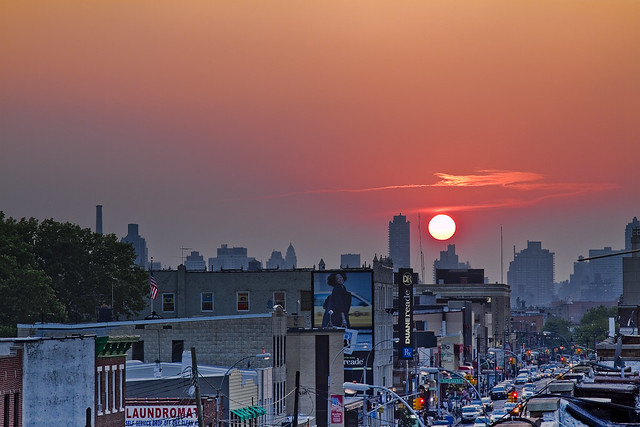
Old world mysteries, primeval prejudices, and certain racial memories which might lead one back to those days before Rome put its torch to the world are extant in Western Queens. Here amongst the seething hills of noble Astoria, one may ask and sometimes receive an answer to questions about certain bizarre conceptions and hear rumors of supernatural forces run amok.
The Cretan might tell you about the Kallikantzaros which followed them here, or the Egyptian might share with you tales about those things which lurk just beyond the village.

– photo by Mitch Waxman
Stout Croat and Romani alike shudder at the mention of Strigoi having entered the area, and the Mexican and Ecuadorean communities close ranks when questioned about the power of the Brujas who have followed their people here. The imitative hipster finds sanguine amusement at the notion of hauntings that have plagued certain buildings, apartment houses, and riverside spots for generations- chalking up these stories to quaint superstition and ironic interpretation.
Even the Museum of the Moving Image is meant to host a spectral resident, after all.

– photo by Mitch Waxman
Buddhist invocations, Hindu mysticism, Brazilian peasant magicks- the hidden arts of Imam and Priest- these things are never discussed by area wags.
Many fear that such talk might reduce property value and cause new residents to choose other and less ancient locales in which to rent or buy real estate. It is when night comes to the ancient Dutch village that the odd things become obvious, begin to happen, and the later it gets the wilder things might become.
Also:

Your humble narrator will be narrating humbly on Friday, February 24th at 7:30 P.M. for the “Ridgewood Democratic Club, 60-70 Putnam Avenue, Ridgewood, NY 11385” as the “Newtown Creek Magic Lantern Show” is presented to their esteemed group. The club hosts a public meeting, with guests and neighbors welcome, and say that refreshments will be served.
The “Magic Lantern Show” is actually a slideshow, packed with informative text and graphics, wherein we approach and explore the entire Newtown Creek. Every tributary, bridge, and significant spot are examined and illustrated with photography. This virtual tour will be augmented by personal observation and recollection by yours truly, with a question and answer period following.
For those of you who might have seen it last year, the presentation has been streamlined, augmented with new views, and updated with some of the emerging stories about Newtown Creek which have been exclusively reported on at this- your Newtown Pentacle.
For more information, please contact me here.
unfortunate lunatic

– photo by Mitch Waxman
Selected for your perusal today are scenes from the hoary desolation of Brooklyn’s Bushwick Inlet.
This little bay, where the USS Monitor was launched some 150 years ago, was the river outlet for Continental Iron Works. In addition to the Monitor, countless steam boats, and the manufacture of all manner of cast iron building supplies- the caissons for the Brooklyn Bridge were assembled and launched here.
The Brooklyn street grid indicates Calyer and Clay streets as being the nearest geographic indicators, but there’s something else missing.

– photo by Mitch Waxman
Bushwick Creek once flowed into and mingled with the East River at this spot after finishing its journey from upland. The city of Williamsburg listed this body of water as its border with the town of Greenpoint, which itself was defined and named for a promontory bluff overgrown with hemlock that existed between the Newtown and Bushwick Creeks.
The hemlock was what originally attracted shipwrights here, as the straight growing evergreens produced wood that had several uses onboard ships.

– photo by Mitch Waxman
The inlet is owned by Motiva Enterprises, a company with several locations in the area which employs itself as a fuel distributor. Accordingly, access to the area is severely limited due to security and safety issues. These shots were acquired during the Greenpoint Monitor Museum‘s recent parade event. The northern side of the site is in a state of disuse and relict decay, while the southern houses several enormous fuel tanks.
There is some buzz that the Museum is attempting to site themselves here, a welcome addition, IMHO.

– photo by Mitch Waxman
Scatterings of artifacts, a brick marked “Manhattan Fire Brick Co.”, or a rust stained concrete foundation peek out of the mud here and there. The very surface you stand on is crumbling, and at waters edge all sorts of uncommented masonry sits in a tumbledown arrangement as the languid waters of the East River nibble away at the shoreline.
The muddy soil is a greasy particulate, more sticky sand than dirt, oddly irridescent and stained with “the colour” which distinguishes the nearby Newtown Creek.

– photo by Mitch Waxman
Across the river in Manhattan, which today hosts the Stuyvesant Town housing development and a power plant, there were shipyards. Novelty Iron Works as well as hundreds of smaller shops were spread out between 14th street and Corlears Hook (just below the modern day Williamsburg Bridge). In the late 19th century, Stuyvesant Town’s site was occupied by shanty tenements and the enormous “works” of the gas system which lit Manhattan streets and homes- I’ve seen references to it as the “gas light district”.
As one got closer to 23rd street, stone masons and other artisan businesses began to appear.

– photo by Mitch Waxman
When a large business concern like Continental Iron Works or Novelty sited somewhere, it created a halo of smaller businesses springing up around it. Coopers to make barrels, carpenters to supply barrel wood, blacksmiths to make carpentry tools. Rope makers, lunch wagons, carting companies- all surrounded these large plants. Greenpoint was no different, with enormous numbers of storefront and stable based craftsmen supplying everything from pencils to livestock to the larger concerns.
Additionally, ferries and streetcar lines were required to transport workers and raw materials from place to place.

– photo by Mitch Waxman
Disuse, changing economies, and the unusual indifference which the 20th century displayed toward the waterfront of New York City have left this historic patch of land a wasteland. Indigenous species or a mollusca invader from foreign shores, all have claimed a rightful place here, planting strong roots which slither into and spread apart the forgotten brick foundations of long ago and way back when.
Who can guess, all there is, that might be buried down there?

– photo by Mitch Waxman
Here in the foundry of the American Industrial Revolution, all we manufacture these days are Red Velvet Cupcakes and other items of fashionable taste.
Stronger men, born in an age of sail, forged a world of steel and iron in this place. A vibrating hum of industry lit the smoky sky with coal fired avarice, forging the great fortunes of some and the prosperity of most. Where are these titans today, with their great and satanic mills, and what happened to “Coketown“?
Also:
Your humble narrator will be narrating humbly on Friday, February 24th at 7:30 P.M. for the “Ridgewood Democratic Club, 60-70 Putnam Avenue, Ridgewood, NY 11385” as the “Newtown Creek Magic Lantern Show” is presented to their esteemed group. The club hosts a public meeting, with guests and neighbors welcome, and say that refreshments will be served.
The “Magic Lantern Show” is actually a slideshow, packed with informative text and graphics, wherein we approach and explore the entire Newtown Creek. Every tributary, bridge, and significant spot are examined and illustrated with photography. This virtual tour will be augmented by personal observation and recollection by yours truly, with a question and answer period following.
For those of you who might have seen it last year, the presentation has been streamlined, augmented with new views, and updated with some of the emerging stories about Newtown Creek which have been exclusively reported on at this- your Newtown Pentacle.
For more information, please contact me here.


