Archive for March 2012
vast enclosure

– photo by Mitch Waxman
When you cut things down to the bone, and ask yourself the question “Who was the New Yorker that most profoundly changed the City?” it always comes back to one fellow. Ray Kelly or Mike Bloomberg would vie for the crown in modernity, in the long view of history Alexander Hamilton, DeWitt Clinton, Boss Tweed, or the Roebling clan have major claims on the title. Robert Moses would tell you that it was himself, and arguably, so would Osama Bin Laden.
In the opinion of a humble narrator, the crown belongs to one man- a Swedish immigrant named Othmar Ammann, and today is his birthday.
from wikipedia
Othmar Hermann Ammann (March 26, 1879 – September 22, 1965) was a American structural engineer whose designs include the George Washington Bridge, Verrazano-Narrows Bridge, and Bayonne Bridge.

– photo by Mitch Waxman
Brooklyn Bridge has the fame, Williamsburg Bridge the infamy, Manhattan Bridge is overlooked. The bridges of Othmar Ammann, however, are the ones which shaped the modern megalopolis and allowed the expansion and diaspora of New York’s laborers from the tenement neighborhoods of the five boroughs to the suburban satellites of modernity. The vast populations of Long Island and New Jersey and Westchester who commute into the city on a daily basis would have never achieved their current size, were Ammann removed from the story.
As a side note, and just to toot my own horn for a moment, the shot above was published last year in the New York Times- check it out here
Also from wikipedia
Othmar Ammann designed more than half of the eleven bridges that connect New York City to the rest of the United States. His talent and ingenuity helped him create the two longest suspension bridges of his time. Ammann was known for being able to create bridges that were light and inexpensive, yet they were still simple and beautiful. He was able to do this by using the deflection theory. He believed that the weight per foot of the span and the cables would provide enough stiffness so that the bridge would not need any stiffening trusses. This made him popular during the depression era when being able to reduce the cost was crucial. Famous bridges by Ammann include:
- George Washington Bridge (opened October 24, 1931)
- Bayonne Bridge (opened November 15, 1931)
- Triborough Bridge (opened July 11, 1936)
- Bronx-Whitestone Bridge (opened April 29, 1939)
- Walt Whitman Bridge (opened May 16, 1957)
- Throgs Neck Bridge (opened January 11, 1961)
- Verrazano Narrows Bridge (opened November 21, 1964)

– photo by Mitch Waxman
Othmar Ammann was a bit of an artist, his bridges achieving a rare thing for engineering projects, which is the elevation of a functional structure to the sublime. A prevailing theory in fine art and graphic design which emerged in the 20th century is “less is more”, and Ammann’s spans are manifestations of this concept in steel and cement.
from smithsonian.com
By the early 1960s, when the George Washington’s lower deck was added (as specified in the original plans), Ammann had all but eclipsed his mentor. Ammann’s other 1931 creation, the Bayonne Bridge connecting Staten Island and New Jersey, was until 1977 the world’s largest steel arch bridge — more than 600 feet longer than the previous record holder, Lindenthal’s Hell Gate Bridge.
Months before his death in 1965, Ammann gazed through a telescope from his 32nd-floor Manhattan apartment. In his viewfinder was a brand-new sight some 12 miles away: his Verrazano-Narrows suspension bridge. As if in tribute to the engineering prowess that made Ammann’s George Washington Bridge great, this equally slender, graceful span would not be surpassed in length for another 17 years.

– photo by Mitch Waxman
Eclipsed by the vain and power seeking during his sunset years, Ammann is one of the forgotten few who crafted the connections between the individual components of the archipelago islands of New York Harbor. Mighty Triborough or the graceful arch of the Bayonne Bridge speak to his sense of esthetic, and indicate that he was in touch with some higher imperative than merely moving automobiles from one place to another.
from nytimes.com
His works soar above the water, spanning the city’s rivers and connecting New York to the rest of the country. But who has heard of Othmar H. Ammann?
Donald Trump hadn’t, at least not back in 1964 when he was a high school student and his father took him to the dedication ceremony for the Verrazano-Narrows Bridge. ”It was a sad experience,” Mr. Trump recalled. ”For years, various politicians had fought the bridge. Now that it was built, I watched as these same people all got up and took credit for it, congratulating themselves and introducing one another. The only one not introduced was the man who made the bridge, Othmar Ammann.
sight within

– photo by Mitch Waxman
Maritime Sunday is here once again, and this time around your Newtown Pentacle is focusing in on something most New Yorkers wouldn’t believe exists within the five boroughs- graving or dry docks. These shots are of the Cadell yard, along the Staten Island border formed by the Kill Van Kull.
from wikipedia
A floating drydock is a type of pontoon for dry docking ships, possessing floodable buoyancy chambers and a “U” shaped cross-section. The walls are used to give the drydock stability when the floor or deck is below the surface of the water. When valves are opened, the chambers fill with water, causing the drydock to float lower in the water. The deck becomes submerged and this allows a ship to be moved into position inside. When the water is pumped out of the chambers, the drydock rises and the ship is lifted out of the water on the rising deck, allowing work to proceed on the ship’s hull.

– photo by Mitch Waxman
Tugs, in particular, take a lot of abuse. Towing hundreds of millions of tons through choppy waters puts terrific strain on their hull and superstructure. Just like the family car, they occasionally need to head for a garage to be inspected and repaired- or just painted to avoid the corruption of oxidation.
from caddelldrydock.com
CADDELL DRY DOCK AND REPAIR CO., INC (Caddell) accommodates a wide variety of marine vessels on its floating dry docks and piers. The Caddell facility is one of the largest full service shipyards in the New York Metropolitan Area. In addition to our dry docking services, we offer pier side repair work available on our network of eight piers with crane operations able to extend up to 200′ and capable handling loads up to 6500 tons. Caddell has carried on the noble maritime tradition and legacy of a uniquely exceptional shipyard by providing quality and prompt service at competitive prices for the surounding New York City region for more than a century.

– photo by Mitch Waxman
Like a lot of heavy industries, the graving docks have largely left New York City. Large facilities at Atlantic Basin in Red Hook and other places have simply been left to rot away. The ones in Staten Island seem to be hanging on, doing essential work that keeps the harbor moving.
from globalsecurity.org
Building and repairing boats and ships was Staten Island’s most important industry before the First World War. One of the Island’s earliest and most important shipyards belonged to William and James M. Rutan. Their shipyard produced about a 100 schooners and sloops per year. There were 17 shipyards on Staten Island by 1880, located on the North Shore, in Stapleton and in Tottenville. Tugs, propeller yachts and coal barges were built there. US Navy and international shipping in the late 1800s produced a need for large shipyards. They could be found along the Kill van Kull near Mariners Harbor and Port Richmond. In 1901-1902, Townsend and Downey Shipyard built the Meteor III, an imperial yacht for Kaiser Wilhelm. By the 1920s, 18 shipyards employed 6,800 people.

– photo by Mitch Waxman
This is from the Brooklyn Navy Yard, and shows the other sort of drydock, a granite pit outfitted with sea walls and gargantuan pumping mechanisms that can accommodate all but the very largest shipping.
from wikipedia
On the eve of World War II, the yard contained more than five miles (8 km) of paved streets, four drydocks ranging in length from 326 to 700 feet (99 to 213 meters), two steel shipways, and six pontoons and cylindrical floats for salvage work, barracks for marines, a power plant, a large radio station, and a railroad spur, as well as the expected foundries, machine shops, and warehouses. In 1937 the battleship North Carolina was laid down. In 1938, the yard employed about ten thousand men, of whom one-third were Works Progress Administration (WPA) workers. The battleship Iowa was completed in 1942 followed by the Missouri which became the site of the Surrender of Japan 2 September 1945. On 12 January 1953, test operations began on Antietam, which emerged in December 1952 from the yard as America’s first angled-deck aircraft carrier.
The US Navy took possession of PT 109 on 10 July 1942, and the boat was delivered to the Brooklyn Navy Yard for fitting.
This boat was sunk in the Pacific in August 1943 and became famous years later when its young commander, Lt. John F. Kennedy, entered politics.
At its peak, during World War II, the yard employed 70,000 people, 24 hours a day.
Project Firebox 37

– photo by Mitch Waxman
Found in Long Island City, at the border between Tower Town and the forthcoming Hunters Point South development, is this survivor of earlier times. Strung loosely to a temporary lamp post, it sits just outside of a certain ancient building which has incalculably survived both the 20th century and the tidal forces of real estate speculation. This structure held the private offices of a certain and quite notorious figure, a man who was known simply as Paddy to those who knew him. The firebox isn’t talking, but a humble narrator will in future postings at this- your Newtown Pentacle.
shutters attached

– photo by Mitch Waxman
Portents and other warnings are manifest everywhere in the Newtown Pentacle- informing, catechizing, and warning. Some instruct the reader to beware, others caution against, some merely advise, while several specifically forbid. A belief exists that if one posts a missive on a signboard, it indicates “due diligence” or extends the authority and regulations of a certain property owner onto the public thoroughfare.

– photo by Mitch Waxman
Some, like this one, speak to impermanence and suggest broad strokes of demographic inspiration and desire. Spotted on the streets of Astoria, the services offered might allow my neighbors to address me as “Mitch” rather than “Mits”, “Midge”, “Meetche”, or “Meedzeche”.

– photo by Mitch Waxman
Relict, and perhaps a half century old, signage found along the gates of Mt. Zion Cemetery adjures passerby from violating the sanctity of this ancient place where the Maspeth Gypsies once camped.
acquired archaism
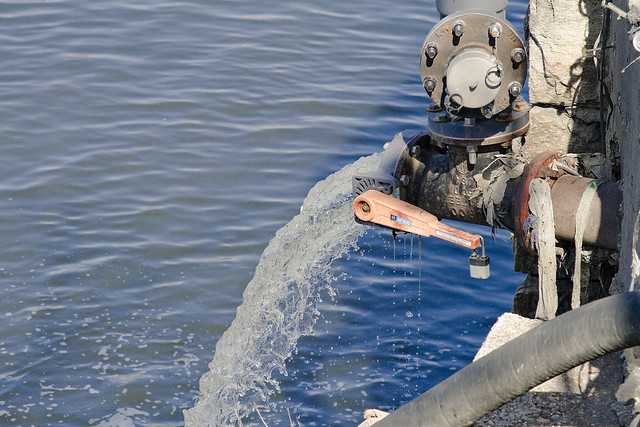
– photo by Mitch Waxman
The internationalists and potentates whose congress calls itself the so called United Nations would have you observe “World Water Day” on this date. This cabal of diplomats, intriguers, and acolytes desire you to imagine and contemplate the assertion that at least a sixth of the living human infestation has no reliable access to pure water. From their headquarters in the Shining City of Manhattan- designed by the gallic crypto fascist LeCorbusier- their edict rings out, and we all must take heed of “Agenda 21”. Pictured in the shot above is the largest source of fresh water flowing into the Newtown Creek, some two to three miles from their base.
from wikipedia
World Water Day has been observed on 22 March since 1993 when the United Nations General Assembly declared 22 March as World Day for Water.
This day was first formally proposed in Agenda 21 of the 1992 United Nations Conference on Environment and Development (UNCED) in Rio de Janeiro, Brazil. Observance began in 1993 and has grown significantly ever since; for the general public to show support, it is encouraged for the public to not use their taps throughout the whole day, the day has become a popular Facebook trend.
The UN and its member nations devote this day to implementing UN recommendations and promoting concrete activities within their countries regarding the world’s water resources. Each year, one of various UN agencies involved in water issues takes the lead in promoting and coordinating international activities for World Water Day. Since its inception in 2003, UN-Water has been responsible for selecting the theme, messages and lead UN agency for the World Day for Water.

– photo by Mitch Waxman
Burgeoning, the human infestation continues to intensify upon the skin of the planet, threatening to overwhelm the fragile biosphere with a monoculture of killer apes. Sophistry and numerical manipulation make the case for Agenda 21 to play out, attempting to induce guilt and damned realization into the mainly western minds of the post industrial world, those who are well fed and watered. Your humble narrator plans on not flushing the toilet today, much to the chagrin of both “Our Lady of the Pentacle” and our little dog Zuzu. Additionally, none of us will eat or drink. A fast day will be observed for the suffering multitudes.
from unwater.org
There are 7 billion people to feed on the planet today and another 2 billion are expected to join by 2050. Statistics say that each of us drinks from 2 to 4 litres of water every day, however most of the water we ‘drink’ is embedded in the food we eat: producing 1 kilo of beef for example consumes 15,000 litres of water while 1 kilo of wheat ’drinks up’ 1,500 litres.
When a billion people in the world already live in chronic hunger and water resources are under pressure we cannot pretend the problem is ‘elsewhere’.

– photo by Mitch Waxman
The unfortunate truth, globally, is that much of the fresh water which the human infestation might consume is fouled by sewage. Whether it is agricultural lagoons of animal waste, municipal infrastructure or lack thereof, or outright industrial effluent- this is the true issue which Agenda 21 ignores. If you want to save the multitudes of the developing world- eliminate malaria and a host of other pathogens almost overnight- build sanitary sewers. Of course, we haven’t managed to swing this in New York City let alone sub Saharan Africa, so you might as well despair.
from nycgovparks.org
Social Hour: World Water Day, Thursday, March 22, 2012. 6:30 P.M.–8:00 P.M.
Celebrate World Water Day by learning more about the Croton Reservoir and Central Park’s historic role in supplying New York City with fresh drinking water. Co-presented with the NYC Department of Environmental Protection.
This event is recommended for adults (18 and over) only.
Provided at no cost to you! No advance registration. More details, including rain plans and directions, are on the Central Park Conservancy calendar.


 The Newtown Pentacle