Posts Tagged ‘ny harbor’
things to do!

for an expanded description of the October 13th Kill Van Kull tour, please click here

for an expanded description of the October 20th Newtown Creek tour, please click here
old manor

– photo by Mitch Waxman
It may have been noticed, lords and ladies, that several shots of the loquacious Newtown Creek from an odd angle have appeared at this- your Newtown Pentacle- in the last few days. Your humble narrator recently found himself coerced into a bird watching expedition, by canoe, by certain powers and potentates of the Newtown Creek Alliance. It should be explained, as it has been mentioned in the past, that if the leadership of NCA can be analogized as the “Super Friends“- your humble narrator plays the role of Gleek the super monkey in the group.
Accordingly, when they ask me to go bird watching on Newtown Creek in a canoe with the North Brooklyn Boat Club, I go.
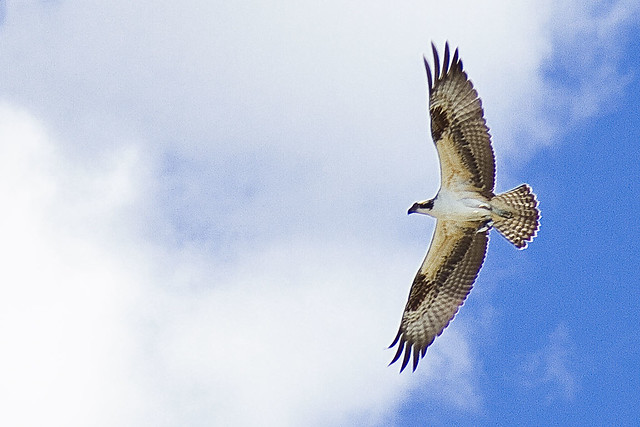
Hey, look, we saw an Osprey.
from wikipedia
The Osprey (Pandion haliaetus), sometimes known as the sea hawk, fish eagle or fish hawk, is a diurnal, fish-eating bird of prey. It is a large raptor, reaching more than 60 cm (24 in) in length and 180 cm (71 in) across the wings. It is brown on the upperparts and predominantly greyish on the head and underparts, with a black eye patch and wings.
The Osprey tolerates a wide variety of habitats, nesting in any location near a body of water providing an adequate food supply. It is found on all continents except Antarctica although in South America it occurs only as a non-breeding migrant.
As its other common name suggests, the Osprey’s diet consists almost exclusively of fish. It possesses specialised physical characteristics and exhibits unique behaviour to assist in hunting and catching prey. As a result of these unique characteristics, it has been given its own taxonomic genus, Pandion and family, Pandionidae. Four subspecies are usually recognised. Despite its propensity to nest near water, the Osprey is not a sea-eagle.

– photo by Mitch Waxman
Personal preference for motorized transport on the water aside, the folks from the North Brooklyn Boat House took great care of us and the afternoon went pretty well. Aside from the Osprey, we witnessed several other avian critters- including the Great Blue Heron which I’ve been chasing around the Creek all year. Unfortunately, the camera rig I carry isn’t purpose built for this sort of thing. The images in today’s post are pretty close to “actual pixels”, a 100% crop of a larger image, and look a bit rougher than my normal photos accordingly.
Bird photography, done properly, requires a powerful and expensive lens to get right.
from nytimes.com
Ospreys — large birds with dramatic brown and white markings and four-foot wing spans — occupy the top of the food chain, eating all kinds of fish, and are thus important indicators of the health of their environment. Along with other birds of prey, they were decimated by the widespread use of the pesticide DDT in the 1950s and ’60s, which led to a thinning of eggshells. Once DDT was banned in 1972, however, ospreys began a remarkable comeback, especially in the Northeast.
– photo by Mitch Waxman
Even those of us familiar with the Creeklands have been startled by the diversity of specie observed during these surveys. Your humble narrator, as an omnivore consumer of visual data, has little to no expertise in such matters- but those well versed with ornithological endeavors have been left slack jawed at the thriving ecosystem observed around the so called “dead sea” of the Newtown Creek.
from dec.ny.gov
The osprey is probably the longest studied and monitored raptor in New York. The New York State Department of Environmental Conservation (NYSDEC) monitors the status and productivity of the majority of New York’s population. Each year, both ground and aerial surveys are conducted by NYSDEC to document osprey nests in the state.
From 1980-1987, the NYSDEC released 36 young ospreys taken from nests on Long Island in an attempt to establish a third or “satellite” population in southwestern New York. During the seven years of the project, 30 young ospreys were released into the wild. This has lead to successful nests in the area, including nine nesting pairs in 1998. There are also close to a dozen breeding pairs in central New York and one in Southeastern New York in Sullivan County.
things sobbing

– photo by Mitch Waxman
Like the Lois Ann L Moran in a graving dock, pictured above, this maritime sunday was not spent hard at work for your humble narrator. A marathon viewing of a cache of latter day Godzilla movies literally has stomped into my weekend, obliterating all productivity as if by a blast of atomic fire breath. This post, as is very thing else besides Godzilla (for instance- hygiene, exercise, conversation), is obligatory at this point in time. At this writing, your humble couch potato is midway through Godzilla versus Destoroyah, and on his way to “Final Wars”. Wish me luck.
frequent references

– photo by Mitch Waxman
Maritime Sunday rolls around once more at this, your Newtown Pentacle, and a humble narrator will remain uncharacteristically terse for a change. All week have I tormented you, lords and ladies, with electioneering and political intrigues and I do believe that we’ve arrived at a juncture where a few simple photographs should be called upon to do the talking. A few tugboats should do the trick.

– photo by Mitch Waxman
It has been a busy week- meetings at and about sewer plants, conversations and presentations about titanic bridges being deconstructed and the community amenities which will accompany their replacements, just yesterday I found myself at no less than three distinct events at and upon the Newtown Creek itself, and on top of all this a social event in Manhattan which I was called on to photograph. I actually cannot remember all which was witnessed, said, and done at this moment- and will have to rely upon the hundreds of photos recently deposited on my hard drive to reconstruct my activities.

– photo by Mitch Waxman
As you read this, I’m likely on my way to a certain destination, well outside of my normal “beat”. An attempt to have a little fun on one of the few weekend days not occupied with the tours and other obligations which have otherwise consumed much of my attention over the last few months. Exploring the unknown, or at least the barely known, has not been a luxury enjoyed since the early spring. One desperately craves wholesome excitement and ribald adventure.
ruined palaces

– photo by Mitch Waxman
Attempts to “take it easy” for a week or two at the end of the summer, coupled with the puzzling virus which hampered all egress to joy, have left your humble narrator in a state of quivering misery. Downtrodden by vast physical inadequacies, failing organs, and a certain sense of ennui- nowhere is nepenthe to be found. Truly- I’m all ‘effed up. Crises, both existential and supranormal, abound.
from wikipedia
Within the framework of the post-Classic cycle of thirteen katuns (the so-called ‘Short Count’), some of the Yucatec Books of Chilam Balam present a deluge myth describing the collapse of the sky, the subsequent flood, and the re-establishment of the world and its five world trees upon the cycle’s conclusion and resumption. In this cosmic drama, the Lightning deity (Bolon Dzacab), the Earth Crocodile (Itzam Cab Ain), and the divine carriers of sky and earth (the Bacabs) have an important role to play. The Quichean Popol Vuh does not mention the collapse of the sky and the establishment of the five trees, but focuses instead on a succession of previous mankinds, the last of which was destroyed by a flood.

– photo by Mitch Waxman
A very bad thought, the sort of tormenting suspicion which instructs and informs madness, infects my mind. There are certain questions which should never even be asked, lest they be answered. Forbidden knowledge is prohibited for a reason, there are some things you cannot unlearn- like what the term “sediment mounds” connotes. The actions of others, with their unknowable motivations, rain random and unpredictable consequences into my days.
from wikipedia
There is a long philosophical and scientific history to the underlying thesis that reality is an illusion. This skeptical hypothesis (which can be dated in Western thought back to Parmenides, Zeno of Elea and Plato and in Eastern thought to the Advaita Vedanta concept of Maya) arguably underpins the mind-body dualism of Descartes, and is closely related to phenomenalism, a stance briefly adopted by Bertrand Russell. In a narrower sense it has become an important theme in science fiction, and recently has become a serious topic of study for futurology, in particular for transhumanism through the work of Nick Bostrom. The Simulation Hypothesis is a subject of serious academic debate within the field of transhumanism.
In its current form, the Simulation Argument began in 2003 with the publication of a paper by Nick Bostrom. Bostrom considers that the argument goes beyond skepticism, claiming that “…we have interesting empirical reasons to believe that a certain disjunctive claim about the world is true”, one of the disjunctive propositions being that we are almost certainly living in a simulation. Bostrom and other writers postulate there are empirical reasons why the ‘Simulation Hypothesis’ might be valid. Bostrom’s trilemma is formulated in temporal logic as follows:
“A technologically mature “posthuman” civilization would have enormous computing power. Based on this empirical fact, the simulation argument shows that at least one of the following propositions is true:
The fraction of human-level civilizations that reach a posthuman stage is very close to zero;
The fraction of posthuman civilizations that are interested in running ancestor-simulations is very close to zero;
The fraction of all people with our kind of experiences that are living in a simulation is very close to one.
If (1) is true, then we will almost certainly go extinct before reaching posthumanity.
If (2) is true, then there must be a strong convergence among the courses of advanced civilizations so that virtually none contains any relatively wealthy individuals who desire to run ancestor-simulations and are free to do so.
If (3) is true, then we almost certainly live in a simulation.
In the dark forest of our current ignorance, it seems sensible to apportion one’s credence roughly evenly between (1), (2), and (3).
Unless we are now living in a simulation, our descendants will almost certainly never run an ancestor-simulation.”

– photo by Mitch Waxman
Instead of allowing the intangible to complicate an already tenuous circumstance, and in the name of the annual “it’s September, so time to double down on the work” season, your humble narrator is retreating to the Creeklands. This is, after all, where one such as myself belongs- amongst the discarded and the decayed.
A long black raincoat hangs in my closet, awaiting the coming of another equinox, here in the Newtown Pentacle.
from wikipedia
In the near future, anthropogenic extinction scenarios exist: global nuclear annihilation, overpopulation or global accidental pandemic; besides natural ones: bolide impact and large scale volcanism or other catastrophic climate change. These natural causes have occurred multiple times in the geologic past although the probability of reoccurence within the human timescale of the near future is infinitesimally small. As technology develops, there is a theoretical possibility that humans may be deliberately destroyed by the actions of a nation state, corporation or individual in a form of global suicide attack. There is also a theoretical possibility that technological advancement may resolve or prevent potential extinction scenarios. The emergence of a pandemic of such virulence and infectiousness that very few humans survive the disease is a credible scenario. While not actually a human extinction event, this may leave only very small, very scattered human populations that would then evolve in isolation. It is important to differentiate between human extinction and the extinction of all life on Earth. Of possible extinction events, only a pandemic is selective enough to eliminate humanity while leaving the rest of complex life on earth relatively unscathed.


 The Newtown Pentacle