Archive for June 2011
reflective power

– photo by Mitch Waxman
The places I go, the things I see… often strain credulity. This is not the world you know, this 3.8 mile long waterway located directly across the East River from Manhattan’s Bellevue Psychiatric Hospital which provides the currently undefended border of Brooklyn and Queens. If it can happen, it has happened here, and if it happened here it happened worse and grander than anywhere else it ever happened. Come visit the night soil and offal dock, hear the stories of the great men- Bliss and Kingsland and Flowers and Degnon and Cooper. This is the place where the Industrial Revolution actually happened, where the death of nature itself was accomplished, and our modern world was born.
Welcome to the Newtown Creek, poison heart of the Newtown Pentacle…
from a Newtown Pentacle post of April 13th, 2011
Just under an hour long, this Magic Lantern Show about Newtown Creek is personally narrated, and transports the viewer to every corner of the Newtown Creek- every tributary and street end, on the water and above it, and is presented in the idiosyncratic and off beat manner which has become familiar to regular readers of this- your Newtown Pentacle. It attempts to explain certain core questions in under an hour which have been repeatedly presented to me over the last couple of years, and the entire talk is illustrated with both my own photography and the product of my historical research:
- What exactly do you mean by the “Newtown Pentacle”?
- When did the Newtown Creek begin to matter?
- Why should I care, how does the Newtown Creek affect me, as I live in Manhattan?
- Where exactly is this place?
- Who is responsible for this mess, and exactly who is it that’s going to clean it up?
- How can I get involved and help my community revitalize and or restore the Newtown Creek?

– photo by Mitch Waxman
It would probably be “politique” to mention that this is not a Newtown Creek Alliance event, which is one of the many organizations which I’ve become affiliated and identified with. Instead this is purely a Newtown Pentacle show, which the studied philosophs who inhabit the upper echelons of the Greater Astoria Historical Society are allowing me to present in their convenient location on Astoria’s Broadway- stumbling distance from the R,M, and N trains. The efficacy of gambling their precious time and effort upon such a poor specimen as myself would be proven by the event being well attended, and the negligible $5 fee at the door should prove an easy burden for most to bear. Therefore, a narrator humbly invites and requests your support and attendance.
from astorialic.org
Mon Jun 6, 7:00 pm
Travel the length and breadth of Americas most polluted waterway, the Newtown Creek, with newtownpentacle.com‘s Mitch Waxman.
Breathtaking photography illustrates the journey, exploring the various tributaries and discussing the industrial history of New York City‘s least known waterway.
Witty and irreverent, the narration describes Waxman‘s own discovery of this place and the fantastic journey it has taken him on.
Question and Answer period follows.

– photo by Mitch Waxman
The actual presentation is just over a hour long, and during it, you’ll travel the length and breadth of the Newtown Creek- every tributary and bridge, each keystone of historical import will be illustrated with both personal experience and historical meaning. For those of you new to the story of the Newtown Creek (or the neighborhood) this will make a fine primer. Attempts will be made by your humble narrator to reveal this willfully hidden place, and introduce the uninitiated to the hellish flames of revelation which only the Newtown Creek can offer.
microcosmic bonds

– photo by Mitch Waxman
Another of the locations which recent efforts assisting the estimable Kevin Walsh in his “2nd Saturdays” series of walking tours brought me to was the Woodside LIRR station.
For an infrastructure geek like myself, this facility offers an immersion in total joy. The MTA elevated lines which follow Roosevelt Avenue soar above, while on a lower level sits a separate system of trussed steel- the east and west tracks of the LIRR shuttle commuters back and forth between Shining City and crowded suburbs in an easterly suburbia.
Mr. Walsh himself was to arrive on one of these LIRR trains, and I humbly awaited the master.
from wikipedia
Woodside is a neighborhood in the western portion of the New York City borough of Queens. It is bordered on the south by Maspeth, on the north by Astoria, on the west by Sunnyside and on the east by Elmhurst and Jackson Heights. Some areas are widely residential and very quiet, while others (especially closer to Roosevelt Avenue) are more urban. The neighborhood is located in Queens Community Board 1 and Queens Community Board 2.
In the 19th century the area was part of the Town of Newtown (now Elmhurst). The adjacent area of Winfield was largely incorporated into the post office serving Woodside and as a consequence Winfield lost much of its identity distinct from Woodside.
With large scale residential development in the 1860s, Woodside became the largest Irish American community in Queens. In the early 1930s, the area was approximately 80% Irish. Even as the neighborhood has seen growth in ethnic diversity today, the area still retains a strong Irish American presence. There are a number of Irish pubs and restaurants scattered across Woodside.

– photo by Mitch Waxman
While pacing nervously, I was keenly aware of interested glances from local constable and fellow citizen alike.
That shabby man, unshaven and clad in a filthy black raincoat… What is he doing? He looks nervous and occluded, that sweaty fellow who is avoiding eye contact with others. Why is he pacing back and forth like that, and what might he be carrying in that enormous black bag? Doesn’t he seem anxious, as if waiting for something to happen?
Being noticed by the conservative and bourgeois is something that has plagued me always- even as a schoolchild, in auditorium assemblies populated by a thousand maniacs- fellow younglings screaming and dancing about while your humble narrator was quietly reading… I would be singled out for excoriation by certain factions of the school administration which always displayed open hostility to me.
Even today, coworkers might be snorting a line of amphetamines off their desks and I will be called to task for an empty coffee cup left too long untended.
from wikipedia
The Mythological Cycle, comprising stories of the former gods and origins of the Irish, is the least well preserved of the four cycles. The most important sources are the Metrical Dindshenchas or Lore of Places and the Lebor Gabála Érenn or Book of Invasions. Other manuscripts preserve such mythological tales as The Dream of Aengus, The Wooing Of Étain and Cath Maige Tuireadh, The (second) Battle of Magh Tuireadh. One of the best known of all Irish stories, Oidheadh Clainne Lir, or The Tragedy of the Children of Lir, is also part of this cycle.
Lebor Gabála Érenn is a pseudo-history of Ireland, tracing the ancestry of the Irish back to before Noah. It tells of a series of invasions or “takings” of Ireland by a succession of peoples, the fifth of whom was the people known as the Tuatha Dé Danann (“Peoples of Goddess Danu”), who were believed to have inhabited the island before the arrival of the Gaels, or Milesians. They faced opposition from their enemies, the Fomorians, led by Balor of the Evil Eye. Balor was eventually slain by Lug Lámfada (Lug of the Long Arm) at the second battle of Magh Tuireadh. With the arrival of the Gaels, the Tuatha Dé Danann retired underground to become the fairy people of later myth and legend.
The Metrical Dindshenchas is the great onomastic work of early Ireland, giving the naming legends of significant places in a sequence of poems. It includes a lot of important information on Mythological Cycle figures and stories, including the Battle of Tailtiu, in which the Tuatha Dé Danann were defeated by the Milesians.
It is important to note that by the Middle Ages the Tuatha Dé Danann were not viewed so much as gods as the shape-shifting magician population of an earlier Golden Age Ireland. Texts such as Lebor Gabála Érenn and Cath Maige Tuireadh present them as kings and heroes of the distant past, complete with death-tales. However there is considerable evidence, both in the texts and from the wider Celtic world, that they were once considered deities.
Even after they are displaced as the rulers of Ireland, characters such as Lug, the Mórrígan, Aengus and Manannan appear in stories set centuries later, betraying their immortality. A poem in the Book of Leinster lists many of the Tuatha Dé, but ends “Although [the author] enumerates them, he does not worship them”. Goibniu, Creidhne and Luchta are referred to as Trí Dé Dána (“three gods of craftsmanship”), and the Dagda’s name is interpreted in medieval texts as “the good god”. Nuada is cognate with the British god Nodens; Lug is a reflex of the pan-Celtic deity Lugus, the name of whom may indicate “Light”; Tuireann may be related to the Gaulish Taranis; Ogma to Ogmios; the Badb to Catubodua.

– photo by Mitch Waxman
Such persecution, coupled to my own antisocially vicious nature and bizarre mannerisms, has resulted in a very thin skinvelope surrounding your humble narrator. Paranoid, socially crippled, and hostile, in order to stave off madness a decision was made long ago to hide in public. Scuttle about the edges of this vile infestation and gross exaggeration of the human hive, and avoid all but topical contact with it’s residents. A cocoon was spun, and happily occupied.
In recent years, however, novel philosophies and aspirations have motivated me to move in different and delusional directions and to scuttle forth and walk the earth.
from wikipedia
According to an Irish dinsenchas (“place-lore”) poem in the 12th century Book of Leinster, Crom Cruach’s cult image, consisting of a gold figure surrounded by twelve stone figures, stood on Magh Slécht (“the plain of prostration”) in County Cavan, and was propitiated with first-born sacrifice in exchange for good yields of milk and grain. Crom is said to have been worshipped since the time of Eremon. An early High King, Tigernmas, along with three quarters of his army, is said to have died while worshipping Crom on Samhain eve, but worship continued until the cult image was destroyed by St. Patrick with a sledgehammer.
This incident figures prominently in medieval legends about St. Patrick, although it does not appear in his own writings, nor in the two 7th century biographies by Muirchu and Tírechán. In the 9th century Tripartite Life of Saint Patrick the deity is called Cenn Cruach, and his cult image consists of a central figure covered with gold and silver, surrounded by twelve bronze figures. When Patrick approaches it he raises his crozier, the central figure falls face-down, with the imprint of the crozier left in it, and the surrounding figures sink into the earth. The “demon” who inhabits the image appears, but Patrick curses him and casts him to hell. Jocelin’s 12th century Life and Acts of St. Patrick tells much the same story. Here the god is called Cenncroithi, interpreted as “the head of all gods”, and when his image falls the silver and gold covering it crumble to dust, with the imprint of the crozier left on bare stone.

– photo by Mitch Waxman
Childish and puerile, my pedantic credos include “what would Superman do?”, “do what you say, and say what you do”, “the world only makes sense when you force it to”, and the recently added gem “make no assumptions”. Accordingly, while walking this strange path that I’ve found myself on, an attempt to maintain an open mind and absorb as much knowledge as possible from the best sources available has been underway.
Which brings me back to why I was attracting so much interest from gentry and security personnel alike while waiting for Mr. Walsh at the LIRR station in Woodside, Queens.
from wikipedia
In Irish and Scottish mythology, the Cailleach (Irish pronunciation: [ˈkalʲəx], Irish plural cailleacha [ˈkalʲəxə], Scottish Gaelic plural cailleachan /kaʎəxən/), also known as the Cailleach Bheur, is a divine hag, a creatrix, and possibly an ancestral deity or deified ancestor. The word simply means ‘old woman’ in modern Scottish Gaelic, and has been applied to numerous mythological figures in Scotland, Ireland and the Isle of Man.
In Scotland, where she is also known as Beira, Queen of Winter, she is credited with making numerous mountains and large hills, which are said to have been formed when she was striding across the land and accidentally dropped rocks from her apron. In other cases she is said to have built the mountains intentionally, to serve as her stepping stones. She carries a hammer for shaping the hills and valleys, and is said to be the mother of all the goddesses and gods.
The Cailleach displays several traits befitting the personification of Winter: she herds deer, she fights Spring, and her staff freezes the ground.

– photo by Mitch Waxman
Of course, I seldom go anyplace in Queens these days without reading up on it, and this station was at the edge of the John Andrew Kelley property (Woodside takes it’s name from that of his mansion) near the Snake Woods- which popular aphorism in the 19th century referred to as “Suicide’s Paradise”.
The actual spot that the LIRR station occupies was first (european) occupied by the Puritan Wiliam Sackett, who later sold the property to a man named Levirich. The LIRR arrived in the 1860’s and occupied several locations in Woodside until settling into the familiar layout of our modern tracks in 1917.
The ancient Sackett farmhouse was scourged in a mysterious fire which occurred in 1890.

– photo by Mitch Waxman
Pictured above is Woodside Court, which the informed opine as being the oldest apartment house in the neighborhood, dating from 1916. Often have I wondered what it must be like to live in this place along the tracks. When this building was constructed, Woodside was an Irish enclave housing- along with Elmhurst- a substantial percentage of the refugees who fled from the 19th century holocausts, and their American born children.
from wikipedia
In Irish mythology, the aos sí (Irish pronunciation: [iːs ˈʃiː], older form aes sídhe [eːs ˈʃiːə]) are a supernatural race comparable to the fairies or elves. They are said to live underground in the fairy mounds, across the western sea, or in an invisible world that coexists with the world of humans. This world is described in “The Book of Invasions” (recorded in the Book of Leinster) as a parallel universe in which the aos sí walk amongst the living.
In the Irish language, aos sí means “people of the mounds” (the mounds are known in Irish as “the sídhe”). In Irish literature the people of the mounds are also referred to as the daoine sídhe ([‘diːnʲə ‘ʃiːə]), and in Scottish Gaelic literature as the daoine sìth. They are said to be the ancestors, spirits of nature, or goddesses and gods.

– photo by Mitch Waxman
The story which microbiological experts transmit describes the Famines as being caused ultimately by the pathogenic organism known as Phytophthora infestans. Water based, this microscopic menace didn’t follow the immigrants to North America, as Phytophthora infestans is native to the place- just like the Potato.
Originating in the mist shrouded highlands of central Mexico, Phytophthora infestans arrived in Ireland via a batch of potato seedlings sent to Belgium in 1845. Additionally, several modern states including the United States have made attempts at weaponizing the oomycete.
from wikipedia
A Fuath (pronounced foo-ah) (Fuathan pl.) is an evil, Gaelic mythological water spirit. In Irish Gaelic, the word “fuath” means “hate”.
Its name is sometimes used as a regional variance for Kelpie or Uisges in Northern Ireland or the Bean-Nighe. The Scottish use the name to refer to generic water spirits who inhabit the sea, rivers, fresh water, or sea loches. Sometimes, this name is even given to highland or nature spirits, but all forms with the name are evil.
Their appearance ranges from covered in shaggy, yellow fur to just having a mane down its back, webbed toes, tails with spikes, and no nose. They are prone to wearing green, whether it be a dress, robe, or kirtle, as it is the color of faeries.
They sometimes intermarry with human beings (typically the female), whose offspring will share a mane, tail, and/or webbed digits. Their banes include sunlight and cold steel, which will kill them instantly. They grow restless upon crossing a stream.
An alternative name for this class of monsters is Arrachd.
June 6th, Magic Lantern Show at Greater Astoria Historical Society

Metropolitan Avenue Bridge, English Kills – photo by Mitch Waxman
I’ve neglected to inform you all of the Magic Lantern Show which this, your Newtown Pentacle, is staging at the Greater Astoria Historical Society on Monday, June 6th at 7pm. There won’t be any archaic museum pieces in use, of course- my magic lantern is all digital and uses a standard and quite modern projector- but the concept is much the same. A photographer captures some hellish reality from the wild and shadowed corners of the world, and presents them with the intention of revealing hidden truths to a comfortable and otherwise wholesome audience who would never encounter this reality otherwise.
from a Newtown Pentacle post of April 13th, 2011
Just under an hour long, this Magic Lantern Show about Newtown Creek is personally narrated, and transports the viewer to every corner of the Newtown Creek- every tributary and street end, on the water and above it, and is presented in the idiosyncratic and off beat manner which has become familiar to regular readers of this- your Newtown Pentacle. It attempts to explain certain core questions in under an hour which have been repeatedly presented to me over the last couple of years, and the entire talk is illustrated with both my own photography and the product of my historical research:
- What exactly do you mean by the “Newtown Pentacle”?
- When did the Newtown Creek begin to matter?
- Why should I care, how does the Newtown Creek affect me, as I live in Manhattan?
- Where exactly is this place?
- Who is responsible for this mess, and exactly who is it that’s going to clean it up?
- How can I get involved and help my community revitalize and or restore the Newtown Creek?

Empire State Building rising over industrial Brooklyn and Newtown Creek – photo by Mitch Waxman
It would probably be “politique” to mention that this is not a Newtown Creek Alliance event, which is one of the many organizations which I’ve become affiliated and identified with. Instead this is purely a Newtown Pentacle show, which the studied philosophs who inhabit the upper echelons of the Greater Astoria Historical Society are allowing me to present in their convenient location on Astoria’s Broadway- stumbling distance from the R,M, and N trains. The efficacy of gambling their precious time and effort upon such a poor specimen as myself would be proven by the event being well attended, and the negligible $5 fee at the door should prove an easy burden for most to bear. Therefore, a narrator humbly invites and requests your support and attendance.
from astorialic.org
Mon Jun 6, 7:00 pm
Travel the length and breadth of Americas most polluted waterway, the Newtown Creek, with newtownpentacle.com‘s Mitch Waxman.
Breathtaking photography illustrates the journey, exploring the various tributaries and discussing the industrial history of New York City‘s least known waterway.
Witty and irreverent, the narration describes Waxman‘s own discovery of this place and the fantastic journey it has taken him on.
Question and Answer period follows.

DUKBO, Down Under the Kosciuszko Bridge Onramp – photo by Mitch Waxman
The actual presentation is just over a hour long, and during it, you’ll travel the length and breadth of the Newtown Creek- every tributary and bridge, each keystone of historical import will be illustrated with both personal experience and historical meaning. For those of you new to the story of the Newtown Creek (or the neighborhood) this will make a fine primer. Attempts will be made by your humble narrator to reveal this willfully hidden place, and introduce the uninitiated to the hellish flames of revelation which only the Newtown Creek can offer.

Greenpoint Avenue Bridge over Newtown Creek – photo by Mitch Waxman
The places I go, the things I see… often strain credulity. This is not the world you know, this 3.8 mile long waterway located directly across the East River from Manhattan’s Bellevue Psychiatric Hospital which provides the currently undefended border of Brooklyn and Queens. If it can happen, it has happened here, and if it happened here it happened worse and grander than anywhere else it ever happened. Come visit the night soil and offal dock, hear the stories of the great men- Bliss and Kingsland and Flowers and Degnon and Cooper. This is the place where the Industrial Revolution actually happened, where the death of nature itself was accomplished, and our modern world was born.
Welcome to the Newtown Creek, poison heart of the Newtown Pentacle…
burst open

– photo by Mitch Waxman
Recent business, if you must ask, is the reason I found myself visiting …Staten Island… Kevin Walsh of forgotten-ny.com wanted, sensibly enough given the sylvan landscaping and thoughtful architecture of the place, to offer a walking tour of St. George as part of his ambitious schedule of “2nd Saturday” walking tours. As an accomplice in his fiendish revelations, I was forced to return to this place by land.
It is one thing to motor past …Staten Island… on a ship or highway, and another thing entirely to touch it with your feet. This is when you are helpless, a pedestrian lost in a land of motor vehicles and steep hills, and movement noticed behind dark curtains might said to be an implied rather than suggested hint of an occluded occupant.
from silive.com
For the past two days, visitors to a park in Staten Island’s Fort Wadsworth section have stumbled upon a gory mystery — a mutilated animal, possibly a dog or a goat, wrapped in a white sheet.
Parkgoers found two such animals in Von Briesen Park yesterday and this morning, city Parks Department officials confirmed.
The discovery has sparked speculation of ritual sacrifice and cult activity, and has led one Port Richmond woman to douse part of the ground where one animal was found with holy water, in an attempt to ward off what she believes is an evil presence.
– photo by Mitch Waxman
Overly sensitive to sleights, always ready to interpret malicious intent in an innocent gesture, your humble narrator nevertheless prides himself on what Brooklyn kids might call “spidey sense”. When certain instincts and triggers begin to fire off, the imperative to “get out of dodge” becomes overwhelming and flight ensues, if I am clever enough to acknowledge this “tingle”.
Every time I’m on the island which Richmond County squats upon, I start to tingle.
from silive.com
Staten Island ranks second in the overall suicide rate out of all five boroughs, behind only Manhattan, according to the most recent state Department of Health statistics.
In 2005, the most recent year available, there were 6.9 suicides on the Island per 100,000 people. Manhattan was the only borough that had more, with 7.6 suicides per 100,000; rates for the Bronx, Brooklyn and Queens were 4.8, 4.6 and 5.4, respectively.
Sudden changes in behavior or personality; feelings of desperation, helplessness, hopelessness, aloneness, loss and depression; previous suicide attempt; and most importantly, suicide statements expressing a desire or intention to die are all some of the warning signs that sometimes go overlooked, experts say.

– photo by Mitch Waxman
Over the years paying attention to this “tingle”, sometimes felt by Our Lady of the Pentacle instead of me, has aided me in avoiding multiple encounters with the Constabulatory, allowed me to escape a burning building twice, and facilitated in sidestepping some of the dire consequences of a degenerate youth. Additionally, I seem to know which days it would be fortuitous to call in sick to work, intuitively avoid traffic jams and transit logjams, and when some baser denizen of the NY streets sets their sights on me- I know it.
It has long been my belief that physical cowardice is a genetic inheritance, a gift from timorousness ancestors who managed to run away before the Vikings or Mongols found them.
from wikipedia
Snug Harbor was founded by the 1801 bequest of New York tycoon Captain Robert Richard Randall for whom the nearby neighborhood of Randall Manor is named. Randall left his country estate, Manhattan property bounded by Fifth Avenue and Broadway and Eighth and 10th Streets, to build an institution to care for “aged, decrepit and worn-out” seamen. The opening of the sailor’s home was delayed by extended contests of the will by Randall’s disappointed heirs. When Sailors’ Snug Harbor opened in 1833, it was the first home for retired merchant seamen in the history of the United States. It began with a single building, now the centerpiece in the row of five Greek Revival temple-like buildings on the New Brighton waterfront.
Captain Thomas Melville, a retired sea captain and brother of Moby-Dick author Herman Melville, was governor of Snug Harbor from 1867 to 1884.
In 1890, Captain Gustavus Trask, the governor of Snug Harbor, built a Renaissance Revival church, the Randall Memorial Chapel and, next to it, a music hall, both designed by Robert W. Gibson.
Approximately 1,000 retired sailors lived at Snug Harbor at its peak in the late 19th century, when it was among the wealthiest charities in New York. Its Washington Square area properties yielded a surplus exceeding the retirement home’s costs by $100,000 a year.

– photo by Mitch Waxman
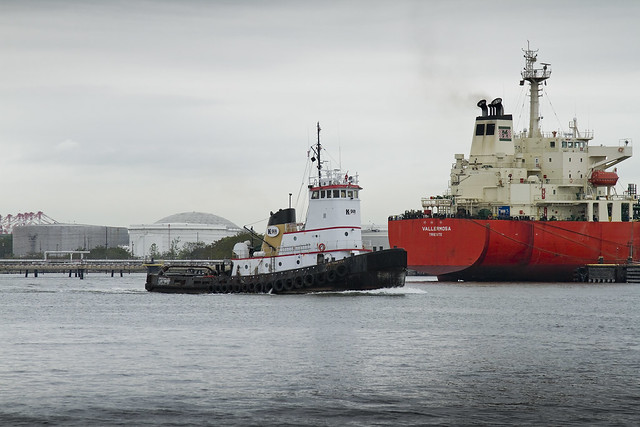
There are places which terrify, and intimidate. …Staten Island… with it’s hoary past and terrifying implications of Old World conspiracy- accomplishes both for me. I prefer to focus on what floats past the place, observing from the safety of running water, rather than delve too deeply into the rumors of those things which have been witnessed in the trees near Willowbrook.
from artsjournal.com
All “aged decrepit and warn-out sailors” were accepted. Even some blacks. Eventually the Harbor also allowed steamboat sailors and inland sailors from lakes and rivers too, but they were no doubt frowned upon as not being adventurous enough. Once, while trying to affix a sculpture to one of the walls, we found a sealed-off compartment containing a book of photographs of hundreds of inmates (as the retired seamen were called). Here and there were some dark faces. All races and nationalities were welcomed. Only “habitual alcoholics and those with contagious disease or immoral character were banned.”
tentacled starers

– photo by Mitch Waxman
The courthouse in Staten Island, found in St. George near the Borough Hall, has always filled me with some nameless dread- an unknowable and substantive certainty that behind it’s gabled window sashes, there exists a brain blasting horror and existential truth which would shatter my sanity were the curtains to shift and reveal what lurks within.
Since childhood, when school trips or camp outings would bring me to this jutting littoral outcrop from my homeland of infinite Brooklyn, I’ve always maintained that there is just something wrong about the place.
If you think about it, the decline of New York City as an industrial and cultural leader began when the Verrazano Narrows Bridge was completed.
from nyc.gov
Borough Hall was designed by Carrere & Hastings, one of the most influential firms in this country in the early twentieth century. John Carrere (1858-1911) and Thomas Hastings (1860-1929) both attended the Ecole des Beaux Arts in Paris and worked at the firm of McKim, Mead & White. They started their firm in 1885. Carrere, a resident of Staten Island, helped select the dramatic hilltop site of Borough Hall, and was involved with the plan and development of the Civic Center. The firm designed the Richmond County Courthouse next door, the Ferry Terminal (burned) and the St. George Branch Library.

– photo by Mitch Waxman
It must be admitted that …Staten Island… is actually quite lovely in spots and that the prejudice I bear the place is entirely between my own ears. Another perfectly lovely community in the United States- Boulder, Colorado- also receives an unreasoning enmity from your humble narrator. No reasonable explanation can be offered except that both make me itchy and uncomfortable, representative of a way of life unattractive to my personality and tastes. Funny thing is, half of my old neighborhood from Brooklyn moved out here, including my own parents.
If you’re from …Staten Island… and reading this, just chalk it up to inter borough antagonism, and allow me to just rattle on…
from wikipedia
McKim, Mead & White was a prominent American architectural firm at the turn of the twentieth century. The firm’s founding partners were Charles Follen McKim (1847–1909), William Rutherford Mead (1846–1928) and Stanford White (1853–1906). The firm was a major training ground for many other prominent architects -partners, associates, designers and draftsmen.
McKim and Mead joined forces in 1872 and were joined in 1879 by White who, like McKim, had worked for architect Henry Hobson Richardson. Their work applied the principles of Beaux-Arts architecture, the adoption of the classical Greek and Roman stylistic vocabulary as filtered through the Parisian Ecole des Beaux-Arts, and the related City Beautiful movement after 1893 or so, which aimed to clean up the visual confusion of American cities and imbue them with a sense of order and noble formality.
Mead was the last of the firm’s founding partners to die in 1928, after McKim (1909), and White (1906). The firm retained its name after the death of Mead, until partner James Kellum Smith’s death in 1961. The firm – primarily Smith – designed the prominent National Museum of American History in Washington DC, one of the firm’s last works, opening in 1964. McKim, Mead & White was also involved with an urban renewal project at Pratt Institute in Brooklyn in the 1950s and designed three buildings as part of the project: DeKalb Hall, ISC Building and North Hall.
In 1961, McKim, Mead & White was succeeded by the firm Steinman, Cain, and White, which by 1971 had become Walker O. Cain and Associates.

– photo by Mitch Waxman
Perhaps it’s just a psychic charge which the place has carried since the maritime days, when old sailors who had capsized into Snug Harbor would dialogue with the locals in area taverns, exchanging wild stories of the south seas for a shot of whiskey or a glass of beer. Squid like monstrosities worshipped like heathen gods, or a 50 foot shark which bit the prow from a boat, Fijian mermaids, and even stranger reports entered the folkloric gene pool here and mixed in with the hybrid pestilence of both English and Dutch superstitions. Isolation too, held special horrors for …Staten Island…
from wikipedia
Stanford White (November 9, 1853 – June 25, 1906) was an American architect and partner in the architectural firm of McKim, Mead & White, the frontrunner among Beaux-Arts firms. He designed a long series of houses for the rich and the very rich, and various public, institutional, and religious buildings, some of which can be found to this day in places like Sea Gate, Brooklyn. His design principles embodied the “American Renaissance”.
In 1906, White was murdered by millionaire Harry Kendall Thaw over White’s affair with Thaw’s wife, actress Evelyn Nesbit, leading to a trial which was dubbed at the time “The Trial of the Century”

– photo by Mitch Waxman
Rumors abound as to the mission of a certain Catholic Lay organization, based in a dormitory skyscraper on 34th street and Madison in Manhattan- and why certain members of that group (who believe even the Knights of Loyola to have lost their way) seem to spend quite so much of their time on …Staten Island…
One theory which has gained my attention suggests that the Masonic Treasures of Garibaldi still lie extant and occluded in the vast acreage of the place, and that the Holy See wishes to see these relics returned to Roman hands. However, one cannot trust in conspiracy, although… Garibaldi did conspire to overthrow the papal states here, and later succeeded in doing so… But that doesn’t prove anything!
from wikipedia
Thaw was born on February 12, 1871 to Pittsburgh coal and railroad baron William Thaw. Violent and paranoid from a very young age (his mother claimed his problems had started in the womb), he spent his childhood bouncing from private school to private school in Pittsburgh, never doing well and described by teachers as unintelligent and a troublemaker. Still, as the son of William Thaw, he was granted admission to the University of Pittsburgh, where he was to study law, though he apparently did little studying. After a few years he used his name and social status to transfer to Harvard University.
Thaw later bragged that he had studied poker at Harvard. He also went on long drinking binges, attended cockfights, and spent much of his time romancing young women. He was expelled after being picked up for chasing a cab driver through the streets of Cambridge with a shotgun, though he claimed it was unloaded.
Thaw has been credited with the invention of the speedball, an injected combination of morphine and/or heroin along with cocaine sometime between 1896 and 1906. He was also reported by newspapers at the time of his trial to have once consumed an entire bottle of laudanum in a single sitting and carry a special silver case full of syringes and other parts of a large “outfit” of injecting equipment.

– photo by Mitch Waxman
The woodlands of …Staten Island… betray it’s nature to visitors who observe the glacial erratics and kettle ponds which would be recognizable to the antediluvian dwellers of the place some 14,000 years ago. The predatory bipeds referred to as the “Clovis Culture” left behind evidence of their presence, and then dropped off the map entirely. The next direct evidence of occupancy, this time of recognizable humans, was some 5,000 years ago. What happened during the nine millennia between 3,000 and 12,000 B.C.? How does it relate to the stories told by the old mariners at Snug Harbor?
from wikipedia
The towns and villages of Staten Island were dissolved in 1898 with the consolidation of the City of Greater New York, with Richmond as one of its five boroughs.
The construction of the Verrazano Bridge, along with the other three major Staten Island bridges, created a new way for commuters and tourists to travel from New Jersey to Brooklyn, Manhattan, and areas farther east on Long Island. The network of highways running between the bridges has effectively carved up many of the borough’s old neighborhoods.
The Verrazano had another effect, opening up many areas of the borough to residential and commercial development, especially in the central and southern parts of the borough, which had previously been largely undeveloped. Staten Island’s population doubled between from about 221,000 in 1960 to about 443,000 in 2000.
Throughout the 1980s, a movement to secede from the city steadily grew in popularity, reaching its peak during the mayoral term of David Dinkins. In a 1993 referendum, 65% voted to secede, but implementation was blocked in the State Assembly.


 The Newtown Pentacle