Archive for the ‘Dutch Kills’ Category
budding branches

– photo by Mitch Waxman
Returning from scouting a tour in hoary Greenpoint recently, your humble narrator was lucky enough to encounter the shot above waiting for me on Hunters Point avenue in Queens. Whereas I do seem to take quite a few shots of locomotives, I am no “railfan”. A true railfan or “foamer” obsesses over schedules and would be waiting for this train to pass. With me, it’s just pure serendipity. This is, of course, an Amtrak train heading for the Belmont tunnels which offer egress from Long Island to Manhattan via the Sunnyside Yards rail complex in Queens.

– photo by Mitch Waxman
In many ways, one can understand the apathy felt by the Manhattan elites toward Long Island City, for what do they see of the wonders hidden therein from the East River? Even the Newtown Creek appears to be just a simple bay from the water, another unremarkable inlet on the western coastline of a Long Island.

– photo by Mitch Waxman
Perhaps this is why I’ve been drawn to conducting all of these tours. Famously, the Newtown Creek Alliance motto is “Reveal, Restore, Revitalize”, and in my capacity as group historian- I’m the “reveal” guy. Next Saturday, I’m going to be doing some of that “revealing”- there are still a few tickets left for “the Poison Cauldron” walk- do come along, if you dare.

– photo by Mitch Waxman
Long have I been reluctant to bring people to this place.
For several months now, your humble narrator has been narrating in a not so humble fashion while leading boat and walking tours of the Newtown Creek watershed.
Literally hundreds of people have attended either the “Thirteen Steps around Dutch Kills“, “Insalubrious Valley“, or “Newtown Creek Boat Tour” events this year- and one question has been asked by all- “What about the Greenpoint Oil Spill?”.
Next week- a group of enthusiasts will be assembling, under the auspices of Atlas Obscura, to explore the lamentable “Poison Cauldron” of the Newtown Creek.
There are still tickets available, should you care to witness the place prior to its forthcoming demolition.

– photo by Mitch Waxman
Down Under the Kosciuszko Bridge Onramp, or DUKBO, is the name I’ve assigned to this lunar landscape of industrial mills and waste transfer stations which lines the Brooklyn side of the Creek. This year is functionally the last time you will be able to witness this place, as the Kosciuszko Bridge replacement project will be kicking into high gear in the spring of 2013.
For the urban explorer and photographer crowd, this is a wonderland of shattered streets and rusted infrastructure which will soon be eradicated from all but living memory.

– photo by Mitch Waxman
The tour will tell the story of Standard Oil at its start and cross over the Greenpoint Oil Spill’s heart, revealing that lost world of industrial aspiration and 20th century dissolution which lies less than a mile from the geographic and population centers of New York City.
In the past, I’ve described the area as “Mordor” at this, your Newtown Pentacle, and the Tolkien analogy is apt. The very air you breathe is a poisonous fume, the water is hopelessly tainted with bizarre combinations and millions of gallons of petroleum and industrial chemicals, the soil is impregnated with heavy metals, asbestos, and truly- who can guess all there is that might be buried down there?
An odd concentration of food distribution, waste transfer and garbage handling facilities, and energy industry plants make the area remarkable, and everywhere you look will be a “colour“- a bizarrely iridescent sheen which resembles no wholesome nor familiar earthly color but is instead like something from out of space- coating every bit of broken masonry and the sweat slicked skin of laborer and passerby alike.

– photo by Mitch Waxman
Standard offer copy follows:
Meetup at the corner of Kingsland and Norman Avenues in Greenpoint at 11 on Saturday, August 25th.
We will be exploring the petroleum and waste transfer districts of the Newtown Creek watershed in North Brooklyn. Heavily industrialized, the area we will be walking through is the heart of the Greenpoint Oil Spill and home to scores of waste transfer stations and other heavy industries. We will be heading for the thrice damned Kosciuszko Bridge, which is scheduled for a demolition and replacement project which will be starting in 2013. Photographers, in particular, will find this an interesting walk through a little known and quite obscure section of New York City.
Be prepared: We’ll be encountering broken pavement, sometimes heavy truck traffic, and experiencing a virtual urban desert as we move through the concrete devastations of North Brooklyn. Dress and pack appropriately for hiking, closed toe shoes are highly recommended- as are a hat or parasol to shield you from the sun.
Bathroom opportunities will be found only at the start of the walk, which will be around three hours long and cover approximately three miles of ground. Drivers, it would be wise to leave your cars in the vicinity of McGolrick Park in Greenpoint.
Click here for tickets, and as always- a limited number of walk ups will be welcomed- but for safety reasons we need to limit the group to a manageable size. Contact me at this email if you desire further details.
final destinations
This is tomorrow, as in Sunday the 22nd. Seriously- you can count the number of seats left with one hand. If you haven’t got your tickets yet, today is probably your last chance.
 |
 |
Many people know about the environmental issues facing Newtown Creek, but did you know that the Creek was once the busiest waterway in North America, carrying more industrial tonnage than the entire Mississippi River?
You’ll learn much more when Working Harbor Committee’s maritime historians and harbor experts
put it all in context during a Hidden Harbor Tours: Newtown Creek Exploration.
The heart of industrial New York, Newtown Creek was home port to hundreds of tugboats (one of which is the historic WO Decker). It was also an international destination for oceangoing ships and a vast intermodal shipping and manufacturing hub that employed hundreds of thousands of people. Forming the border of Brooklyn and Queens for nearly three miles, five great cities grew rich along the Newtown Creek’s bulkheads — Greenpoint, Willamsburg, Bushwick, Long Island City and Manhattan itself. The waterway is still a vital part of the harbor and the Working Harbor Committee (WHC) is proud to present this tour as part of the celebration of their tenth anniversary year.
Mitch Waxman, a member of WHC’s steering committee and the group’s official photographer, also serves with the Newtown Creek Alliance as its group Historian. In addition to working on WHC’s boat tours of the Creek, Mitch offers a regular lineup of popular walking tours, and presents a series of well-attended slideshows for political, governmental, antiquarian, historical and school groups. His website – newtownpentacle.com – chronicles his adventures along the Newtown Creek and in the greater Working Harbor.
He was recently profiled in the NY Times Metro section, check out the article here.
Upcoming tour: Hidden Harbor Tours: Newtown Creek Exploration.
On July 22nd, Mitch shares his unique point of view and deep understanding of the past, present and future conditions of the Newtown Creek as the narrator and expedition leader for this years Hidden Harbor Tours: Newtown Creek exploration.
Our NY Water Taxi leaves from South Street Seaport at 11 a.m. (sharp) on a three hour tour of the Newtown Creek. From the East River we’ll move into the Newtown Creek where we’ll explore explore vast amounts of maritime infrastructure, see many movable bridges and discover the very heart of the Hidden Harbor.
Limited seating available, get your tickets today.
 |
|||||||||||||||
|
|||||||||||||||


Newtown Creek Boat Tour

– photo by Mitch Waxman
This coming Sunday -the 22nd of July, the Working Harbor Committee is producing and offering a boat tour of the Newtown Creek to any interested parties. A special emphasis on the waterway’s storied history and maritime legacy will be made.
I’m going to be doing the history part, speaking in my capacity as the Newtown Creek Alliance Historian, and am tasked with highlighting the various points of interest encountered along the route. Anticipated to be some three hours in length, this boat tour will be delving some three miles inland, proceeding to the Metropolitan Avenue Bridge crossing English Kills in East Williamsburg, Brooklyn.

– photo by Mitch Waxman
The Maritime History of Newtown Creek is one largely forgotten in these decadent times, but even now an odd tugboat and barge might be spied making their way down the waterway on any given day. Property owners were considered to have been blessed by some of the finest industrial bulkheads in the world a mere century ago, yet many of the businesses based along the Creek today ignore this invaluable resource, allowing their waterfront property to decay and decline.
Nevertheless, a staggering amount of maritime traffic is still observed here, and towing companies such as Reinauer, K-Sea, DonJon, and Poling and Cutler are regular visitors.

– photo by Mitch Waxman
Vast operations will be witnessed by those onboard, many of which are involved in the scrap metal and recyclables trade. Responsible for an enormous amount of cross harbor shipping, companies such as SimsMetal are heavily reliant on the maritime trades for their economic success.
Not all that long ago, Newtown Creek carried a greater tonnage of cargo than the entire Mississippi River.

– photo by Mitch Waxman
An active and thriving industrial zone in the center of New York City, from the water one can truly grasp the sheer scale of Newtown Creek’s busy waterfront. Normally hidden by high fences and obscured by street facing structures, the intensity of the Newtown Creek is laid bare before the admiring gaze of first time visitor and veteran urban explorer alike.

– photo by Mitch Waxman
A tributary of the estuarine East River, Newtown Creek extends some 3.8 miles from its junction with the more familiar waterway, and provides demarcation for the currently undefended border of much of Brooklyn and Queens. Named to the Federal Superfund list, the Creek suffers from a history of environmental degradation and municipal neglect.
An era of great change is upon the Newtown Creek, and this trip will be one of your last chances to see it in its current form.

– photo by Mitch Waxman
We will see four moveable bridges, and this year will be your last chance to see the static Kosciuszko Bridge as the NYS DOT has indicated that construction on its replacement will begin as early as the Spring of 2013.

– photo by Mitch Waxman
Along it’s banks, great fortunes have risen.
Amongst others- Peter Cooper (BO Railroad, Canton Iron, and Cooper Union), Charles Pratt (Astral Oil, and Pratt University), and ultimately John D. Rockefeller (Standard Oil)– all grew richer than the dreams of avarice in this place. Alongside them, the darkest mills of the industrial revolution- rendering plants, yeast distilleries, bone blackers, and acid factories provided tens of thousands of jobs to the immigrant populations of Brooklyn and Queens. Today- National Grid, BP, Amoco, ExxonMobil, and a host of other multinational companies still maintain an enormous investment in this valuable industrial canal.
There are still a few, and I mean “few” tickets left for this trip- get yours while you can.
Upcoming tour: Hidden Harbor Tours: Newtown Creek Exploration.
On July 22nd, Mitch shares his unique point of view and deep understanding of the past, present and future conditions of the Newtown Creek as the narrator and expedition leader for this years Hidden Harbor Tours: Newtown Creek exploration.
Our NY Water Taxi leaves from South Street Seaport at 11 a.m. (sharp) on a three hour tour of the Newtown Creek. From the East River we’ll move into the Newtown Creek where we’ll explore explore vast amounts of maritime infrastructure, see many movable bridges and discover the very heart of the Hidden Harbor.
Limited seating available, get your tickets today.
Tickets $50, trip leaves Pier 17 at South Street Seaport at 11a.m. sharp.
We will be traveling in a comfortable NY Water Taxi vessel with indoor and outdoor seating. There will be refreshments and snacks available for purchase at the bar.
ordered terraces
– photo by Mitch Waxman
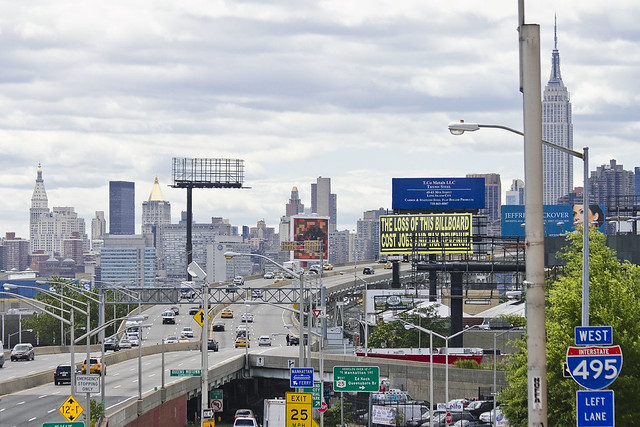
The blasted heaths of Western Queens, which the art of engineering have conquered fully, must have once been quite lovely. What exists at the dawn of the second millennia, however, represent obeisance to the motor vehicle and “flow”. Gaze in horror upon the Queens Midtown Expressway section of the Long Island Expressway, a 1939 expression of the seeming ennui felt by Robert Moses for the ancient villages and communities of Long Island City.
Your humble narrator is often struck dumb and blind when doing so.
from wikipedia
Symptoms of acute stress reaction
The symptoms show great variation but typically include an initial state of “daze”, with some constriction of the field of consciousness and narrowing of attention, inability to comprehend stimuli, and disorientation.
This state may be quickly followed by either further withdrawal from the surrounding situation (to the extent of a dissociative stupor), or by agitation and overactivity, anxiety, impaired judgement, confusion, detachment, and depression. Autonomic signs of panic anxiety (tachycardia, sweating, flushing) are also commonly present.
The symptoms usually appear within minutes of the impact of the stressful stimulus or event, and disappear within 2–3 days (often within hours). Partial or complete amnesia for the episode may be present.

– photo by Mitch Waxman
At its apex over the Dutch Kills tributary of the languid Newtown Creek, which climbs to some one hundred and six feet over the water, the steel roadway begins a precipitous change in declination which carries vehicular traffic to the subaqueous Queens Midtown Tunnel and into Manhattan. The roadway was elevated to this altitude for no reason other than allow ocean going vessels egress to the turning basin of the Degnon Terminal at the head of Dutch Kills, and the blighting effect it had on Long Island City was quite unintentional. The industrial center became something to be ignored, driven over, forgotten, and quite irrelevant- seemingly by design.
If this is not the case, why are there no entrance or exit ramps between Greenpoint and Vernon Avenues?
from wikipedia
Depersonalization disorder (DPD) is a dissociative disorder (ICD-10 classifies the disorder as an anxiety disorder) in which the sufferer is affected by persistent or recurrent feelings of depersonalization and/or derealization. A diagnosis is made when the dissociation is persistent and interferes with the social and occupational functions necessary for everyday living. Diagnostic criteria include persistent or recurrent experiences of feeling detached from one’s mental processes or body. “Dissociation is defined as a disruption in the usually integrated functions of consciousness, memory, identity and perception, leading to a fragmentation of the coherence, unity and continuity of the sense of self.

– photo by Mitch Waxman
The complicated snare of vehicular access to Manhattan as it all compacts in Long Island City has often caused me to fall into a stupor when contemplated. Subway lines, railroads, passenger and freight vehicles- all form a tight fist gripping the heart of this formerly vital center. Storm water flows freely from exhausts onto local streets, causing temporary lagoons of sooty liquids to agglutinate about garbage choked sewers. Many of these sewers bear the screed “no dumping, drains into waterway” embossed directly on the iron grates.
Perhaps one is entangled in some waking nightmare, and all of what may be observed is merely some fevered ideation?
from wikipedia
Oneirophrenia is a hallucinatory, dream-like state caused by several conditions such as prolonged sleep deprivation, sensory deprivation, or drugs (such as ibogaine). From the Greek words “ὄνειρο” (oneiro, “dream”) and “φρενός” (phrenos, “mind”). It has some of the characteristics of simple schizophrenia, such as a confusional state and clouding of consciousness, but without presenting the dissociative symptoms which are typical of this disorder.
Persons affected by oneirophrenia have a feeling of dream-like unreality which, in its extreme form, may progress to delusions and hallucinations. Therefore, it is considered a schizophrenia-like acute form of psychosis which remits in about 60% of cases within a period of two years. It is estimated that 50% or more of schizophrenic patients present oneirophrenia at least once.
____________________________________________________________________________
Click for details on Mitch Waxman’s
Upcoming boat tours of Newtown Creek
July 22nd, 2012- Working Harbor Committee Newtown Creek Boat Tour
lands adjacent

– photo by Mitch Waxman
Found along Jackson Avenue in Long Island City, in the stretch between 21st Street and Queens Plaza, there are several truncated little blocks. Part of an earlier street grid pre dating the 20th century and the Queensboro Bridge, some host residences while others are partly residential while others are entirely industrial. All of these lanes share one commonality, which is ending where the Sunnyside Yard begins. Dutch Kills Street starts at Jackson Avenue and ends a mere block later at the fenced in rail yard.
from wikipedia
Dutch Kills is an area within Long Island City, in the New York City borough of Queens. It was a hamlet, named for its navigable tributary of Newtown Creek, that occupied what today is centrally Queensboro Plaza. Dutch Kills was an important road hub during the American Revolutionary War, and the site of a British Army garrison from 1776 to 1783. The area supported farms during the 19th Century, and was finally consolidated in 1870 with the villages of Astoria, Ravenswood, Hunters Point and Blissville to form Long Island City.

– photo by Mitch Waxman
Perpetual shadow stains the street here, titan masonry is sky flung and the steel of mighty Queensboro’s exit ramps is singing high above the pavement. Tumultuous passings of rail on the other side of an overgrown fence declare themselves loudly, and all around is evidence of poor drainage. A lonely dead end, it is one of the places where the residents of Queens enjoy indulging in the two art forms that the Borough is known for- illegal dumping and graffiti.
from wikipedia
The Pennsylvania Railroad (PRR) completed construction of the yard in 1910. At that time Sunnyside was the largest coach yard in the world, occupying 192 acres (0.78 km2) and containing 25.7 mi (41.4 km) of track. The yard served as the main train storage and service point for PRR trains serving New York City. It is connected to Pennsylvania Station in Midtown Manhattan by the East River Tunnels. The Sunnyside North Yard initially had 45 tracks with a capacity of 526 cars. The South Yard had 45 tracks with a 552 car capacity.

– photo by Mitch Waxman
A lurking menace is sensed here, the surety that one is being watched from cover. A risible smell colors the air, one which betrays the odors of mold and rot and urine. It is odd to be so close to the center of the human infestation, yet so totally alone. It would be very easy to disappear here, and imagined perils spring into the forefront of ones mind. The shining promise of the Degnon Terminal glowers with ambition and thwarted aspiration, providing backdrop and counterpoint.
from nytimes.com
PROGRESS is the watchword of Queens Borough at the present time, especially of the Queensboro Bridge Plaza and the adjacent parts of Long Island City. Never before have there been so many striking object lessons of this forward movement in that long-neglected borough as may be seen today within a few blocks of the spacious approach to the bridge.

– photo by Mitch Waxman
Some poor soul calls this place their own, living in a makeshift shanty. So many of the “working homeless” are observed around these back alleys and forgotten corners, lonely vagabonds ekeing out a subsistence living while living in squalor, surviving by craft and guile. What strange experiences and odd tales could they relate about what happens in the dark of night, here on Dutch Kills Street?
from wikipedia
Modern homelessness started as a result of economic stresses in society and reductions in the availability of affordable housing such as single room occupancies (SROs) for poorer people. In the United States, in the 1970s, the deinstitutionalisation of patients from state psychiatric hospitals was a precipitating factor which seeded the homeless population, especially in urban areas such as New York City.
The Community Mental Health Act of 1963 was a predisposing factor in setting the stage for homelessness in the United States. Long term psychiatric patients were released from state hospitals into SROs and supposed to be sent to community mental health centers for treatment and follow-up. It never quite worked out properly, the community mental health centers mostly did not materialize, and this population largely was found living in the streets soon thereafter with no sustainable support system.
Also, as real estate prices and neighborhood pressure increased to move these people out of their areas, the SROs diminished in number, putting most of their residents in the streets. Other populations were mixed in later, such as people losing their homes for economic reasons, and those with addictions (although alcoholic hobos had been visible as homeless people since the 1890s, and those stereotypes fueled public perceptions of homeless people in general), the elderly, and others.

– photo by Mitch Waxman
Although nothing of the sort was observed on this visit, one often sees candles and small altars to unknown gods in these places. Offerings of coins, foodstuffs, and cigars have often been noted amongst these arrangements. Peasant superstition and magicks are often the recourse of the desperate and desolated, however.
from wikipedia
Beliefs in witchcraft, and resulting witch-hunts, existed in many cultures worldwide and still exist in some today, mostly in Sub-Saharan Africa (e.g. in the witch smellers in Bantu culture). Historically these beliefs were notable in Early Modern Europe of the 14th to 18th century, where witchcraft came to be seen as a vast diabolical conspiracy against Christianity, and accusations of witchcraft led to large-scale witch-hunts, especially in Germanic Europe.
The “witch-cult hypothesis”, a controversial theory that European witchcraft was a suppressed pagan religion, was popular in the 19th and 20th centuries. Since the mid-20th century, Witchcraft has become the self-designation of a branch of neopaganism, especially in the Wicca tradition following Gerald Gardner, who claimed a religious tradition of Witchcraft with pre-Christian roots.
____________________________________________________________________________
Click for details on Mitch Waxman’s
Upcoming walking and boat tours of Newtown Creek
July 8th, 2012- Atlas Obscura Walking Tour- The Insalubrious Valley
(note: there was just one ticket left for this one when I hit “publish”)
for July 8th tickets, click here for the Atlas Obscura ticketing page
July 22nd, 2012- Working Harbor Committee Newtown Creek Boat Tour


 The Newtown Pentacle