Archive for the ‘Long Island Rail Road’ Category
The 2013 Spring and Summer Tours Schedule
“follow” me on Twitter at @newtownpentacle

– photo by Mai Armstrong
Want to see something cool?
Odds are that a bunch of the folks who will be reading this might have no idea who Mitch Waxman is, why they should come along with him on a tour of some weird neighborhood in Brooklyn or Queens or Staten Island, nor what a Newtown Creek or Kill Van Kull are- let alone where. Who is this weirdo?
Check out the “bio” page here at Newtown Pentacle, or this profile of me from the NY Times published in 2012. My tours of Newtown Creek have garnered no small amount of interest from the fourth estate- whether it be DNAInfo, untappedcities.com, Queens Chronicle, newyorkview.net, the 22blog, photobycateblog.com, or Queensnyc, and I’ve turned up in a bunch of media reports, documentaries, and been interviewed for multitudinous reports on the lamentable history of the Newtown Creek.
Most recently, it was National Geographic and Curbed. Attendees on my tours come from a variety of backgrounds- photographers, history and rail buffs, maritime enthusiasts, and there always seems to be an odd and welcome concentration of elected officials and journalists about.
What is with this guy?
I’m the Newtown Creek Alliance Historian, Official Photographer and Steering Committee member of the Working Harbor Committee, a member of the Newtown Creek Monitoring Committee and the Newtown Creek CAG, and am also a member of the Kosciuszko Bridge Stakeholders Advisory Committee. Newtown Pentacle, this blog, has been steadily published since 2009. I live in Astoria, Queens with my wife and our little dog, Zuzu.
In just the last few years, I have exposed thousands of people to the Newtown Creek, and its incredible history. This is where the industrial revolution actually happened, along this 3.8 mile long waterway that defines the border of Brooklyn and Queens.
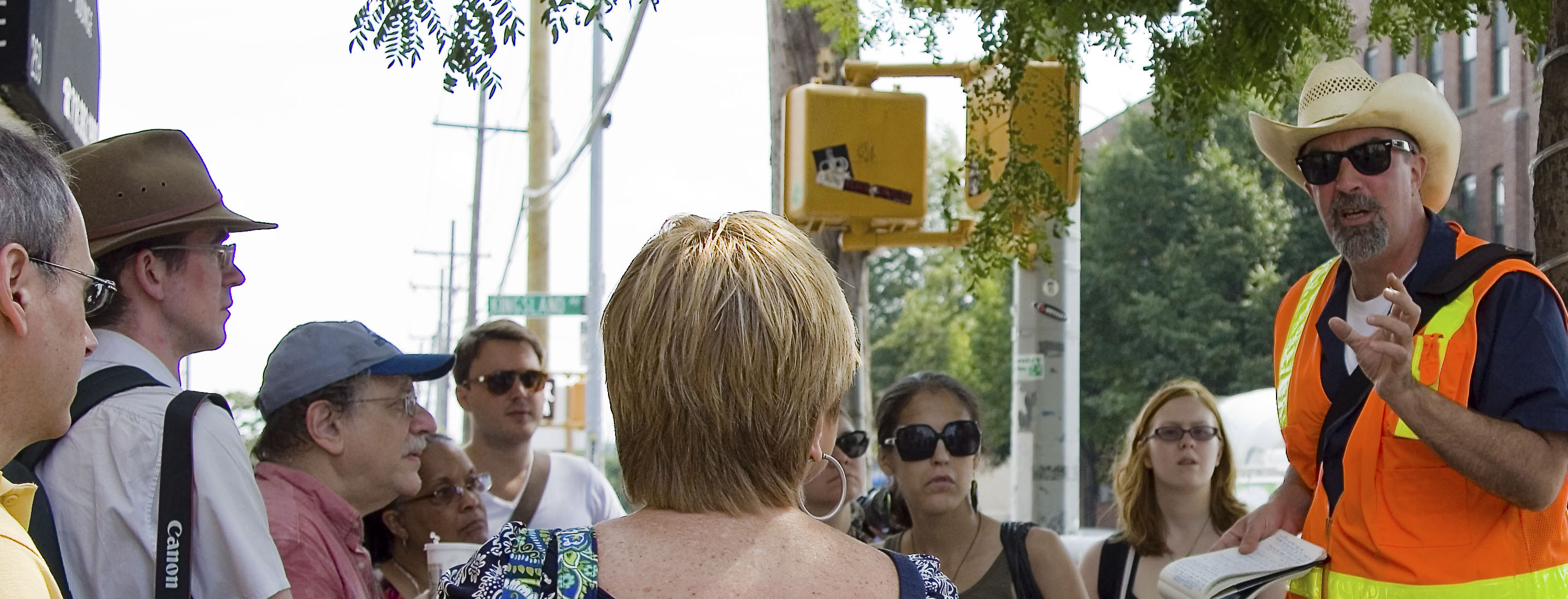
– photo by Mai Armstrong
In 2013, continuing relationships with Atlas Obscura, Newtown Creek Alliance, and the Working Harbor Committee (as well as friends like the Metropolitan Waterfront Alliance, and others) allow me to offer the following schedule. Live ticketing links will be made available as they come online, and all dates are subject to cancellation or rescheduling due to weather or unforeseen circumstance. There are 6 unique walking tours listed here, and one boat trip in which I will be the principal speaker.
Private tours are possible, schedule permitting, and can be arranged by contacting me here. Last year, for instance, several private University classes engaged me for a day at the Creek, as did a few private groups. As mentioned, contact me and we will figure something out if you’ve got a meetup group, college class, or special request.
Here then, is my official schedule as it stands right now. There will likely be a few additions as time goes on, which I will let you know about as they occur. Best to subscribe to this blog (top right, email subscription) or “follow” me on Twitter @newtownpentacle for news.
In April, 2013- There will be a brand new tour of Greenpoint debuted, which I call “Glittering Realms.”
Glittering Realms– Saturday, April 20, 2013
Newtown Creek walking tour with Mitch Waxman and Atlas Obscura, tickets now on sale.
In May, 2013- We start off with 13 Steps around Dutch Kills, go to the Insalubrious Valley, visit DUKBO, and finish off the month with a Working Harbor boat tour.
13 Steps around Dutch Kills– Saturday, May 4, 2013
Newtown Creek walking tour with Mitch Waxman and Atlas Obscura, tickets now on sale.
Parks and Petroleum- Sunday, May 12, 2013
Newtown Creek walking tour with Mitch Waxman and Newtown Creek Alliance, tickets on sale soon.
The Insalubrious Valley- Saturday, May 25, 2013
Newtown Creek walking tour with Mitch Waxman and Atlas Obscura, tickets on sale soon.
Hidden Harbor: Newtown Creek tour with Mitch Waxman – Sunday, May 26,2013
Boat tour presented by the Working Harbor Committee,
Limited seating available, order advance tickets now. Group rates available.
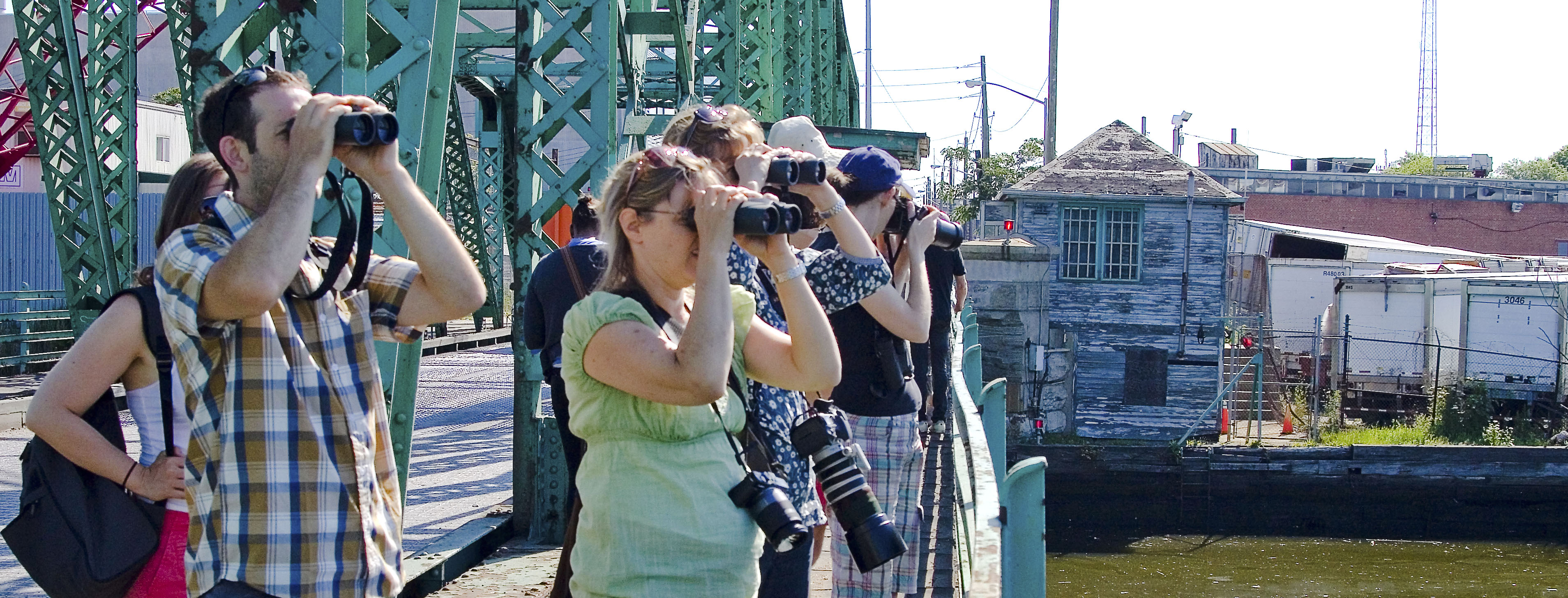
– photo by Mai Armstrong
In June, 2013- We visit the Poison Cauldron, return to the Insalubrious Valley, and check out the Kill Van Kull.
The Poison Cauldron- Saturday, June 15, 2013
Newtown Creek walking tour with Mitch Waxman and Atlas Obscura, tickets on sale soon.
Kill Van Kull- Saturday, June 22, 2013
Staten Island walking tour with Mitch Waxman and Working Harbor Committee, tickets on sale soon.
The Insalubrious Valley- Saturday, June 29, 2013
Newtown Creek walking tour with Mitch Waxman and Newtown Creek Alliance, tickets on sale soon.
In July, 2013- We visit Queens’s Hunters Point with a brand new tour. I might have another offering or two for you, but nothing I can speak about quite yet.
Modern Corridor- Saturday, July 13, 2013
Newtown Creek walking tour with Mitch Waxman and Atlas Obscura, tickets on sale soon.
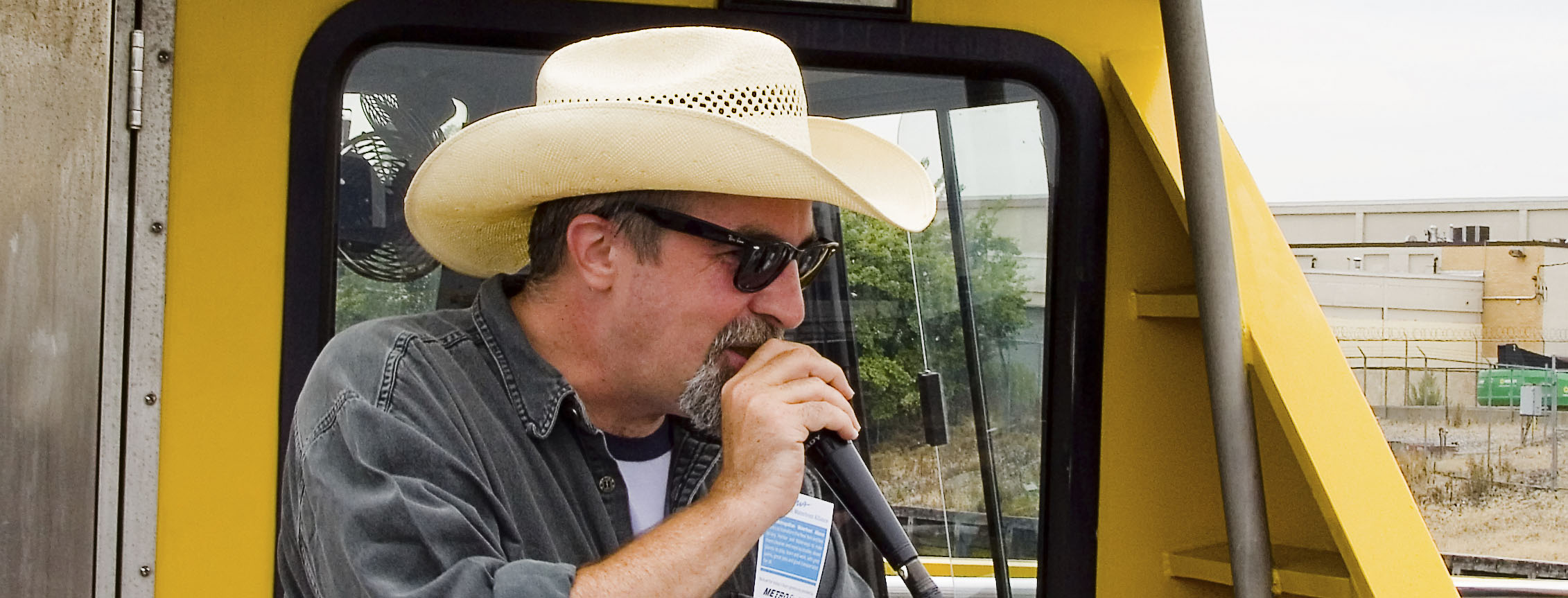
– photo by Mai Armstrong
In August, 2013- We return to the Poison Cauldron, repeat the 13 steps, and the Kill Van Kull walks.
Kill Van Kull- Saturday, August 10, 2013
Staten Island walking tour with Mitch Waxman and Working Harbor Committee, tickets on sale soon.
13 Steps around Dutch Kills- Saturday, August 17, 2013
Newtown Creek walking tour with Mitch Waxman and Newtown Creek Alliance, tickets on sale soon.
The Poison Cauldron- Saturday, August 24, 2013
Newtown Creek walking tour with Mitch Waxman and Atlas Obscura, tickets on sale soon.
There are a few other dates coming in the fall, and a couple of more summer events which are still being discussed, but I’ll let you know more about them in coming posts.
Also, I will definitely be onboard but not on the microphone during the Working Harbor Committee “Beyond Sandy” Hidden Harbor tours on Tuesday nights, all summer. Hope you can come along.
decreasing wind
“follow” me on Twitter at @newtownpentacle

– photo by Mitch Waxman
Foaming, your humble narrator was scuttling his way to Brooklyn recently when sonic evidence of certain titanic exertions, whose only source could be a locomotive engine at work, penetrated through my ever present head phones.
On this particular afternoon, nearby the so called “Bliss Tower” along those tracks of the Long Island Railroad which snake along beneath the Greenpoint Avenue Bridge in a nameless section of Queens, once known as Blissville but which I describe as DUGABO, it was a NY and Atlantic freight operation which was raising the ruckus.
from anacostia.com
New York & Atlantic Railway began operation in May 1997 of the privatized concession to operate freight trains on the lines owned by Long Island Rail Road. The railway serves a diverse customer base and shares track with the densest passenger system in the United States.

– photo by Mitch Waxman
My headphones were not playing Norwegian Black Metal, nor late 80’s NYC Hardcore. They were not transmitting one of my many H.P. Lovecraft audio books, the soundtrack from the first Omen movie, or any of my usual playlists of childish anthems and guitar driven ballads.
Instead, the audio files I was enthralled by were podcasts, specifically Dan Carlin’s “Wrath of the Khans” series, which is presented episodically at his Hardcore History show.
If you’re not listening to Dan, you’re missing out.
from wikipedia
There is an urban legend that Julius Caesar specified a legal width for chariots at the width of standard gauge, causing road ruts at that width, so all later wagons had to have the same width or else risk having one set of wheels suddenly fall into one deep rut but not the other.
In fact, the origins of the standard gauge considerably pre-date the Roman Empire, and may even pre-date the invention of the wheel. The width of prehistoric vehicles was determined by a number of interacting factors which gave rise to a fairly standard vehicle width of a little under 2 metres (6.6 ft). These factors have changed little over the millennia, and are still reflected in today’s motor vehicles. Road rutting was common in early roads, even with stone pavements. The initial impetus for the ruts probably came from the grooves made by sleds and slide cars dragged over the surfaces of ancient trackways. Since early carts had no steering and no brakes, negotiating hills and curves was dangerous, and cutting ruts into the stone helped them negotiate the hazardous parts of the roads.
Neolithic wheeled carts found in Europe had gauges varying from 130 to 175 centimetres (4 ft 3 in to 5 ft 9 in). By the Bronze age, wheel gauges appeared to have stabilized between 140 to 145 centimetres (4 ft 7 in to 4 ft 9 in) which was attributed to a tradition in ancient technology which was perpetuated throughout European history. The ancient Assyrians, Babylonians, Persians and Greeks constructed roads with artificial wheelruts cut in rock spaced the wheelspan of an ordinary carriage. Such ancient stone rutways connected major cities with sacred sites, such as Athens to Eleusis, Sparta to Ayklia, or Elis to Olympia. The gauge of these stone grooves was 138 to 144 centimetres (4 ft 6 in to 4 ft 9 in). The largest number of preserved stone trackways, over 150, are found on Malta.
Some of these ancient stone rutways were very ambitious. Around 600 BC the citizens of ancient Corinth constructed the Diolkos, which some consider the world’s first railway, a granite road with grooved tracks along which large wooden flatbed cars carrying ships and their cargo were pulled by slaves or draft animals. The space between the grooved tracks in the granite was a consistent 1.5 metres (4 ft 11 in).
The Roman Empire actually made less use of stone trackways than the prior Greek civilization because the Roman roads were much better than those of previous civilizations. However, there is evidence that the Romans used a more or less consistent wheel gauge adopted from the Greeks throughout Europe, and brought it to England with the Roman conquest of Britain in AD 43. After the Roman departure from Britain, this more-or-less standard gauge continued in use, so the wheel gauge of animal drawn vehicles in 19th century Britain was 1.4 to 1.5 metres (4 ft 7 in to 4 ft 10 in). In 1814 George Stephenson copied the gauge of British coal wagons in his area (about 1.42 metres (4 ft 8 in)) for his new locomotive, and for technical reasons widened it slightly to achieve the modern railway standard gauge of 1.435 metres (4 ft 8.5 in).

– photo by Mitch Waxman
Normally, the media I consume is not something I think people would be interested in, at least that’s been my experience in real life. A recent conversation with Kevin Walsh of Forgotten-NY fame, wherein that intrepid explorer queried me about where to find some of these Lovecraft audio files which are so often mentioned, forced me to reconsider that maxim. Accordingly, since its a holiday weekend and you might have some free time, here you go.
The Atlanta Radio Theater Company is great. The website… their stuff is available as mp3’s at itunes and others, so go hunt them down.
The astounding H.P. Lovecraft Historical Society.
ARTC made a better Dunwich, by my taste, but HPLHS did both “Mountains of Madness” and “Shadow Out of TIme” better and they made a freaking “Call of Cthulhu” silent movie as well as the unbelievably great “Whisperer in Darkness” film. Dark Adventure Radio Theatre just rocks.
Huge talents, a podcast performed by two of its associates is HPPodcraft.com.
Incidentally, just like the LIRR Engine 102 featured in yesterday’s post, today’s NY&A engine is an EMD SW1001.
from wikipedia
The EMD SW1001 was a 1,000-horsepower (750 kW) diesel locomotive for industrial switching service built by General Motors’ Electro-Motive Division between September 1968 and June 1986. A total of 230 examples were constructed, mainly for North American railroads and industrial operations.
The SW1001 was developed because EMD’s SW1000 model had proved unpopular among industrial railroad customers, as the heights of its walkway and cab eaves were much greater than those of earlier EMD switcher models. The overall height was similar, but the SW1000′s roof was much flatter in curvature. Industrial railroads that only operated switchers often had facilities designed to the proportions of EMD’s earlier switchers.

– photo by Mitch Waxman
Gold standard, the best of the best unabridged readings are from Audiorealms, featuring narrator Wayne June. Flat out readings of the Lovecraft Texts by professional voice talent in a studio. Genre defining, these are commercial works which really deserve support. Buy em, highest Mitch Waxman ratings- lengthy, mellifluous, well worth the hard slaved money. Six volumes, covering all the really good stuff. I think I got them through iTunes, although audible.com has them for sale.
The unmentionable Jeffry Combs reads “Herbert West Re-Animator.”
Additional mentions for theatrical productions of “Call of Cthulhu” and “Lurking Fear,” pro recordings from “back in the day,” when audio books were released on things called “audio cassettes.” Check out lovecraftzine.com for a list of free downloads which includes these two gems.
Archive.org is hosting Maria Lectrix‘s readings of “The Dream Quest of Unknown Kadath.“ Free, and open sourced, go get em. Poke around at archive.org, by the way. This isn’t the only Lovecraft audio there- look for “Herbert West: Reanimator” and others.
from nyc.gov
Greenpoint Avenue is a four-lane local street in Queens and Brooklyn, running northeast from the East River in Greenpoint, Brooklyn to Roosevelt Avenue in Sunnyside, Queens. The Greenpoint Avenue Bridge, also known as the J. J. Byrne Memorial Bridge, is located approximately 2.2 km from the mouth of Newtown Creek. The bridge is situated between Kingsland Avenue in Greenpoint, Brooklyn and Review Avenue in the Blissville section of Queens.
dark and furtive
“follow” me on Twitter at @newtownpentacle

– photo by Mitch Waxman
While inspecting the scene which stands extant in DUPBO, or Down Under the Pulaski Bridge Onramp, one cannot help but notice the regular appearance of the Long Island Railroad operating along those tracks which it has held tenancy over since 1870.
The singular thrumming and vibrations of the municipal railways engines often rouse me from the piles of trash and wind blown debris amongst which one such as myself dwelleth, commanding my attentions and demanding proximity.
from 1877′s “Long Island and where to go!!: A descriptive work compiled for the Long R.R. Co.“, courtesy google books:
Long Island City is the concentrating point upon the East river, of all the main avenues of travel from the back districts of Long Island to the city of New York. The great arteries of travel leading from New York are Thomson avenue, macadamized, 100 feet wide, leading directly to Newtown, Jamaica and the middle and southern roads on Long Island, and Jackson avenue, also 100 feet wide, and leading directly to Flushing, Whitestone and the northerly roads.
Long Island City is also the concentrating point upon the East river, of the railway system of Long Island.

– photo by Mitch Waxman
Diminished expectations notwithstanding, someday I would hope to actually ride upon one of these trains, transiting merrily from terminus to terminus and happily recording the largely pedestrian experience in photographs, anecdote, and the occasional video.
Of course, such pleasures must be denied to one such as myself, who is an onerous, undeserving, and decidedly feckless quisling renowned for publicly embarrassing himself with wild flights of fantasy and fantastic predictions of an uncomfortable and dire future.
from wikipedia
This station has 13 tracks, two concrete high-level island platforms, and one wooden high-level island platform. All platforms are two cars long and accessible from Borden Avenue just west of Fifth Street. The northernmost one, adjacent to tracks 2 and 3, is the only one used for passenger service. The other concrete platform adjacent to tracks 6 and 7 and the wooden one adjacent to tracks 8 and 9 are used for employees only. All tracks without platforms are used for train storage. The southernmost four tracks are powered by third rail while the remaining tracks are used only by diesel-powered trains.
– photo by Mitch Waxman
Feeling somehow exposed down in DUPBO, a dark corner of the Newtown Creek watershed occasionally occluded by the gaseous exhalations of high volume roads, vehicular tunnels, and hundreds of thousands of automotive engines, your humble narrator retreated to the increasingly well used and so called “51st Avenue bridge”.
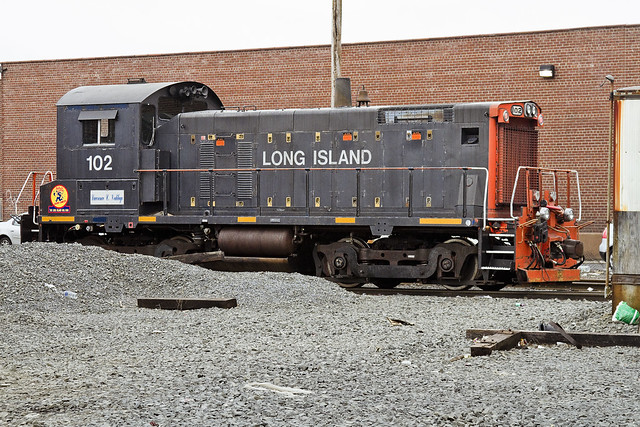
The elderly engine you see above, which is still at least ten years younger than me, is an EMD SW1001.
from wikipedia
The EMD SW1001 was a 1,000-horsepower (750 kW) diesel locomotive for industrial switching service built by General Motors’ Electro-Motive Division between September 1968 and June 1986. A total of 230 examples were constructed, mainly for North American railroads and industrial operations.
The SW1001 was developed because EMD’s SW1000 model had proved unpopular among industrial railroad customers, as the heights of its walkway and cab eaves were much greater than those of earlier EMD switcher models. The overall height was similar, but the SW1000’s roof was much flatter in curvature. Industrial railroads that only operated switchers often had facilities designed to the proportions of EMD’s earlier switchers.
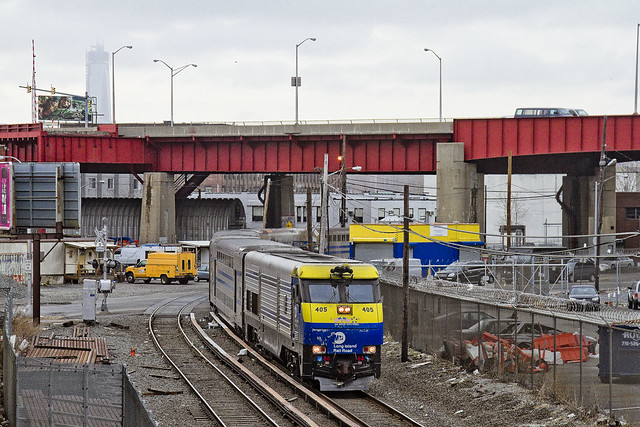
– photo by Mitch Waxman
A decaying and increasingly decrepit truss bridge designed for pedestrians, the structure hurtles over the tracks and leads one under the steel of the fabled Long Island Expressway. Several years ago, I witnessed documents prepared by certain members of the government which proposed the utter destruction and subsequent replacement of this bridge. This report continued in dire tones- describing the bridge as standing, but unsound due to decaying concrete and rusted steel.
For a longer look at the bridge and environs, check out this post from February of 2010, “dimly lit and illimitable corridors.”
Personal observation has revealed that this is a VERY well traveled route between the industrial labor force of LIC and the nearby 7 train at 49th Avenue- or Hunters Point Avenue- depending on which century you’re describing. The 7, of course, offers connections to the east via Queens Plaza or a short journey into Manhattan via the Steinway Tunnel.
Forgotten-NY has been here too.
from wikipedia
The Steinway Tunnel carries the 7 trains of the New York City Subway under the East River between 42nd Street in Manhattan and 51st Avenue in Long Island City, Queens, in New York City. It was originally designed and built as an interurban trolley tunnel (hence the narrow loading gauge and height), with stations near the 7 ; trains’ current Hunters Point Avenue and Grand Central stations. It is named for William Steinway, who was a major promoter of its construction, although he died in 1896 before it was completed.

– photo by Mitch Waxman
This is officially “one of my spots,” by the way.
During the week, especially around rush hour, a series of trains roll through here, providing a good opportunity for photography enthusiasts to gain a less common angle on the familiar blue and yellow passenger service. The phrase “one of my spots,” by the way, refers to an area I visit often while looking for a perfect combination of sky and light and subject. A wealth of photos of this particular spot and situation adorns my photostream at flickr, but I still haven’t hit that moment here, which is another failure I can pin on to my sweater.
There’s magic on the 51st Avenue bridge, I just have to find the right place and time to photograph it, which will take nothing but persistence.
from wikipedia
The Long Island Rail Road owns an electric fleet of 836 M7 and 170 M3 electric multiple unit cars, and 134 C3 bilevel rail cars powered by 23 DE30AC diesel-electric locomotives and 22 DM30AC dual-mode locomotives.
In 1997 and 1998, the LIRR received 134 double-decker passenger cars from Kawasaki, including 23 cab control cars, and 46 General Motors Electro-Motive Division diesel-electric locomotives (23 diesel DE30ACs and 23 dual-mode DM30ACs) to pull them, allowing trains from non-electric territory to access Penn Station for the first time in many years, due to the prohibition on diesel operation in the East River Tunnels leading to Penn Station.
stark hideousness
“follow” me on Twitter at @newtownpentacle

– photo by Mitch Waxman
One is never truly alone in New York City, given that it is one of the most densely inhabited and developed sections of the entire planet, but one often experiences a deep and abiding loneliness here. This is paradoxical, as any New Yorker- when queried as to their deepest wish- will answer with “I’d just like to left alone and have everyone else just mind their own business instead of paying attention to mine.”
That, and they’d like to win something called the Lottery, quit their jobs, and move someplace called “the country” where there is “no bullshit.”

– photo by Mitch Waxman
A product of this place, having existed in its schools and streets and along the waterways, your humble narrator is lonely by nature- but that has nothing to do with the City. Vainglorious humility is oft invoked when describing myself as an Outsider, but I’m only half joking. Regardless of my social status and ability to “fit in,” one would have no desire whatsoever to leave New York were my “ship to come in.”
That would be giving in, and allowing the City to say that it beat you (although the thought of a little country place in Vermont sounds pretty sweet).

– photo by Mitch Waxman
The desolations of solitude, wherein the mind spawns metastases of self accusation and secondary guessing, are at the root of much of what ails most. How can one truly be alone in a crowd, or lonely in New York City? One such as myself craves (and in fact deserves) desolating isolation, the quiet of the tombs, and the absence of others.
Then again, I was raised as an “only child” and never had to share a bedroom with someone I didn’t wish to.
beggars crouched
“follow” me on Twitter at @newtownpentacle

– photo by Mitch Waxman
Personal velocity seems to be at an all time low, lords and ladies, as your humble narrator must have seen too many winters. A shut in and seemingly partial invalid, at least cognitively, one must do with the few pleasures left to him as the end is likely nigh and sure to be horrible. An insubstantial element of joy, however, has been watching the painfully slow processes at work around the Sunnyside Yards as the East Side access project incarnates.

– photo by Mitch Waxman
Vast, the part of the project walked through in today’s post is the fascinating and parallel insertion of a second track on the LIRR main line.
My comprehension of the situation is limited, but as I understand- it involves the requirements of Amtrak, which gave up some amount of allotted space and track rights at Sunnyside Yard to the City and State project, on condition that it no longer suffer schedule interruptions due to LIRR breakdowns or bottlenecks. It seems that even with Amtrak’s former holdings, frequent service delays experienced by the LIRR rippled out from NY and across the Northeast corridor rail network.

– photo by Mitch Waxman
Your humble narrator is a relative late comer to the story of the railroads, and there are incredible gaps in my understanding of the system. One thing which I’ve never been able to clarify for myself is why there isn’t more active rail at work.
Once upon a time, in the City of New York, there were miles of active tracks servicing thousands of individual businesses. The plan which is actively under construction will ostensibly improve passenger service, but what about freight?
Also:
Remember that event in the fall which got cancelled due to Hurricane Sandy?
The “Up the Creek” Magic Lantern Show presented by the Obscura Society NYC is back on at Observatory.
Click here or the image below for more information and tickets.



 The Newtown Pentacle